Vashti Bunyan: Way to Skye

vashti_bunyan_1200

Just another diamond day
Just a blade of grass
Just another bale of hay
And the horses pass.
– Vashti Bunyan

You can’t stay in your corner of the Forest waiting for others to come to you.
You have to go to them sometimes.
– Winnie The Pooh

***

The story of Vashti Bunyan is an unusual one.

She entered swinging London as a young, blue-eyed singer-songwriter in the late ’60s, briefly glimpsing into a world of stardom, until she went out on the road for a couple of years in search for paradise – and released one sole album that existed totally off the radar for 30 odd years.

Bunyan didn’t know anything about the growing cult around her music until she googled herself one day in the early 2000s, inspiring her to step back into to the spotlight with another set of gorgeous songs in 2005. Now, almost ten years later, she is back with her third album in 35 years. It is as if times stands still around Vashti Bunyan and her tender, graceful music.

I talked with this unique artist about her unique career, walking with her from the early days all the way until today and her new album.

Beginnings
– My father was a great lover of recorded classical music, which was always playing in our home, says Vashti when being asked about her family background.

– I was the youngest of three – and was referred to as ‘the arty one‘ – because unlike my sister I did badly at school, drew and painted a lot and sang to myself each night before sleeping. My older brother especially was very supportive of my wanting to write songs and sing – and he recorded my songs himself in the mid-sixties. He thought no one else could ever capture my sound the way he could.

freewheelin_bob_dylanBunyan, born in 1945, grew up in London, and studying at Ruskin School of Drawing and Fine Art in Oxford where she eventually got kicked out for failing to attend classes, having been ‘wasting’ her time writing songs and playing the guitar. In the summer of ’63, 18 years old Vashti visited her sister in New York, where she discovered the sheer brilliance of Bob Dylan and his then brand new Freewheelin’ album. In it she found a sound that would change her life forever:

– Having had a somewhat sheltered post-war upbringing but knowing that there was a whole world out there that I ached to find out about – the songs on The Freewheelin’ Bob Dylan opened my eyes to a world so different to mine, one that I wanted to be part of and understand. It sowed the seeds for my romantic notion of becoming a wandering musician.

Bunyan returned to London, determined to become a pop singer. Andrew Loog Oldham, manager for the Rolling Stones, took notice of her and handed her the Jagger/Richards-penned song “Some Things Just Stick in Your Mind.” The release went unnoticed by the larger public, and Bunyan herself returned to her original, quieter ideals of making music. She did a couple more recordings, but gradually lost her dream of becoming a pop star, pursuing divergent path instead – this time by horse and buggy.

– It didn’t turn out the way I wanted it to – I didn’t succeed in bringing quiet acoustic songs into the mainstream. When I met art student Robert Lewis, our likeminded thoughts and dreams led to a plan to escape the city and head for what we hoped would be a more meaningful life. We intended to make our actual days the picture, the painting, the song, says Vashti on what would become an almost two year long journey across Britain, on their way to Skye.

donovan_mellowIn Search of Eden
Around that time Donovan, wealthy from the success of his hit songs like “Sunshine Superman” and “Catch The Wind,” had bought three remote Scottish islands in the Inner Hebrides, near the Isle of Skye, in order to build up an artistic commune. The couple finally reached their destination, only to find that Donovan had lone ago fled his visionary project.

– I learned more on that journey than I could have any other way. I refer to it every day even now in my thinking – in some way or other. The differences in people and the humanity we found as well as the hostility we realized that traveling people experience. Also the fact that we were able to live on so little – and that we came to recognize our responsibility for other creatures. So much so that they became just as important to us as our human companions.

The late 1960s was a period when many artists fled the cities, returning ‘back to nature’ in search of of inner peace and the discovery of a more truthful life. The concept of a more pure, down-to-earth music form went hand-in-hand with this idealism.

– Looking back I can only speak for myself as I was not involved with any other musicians at the time. For me the promise of remote places that had been abandoned and were waiting to be lived in by anyone willing to go without electricity or mains water – that was the appeal. Having not been able to make a living from music my only other choice seemed to be a ‘day-job’ – but I was too restless for that. And so perhaps living in places that others undervalued became a movement of its own – for artists especially.

Do you feel now, or did you feel then, that something has been lost in the interplay between modern life and something basic in us as humans?

– No I don’t feel it has been lost. It has been added to by other layers of possibilities and exchange of ideas and information. We are still human and still have the same choices between greed and generosity.

In his book Electric Eden, author Rob Young writes of Bunyan’s music “reveals many of the contradictory impulses that shape the British artistic imagination: craving the freedom and peace of a countryside that is already shaped and manicured.”

How do you see yourself and your music fit into such a description?

– On that journey I learned the realities of the ‘country living’ that I – as an urban child – had so romanticised. I came to understand that the little sheepies were going to be slaughtered, that the low moaning of the cows at night was because their calves had been taken from them, that the fields were being poisoned and that the fish were dying. I still wrote songs as if this were not happening – in order to comfort myself more than anything. The shepherd and shepherdess in “Rose Hip November” were more a picture from an old blue-and-white china plate than from real people.

The folk scene in those transitional days were torn between a new, progressive direction and a more traditional, purist form. Did you associate with either of those mentalities in those days, or were you more of an outsider?

– I was never a part of the folk scene and so now when I am referred to as a folksinger I bristle and complain bitterly ’till everyone around me sighs and looks at the ceiling.

Bunyan smiles, and continues,

– Before I left London with a horse, a dog and a boyfriend I had been recording with Andrew Loog Oldham and making my songs into what I’d hoped would enter the pop charts of the day. It didn’t happen and I left in a sulk – and vowed never to set foot in a recording studio again. Joe Boyd changed all that.

Diamond Days
She encountered Joe Boyd through a friend while on the road.

vashti_diamond_dayBoyd was a keystone figure in British music at the time, especially in the bourgeoning folk scene. He worked with Nick Drake, Fairport Convention, The Incredible String Band and countless others, including the debut album of Vashti Bunyan, a collection of her traveling songs, released as Just Another Diamond Day in 1970.

– Joe was unusual as a producer in that he really cared about the musicians he worked with. Coming from the States I think he had quite a rosy view of traditional British folk music, but recognized that there were young people making more of it than had been made before – unique musicians like Fairport Convention, and The Incredible String Band. That was difficult for me as it wasn’t really what I was up to – I was not traditional in any way.

Have you talked to Boyd about this later?

– Yes, when I saw Joe recently he said he understood now that he had been wrong to bring in folk musicians for Just Another Diamond Day and that it is his fault that I am still referred to as a folk singer. But in his defense, he said, he did visit me when I was living a life that was more ‘folky’ than any folk singer he knew, in that I was living in a field with a horse and a dog. And a boyfriend.

And through Joe Boyd, you also met Nick Drake?

– That’s true. Joe wanted me to meet up with Nick Drake at his house and try to write something together. I’d had a baby by then who cried every time I picked up my guitar. Nick’s shoulders went higher and higher as he sat at an old upright piano – and we exchanged not a word. I had not heard Nick’s songs at that time – I had no record-player – and I am sure he hadn’t heard mine – and we were both too shy and individual to be able to work together. I have never been able to work well with others on writing ever since.

Just Another Diamond Day received good reviews, but went largely unnoticed to the public. And Vashti Bunyan went away, again. This time for good, spending the next decades peacefully and privately, raising her children and living a quiet life.

Rebirth
30 years down the road she suddenly discovered that her album had turned into a cult item among connoisseurs and collectors, and her style being cherished among a new generation of artists.

Devendra Banhart, Joanna Newsom and other praised Just Another Diamond Day as a forgotten masterpiece. Once again she came back from the shadows, now heralded as a consequential figure from the ’60s.

What was it like to learn your music was so vital in inspiring a new generation of artists?

– Unreal and strange after so many years in a musical wilderness of my own choosing. My overwhelming thought was ‘if only they had been around back then’.. they would have understood what I was trying to do.

You’ve been called the ‘Godmother of Freak Folk’ for your influence. How do you feel about this title?

– Oh dear. A fairy dress and wings – I think not! And I don’t think I was such an influence – I think those young musicians made a place for me – for which I adore them.

vashti_lookafteringOut of that revival, you returned to the music world to release a new record, Lookaftering, with some help from the musicians you inspired, such as Banhart and Newsom.

What was that experience like?

– As if in a dream – mostly going over my head. I had written the songs, made the demos and had arranged a lot of the instrumentation – but Max Richter who produced the album knew what to do where I really did not. However he taught me as we went along, included me in decision making every step of the way and I am forever grateful to him, for Lookaftering could not have been made without him. Devendra Banhart, Joanna Newsom, Adem, Adam Pierce and Robert Kirby all contributed so good-heartedly and looked after me so well.

Your music has been covered by many artists – Devendra, Fever Ray, Feist and Ben Gibbard, to name a few. Do you have any favourite reinterpretation of your songs?

– I love Fever Ray’s version of “Here Before.” It made me fall off my chair when I first heard it. In a quite different way I also like Norwegian singer Moddi’s version of “Train Song,” and Beautify Junkyards’ “Rose Hip November.”

vashti_heartleapHeartleap
Heartleap is your third album, and your first in nine years. What can you tell us about the album and the process that went into making it?

– Where I had been so sheltered by all the people who helped me make Lookaftering – this time I wanted to take what I had learned and try to understand the process for myself. I had always been fascinated by recorded music but not until I got my hands on music software in 2000 did I get the chance to get the music in my head out into the real world. I don’t read or write music and so it has been a great gift.

You’ve said this is your last album?

– I just feel that it is unlikely that I will make another collection of songs in album form – partly because I am so slow – but also because I am not sure there will be such a format as ‘album’ in however long it would take me to come up with ten more songs. That does not mean I would turn my back on music again – I find the whole process of recording too fascinating now.

– I will, I’m sure, keep making music. No more turning backs.

vashti_bunyan_2

Bjørn Hammershaug
Opprinnelig publisert på read.tidal.com 5/11 2014.

Sannhet: Mutation is the Chaos Factor

sannhet_1200Some records just blow us away.

Brooklyn-based instrumental metal band Sannhet recently released their sophomore album, Revisionist, an exciting musical journey taking us into unexplored landscapes, crossing through foggy realms of black metal, no wave and post-rock.

Sannhet began out as a recording project between two cities, with Christopher Todd based in New York and guitarist John Refano working in Philadelphia. When Refano moved to Brooklyn the pair decided to take the band in a more live-oriented direction, but something was missing.

“A million pedals and practices later we were playing the recorded material live. Eventually we decided no matter how much I could emulate bass with pedals and amps, we craved the extra dimension a bassist added to the band,” says Todd.

Bassist AJ Annunziata joined while they were writing their 2013 debut, Known Flood, solidifying the powerful trio Sannhet is today.

With the proud exception of bands like Hüsker Dü, Vattnet Viskar and Lutefisk, Scandinavian names are not exactly common choices for American bands. How did you end up calling yourself Sannhet?

The word ‘Sannhet’ means truth, but it also means reality, which is open for interpretation. We would rather our songs to be interpreted, so we don’t use vocals or lyrics because they are too specific, they lock a song into one idea. The same goes for our live shows. We use projections, and the rule of thumb for the artwork is that it should be abstract enough to imply a mood or feeling without being overly specific.

Playing purely instrumental music must give you some sort of artistic freedom?

Yeah, it opens the door and leaves room for a lot of creative ideas. A lot of our craft is in details. There are thousands of tracks on this record. When you listen to our songs, you might hear a sound you didn’t notice the time before. Very rarely, if ever, are phrases repeated verbatim.

There is an evolution throughout most of the material. It may all be happening in such a subtle way that people don’t notice… or it just flies by too fast. Which is fine, it’s not important for people to analyze things as long as the music is pulling you towards something.

You manage to stick out of the crowd. What are your thoughts about Sannhet in terms of defying label categorization?

That has always been a goal of the band. We prefer you to not quite understand where to categorize the music. Mutation is the chaos factor that drives evolution. Hopefully the sonic ambiguity being created by us and our other genre-bending contemporaries inspires a new one.

sannhet_revisionistIs this what the title of the album is about as well?

It’s a nod to the iterative process by which the band works, but it’s also a comment on the interpretation and evolution of ideas.

In another interview we spoke about the poetic ending of the album’s mixing, after having recorded and re-recorded the songs for almost a year, laying down thousands of tracks, tweaking and pushing everything… we mixed the entire record on an analog board, so there was no way to edit any further. If we hadn’t done that we probably would have never finished the album.

The Brooklyn metal scene seems very vital these days. What does it mean for you being located here?

Your location matters less than it used to, but it still matters. The sharing of ideas is always what helps a scene progress or grow, and before the internet you really did only have maybe 10 major scenes in the country that were below mainstream.

NYC is cool in general just because of the culture of acceptance or maybe even indifference. It allows artists to really experiment, in a space that is very open, and also one that can take or leave it. I find that liberating. In the practice space we rent with two other bands, we are in a building that has hundreds of bands, and you just get to know these people and everyone is really supportive.

I understand that the local Saint Vitus bar has played a special role in the early stages of your career?

Yes, Saint Vitus has been integral to our coming out. The owners there were the first to really help push the band into actual light. Dave Castillo (Saint Vitus) has been very supportive, and so have other promoters like Fred Pessaro, Ric Leichtung and Bill Dozer (the Acheron). These guys hear countless bands a year, and they help develop the ones they like. We are hugely grateful for the faith they put in us – and the chances we’ve been afforded.

In what ways have you progressed since your first album?

Maybe subconsciously we tried to take some of the reviews of the first record and expand on them. But the truth is that was probably the last thing we thought about when writing this album.

The first record was mostly written when the band was a two-piece. This record we were learning how to write together. Now we’ve really gelled and can accurately articulate our ideas. However, in that time, the cultural climate changes, music tastes mature and cycle.

So, what does this means for the future sounds of Sannhet?

The music we are writing for our next record will probably surprise some people, as I’m sure some of the songs on Revisionist did. We are fortunate enough to have been able to grow and to for people to follow along as we have done so.

Opprinnelig publisert på read.tidal.com, 18. mars 2015

Bjørn Hammershaug

Harmonia: Deluxe

harmonia_800A look back at Harmonia: Deluxe (1975), the second album from Krautrock pioneers Harmonia, written in honor of founding member Dieter Moebius, who sadly passed away July 20, 2015, at the age of 71.

* * *

Harmonia was an influential German band formed in 1973, often referred to as a ‘supergroup’ due to its members’ backgrounds: Michael Rother of Neu!, Hans-Joachim Roedelius and Dieter Moebius of Cluster, and eventually the legendary British musician and producer Brian Eno.

Harmonia incorporated many of the archetypical Krautrock characteristics – ambient electronica, motorik 4/4 beats, prog improvisation, minimalist arrangements – which they processed and elevated into something totally unique and brilliant.

Two years after their debut, Musik Von Harmonia (1973), the band followed up with their crowning masterpiece, Deluxe (also styled as De Luxe). Produced by Conny Plank (Kraftwerk, Neu!, Ash Ra Tempel), the album was recorded in the band’s own Forst, Germany studio. Free jazz drummer and Guru Guru frontman Mani Neumeier also joined the sessions.

harmonia_240Deluxe is the sound of open-minded, free-thinking musical masterminds merging into an entity that’s even greater than the sum of its parts. Effortlessly interweaving shimmering keyboards, soft mechanical beats, and a melodic flow, the album sounds as sweet as a summer’s day. Just 40 minutes in length, but endless in depth and beauty, Deluxe is a timeless piece of music meant for eternity.

The album opens with electronic chirping of birds and warm, melodic synth lines, followed by the introduction of vocals, whose lyrics somewhat define the band’s modus operandi: “Immer wieder rauf und runter / Einmal drauf und einmal drunter…” Neumeier’s pulsating, percussive beats dominate the 10-minute epic, “Walky-Talky,” giving it a stable framework that the other three willingly play around, with psychedelic guitar lines and keyboards that build and evolve on themselves.

The more rapid “Monza (Rauf Und Runter)” is the most conventional Krautrock track here, with its linear, jogging rhythm, while “Notre Dame” waves back and forth between different themes – not aimlessly, but dreamily, like clouds that are formed, broken up and reshaped anew. Deluxe is a living, pulsating and joyful magic carpet ride, which eventually returns us back to earth with nature’s own ambient sound, concludinf “Kekse” and thus the entire album. Having traveled around the sun, in what may seemed like an eternal dream, we can see the world with new eyes.

Harmonia is often regarded as a side project, and therefore less important than bands from the same time and scene, but their influence extends far beyond that. Their position in the wave of early-’70s rock/electronica is concurrent with bands like Kraftwerk, Can and Neu! – all artists who sought other approaches to music than the Anglo-American blues-based style.

Without these bands, it is difficult to imagine David Bowie’s development in the 1970s, the rise of post-punk, new wave, new age or current day electronica, and the fundament of bands like Stereolab, Tortoise, LCD Soundsystem and countless others. In this musical chapter, Deluxe should hold a cornerstone position.

Last, but not least, it is a record that still holds up with beauty with grace, without losing any of its former glory.

The band’s entire catalog is highly recommended. Their debut is somewhat more ambient in style, an album that supposedly made Brian Eno describe Harmonia as ‘the world’s most important rock band.’ Unsurprisingly, he later joined the band himself, and together they made Tracks And Traces in 1976, a record that did not see the light of day for another 20 years.

Opprinnelig publisert på read.tidal.com 21. juli, 2015.

Bjørn Hammershaug

Distance, Light & Sky: Casting Nets

distance_lights_skyHidden behind this largely unknown band we find three very experienced musicians with different backgrounds: Singer-songwriter and multi-instrumentalist Chris Eckman is best known for fronting Seattle rock band The Walkabouts, and the duo offshoot Chris & Carla. British-Dutch singer-songwriter Chantal Acda is a member of the Isbells and recorded her last solo album, Let Your Hands Be My Guide, with Nils Frahm and Peter Broderick of Efterklang. Next to her and Eckman there’s percussionist and composer Eric Thielemans of the EARR Ensemble.

The trio recorded their album in analogue at Sono Studios in Prague with renowned producer Phill Brown (Talk Talk, Kristin Hersh, Midnight Choir, The Walkabouts and others). Casting Nets is wonderful and melancholic, made of quiet and calm sounds perfectly timed for these cold, wintery days. It’s also multifarious and nuanced, shaped by its composers and their various characters.

I asked Chris Eckman to guide us deeper into his new project, this album and how it came to life:

I met Chantal at a concert we both played at, her with her band Sleeping Dog and me solo, in San Sebastian, Spain in the late 2000s. We talked backstage after the concert, both intrigued by each other’s music, and after a few exchanged emails in the months that followed; we came to the idea of doing something together.

Several years passed and by the time we actually got together in the same room to play, Eric had also joined us. Eric was Chantal’s suggestion and it was such a great one. Eric’s drumming lifts the songs in directions that don’t ascribe to the normal singer-songwriter conventions.

The three of you all have quite different musical backgrounds. How did you manage to tie it all together?

By purposefully not talking about it much, [laughs], I think once you start playing with different folks, it either works or it doesn’t. And this just simply worked. All three of us are pretty good listeners. We clue in to what the others are doing and try to find something complimentary. It is not complicated but it is not such a common thing either. It is amazing how few musicians really listen.


I guess you had to explore the unknown, in order to find some sort of a common musical platform. Could you say something about the process in the studio and how you approached each other?

We shared the songs via email before we went into the studio, but before the actual recording we had only ever played once together, in 2013 at my studio in Ljubljana. So at the actual album sessions we had to very spontaneous. There wasn’t a predetermined script of how we would play each song. We would rehearse a bit, discuss the arrangement and then simply play it all together. There was almost no overdubbing. Even the vocals were mostly done as live performances. We did the album very fast. Six days I think.

We had a clear vision that this group of three people could make a decent album together, but the specifics of how that would work developed out of the process of doing it.

How did you choose the name Distance, Light & Sky? Does it reflect the elements within the music?

We liked the metaphorical nature of those words. Those three in a way represent elements of what we might sound like to somebody. Also, we liked that there are three elements in both the band and in the band’s name – and it is a title of one of the songs.

You’ve been working with Phill Brown for many years. What qualities does he add to your music – and how did he affect the result this time?

Phill is a great facilitator of ideas. He has seen everything in his long career, so nothing seems strange to him. He never says ‘that can’t be done.’ He also has a wonderful way of creating dimension and space in his recordings. It starts with the way he places microphones and he carries his vision of sound all the way through the mix. In fact distance, light and sky is a pretty good description of what a lot of Phill’s recordings sound like.

Where and how do you place Distance, Light & Sky compared to your other musical projects?

It’s hard to place this group in amongst my other musical endeavors, because I don’t have any perspective yet. It is too early. All I do know is that I really enjoy Chantal and Eric’s company on a personal and musical level.

We all agreed that if we referred to Distance, Light & Sky as a side project it would diminish our commitment to it, and other people’s perception of it. So for all three of us, it is very much a band – maybe not full time, as we are all in other bands, but it is a band that will hopefully work steadily over the next years.

distance_light_sky

Opprinnelig publisert på read.tidal.com 6. desember 2014

Bjørn Hammershaug

I Don’t Look Back: David Thomas Unedited

pere_ubu_1200“I think that in general rock critics aren’t nearly as good at their job as I am at my job. I think that in general rock critics are ignorant of the history of rock music and have no respect for it, or understanding of it, as an art. I think that in general rock critics are lazy and have not thought out what they are doing.”
David Thomas

***

To put it mildly, Pere Ubu is one of the most important bands of the post-punk era.

pere_ubu_modern_dance_240Birthed from the ashes of the seminal proto-punk group Rocket From the Tombs, they were founded in mid-70’s Cleveland, Ohio, and are still going strong with David Thomas as the sole constant member.

Rocket From the Tombs didn’t gain much attention during their year being active (1974–75), nor did they even release a full album at the time.

Nonetheless the flash-bulb project did leave behind legendary tracks like “Sonic Reducer,” “Final Solution” and “30 Seconds Over Tokyo,” songs they brought into the two offshoots: Dead Boys and Pere Ubu.

Pere Ubu released their landmark debut album, The Modern Dance, in 1978. It is considered a classic, as are the 1979 follow ups, Dub Housing and New Picnic Time.

After a brief hiatus in the 1980s, when Thomas established himself as a solo artist and in various constellations, the group reformed in 1987. They been steadily releasing albums and touring ever since.

Without Pere Ubu, there would probably be no Pixies, Gang of Four, Mission of Burma, Feelies, Wire, or Mekons. In short, music as we know it would have been a lot more boring without them.

pere_ubu_carnivalFast forward to 2015. Pere Ubu has just released the highly-acclaimed Carnival of Souls, their third album in a trilogy inspired by classic films.

Says Popmatters, “This is the most cohesive, band-centric album the current iteration of Pere Ubu has released, its strongest album of the new millennium.”

I was given the opportunity to interview David Thomas over email. Being longtime fans of the legendary band, I tried to come up with some meaningful questions addressing both the new album and the band’s 40-year history, in order to bring light to their under-appreciated legacy.

My mistake: I didn’t read the Ubu Projex Press Center up front, and, as it turns out, Mr. Thomas doesn’t like answering the same question twice. We assume he was a bit short on coffee when he set the record straight for us in true punk rock fashion.

And yeah, he doesn’t look back.

I Don’t Look Back: The Unedited David Thomas Q&A

The recent Punk 45 compilations from Soul Jazz Records have sparked a revived interest in the Ohio music scene in the 1970s, commonly hailed as the true birthplace of punk rock. You played an important role in this birth. How important is this legacy for you, personally and for that time and place? Is this glorious past something you reflect on much these days?

Since the American Federation of Musicians has blocked us from performing in America, we have renounced not only our American ‘citizenship’ but also our American past. We’re not from Cleveland. Pere Ubu was formed in Leeds, England, in 1975. We are an English band. I don’t know anything about Cleveland. Sounds like an interesting place. I may visit there one day.

The Cleveland and Akron areas both share a history of industrial decline parallel to the growth of punk rock. How would you describe the socio-economic/artistic environment of the time, and in what ways do you think these bleak surroundings actually affected the music?

See above. Don’t know anything about those cities.

Do you think being situated far from the cultural hubs on the coasts made you more of a close-knit group of people in those early days? That is, to what extent did you work together and help each other out in the local community? Did you make any fanzines, set up gigs together? Was there a common spirit?

See above.

rocket_from_the_tombs_240What were the driving forces for starting up Rocket from the Tombs, and who were your main influences back then?

I was never in Rocket From the Tombs.

Rocket From the Tombs is one the true proto-punk bands, whereas Pere Ubu took a turn into post-punk before even punk was commonly known. What intrigued you about more experimental, avant-garde ways of making music?

I don’t look back.

This year marks the 40th anniversary for Pere Ubu. Did you think, early on, that this was going to be for the long run?

Yes.

Looking back, what do you think is the greatest achievement in this 40 year long history?

I don’t look back.

You are responsible for a couple of the most celebrated albums in the post-punk era and leading a hugely influential band. Do you think such acclaim has affected you artistically?

No.

As the only perennial member of the band, what constellation or epoch of Pere Ubu are you most satisfied with?

‘I don’t look back’ means I don’t look back.

Your most recent album is called Carnival of Souls. What is the background of this album and how did it come to life?

Read http://www.ubuprojex.com/cos.html and the ‘Cogs’ book.

Carnival of Souls has received some rave reviews. One critic said, ‘this album, much like the majority of their canon, is superb. Ratings and critical words are totally unnecessary at this point: This is a Pere Ubu album. It is exactly what you expect and exactly what you don’t.’ Is this a satisfying phrase for you – the idea that after 40 years, you’ve not only carved out a unique sound, but also managed to continually surprise listeners?

I don’t do anything to feel satisfied. I do it to prove how much pain I can endure.

What kinds of territories are still unknown to you, where can we expect the next musical journey of Pere Ubu and David Thomas will lead us?

I don’t tell the band. There’s no reason I am going to tell you.

david_thomas

***

[I wish I had read the below excerpt before agreeing to interview David Thomas. (“Frequently Asked Questions,” ubuprojex.com)]

Do you consider yourself to be an excessively controlling person, in terms of compiling information; or are you just not keen on answering the same thing a thousand times? What was your approach to the press and interviews overall, and has it changed over the years?

The website ubuprojex.com is very complete. There are very few interviews that aren’t completely covered within it.

Two issues: (1) Efficient use of computer/information technology means you should never have to type in the same data more than once. So, yes, I hate answering the same question a thousand times.

(2) Information may as well be available to all, not just self-appointed media elitists. I am nearly at the point of refusing to do face-to-face interviews or phone interviews. Generally it seems to me these are excuses for the journalists not to prepare ahead of time, plus a certain arrogance/sense of self-importance that the answer I give will / should be unique to them.

Opprinnelig publisert på read.tidal.com 19. mars, 2015.

Bjørn Hammershaug

15 Ways to Nirvana: Albums That Shaped the Band

black_flag_warNirvana frontman Kurt Cobain was 27 years old when he ended his life in his Seattle home on April 5, 1994 – leaving this earth perhaps the most iconic cultural figure of his time. As Cobain biographer Charles R. Cross emphasized, ‘He isn’t the last star in rock ’n’ roll, but he is the last true Rock Star that we’ve had to date who earned Icon status. He existed in a period that is now lost to history, when a rock artist could be played on all formats of radio, when rock was the dominant musical form.’

The tragic story of Nirvana’s rise and fall, and grunge’s parallel emergence from underground cult to worldwide phenomenon, have been duly told and retold over the years. This article instead looks closely at the musical building blocks that set the foundation for Nirvana, illuminated by 15 selected albums, in an attempt to grasp the essence of their subsequent sound – and thus get a little closer to explaining their unlikely success.

As Cobain himself said, ‘I think we sound like The Knack and the Bay City Rollers being molested by Black Flag and Black Sabbath.’ An assessment not without accuracy or charm.

Nirvana leaned against the obvious persuasions of hardcore and hard rock, but this was interspersed with a broad and more commercially friendly side that appealed far beyond the inner clique. Sub Pop’s Jonathan Poneman put it this way, ‘Part of what was so captivating about Nirvana’s music was not so much its stunning originality, but its remarkable fusion of so many different strands of influence.’

Kurt Cobain was very open to the music he liked and took inspiration from, and shared passing lists of Nirvana’s favorite bands, albums, and songs. Such was the case in this famous paper in which Kurt scribbled down Nirvana’s Top 50 favorite albums – a list that has led many fans to increase the volume of the album collection.

Top-50-by-Nirvana

These were not necessarily Cobain’s favorites, but rather 15 bands and albums that are co-responsible for laying the musical groundwork for Nirvana – and by extension, for the development of the alternative rock into the ’90s.

* * *

black_sabbath_bsBlack Sabbath:
Black Sabbath (1970)
Black Sabbath were the foundation for what would become heavy metal, and, naturally enough, their debut album is one of rock’s dark mastodons. The rainy intro opens the gates to a post-industrial wasteland in 1970 Birmingham, with a resonance that carried itself to the ears of a couple of boy ears on the west coast 10-15 years later.

Black Sabbath‘s leaden sound spawned many bastard children over the years, not least of which includes Nirvana’s debut album. Bleach plods though the same muddy tracks – which would help define grunge in the late 1980s.


iggy_raw_powerIggy & The Stooges:
Raw Power (1973)
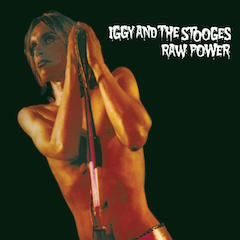
Iggy Pop was one of Cobain’s role models, with similarities in both music and attitude. Iggy was a demon on the stage, writhing on the floor, rolling around in broken glass; he was as an out of control force of ‘raw power’, destructive drug use and uncontainable energy. Cobain absorbed this persona into Nirvana, not least in their early gigs where anarchy and chaos were prevailing forces. Musically, of course, proto-punk machinery from Detroit also had an obvious effect on Nirvana. The Stooges – and Raw Power especially – are punk rock required reading.


kiss_destroyerKiss:
Destroyer (1976)
There’s an obvious superficial distance between the cynical, flannel-clad Seattle rockers’, and pyrotechnically-aided arena rock of four men dressed like superheroes. Yet Kiss was an integral part of growing up in the ’70s and ’80s, and they offered a sense of escapism to the misfit youth of the time. Like it or not, Nirvana has roots elementary school scribbles of Starchild. They recorded a cover of ”Do You Love Me” off of Destroyer, which also includes “Detroit Rock City” – later paraphrased as “Sub Pop Rock City” by Soundgarden. And as fate would have it, on a December’s day in 2013, Kiss and Nirvana were both inducted into the Rock and Roll Hall of Fame.


SEX PISTOLS_NEVERMINDSex Pistols:
Never Mind The Bollocks Here’s The Sex Pistols (1977)
With their first and only album, Sex Pistols sent shock waves into the establishment, catapulting punk into a mass movement that shaped culture and opened up opportunities for a new generation of artists in its wake – a similar effect to what Nirvana would repeat 15 years later. Could it be a coincidence that Nevermind and Never Mind the Bollocks… made their greatest mark not by shaping musical trends but in shaking the music industry and the cultural establishment? Both mark the boiling over point of an underground phenomenon – the beginning of a new era where the boundaries between alternative and mainstream became more porous. A game-changing work of its time and a killer plate of punk rock to boot.


cheap_trickCheap Trick:
Cheap Trick (1977)
‘I’ll be the first to admit that we’re the ’90s version of Cheap Trick or the Knack’ stated Kurt Cobain in his liner notes for the compilation album Incesticide. Cheap Trick had a penchant for British pop invasion (think The Kinks) which they used as the foundation for their fusion of power pop and hard rock, with a dash of punk. Their eponymous debut is chopped a bit rougher than their later more radio friendly sound. If you’re wondering whether Cobain was referencing the same Knack that produced the one hit wonder, “My Sharona”, you’d be right. In the Cobain biography Heavier Than Heaven Kurt meets up with a friend in 1988: ‘There’s this great record that I’ve discovered that you HAVE to hear. Kurt pulled out Get the Knack. Romero thought Kurt was being sarcastic, and inquired, ‘Are you serious?’ ‘You’ve got to listen to this – it’s an awesome pop album,’ was Kurt’s deadpan reply.’


neil_young_rust_never_sleepsNeil Young & Crazy Horse:
Rust Never Sleeps (1979)
‘It’s better to burn out than fade away.’ The stanza, taken from Neil Young’s “Hey Hey, My My (Into the Black)”, is the penultimate line of Kurt Cobain’s suicide not. Young would dedicate the entirety of his 1994 album Sleeps With Angels to Cobain. Like Iggy Pop, Young had been trying to contact Cobain shortly before he died. In Young’s autobiography, he writes: “I, coincidentally, had been trying two reach him through our offices to tell him That I thought he was great and he should do exactly what he thought he should do and fuck everybody else…” Neil Young was early to popularize the flannel shirt as the preferred rock uniform. The echo of his thundering guitar rang deep into the forests the northwest, earning him the title, ‘Grandfather Of Grunge.’


young_marble_giants_youthYoung Marble Giants:
Colossal Youth (1980)
Minimalist and magical: Young Marble Giants’ first album from 1980 is a something of a forgotten masterpiece, and it has its natural place here as a representative of the British post-punk that Cobain felt most at home in. Far from the angry, snot-nosed punk image his stage persona let on, Cobain shared much of their introversion, as well as their self-destructiveness. Together with their Scottish counterparts, The Vaselines, these Welsh were among Cobain’s most relatable artists. In an interview with MTV Brazil in 1993 Kurt Cobain underlines that he was ‘heavily influenced by them’ – less in sound than in terms of ‘their emotions, the feeling, the sincerity and their fantastic songwriting.’


flipper_genrericFlipper:
Album – Generic Flipper (1982)
Kurt Cobain could make a band cool by simply muttering their name in passing – as he did The Vaselines – or by sporting a concert T-shirt in public – as he did with his well-worn Flipper shirt. And glory to him for that – if there’s a band that deserves to be lifted out of obscurity, it’s Flipper. The San Francisco band’s epic debut from 1982 check’s every box in the rock handbook: rule breaking, destructive, infantile and reckless. Flipper slowly cranked their songs through a meat grinder, without fully knowing what would come out the other side. En route, they stumbled upon such punk anthems as “Sex Bomb” while blazing a magnificent trail to madness.


black_flag_my_warBlack Flag:
My War (1984)
As pioneers of American underground rock into the ’80s, and originators of the California hardcore sound, Black Flag is obvious primary school curriculum for Nirvana. On their later album, My War, the band took punk into a slower, heavier and more militant territory. This had a clear effect on bands like Melvins and Nirvana. Black Flag frontman Greg Ginn started the SST label in 1978, which went on to become one of the most important publishers of the ’80s – and a role model for Sub Pop’s rise some years later.


husker_du_new_dayHüsker Dü:
New Day Rising (1985)
New Day Rising marks an important transition for the power trio of Hüsker Dü. Without losing their frenetic power and strength, here they write pop-flavored melodies that shine through the layers of treble fuzz, albeit not overpoweringly. With a little more polishing, New Day Rising could have been the Nevermind of the ’80s. As Krist Novoselic admitted, ‘Nirvana’s blend of pop, punk and metal was nothing new, Hüsker Dü did it before us.’ From the same circuit and time period, it is also worthy to mention the parallel developments by The Replacements, Butthole Surfers, and Meat Puppets – all of whom were significant fertilizers for the ripening of Nirvana.


beat_happening_jamboreeBeat Happening:
Jamboree (1988)
Sub Pop rapidly grew into a multinational brand in the ’90s, but they initially came from a proud tradition of strong underground labels from the heyday of SST, Touch & Go – and K Records in nearby Olympia, Washington. K was formed in 1982 by Calvin Johnson, the frontman of Beat Happening. Lo-fi aesthetics dominated the label’s releases, casually produced by friends and acquaintances in the region, which helped chart course for the “alternative revolution” and the rise of indie rock as a mainstream phenomenon. Musically, there is a certain distance between the compact guitar rock of Nirvana and the more quirky indie pop of Beat Happenings, but the relationship can be illustrated by this quote from the band: ‘We are Beat Happening, and we do not do Nirvana covers. They do Beat Happening covers, so let’s get that straight.’


killdozer_twelveKilldozer:
Twelve Point Buck (1989)
Madison, Wisconsin band Killdozer ruled the 1980s underground, along with acts like Butthole Surfers, Laughing Hyenas, and Scratch Acid (pre-Jesus Lizard). Their slow, sludgy punk-on-downers sound distinguished them as early predecessors to grunge, especially for the periphery scene outside of Seattle. The band became known for its original and unexpected cover songs – such as a throaty rendition Don McLean’s “American Pie” – a talent Cobain and Co. also became known for after the live recording, MTV Unplugged in New York. They worked repeatedly with technician Butch Vig in Madison’s Smart Studios. As a result of hearing Killdozer’s 1989 LP Twelve Point Buck, Nirvana hired Vig to work on In Utero. After Cobain’s death, Killdozer also record 1995’s God Hears Pleas of the Innocent with Steve Albini.


dead_moon_graveyardDead Moon:
In The Graveyard (1988)
Barbarous garage rock has a long history in the Pacific Northwest, with bands such as The Kingsmen (“Louie Louie”) and The Sonics as key originators. Portland-band Dead Moon push forward this rich legacy and remind us that neither Nirvana, nor grunge as a whole, appeared from nowhere. Unlike Nirvana and the landslide that followed in their wake, the Dead Moon remained in the garage while the other left the scene in limousines. And there they still had it pretty good until dissolving in 2006.


pixies_surferPixies:
Surfer Rosa (1988)
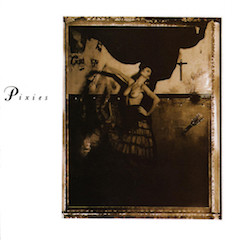
Telling the story behind “Smells Like Teen Spirit,” Kurt Cobain confessed, ‘I was trying to write the ultimate pop song. I was basically trying two rip off the Pixies.’ And indeed, Nevermind shares countless similarities with Pixies, in song structure and, notably, in the powerful soft-loud dynamics that Nirvana would further perfect. Sound engineer and producer Steve Albini was commissioned to produce In Utero as a result of his signature work on Surfer Rosa.


melvins_ozmaMelvins:
Ozma (1989)
Seattle rock’s anomalous emergence came out nowhere, and in a matter of years the city’s musical profile transitioned from a loser-like sense of coolness to streamlined factory for mass culture. But one band never changed. Melvins were heavier, stickier and gloomier than all the others – and they were among Cobain’s biggest musical influences, especially noticeable on Bleach. Melvins would later serve as role models for an even heavier, slower and more somber drone rock formulated by bands like Earth and Sunn O))). Melvins have definitely left a heavy imprint in the rock history books, and their first two albums are authentic sludge rock at its best.


Bjørn Hammershaug
Originally published on read.tidal.com October 12, 2014.

Eirik Wangberg: Mannen bak legendene

Foto: Linda McCartney

Foto: Linda McCartney

I februar 2013 hadde vi i daværende WiMP et større fokus på Paul McCartney i forbindelse med at hans albumkatalog i tiden etter The Beatles da ble tilgjengelig for streaming. De fleste kjenner til McCartney, men det få vet er kanskje at en nordmann var sentral i lydkulissene på flere av hans album, ikke minst på RAM (1971) som anses som et av Maccas definitive soloalbum.

Det kanskje enda færre har fått med seg er at Eirik Wangberg må være den nordmann involvert i flest kjente produksjoner – i hvert fall pre-Stargate. I tillegg til McCartney har han jobbet med artister som Brian Wilson, Diana Ross, Olivia Newton-John, Jackson 5, John Mayall, Donovan, The Turtles og The Mamas & Papas. Listen over de produksjonene som bærer Eirik ”The Norwegian” Wangbergs signatur er i det hele tatt imponerende lang. Dette intervjuet med den imøtekommende studiolegenden har nå fått ny aktualitet ettersom hans selvbiografi Mitt liv blant stjerner nå er ute.

Eirik Wangberg hadde allerede en karriere bak seg som medlem i Oslobandet The Cool Cats, sammen med blant andre Jan Rohde og Ole A. Sørli, da han i 1964 forlot Oslo til fordel for California for å studere. Der begynte hans karriere som lydprodusent, som raskt brakte ham til å jobbe med de store kanonene der borte.

– Jeg ville lage plater, og begynte først i Sverige, men ingen ville ha meg som artist. Så jeg bygde et studio selv, spilte inn og fikk gitt ut plate som Eirik Wangberg With The Noisemen i Stockholm – hos Polar Music. Jeg gjentok opplegget i California, og fikk etterhvert jobb i et proft studio i Nord-California. Der ble jeg teknisk leder i en alder av 21-22 år. Dette førte igjen til at jeg i Los Angeles kom inn i et topp studio og endte opp blant kremen av artister, forteller Wangberg.

Hva var din primære oppgave i studioarbeidet de første årene, da du er kreditert på utgivelser med bl.a Turtles, The Mamas & Papas og Buffalo Springfield?

– Jeg kom i gang i Sound Recorders Studio i Hollywood januar 1967, først som ’second engineer’, der jeg assisterte anerkjente Armin Steiner. Etter noen måneder begynte jeg å ha egne sessions. Med årene ble det mer og mer plateproduksjon, og jeg bar flere hatter. Jeg ble jo også kjent med artistene, og flere av de er jeg fortsatt venn med den dag i dag.

En av dine tidlige oppdrag var på SMiLE med Brian Wilson. Hvordan opplevde du å jobbe så tett innpå det musikalske og eksentriske geniet?

– Joda, jeg jobbet direkte sammen med Brian Wilson på flere sessions, hovedsakelig med låten ”Vegetables”. Det var sprøtt. The Beach Boys dro til super’n og kom tilbake med poser fulle av grønnsaker. Dernest tygde de takten til låten med diverse av disse. Det var rene galskapen – og hvilket søl! For å lytte til stereo måtte Brian snu hodet sitt frem og tilbake mellom venstre og høyre høyttaler, han har dårlig hørsel på det ene øret…

Sammen med Brian Wilson står Van Dyke Parks igjen som en av de virkelig store innovatørene fra slutten av 60-tallet. Hva kan du fortelle om hvordan det var å jobbe med lyd for ham?

– Van Dyke Parks er selvfølgelig et annet geni. Det var bare herlig og spennende å mikse lyder og musikk for ham. Som med Paul McCartney, lot han meg forbausende nok ordne dette alene.

Hvordan kom samarbeidet med Paul McCartney i stand?

– Jeg ble rett og slett anbefalt etter at han forlot New York for å fortsette og gjøre ferdig albumet RAM i Los Angeles.

Kan du kaste litt lys over hvordan det var å jobbe med ham?

– Det blir for mye å fortelle om i denne omgang, men kort sagt er han et geni utover alle grenser. Jeg er svært takknemlig for at han hadde så stor tillit, og f.eks. overlot arbeidet til meg med å sette sammen en samling radio RAM PR-spots, og det å velge ut låtene og rekkefølgen som ble det ferdige albumet. RAM er hans sterkeste soloalbum, nettopp fordi det ligger så tett opptil Beatles-perioden, og det skinner gjennom. Jeg gjorde i alle fall mitt beste i så henseende.

En av artistene Wangberg jobbet tettest med på 70-tallet var den svenske artisten Ted Gärdestad. Han produserte Teds Amerika-plate og fikk med Toto og de andre superstjernene:

– Ted Gärdestad var en av dem som fikk hjelp fra Steve og de andre Toto-medlemmene på slutten av syttitallet. Gärdestad var på samme plateselskap som Abba, Polar Music, som av naturlige grunner på denne tiden hadde store økonomiske friheter. I 1978, samme år som Toto ga ut sitt debutalbum, endte Gärdestad opp i Hollywood for å spille inn sitt første engelskspråklige album, Blue Virgin Isles. Ut av dette kom også Melodi Grand Prix-bidraget ”Satellit”, dog innspilt med svenske musikere. Men sjekk likheten med ”Hold The Line” fra det nevnte Toto-albumet.

Her kan det også nevnes at Eirik Wangberg selv var artist på Polar i 1964 med singlen ”I Left My Baby Behind”, plateselskapets femte utgivelse – og før ABBA.

Sett i ettertid, hva er det største musikalske samarbeidet du har vært med på?

Paul McCartney og Grease med John Travolta og Olivia Newton-John er de første jeg må nevne. Det er ikke så lett å avgjøre, Michael Jackson, Scott McKenzie og flere andre er jo også musikalske kjemper!

Fra en lydprodusents side, hvilken produksjon er du selv mest fornøyd med?

– Det er vanskelig å plukke ut en favoritt blant så mange ’barn’. Hva med musikk fra Paul McCartney, Beach Boys (”Vegetables”), Scott McKenzie (”San Francisco”), Skylark/David Foster (”Wildflower”, en egen produksjon), Alex (”I Love Warzawa”, også en egen produksjon), The Turtles (”Happy Together”), Spirit (”I Got a Line on You”, egen) og Grease… Nei, det er for mange gode innspillinger her til å ta en slik avgjørelse, jeg får bare lyst til å nevne flere. Vil du vite mer, så kan du lese biografien min!

Bjørn Hammershaug
Opprinnelig publisert på WiMPbloggen 04/2-2013

Outsider Music: Kultlegender og Eksentrikere

outsider_1200_3Dette er en hyllest til noen av anti-legendene i musikkhistorien. Enkelte har særegne og lite konvensjonelle musikalske uttrykk, noen har tragiske livshistorier som har overskygget deres karrierer og atter andre oversette eller glemte talent. Et gjennomgående begrep for de fleste av disse kan være ’Outsider music’, lansert på 1990-tallet av skribent og musikk-historiker Irwin Chusid. Han har viet store deler av sitt liv til å arbeide med musikk på utsiden av normen, definert av ham selv som ’crackpot and visionary music, where all trails lead essentially one place: over the edge.’ Her er over 20 artister som aldri gikk hovedveien, men som beriket (og beriker) musikkhistorien i langt større grad enn deres manglende kommersielle appell skulle tilsi

Hasil Adkins
hasil_adkinsHasil ’The Wild Man’ Adkins kom fra fjellsidene i West-Virginia, og startet med musikk på 50-tallet etter å ha hørt Hank Williams på radio. Han gikk ut fra at Hank spilte alle instrumentene selv, og Hasil startet dermed sitt ’one-man band’ som ble hans varemerke gjennom hele karrieren. Takket være entusiastene i Norton Records ble han til sin store overraskelse gjenoppdaget av et ’større’ publikum på 1980-tallet. Billy Miller i Norton minnes flere utrolige episoder med Adkins, mange samlet i høyt anbefalte Incredibly Strange Music vol. 1, som denne fra en opptreden på en klubb i New York: The ceiling fan was whirling around, making a creaky sound, and without missing a lick he reached down, pulled out a gun and shot it down – it was interfering with the song. Norton utga bl.a. samlealbumet Out To Hunch (1986) der vi finner signaturlåta ”She Said”. Hasil Adkins døde i 2005.

Lucia Pamela
lucia_pamela_240Lucia Pamela hadde en rik livshistorie. Hun rakk å bli kåret til Miss St. Louis i 1926, før hun dro til California for å drive en fornøyelsespark og startet der et av USAs første rene kvinneband (Lucia Pamela and the Musical Pirates – sammen med datteren, som for øvrig eide selveste St. Louis Rams). Mor var skuespiller, radiovert, men kanskje aller mest imponerende: I 1969, i en alder av 65 år, bygde hun en rakett og dro på rundreise i solsystemet, med innlagt stopp på månen for å spille inn sitt debutalbum. Denne space tripen ble foreviget med Into Outer Space With Lucia Pamela. Om albumet skal hun ha uttalt: ’It was recorded on Moontown. I was the only one from Earth there.’ I 1992 ble det re-utgitt av Irwin Chusid, og raskt en kultfavoritt. Lucia Pamela gikk bort i 2002, 97 år gammel.

Moondog
moondogThe Viking Of Sixth Avenue: Avantgarde-musikeren Moondog – født Louis Hardin – ble først kjent som et landemerke på Manhattan. Fra slutten av 1940-tallet til midten av 70-årene inntok den blinde og skjeggete mannen hver dag Avenue of the Americas for å framføre sin musikk og poesi. Kledd i en hjemmelaget drakt, iført sandaler og vikinghjelm var han utvilsomt litt av et syn på gata. Han kom seg etter hvert over til Tyskland og rakk der å få anerkjennelse som komponist og dirigent. Han ble også respektert i hjemlandet i sine senere år, og hadde en viss innflytelse blant moderne komponister og minimalister som Philip Glass og Steve Reich. Moondog var dessuten instrumentbygger, og stod bak harper han navnga Oo, Ooo-ya-tsu og Hüs (etter vårt eget ’hus’, hans interesse for norrøn kultur var stor). Moondog døde i 1999, 83 år gammel.

Moondog: More Moondog

Charles Manson
Charles Mansons navn vil for alltid være knyttet til hans ’familie’ og den blodige nedslaktingen av uskyldige mennesker i California på slutten av 60-tallet. Før Mansons liv tok dramatiske veier, var han en av solskinnsstatens mange håpefulle musikere, og kompis med bl.a. Dennis Wilson fra The Beach Boys. Albumet Lie: The Love and Terror Cult ble utgitt etter at Manson ble dømt for sine ugjerninger (inntektene av denne går til ofrenes familier), men består av låter innspilt i forkant av drapene. Her er bl.a. originalversjonen ”Cease to Exist,” som Beach Boys spilte inn som ”Never Learn Not to Love”, og ”Look At Your Game, Girl”, senere tolket av Guns N’ Roses.

Peter Grudzien
Peter Grudzien_unicorn_240Peter Grudzien fra New York oppdaget hillbilly-musikken på 1950-tallet, og inspirert av Hank Williams og Johnny Cash startet han på det som skulle bli en snodig karriere – laaangt utenfor allfarvei. Han fikk smaken på hallusinerende knask på 60-tallet, og utviklet etter hvert teorier om at myndigheten drev med aktiv klonevirksomhet (ikke nødvendigvis en sammenheng, men mulighetene er vel tilstede). Uansett, i 1974 utga han albumet The Unicorn, en kul miks av country og psykedelia. Surrealistisk hillbilly-rock med homsevennlige tekster gikk, ikke uventet, under radaren både i konservative Nashville-kretser og andre steder, og albumet forsvant ut i obskuritetens tåkehav. Det fortelles at Grudzien skal ha skrevet over 900 låter, og fremdeles venter på et gjennombrudd.

Larry ’Wild Man’ Fischer
wildman_fischer_600
Manisk depressiv og schizofren, Larry ’Wild Man’ Fischer – ’the godfather of outsider music’, hadde ingen lett vei inn i artistlivet der han vandret gatelangs i Los Angeles og solgte sine sanger til forbipasserende. Han ble oppdaget av Frank Zappa på et fortau, som tok ham til seg og i 1968 spilte inn hans debutalbum. Deres samarbeid ble brått avsluttet da Fischer pælmet en flaske noen centimeter unna hodet til Zappas datter Moon Unit. Fischers mest kjente bidrag til popkulturen er nok ”Go To Rhino Records” – Rhinos første utgivelse fra 1975.

Et par album tidlig på 80-tallet gjorde lite for å booste hans karriere, og Fischer svant ned i glemselens mørke – inntil han ble gjenoppdaget på slutten av 90-tallet, og opptrådde bl.a. på Jimmy Kimmel med låta ”Monkeys vs. Donkeys”. Larry Fischer døde i 2011, 66 år gammel.

Roky Erickson
Roky Erickson er en levende legende innen garasjerock/psykedelia – men også han med et trøblete liv som i stor grad har overskygget hans artistliv, og som gir ham en plass også på denne lista. Han slo gjennom med Texas-bandet 13th Floor Elevators i 1966 og låta ”You’re Gonna Miss Me”. Ericksons flørt med narkotika førte ham til et mentalsykehus (han sa seg utilregnelig for å unngå fengselsstraff etter at han ble tatt for en joint), der han ble erklært schizofren og utsatt for omfattende elektrosjokk-behandling i løpet av sine tre år bak sykehusveggene. Livet til Erickson – både som menneske og artist – ble lagt i ruiner, og han endte opp som en kulthelt blant de få mens han selv måtte klare seg på en spinkel trygd. Fra begynnelsen av 90-tallet ble han gradvis gjenoppdaget av en ny generasjon musikere og fans, og han fikk dessuten etterlengtet god behandling for første gang i sitt liv. I dag er han tilbake som en aktet og anerkjent musiker, dog noe redusert i adferden.

Wesley Willis
Wesley Willis døde i 2003, og ble bare 40 år gammel, men hadde ganske stor suksess som kultartist på 90-tallet. En svart, overvektig og paranoid schizofren outsider fra Chicago, Willis hadde aldri oddsene på sin side. Han ga ut godt over 50 album der han raljerte over temaer som bussruter, fast food og superhelter, og ble en favoritt for sine utagerende liveshows – særlig i Chicago-området. Noen gikk nok mest for å le av ham, men også mange fulgte ham på mer seriøst grunnlag.

Wesley Willis var for øvrig kjent for å alltid hilse folk med en real ’headbutt’, noe som resulterte i en kronisk flekk i panna. Ikke bare var en selv en tegner, han ble også foreviget i en utgave av Wonder Woman, utgitt på DC Comics.

The Legendary Stardust Cowboy

Psychobilly-pioner fra Lubbock, Texas. The Ledge, Norman Carl Odam, er en spaca cowboy som for alltid vil huskes best for sin første låt: ”Paralyzed” fra 1968 (med T-Bone Burnett på ville trommer) er en blanding av romreise, jodling, syretripp og rodeo som skaffet The Ledge 15 minutter i rampelyset. Der har han ikke vært altfor mye i årene etter. Men David Bowie var en svoren fan, og både spilte med The Ledge live og tolket en av hans låter: ”I Took a Trip on a Gemini Spaceship” (på Heathen).

Syd Barrett
syd_barrettSyd Barrett stod bak et av historiens aller største band, men forsvant etter hvert inn i et mer tåkete landskap enn den som førte til stjernene. Hans oppførsel innad i Pink Floyd, trigget av ekstensiv bruk av LSD, ble etter såpass merkelig at han måtte forlate bandet etter deres første album.

Barrett fortsatte som soloartist i noen år og ga ut et knippe psykedeliske klassikere, før han forlot det hele og dro hjem til Cambridge, hjem til mor. Han snakket ikke offentlig siden midten av 70-tallet, og viet resten av sitt liv til å male og stelle i hagen. Han døde i 2006.

Daniel Johnston
Daniel_JohnstonMusiker og tegner Daniel Johnston er en kulthelt blant både fans og ikke minst mange musikere som har trykket hans personlige, naivistiske poplåter til sitt bryst. Han startet sine hjemme-innspillinger på slutten av 70-tallet, og har holdt det gående mer eller mindre jevnt og trutt siden. Johnston har strevet hele livet med sine mentale problemer, men har også skapt en karriere som har hatt ganske så stor innflytelse, ikke minst innen indie/lo-fi. Han ble et nasjonalt fenomen da MTV fanget ham opp i 1985 (det var på den tiden MTV gjorde slikt), men mange ble nok først oppmerksomme på hans talent med den prisbelønnede og vellagde dokumentaren The Devil and Daniel Johnston (2005).

Tiny Tim
Tiny_TimEt særegent syn; to meter høy, flagrende hår, en gedigen nese og flamboyant stil. Tiny Tim spilte ukulele og sang falsett, og fikk en stor hit på slutten av 60-tallet med ”Tip-Toe Through the Tulips”. Det ble hans eneste smak av særlig suksess, og han tilbrakte resten av sin karriere med å spille på småsteder og jobbe på sirkus. Han ble gjenoppdaget på slutten av 90-tallet, blant annet opptrådde han på Conan O’Brien, men døde av hjerteinfarkt i 1996. På scenen, mens han sang ”Tip-Toe Through the Tulips”.

Jandek
jandekNotorisk kjent for sitt tilbaketrukne og hemmelighetsfulle liv, denne musikkens svar på J.D Salinger eller Thomas Pynchon. Det vi vet om ham: Født Sterling Smith, bosatt i Houston, Texas og har utgitt noe sånt som 70 album med særegen folk/blues siden slutten av 70-tallet. Han har gitt to intervjuer i sitt liv. Fram til 2004 var han knapt noe mer enn en anonym postboks, men da kom dokumentaren Jandek On Corwood (ref hans plateselskap) og han begynte så smått med å turnere i mindre skala. Uten at vi vet så mye mer om gåtefulle Jandek av den grunn.

Malinda Jackson Parker
malinda_jackson_parker_240Eksentrisk kongresskvinne fra Liberia med mildt sagt særegen pianostil og vokalbruk. Malinda Jackson Parker har blitt sammenlignet som en miks av Lucia Pamela og Nina Simone, og spilte gjerne Rachmaninoff mens hun sang/snakket om moskitos, kumelk og palmetrær.

På låten ”Cousin Mosquito #1” sier hun ’cousin’ intet mindre enn 204 ganger. Ubetalelig.


Skip Spence
skip_spence_240Nok en tragisk skjebne med store personlige problemer. Alexander ”Skip” Spence var medlem i band som Quicksilver Messenger Service, Jefferson Airplane og Moby Grape. Men i likhet med Syd Barrett forsvant han inn i syretåka, i likhet med ovennevnte Wesley Willis, Daniel Johnston og Wild Man Fischer led han av schizofreni, og i likhet med så altfor mange andre mentalt syke i USA endte han som hjemløs fram til sin død i 1999.

Hans kryptiske soloalbum Oar (1969) ble en gigantisk flopp i sin tid, men er rettmessig løftet opp til klassikerstatus med årene.

Eilert Pilarm
Eilert_PilarmSvensk Elvis-imitator som ikke sang spesielt bra. Og som ikke behersket engelsk så godt. Og som ikke lignet noe særlig på Elvis. Og som mest av den grunn i noen år ble enormt populær kultfavoritt her i Skandinavia.

Olga Marie Mikalsen
Olga_Marie_MikalsenSangerinne fra Langevåg som slo gjennom med et brak blant ironigenerasjonen midt på 90-tallet, da hun gjorde sin versjon av ”Hurra for deg…” Olga Marie Mikalsen debuterte i godt voksen alder, på slutten av 60-tallet, og framførte sin spesielle lyriske alt i noen av verdens store konsertsaler. Men for de fleste vil hun nok helst forbindes med en reklamefilm for Solo. Olga Marie uttalte at hun aldri øvde (’har man det, så har man det’), og skapte seg en karriere med akkurat det som utgangspunkt. Hun gikk bort i 2006, 91 år gammel.

Florence Foster Jenkins
I samme åndedrag: Florence Foster Jenkins var en velstående diva som ikke ble kjent for sine sangtekniske kvaliteter. Vi gir ordet til Carnegie Hall, der hun opptrådde én gang, rett før sin død i 1944: ’In order for a singer to succeed, they need to have a combination of talent, charisma, and interpretive quality. And, by definition, they need to be able to sing. Florence Foster Jenkins had none of these attributes. In fact, she was considered one of the worst singers of all time.’ I forlengelsen av denne harde kritikken må vi også ta med Jenkins’ positive vinkling på det hele: ’People may say I can’t sing, but no one can ever say I didn’t sing.’ Herlig.

Jack Mudurian
Jack_MudurianI 1981 var David Greenberg ansatt som pleier ved Duplex Nursing Home i Boston, der han ved en anledning overhørte en pasient ved navn Jack Mudurian som påsto at han kunne synge like mange sanger som Frank Sinatra. Minst. Greenberg tok ham på ordet, brakte med seg en opptaker og trykket record. Mudurian klarte å synge 129 sanger sammenhengende i løpet av 47 minutter. Opptakene ble utgitt i 1996, og det er unødvendig å si at albumet ble en instant kultfavoritt.

Alvin Dahn
Alvin Dahn, også kalt Dahn Halen, spilte inn kun ett album. Hans produsent oppsummer noen av hans kvaliteter: ’Alvin is good because he’s so very, very bad. He can’t sing certainly, but his music is very catchy and frightfully innocent and sincere.’

Bingo Gazingo
Tannløs slampoet og postmann fra New York som på sin eldre dager fikk et publikum i byens poesiklubber. The New York Times omtalte ham i 1997: ’Most evenings he can be found making his rounds in the East or West Village, dressed in a cheap, wrinkled suit, carrying a plastic bag full of props – an alarm clock, a can of sardines, a green plastic guitar and hundreds of tattered pages of lyrics that he has painstakingly composed over the last 10 years. And since his arrival on the amateur performance scene in the early 1990’s, many of those who have seen his indescribable act at the Wetlands, Fez, the Sun Mountain Cafe, Limelight and dozens of other clubs have doubted his sanity.’ Han døde i 2010, 85 år gammel, påkjørt av en drosje mens han visstnok var på vei for å opptre på Bowery Poetry Club.

Bjørn Hammershaug

Runddans: The Beginning and End of All Music

runddans_1200Runddans is the result of the rather unlikely collaboration between 1970s pop-wizard Todd Rundgren, space-disco pioneer Lindstrøm and free-spirited sound-magician Emil Nikolaisen of Serena-Maneesh. The foundation of this project was laid back in 2012, when Rundgren did a remix of Lindstrøm’s “Quiet Place To Live.” The three musicians met in a studio in Oslo that same year, and the music slowly mushroomed from there.

After three years of extensive work, patient correspondence and carefully building the sessions together, the album is now finished.

runddans_coverThe eponymous Runddans is a cosmic mix of soul, synth, pop and disco – meant to be enjoyed as one whole piece: 39 minutes of music, broken down into 12 parts and 4 sides of an LP. Journalist Paul Lester (Mojo, The Guardian) described the experience as ‘dense, complex, thrillingly intricate yet sweepingly emotional, here the original laptop kid and the Norwegian electronicists capture a long-lost time while also managing to sound utterly future-perfect.’

– Every time you listen to it, it seems to take a slightly different form in your head. There’s no way to absorb it all the first time you hear it, says Todd Rundgren, while talking about the album.

– It’s the kind of record where you’re never gonna get it all the first time. We wanted to have things in there to make people come back and get another aspect of it. I guess that’s one of the reasons why this project has been so important to me as well: music sometimes needs to be deconstructed as much as constructed.

With utter enthusiasm, he goes on: – I’ve characterized Runddans as the beginning and end of all music. It goes places that are extremely simple and primitive, and in other places there’s so much sound and glory happening, it can’t all be grasped in just one listening.

todd_wizardThe highly eclectic Rundgren, the most renowned of the three, has been active since the late 1960s, both as a musician and a producer. He rose to fame in the early 1970s thanks to magnum opuses like Runt (1971), Something/Anything (1972) and A Wizard, A True Star (1973). Through the ’70s and ‘80s Rundgren also gained a reputation as a prime producer, working on seminal albums like Meat Loaf’s Bat Out of Hell, XTC’s Skylarking and New York Dolls’ self-titled debut.

– I actually discovered him pretty late, admits Oslo-based electronica musician and producer Hans-Peter Lindstrøm.

As one of the forerunners of space disco and a part of the Oslo Disco scene alongside Todd Terje and Prins Thomas, Lindstrøm has worked high-profiled remixes for the likes of LCD Soundsystem, Best Coast and Roxy Music.

– I guess I initially picked up some of Rundgren’s albums in the cheap bins at used record stores, he says. Eventually I started to dig into his vast back catalog and discovered his unique qualities as an album artist. He was a pioneer in making really thorough albums, more than just some great songs. He represents an eclectic soup that I just love.

serena_maneeshEmil Nikolaisen, known as frontman to the indie-shoegazers Serena-Maneesh, as well as a heavy repertoire of production work, shared some of the same sentiments on Rundgren.

– I have always known about him, glaring at his well-known hits from a distance, says Nikolaisen. They were great, for sure, but as an adult I was lured deeper into the Garden of Rundgren-Eden of harmonies, purity and his joyous bittersweet sarcasm. His restless, stupid swirls and neck-breaking stunts side-by-side, drenched in an aesthetic that just went straight to my heart – that was what made me a fan.

Lindstrøm and Nikolaisen tell how they prepared a raw draft of music as a starting point, in order to be as efficient as possible with the few days they had with Rundgren in the studio.

Even though they had briefly crossed paths before, little could they imagine that this was the beginning of a three-year long process.

– We started out with just some improvisations the first day that we got together in the project, says Lindstrøm. I don’t think that we imagined that years later this would be the baby that results from that collaboration.

– I was coincidentally in Norway for another event, Rundgren explains, and we thought it would be nice to get together for a couple of afternoons, fool around and see what happens. That’s as seriously as we took it at that point.

Nikolaisen: – You know, eight chords around a piano in Oslo, feeling the vibes and dropping some loose ideas, made us draft some small but important sketches. Then it just escalated, out of proportion. Files were being tossed back and forth, briefly meetings, travelling, chaos, more ideas on the table, and then finally finding a structure and a conclusion on it all. I think the most important is to recognize the interplay in working together and always challenging each other.

All three of them separately emphasize how this was meant to be one piece.

lindstrom_smalhansLindstrøm tells how this was clear pretty early on: – I think we became aware of that early in the process. The foundation of music bites its own tail, so to speak, being repetitive and ascending at the same time. We understood that wasn’t a bunch of songs, but an exhaustive piece of music – an endless roundel.

Rundgren substantiates this point further: – What I like about it is the way you’re in certain place the one moment, and wind up in completely different place mere moments later. But you’re still riding the same wave all through it, he says. – It’s almost like a train ride, going through little towns, big cities and rural fields, giant thresholds over great valleys, through mountain tunnels and things like that. The only way I can characterize it is like this journey, and it’s of such a character that it doesn’t have the typical linearity to it.

– You lose track of time so much while listening. I guess that’s my favorite aspect about it: It kind of reminds me of some of my older records, records I’ve usually broken into tracks. That’s how I keep track of time. When there aren’t those kinds of typical breaks, the further along you go, the more you lose track of how long you been listening to it. It takes you out of the place that you’re in. Puts you in other space where time is not that important anymore.

He goes on to speak of his vocal contributions, and how they became a part of this greater project:

– After the first couple of sessions, we thought that we needed more vocals, words and other sorts of atmospheres for the listener to hang on to. And that became my mission of the project; to make sure that there was some sort of vocal presence. That is a touchstone element. You hear so many interesting and crazy sounds, but after a while you want something that is familiar and human to reground you. I see the vocals having that purpose. It wasn’t my only role, but it became a central role for me. And in retrospect, I think that is an essential element. Without that you would lose sense of not just time, but space as well, he says, expelling his typical friendly grin.

The utter enthusiasm around this whole project shines through all three of these gentlemen, clearly proud of what they managed to achieve together.

As Nikolaisen states at the end: – We were like a triangle hovering alone up in the galaxies, where no one knew what we were doing. We could just do our own thing, so this has just been … an incredibly mercurial feeling freedom.

Bjørn Hammershaug
Opprinnelig publisert på read.tidal.com, 30. mars 2015

Years & Years: Dance Music For Your Head

years_years_12002014 was a great year for London-based electronica trio Years & Years.

Climbing the charts with songs like “Take Shelter” and “Desire”, and playing featured artist on The Magician’s “Sunlight” and Tourist’s “Illuminate”, the group secured a deal with Polydor Records.

2015 will most certainly bring one of last year’s rising names closer to the stars: In January they won the highly prestigious BBC Sound of 2015, and they’re currently nominated for this year’s Brit Awards, held on February 25. With their shiny Y&Y EP out now, their debut full-length is set for release later this summer.

I caught up with the three talkative, cheerful chaps – Olly Alexander (vocals, keyboards), Mikey Goldsworthy (bass), Emre Turkmen (synths, beats) – for a coffee table chat that covered their growing recognition, being inventive, and their expansive interests in music, from modern dance to classic rock.

* * *

For some you’re still a pretty unknown act. How will you describe Years & Years for a new and curious listener?

Olly: We make electronic dance music that has bit of an emotional personality to it, music you can dance and sometimes cry to. [laughs]

So it’s music both for you head and feet, then. How’s the climate for thinking man’s electronic music in the UK these days?

Emre: It’s great, but I don’t think of music in terms of countries any more. With the Internet and stuff it’s really different now. Even when we were completely unknown we had people that listened to our music from Brazil, Mexico, Poland… Music is global, but London is definitely the place to be for us. It’s full of music and creativity, and it’s always alive.

How does that energy channels into your music, I mean, do you feel like you’re part of a scene or something?

Olly: Well, I don’t know. People come to London for a number of reasons. Mikey moved from Australia to London, I got here from the countryside and Emre has spent more time in the city, but we met each other because we all moved to London. I think that’s in itself is an example on how a city like London breeds creativity, and bands tends to form in those places.

I heard that you guys also bonded over a common fondness for Radiohead?

Emre: Yeah, that’s true. It’s not like we sound like them or anything. There are all kinds of things you pick up from bands without necessarily trying to rip them off sonically. But they’re cool, inventive and they change a lot.

We sound very different now from when we started, and hopefully we’ll sound different if we ever meet again in five years time. We get bored easily, spending all our money on gadgets. We spend it on gadgets, food and synthesizers. [laughs]

Are being inventive a key phrase for you?

Emre: Definitely. I think that if you are inventive, then you have a personality to your music. Music spurs expression and you want to express who you are. The three of us have come to a place where we all contribute different things to our sound and the way we make music. It’s really important that it’s us, so we always try to be involved with every aspect in what we do – be it music, videos, live shows, or whatever.

And it seems like you have done some right moves along the way. Congratulations on winning BBC Sound of 2015, in competition with Rae Morris, Kwabs, Soak and others. What did that award mean to you?

Olly: It’s really overwhelming. Before we won, I have always looked at the sound poll myself, knowing how prestigious and great it is being such a great component of new music and new talents; so even to be on the list was really exciting.

Since winning it has been a definite change. We made the news. We went from being a band that some people had heard of in the UK to being a band that people were talking about in the UK. But it doesn’t guarantee you anything winning an award like that. You have to make the most of the platform that’s given you. We are really grateful, but now it’s up to us.

You’re also nominated for the Brit Awards, as the Critic’s Choice for Breakthrough Act of the year – along with James Bay and George the Poet. How do you feel about that one?

Olly: It’s similar. We just have to thank when an institution backs you, saying, “we’re picking you, and we think you’ll be great”. It’s great but equally quite scary, with a pressure to deliver. But at least we get to go the awards and have us some cocktails at the party. And Madonna is coming! [giggles]

Has this pressure that you mentioned changed anything for you within the group?

Mikey: It hasn’t changed what we do or the way we do it. We’ve always been pretty self-sufficient in many ways. We make and play our own music, used to record at home and make our own videos. A great upside is that we get more people listening to what we do, meet cool people along the way, and see how they do it and maybe work with them. All this cool stuff we wouldn’t get on another level.

So it hasn’t changed what we do and the way we do it, but it has made us more conscious. We take it a bit more serious now. But not in a boring way. We’re actually thinking that we can be a really good band. [laughs]

You’ve have recently been working with artists like The Magician and Tourist. If you could choose your dream cast to work with, whom would you pick?

Michael: Current artists? I’d love to work with… Caribou.
Emre: Flying Lotus
Olly: Little Dragon

Your debut album is finished and will be released later this summer. What can you share, any new collaborations to expect?

Emre: No, not on the album – it has been an in-house operations. But yeah, it has all our singles on it, older songs together with brand new ones. We’ve been a band for a long time, and had lots of time to think about this album. You know what they say: it takes a lifetime to write your first; it’s the second one that’s hard. You can expect some energetic singles in there, but also some slower, more introspective numbers.

years_years_communionWhat’s your view on the album format? Do you think of it more like a set of songs in a row or do you consider the album more as one piece, a unique entity?

Olly: We made this collection of songs from the last few years that shares a certain sound, a similar idea that fits into a body of work. I guess most of the songs have a similar sound to each other, but then you’re becoming aware of something that might not fit with the album – but you need to have a body of work to know what that is.

Mikey: Yeah, it’s a different thought process. Before, we would never think of things that way, we just made music and didn’t have to consider whether it all fit in one body of work. Now we have to think about it as one album, and be a bit more precious. But it doesn’t have a specific theme or concept, so it’s certainly not a concept album.

Emre: And also, this is our debut, so hopefully as we progress we’ll find different ways of working and thinking, sonically or the way we write. We don’t ever want to do the same thing over and over again.

And sonically speaking, how will you describe the recording process?

Olly: We’re concerned about everything. We take care in every single detail of the production, and have been spending hours and hours to flick on just one note. But it’s your baby, right. The arrangements are as important as anything else in the creative process. But the most important is the song, though. Once you have that right, then you really can start having fun with it.

What do you write about?

Olly: Oh, it’s all about me and my life, he said selfishly. [laughs] You know, the classic themes of heartbreak and rejection. That’s all I know, really. Maybe I should try to write from a third person perspective, like the great storytellers. It’s not that common in popular music, being less immediate and difficult to master. Like John Lennon did. Or Tom Waits, he can tell a story. Bob Dylan. Nick Cave is a great storyteller.

You namedrop some classic artists here, you still buy albums?

Olly: Oh yeah, and we still pay for them! I actually just started buying a again, in order to enjoy to a full body of work.

So, you guys have any favorites?

[All together:]
Harvest by Neil Young.
In Rainbows by Radiohead.
What’s Going On by Marvin Gaye.
Until the Quiet Comes by Flying Lotus. Siamese Dreams. Grace. Innervisions. Ritual Union by Little Dragon. Blue. Off the Wall….

And the threesome just kept pumping out names as we left them behind at the coffee house table.

One day in the future, they might be name-dropped by a young band themselves. Until then, tune into Years & Years yourself.

Opprinnelig publisert på read.tidal.com, 19. februar 2015

Bjørn Hammershaug