 New York in the mid 1970s was quite possibly the most dynamic and vibrant music scene the world has ever witnessed.
In the midst of a broken city, where rising crime, frequent blackouts and piling garbage made up the scenery, artistic spirits from all over found a creative haven to express their own art. The city’s miscellaneous scenes also opened up for a multitude of constellations across different genres, embracing both the nihilistic and the hedonistic.
A cultural melting pot thrived in this urban wasteland, stirring up sounds never before heard, setting the bar for forward thinking music for decades to come – not to mention leaving some of the world’s greatest recordings in its wake.
In the middle of it all, Michael Zilkha, the affluent heir of a U.K. retail chain, and Michel Esteban, owner of an iconic Parisian concept store, willfully entered the zeitgeist and became crucial parts of it all – absorbing both the filthy no wave and punk rock from CBGBs and Max’s Kansas City, as well as the energetic and rhythmic underground disco from clubs like Paradise Garage and the Loft.
In 1978, Zilkha and Esteban founded ZE Records as an imprint to embrace both these trends.
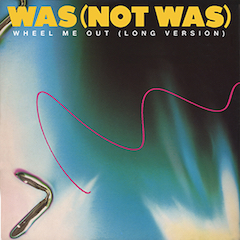 In just a few years they released significant and influential recordings by artists like Was (Not Was), Suicide, Kid Creole and the Coconuts, Lydia Lunch, James White (a.k.a. James Chance), Cristina, Lizzy Mercier Descloux and many others. The sound of ZE Records and the sound of New York are inherently linked. Both nourished the meetings of different genres, tastes and ideas – whether it was avant-garde, salsa, calypso or noise – blending it all into a hybrid of global grooves and urban decay.
Earlier this year Light in the Attic re-released Lizzy Mercier Descloux’s seminal debut record, Press Color, attracting renewed attention for both Descloux and ZE Records. We used the opportunity to Skype up with Michel Esteban, currently based in Thailand (and recovering from a broken collarbone due to a recent motorcycle accident) for a chat about ZE Records and his fascinating career, as well as French new wave, British punk, and of course the brilliant heyday of the New York underground and downtown scenes.

Was (Not Was)
Michel Esteban was far from a newcomer when he started up ZE Records with Michael Zilkha.
His Parisian store, Harry Cover, specialized in imported records, books and rock merchandise, and became an epicenter in the French capital for local new wave bands.
– Yeah, it turned into an important place for Parisian bands, so I soon became involved with music. We had a rehearsal place in the basement, and this band Marie et Les Garcons came to see me with a demo. And I just said, “Let’s release it as a single.” It was very simple. That’s how it all started; just as a fun thing at the beginning. I had no idea of distribution deals or anything; we just sold it from the shop and through mail order.
Esteban had at the time already spent some time in New York, writing for the Village Voice and covering the new sound as publisher of Rock News, writing about artists like Ramones, Television and Patti Smith, and connecting it with the bourgeoning downtown scene. He had previously published Patti Smith’s books, Witt and The Night, leading to a friendship with John Cale, who Patti introduced to him to while Cale was producing her iconic debut, Horses.
– I sent the Marie et Les Garcons’ demo tape to John in New York, and at that time such things took ages. But two-three months later he mailed back and said he’d like to produce their song “Re Bop” in New York.
 How will you describe the scene in New York back in those days?
– At that time, New York underground was like 50 or 100 people, and you always met the same people around. Most of the people you met at CBGB’s or Max’s Kansas City were in bands, or they were groupies or friends of the bands. Also, there were not too many places to go to.
– In such an environment it was only natural that Talking Heads opened up for The Ramones. Musically they were very different, but you know, that happened at CBGB’s. After the show everyone just hung out by the bar, all the musicians stayed there, and they were all more or less like friends, even though there were lots of differences between people. Things happen like that, and I don’t think then we realized it was of any importance.

Cristina
Did you sense that there was something new in the air?
– It was definitely something new, and definitely a break from the past, at least for a couple of years. It didn’t last that long. That’s why I call my upcoming book ‘Right Place, Right Time.’ It happened in the right place, at the right time. I don’t know why. Things go in circles, five years prior nothing much happened, and then it suddenly exploded, and lasted for three or four years.
– I was lucky enough to be there, and I was lucky enough to be in London and witness the beginning of The Sex Pistols, The Clash and the birth of British punk. I saw all their first gigs too. When Malcolm McLaren came into my shop in Paris he played me the demo of the Sex Pistols and asked me to come and see them in London the following month. It just happened.
What was your experience of New York the first time you arrived?
– It was just like expected, because I was such a big fan of New York. And New York for me was the films of Martin Scorcese and John Cassavettes, and the music of The Velvet Underground. So when I arrived in New York in 1974, I was in the film. When you went to Times Square in ‘74, it was not Disneyland, it was Taxi Driver.
– I’d been dreaming of New York for so long, and being 22, 23 at the time, for me it was a dream come true. It was a fantasy. But it was real. New York at that time was a very interesting place. It was bankrupt and violent, but lots of things happened. So for me it was just great.
From 1977 and onwards, Esteban started spending more time in New York than in Paris.
 Around that same time John Cale called and wanted him to join his new label, Spy Records. Spy was a joint effort between Cale, Esteban, Jane Friedman (John and Patti’s manager) and Michael Zilkha. The collaboration lasted just a few months, until Zilkha and Esteban decided to start their own label: ZE records. One of the early key figures in the ZE circuit was his then-girlfriend, Lizzy Mercier Descloux.
How did you meet up with her in the first place?
– It is a very romantic story. I lived on rue des Halles in Paris, where I had my shop in the basement and my apartment on the fifth floor. Lizzy lived right in front of my building. I saw her the first time on the balcony, and thought she looked like a, you know, a really lovely girl. She was always riding a bike, and parked it in front of our building. So one day I just put on a note, telling her she looked nice and asked if she’d like to drop by my shop. She came, and we stayed friends for 40 years.
Lizzy died of cancer in 2004, but left behind her a vast catalog of music and art. Together with Esteban, she became an integral part of Harry Cover and the Rock News magazine. She joined him over to New York and together they befriended people like Richard Hell and Patti Smith.
– [Lizzy] was very instinctive. She never wanted to be a professional or learn too much. In a way that was good, but that was also her limit. It’s great for the first album; when you’re fresh and want do discover everything – even if the professional musicians and the studio say no. So, in the beginning it’s a quality, after a few albums… it’s not a quality anymore. You have to learn things in a way. But she was like that, more of a poet than a singer and musician.

Lizzy Mercier Descloux
Descloux followed these instincts on her debut album, Press Color, recorded over just a few days in February 1979 at Bob Blank’s legendary Blank Tapes studio.
– We came into the studio without one song. We had two ideas: doing cover versions of “Mission Impossible” and “Fire.” That’s it; the rest came in the studio just playing with the musicians.
What are your thoughts on ‘Press Color’ today?
– I still love it, because I can still see in detail how everything happened. And 35 years later people not even born at the time love it, and I’m amazed to read all the wonderful reviews, like when Pitchfork recently gave it a Best New Reissue. Great! I’m not gonna complain! But if you had asked me that question in 1979, I’d be like “Come on, we won’t care about this music in 35 years.” But it’s still there. And people enjoy it, so I guess we did something right.
 During its existence ZE developed into an independent and varied entity with a particular esthetic line, covering the arty New York underground scene and the strong individualities that composed it.
At the height of their powers, ZE was hailed as “the best independent record label in world” by Melody Maker, and “the world’s most fashionable label” by The Face. Their influence on modern music is indisputable.
As Spin wrote a while back, “Like all great independent imprints, ZE took chances on oddballs nobody else would. And on the dance floor, at least, it had hits. These have been compiled in countless sequences over the decades, and their influence still echoes through contemporary music – from M.I.A. to Buraka Som Sistema, LCD Soundsystem, Electric Six, Ke$ha, Scissor Sisters, K-Pop, and New Orleans sissy bounce.”

Kid Creole and the Coconuts
Ze released a steady stream of landmark releases, including James White and the Blacks’ Off White (1979), Lydia Lunch’s Queen of Siam (1980), the eponymous debut by Was (Not Was) (1981) and The Waitresses’ “I Know What Boys Like” (1982) – just to name a few.
 Are there any of your own releases you hold especially dear?
– Oh, there are lots of them. I really like Kid Creole and the Coconuts, Material, Lizzy, Cristina, the second album by Suicide is really good. I absolutely love their song “Dream Baby Dream.” You know, we only did albums with people we liked, absolutely not in a music business sense with promotion, expectations and all that. We just did it! Fortunately we had money, and we had a good distribution deal with Chris Blackwell and Island Records. But basically we were just kids wanting to have fun.
You mentioned Suicide and the notorious Alan Vega. Did you become friends with him?
– Well, not exactly friends. [laughs] But obviously we knew everybody. You know, Michael [Zilkha] was the son of a billionaire, which is very rare in the music business, while I had some money from my shop. We literally were the two people with money. We were the bank to people whose life was very difficult in New York at the time. So that relationship was a bit strange, and something especially Michael had to manage when a guy like Alan Vega came up and demanded money. But we managed, and looking back 30 years later I think we did pretty good.

Suicide
How will you describe the relationship between you and Michael?
– Almost everything we did was something we really wanted to do. Some ideas were mine, some were Michael’s work, and I was not crazy about all of them. We were different. I’m French, so even if I speak English I cannot read Shakespeare in English. Whilst Michael was raised in England, he went to Oxford and he was more into lyrics than me.
– I was into the music. The first records I bought as a kid – by The Beatles, Stones or Beach Boys – I didn’t understand a fucking word. It was all about the music and the spirit of the words. Michael read the lyrics first. He signed Davitt Sigerson for example, because he loved the words. I was not too crazy about the music, but that was his thing. And that was OK too.
What are your views on the music being made today?
– Look, I’m 64 years old. I’ve been listening to music since I was 10. I’ve been listening to so much music; it’s very difficult to impress me. When I hear new music I often say, “well, it’s not bad, but it reminds me of this or that,” you know? Listening to stuff that reminds me of music I’ve already experienced doesn’t really excite me.
– What excites me today is when I listen to something I haven’t heard before. Now I listen to lots of hip-hop music, there’s some productions there that’s just… wow! I’m not crazy about the lyrics and the melodies are sometimes not there, but on the production side there so much great stuff. For me, that’s new. I like a recording that says, before this there was something, after this there’s something else. I like albums that changes things, like what Massive Attack or Björk achieved in the ’90s.

James Chance, 1980. (Photo: Edo)
Do you feel ZE Records has gotten its due recognition?
– We never cared about that when we started. It was all about just doing it. When the album is done, it’s done. Of course you’re happy if it sells and gets good reviews, but there’s nothing else you can do. It’s done, and you did it the best way you could at that time. I enjoy good reviews, but there’s nothing to do about it.
– Neither Michael nor me were looking for big success or recognition, we were interested in what we wanted at that time. Same thing as now: I’m living on a paradise island, just doing what I want to do. And to me that’s the most important thing about life. The rest – success, glory, money – if it comes, okay, but don’t sacrifice anything for it.
In 1982 Michel Esteban left New York and ZE Records to pursue other solo adventures, while still working with music as a producer.
Michael Zilkha closed down ZE Records two years later, in 1984, but in 2003, Esteban relaunched the imprint, which has released more than forty albums since 1978.
Bjørn Hammershaug
(first published on read.tidal.com, October 2015)
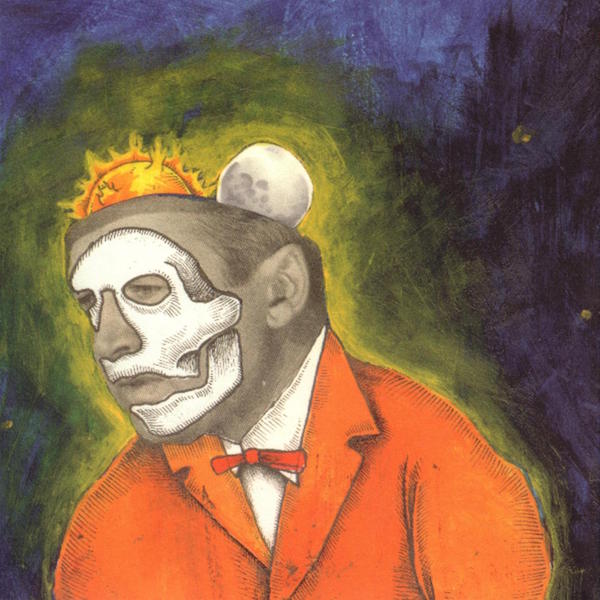
 When it comes to rendering outstanding album artwork, few have proven so consistently capable as William Schaff.




 Chuck Prophet will forever be closely linked to his less than 10-year stint in the seminal Paisley Underground outfit Green On Red.
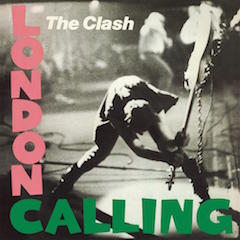 The Clash
 Kelley Stoltz
 Big Star
 J.J. Cale
 Lou Reed
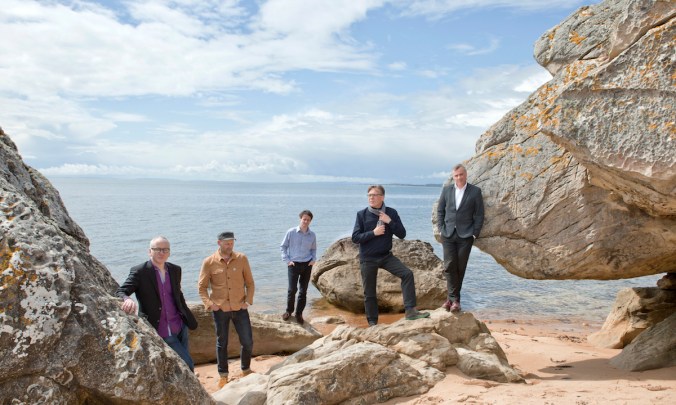 Kurt Cobain once supposedly called them “the best band in the world,” while a slightly more sober Liam Gallagher ranked them as merely “the second best band in the world” (after Oasis, of course).
 In either case, Scotland’s own Teenage Fanclub is well worth knowing. Surpassing waves of slacker rock, Britpop and power-pop while managing to influence numerous generations of indie bands despite their cult status among connoisseurs of classic pop music, TFC is one of the most celebrated, cherished and simultaneously overlooked U.K. bands of the last 25 years.
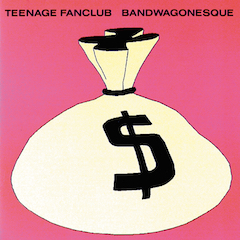 With their breakthrough album Bandwagonesque released just a year later by way of Alan McGee’s legendary Creation Records things really started to come together for the band. Immediately praised upon release for its exceptional take on power-pop (think The Beach Boys, The Byrds, Big Star), Bandwagonesque was to be found atop many of the year’s best of polls, with Spin Magazine even placing it ahead of landmark albums like Nevermind, Loveless, Out of Time and Screamadelica at #1.
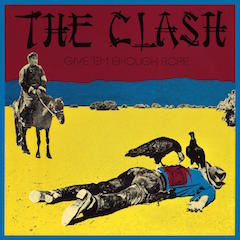 The Clash:
 Y
Y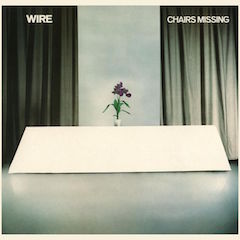 Wire:
Wire: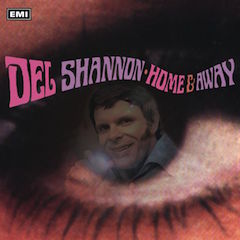 Del Shannon:
 The Kinks:
 In the mid-2000s, Eckman founded Dirtmusic with Hugo Race (Nick Cave and the Bad Seeds) and Chris Brokaw (Codeine, Come). What seemed at first to be a desert band rooted in the US frontier tradition soon transformed into something else when they hooked up with Tuareg band Tamikrest while on a trip to Mali. Says Chris Eckman in our interview: “I had listened to a fair amount of African music and reggae and dub in the early 80’s and I found myself increasingly returning to that. And then I went to Mali to travel in 2006, and that sealed the deal. After that there was no looking back.”
 What motivated you to launch the label in the first place?

 What’s next for Glitterbeat?
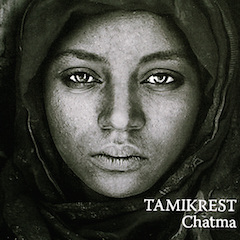 Chatma
 Soutak
 Hologram İmparatorluğu
 Gjermund Larsen Trio: Reise
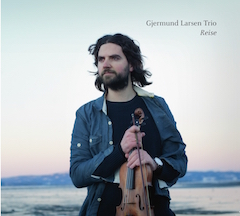 Gjermund Larsen (fele), Sondre Meisfjord (kontrabass) og Andreas Utnem (trøorgel, piano) innledet det som nå har blitt en trilogi med å melde sin Ankomst (2008), fulgte opp med Aurum (2010) og signaliserer at de fremdeles ikke har tenkt å slå seg til ro. Gleden over debuten og oppfølgerens finslipte formuleringer er naturligvis ikke like sterkt tilstede, overraskelsesmomentet mindre fremtredende. Det trenger ikke bety så mye, med mindre fornyelse er den viktigste forutsetningen. Reise skiller seg ikke nevneverdig ut fra forgjengerne, men kvaliteten i materialet er fremdeles av den mest slitesterke typen – særlig når de er på sitt mest dvelende og poetiske. Gjermund Larsen Trio har lykkes med å forene ulike disipliner, og ut av det skape noe høyst personlig og egenartet.
 Før Kacey Musgraves ga oss Same Trailer Different Park (2013) hadde hun tre selvutgitte album bak seg, vært deltaker i talentkonkurransen Nashville Star (en country-variant av Idol), og skrevet låter for Miranda Lambert og Martina McBride.
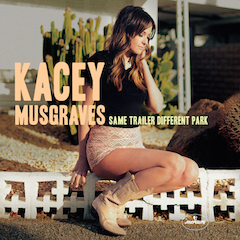 Men det var først med major label debuten Same Trailer Different Park at det virkelig tok av for supertalentet fra Sulphur Springs, Texas. 12 glitrende countrylåter og et sett vittige, rørende og ikke minst skarpe observasjoner sentrert rundt småbylivets gode og dårligere sider er nøkkelen til at Kacey Musgraves kan regnes blant dagens store countrystemmer. Skiva gikk rett inn på andreplass på Billboard (#1 på countrylistene), er nominert til det som er av countrypriser i hjemlandet og med en påfølgende turné på begge sider av havet.


 Diligently recording and releasing unique music since the mid ‘70s, Half Japanese is an American outsider music institution, one that represents the true embodiment of cult heroes.
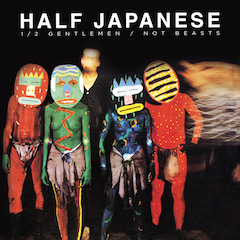 The band’s official recording career began with a characteristically ambitious triple album, 1/2 Gentlemen/Not Beasts (1980), later chosen by Rolling Stone as one of the top 100 most influential alternative albums of all time. Over the years, Half Japanese have faithfully released music at a tremendous pace, as Half Japanese, as solo artists and in numerous additional collaborations. And aside from David Fair, who handed over the duties to his brother in the early 1980s but has made occasional guest appearance over the years, the band features the same members who have been at Jad’s side since the late ’80s and early ’90s: John Sluggett (guitar, keys, timbales), Gilles-Vincent Rieder (drums, percussion, keys), Jason Willett (bass, keys), Mick Hobbs (guitar, glockenspiel).
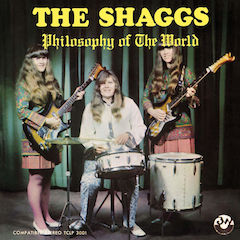 The Shaggs:
 Daniel Johnston:
 Tompkins Square is the small but highly-respected label out of San Francisco. Founded and largely run alone by Josh Rosenthal, the young indie imprint is most renowned for their exquisite sense of quality and their deep diggings into the forgotten crates of 20th century American music.
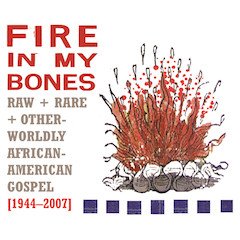 They have shed new light on old artists like Robbie Basho, Charlie Louvin and Tim Buckley, also releasing new artists like Hiss Golden Messenger, Daniel Bachman and James Blackshaw. In just a decade Tompkins Square has also earned a well-deserved reputation for their archival collections, such as the Grammy-nominated box set People Take Warning! Murder Ballads & Disaster Songs, 1913-1938 and the fantastic gospel collection Fire In My Bones!: Raw + Rare + Otherworldly African-American Gospel, 1944-2007

 Did you have an initial idea back then on what the label should be and how it could evolve in the future?
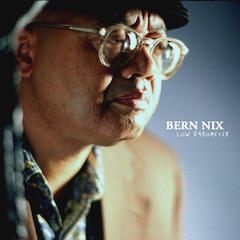 Guitarist Bern Nix’s album Low Barometer was one of the first albums I recorded. Bern played with Ornette Coleman, and I used to see him around my neighborhood in the East Village. His harmolodic approach to guitar is fascinating and he is a giant of improvisation. Like Derek Bailey, not always the easiest listen, but a very satisfying one if you put yourself to the test.
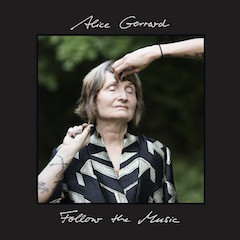 Sharon Van Etten emailed me cold in 2009 and told me to check William out. I didn’t know who she was at the time, it was a random email. So I signed Will, and then he told me about Hiss Golden Messenger, who I signed, and then Michael Taylor from HGM produced Alice Gerrard’s album, Follow The Music, which got Alice her first Grammy nom at age 80. All from one email! His LP [Behold The Spirit], with its sweeping arrangements, changed the game for acoustic guitar records. Everyone who follows the American Primitive genre knows this by now.
 Before punk, there was the pub. Unlike their American counterparts, the British punk scene mainly evolved from pub rock. Developing in the early 1970s, pub rock followed a straight path rooting back to 1950s and ’60s no-nonsense rock ‘n’ roll and rhythm & blues. Disdaining the glitz and glam of the era in favor of a much more back-to-basics approach to rock, it was not limited to one certain style, and just as happily embraced ragged folk, country, funky soul and other musical expressions fit for tight and sweaty club nights.
 Because pub rock was mainly a phenomenon based around live experiences it centered around legendary London clubs like The Hope & Anchor, Dingwalls, the Nashville and the Tally Ho. Spearheaded by acts like Dr. Feelgood, Eddie and the Hot Rods and The 101’ers (Joe Strummer’s first band before The Clash), the lines between pub rock and punk rock are blurred at best, with The Vibrators, The Stranglers, Ian Dury and Elvis Costello serving as prime examples of the transcending artists of the scene.
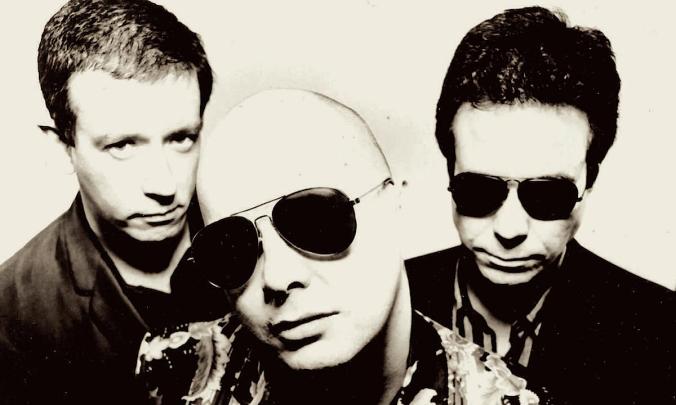
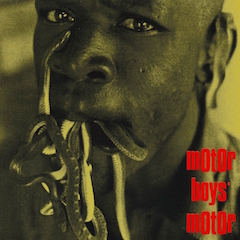
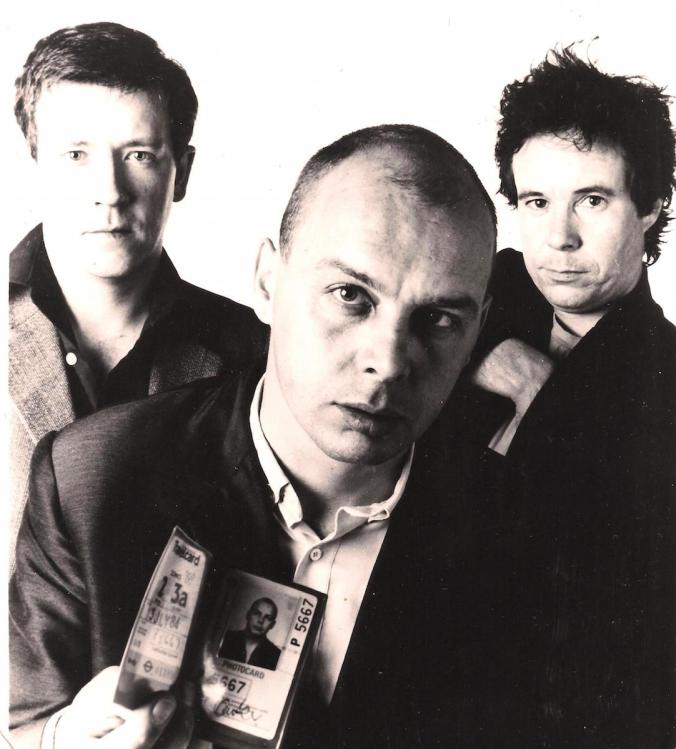
 Screaming Blue Messiahs rose from the ashes of Motor Boys Motor (named after a 101’ers tune). The now obscure, but superb band only released one sole album in 1982, exposing a crew owing debt to the likes of Bo Diddley, Little Richard and Captain Beefheart. With some adjustments to the line-up, the smokin’ trio was finally settled as the highly skilled outfit of Bill Carter on guitar and vocals, Chris Thompson on bass and Kenny Harris on thundering drums. Soon after they were renamed the Screaming Blue Messiahs and found a natural place to call home in the excellent and wildly eclectic Big Beat label, one known for pushing rock in all shapes and forms (rockabilly, mod, hillbilly, blues, rock ’n’ roll, ’60s soul and much more).
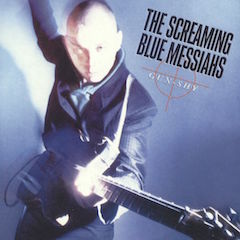 Gun-Shy hit the record stores in early 1986 and segmented the band’s status as both critical darlings and live favorites. Following the release of Gun-Shy the band did some extensive touring in Europe, North America (with The Cramps), Australia and New Zealand.
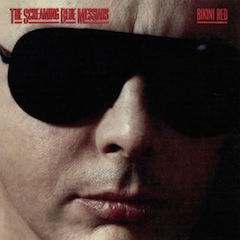 They were met again with positive reviews, even though the release itself was a bit haltered due to the lack of the same sort of extensive touring that followed their debut. But support then came from unexpected places, including when David Bowie, on several occasions, stated that “an angry mob from London” known as the Screaming Blue Messiahs was “his pet project.” His admiration led to a couple of support gigs along his ongoing Glass Spiders tour in the UK. Then, in 1988 they reached a commercial peak as “I Wanna Be a Flintstone” hit the charts, introducing them to a more mainstream audience.
 The Big Beast