Slagr: straum, stile (Ozella, 2011)
Stille vann, dyp bunn
Andrei Tarkovskys Solaris (1972) er et psykologisk drama sentrert rundt omstendighetene på en romstasjon, en utenomjordisk vakker og hallusinerende film som etter gjentatte ganger setter seg langt inn i marg og bein. Slagr er den norske folkemusikkens ekvivalent til Tarkovsky. Deres debut Solaris (Nor-CD 2007) var et svært vellykket forsøk på å utforske de “lange linjers musikk” – eller dronemusikk om du vil. Preget av minimalismen (tenk Steve Reich, LaMonte Young) og med bakgrunn i tradisjonsmusikken, abstraherer Slagr de fleste av folkemusikkens bumerker og beveger seg fremdeles langs andre linjer enn de mest utforskede. Mer opptatt av klanglige farger enn melodiske strukturer skaper de kammerfolk med enkle virkemidler: Hardingfele (Anne Hytta), cello (Sigrun Eng) og vibrafon (Amund Sjølie Sveen) er den uvanlige, men effektive kombinasjonen.
Spor 2 på straum, stille er også titulert “Solaris”, og slik kan Tarkovskys filmatiske uttrykk atter en gang overføres på den norske trioen. Meditativt og grasiøst skaper de noe hinsides denne verden. Med dvelende tilnærming i langsomme, nesten drømmeaktige sekvenser møter de oss med det talende titulerte åpningssporet “Drifting Out Of Sleep”. Titler som “Quiet Rain” og “First Frost” beskriver atmosfæren i det som foreligger, innspillingen i Sofienberg kirke (av Nils Økland) underbygger ytterligere en katedralsk stemning som preger hele platen.
straum, stille består i hovedsak av innadvendt og kontemplerende materiale, som sikkert vil bli for stillestående for enkelte. For dette er mer sansemusikk enn dansemusikk, som kommer best til sin rett i et par gode hodetelefoner. Det er å anbefale å gi Slagr denne sjansen, sjansen for en berikende opplevelse i retur er stor. Bare en sjelden gang blir det mer straum enn stille, som i pågående “April” med sin krysning av av norske folketoner og post-rock.
Men det er ikke krusningene Slagr er mest opptatt av, det er understrømmene.
De har nok en gang levert en nydelig plate, der Tarkovskys blikk mot kosmos liksom vendes til en indre reise, og reflekterer noe dypt originalt – og dypt urnorsk.
Bjørn Hammershaug Opprinnelig publisert i bladet Folkemusikk i 2011
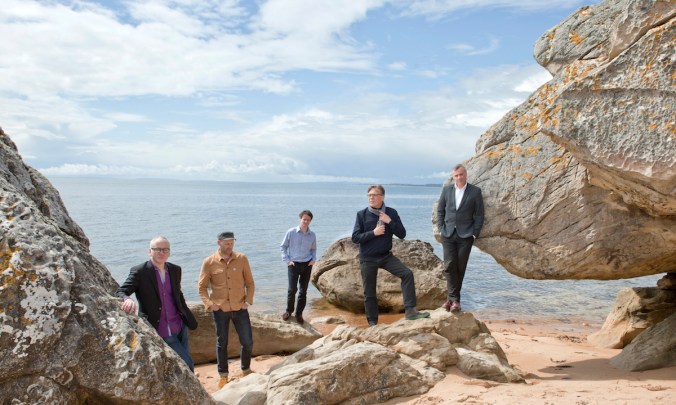
Kurt Cobain once supposedly called them “the best band in the world,” while a slightly more sober Liam Gallagher ranked them as merely “the second best band in the world” (after Oasis, of course).
In either case, Scotland’s own Teenage Fanclub is well worth knowing. Surpassing waves of slacker rock, Britpop and power-pop while managing to influence numerous generations of indie bands despite their cult status among connoisseurs of classic pop music, TFC is one of the most celebrated, cherished and simultaneously overlooked U.K. bands of the last 25 years.
Though they could easily rest on their laurels, ‘the fannies’ are back at it again with their first new album in six years, one already praised by critics and fans alike. Here has been described by as Uncut as ‘maybe their best this millennium; a triangulation of mature soppiness, mitigated contentment and indelible tuneage.’ Meanwhile, Pitchfork points out how their music has evolved over the years as a long and stable love affair propelled by intimacy, comfort, and shared admiration, describing the album as ‘a series of quiet revelations, the kind of thoughts you have in moments of clarity, surrounded by people you love.’
Teenage Fanclub emerged out of the town of Bellshill, near Glasgow, flourishing in the local jangly indie scene alongside wonderful bands like BMX Bandits and The Soup Dragons. Their noisy album debut, A Catholic Education (1990), is commonly considered a predecessor to the coming grunge craze.
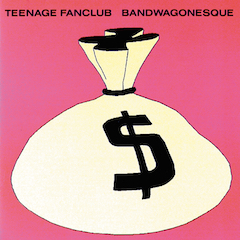
With their breakthrough album Bandwagonesque released just a year later by way of Alan McGee’s legendary Creation Records things really started to come together for the band. Immediately praised upon release for its exceptional take on power-pop (think The Beach Boys, The Byrds, Big Star), Bandwagonesque was to be found atop many of the year’s best of polls, with Spin Magazine even placing it ahead of landmark albums like Nevermind, Loveless, Out of Time and Screamadelica at #1.
Though they didn’t achieve the same commercial success with their underrated follow-up Thirteen (1993), TFC were far from history. Grand Prix (1995) and Songs From Northern Britain (1997) stand as pillars not only in their catalog, but also in the annals of ‘90s pop music. In the years since they have continued to explore new terrain, evolving as a band while still staying true to the formula of classic and elegant pop craftsmanship. Working with cult icon Jad Fair (Words of Wisdom and Hope, 2002), Tortoise’ John McEntire on Man-Made (2005) and flirting with various styles within their loose framework over the years, the band in question is still very much alive and well and potent as ever.
Here is described as a record that embraces maturity and experience and hugs them close while expertly consolidating nearly three decades of peerless songwriting amongst the band’s three founding members: Norman Blake, Raymond McGinley and Gerard Love. Long story short, Here marks but another victory for a seasoned act that’s still considered a cult band despite the fact that they ought to be rightfully praised as pop kings.
We invited main spokesman Norman Blake for a round of our series 5 Albums That Changed My Life.
* * *
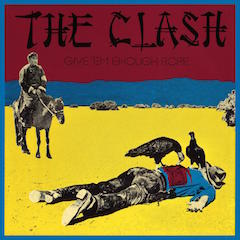
The Clash: Give Em’ Enough Rope (1978)
I could have picked anything by The Clash but this was the first record that I bought with my own money. Brilliant songs and it still sounds incredibly fresh and relevant.
Yo La Tengo: Painful (1993)
We toured with Yo La Tengo when this album was released 23 years ago. Very fond memories of hearing these songs every night on the tour. We ended up covering “I Heard You Looking.” Yo La Tengo are still good friends.
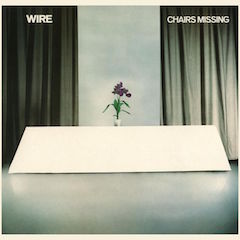
Wire: Chairs Missing (1978)
Wire were the most idiosyncratic band plying their trade in the UK in the late 70’s. There is no one quite like them and their music is instantly recognizable. They could be abstract and angular on a song like “Another The Letter,” and then write the most sublime pop song in “Outdoor Miner.” Brilliant album.
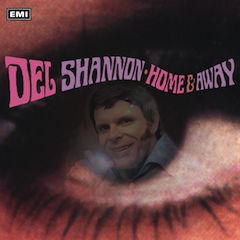
Del Shannon: Home & Away (1967/2006)
Recorded in 1967 but unreleased until 1978. Produced by Andrew Loog Oldham. Del’s best and most interesting album, and completely overlooked at the time. I suppose they thought that at 33, Del was past his best. Loog Oldham’s orchestral arrangements are beautiful as is Del’s voice.
The Kinks: The Kinks Are The Village Green Preservation Society (1968)
Ray Davies is a master songwriter and this is his masterpiece. Brilliant melodies with great lyrics. Nuff’ said. If you’ve never heard this album, do yourself a favour and purchase a copy immediately. God save the Village Green.
Bjørn Hammershaug
Opprinnelig publisert på read.tidal.com, september 2016
Chris Eckman has been on a musical quest his whole life, restlessly walking untrodden paths from the Pacific Northwest to the African desert and beyond.
His lifelong journey is paved with passion, not fame and fortune. A career marked by open-mindedness and praiseworthy craftsmanship on all levels, whether as a highly underrated singer and songwriter, producer or label manager. It’s an honor to present the musical world according to Mr. Eckman and to talk specifically about his exciting work with the label Glitterbeat – a home for vibrant global sounds. But first, we need to introduce him properly.
Chris Eckman rose to fame in the 1980s as one of the core members of the beloved and now defunct Seattle rock band The Walkabouts. Together with his main band partner Carla Torgerson, The Walkabouts started out combining introspective jangle pop with dark and moody folk rock on brilliant albums like Scavenger (Sub Pop, 1990) and New West Motel (Sub Pop, 1993). The band gradually expanded their sonic palette, widening their musical horizons to encapsulate a more cinematic sound while simultaneously conjuring “European elegance” on albums like Devil’s Road (1996, recorded with Warsaw Philharmonic Orchestra) and Nighttown (1997). reminiscent of the musical landscapes of Tindersticks, Nick Cave and Leonard Cohen.
Eckman & Torgerson also started up the mainly acoustic offshoot Chris & Carla, a project following somewhat in the footsteps of their mother-band as equally at home playing with anyone from Greek folk musicians to members of R.E.M and Camper Van Beethoven. In the early 2000s, Eckman relocated to Ljubljana, Slovenia, and has kept more than busy on European soil as a solo artist and producer, making music for films and more while also working with the somber trio Distance, Light & Sky.
In the mid-2000s, Eckman founded Dirtmusic with Hugo Race (Nick Cave and the Bad Seeds) and Chris Brokaw (Codeine, Come). What seemed at first to be a desert band rooted in the US frontier tradition soon transformed into something else when they hooked up with Tuareg band Tamikrest while on a trip to Mali. Says Chris Eckman in our interview: “I had listened to a fair amount of African music and reggae and dub in the early 80’s and I found myself increasingly returning to that. And then I went to Mali to travel in 2006, and that sealed the deal. After that there was no looking back.”
Enamored with his experience, Chris Eckman finally formed the Glitterbeat label in 2012 together with Peter Weber (former manager of Tamikrest and head of the German imprint Glitterhouse) in order to release records that embrace both evolving global textures and localized roots traditions. In their own words: Glitterbeat specializes in vibrant global sounds from Africa and beyond.
Though Glitterbeat only just released their first album back in 2013, the label has already established itself as a noted home for music originating from outside of the Western hemisphere as a result of releasing albums by the likes of Tamikrest, Aziza Brahim (Western Sahara), Noura Mint Seymali (Mauritania), Bassekou Kouyaté (Mali) and Bixiga 70 (Brazil). The label has won the WOMEX Label Award in 2016, 2015 and 2014 to date.
* * *
Chris, can you please offer a brief history of Glitterbeat and how it came to life?
My band Dirtmusic went to Mali in 2008 to play the famous Festival au Desert, which used to take place deep in the Malian desert every January. My Glitterbeat partner Peter Weber came with us and during that brief trip we met a young Tuareg rock band called Tamikrest. That changed everything. Peter ended up managing Tamikrest and signing them to his other label Glitterhouse and Dirtmusic and I returned to Mali in 2009 to record a collaborative album with Tamikrest called BKO.
Peter and I returned to Mali a couple more times to produce records, and from those experiences we began to develop an idea to make a label dedicated to this fabulous music we were encountering and working with.
What motivated you to launch the label in the first place?
I think the motivation was, in part, that we thought we could do a bit different type of label. A label that embraced global musics as contemporary sounds and not as decidedly folkloric or traditional or “other.”
Of course, some labels had taken similar approaches in the past but we thought there was room for a fresh take on that idea. Also we wanted to fight hard to have our artists featured beyond specialist “world music” media outlets. In fact, we consciously never use the words “world music.” We feel there are too many biases built into that term at this point.
There is no reason that artists like Tamikrest or Noura Mint Seymali or Aziza Brahim shouldn’t be featured in rock magazines or on portals that usually cover indie or experimental music. We certainly have proven this is possible, or should I say, our artists have made that possible. They of course make the music that crosses these borders.
What other labels, if any, where role models or guiding stars when you started up, and why?
Certainly Real World has been groundbreaking and influential. They did so much to introduce global sounds into the western consciousness. Also I really admire the fearless approach of smaller imprints like Sahel Sounds and Sublime Frequencies. Both of those labels have a very punk rock attitude. They are not obsessed with watering the music down; in fact, they celebrate the rawness. I think they helped to create an essential reset of people’s expectations about global music.
Too often the approach had been to market genteel, coffee-table versions of ethnic music. Some of the newer labels have worked hard to overturn all of that. We certainly align ourselves with this new turn.
Gaye Su Akyol (Ali Güçlü Şimşek)
What does Glitterbeat represent or stand for as an institution?
Hopefully we will always be more or less non-institutional. Hopefully we will always be taking chances and obsessed with new ideas.
What, in your opinion, is the greatest achievement in the history of Glitterbeat thus far?
I think making it through the first year was a big thing. We didn’t know if we were going to eventually release 3 records or 30. We started with a very open concept. By the end of 2017, we will have released 50 records.
But I think the biggest accomplishment has been to create a place that artists want to be a part of. That feels really satisfying. The more it feels like a family, rather than a cold and calculating business, the more we are satisfied. And I think at the level we are at, that is also good business sense. It is a very chaotic and quick changing industry and the more connected and supportive we all are; the better the chance is that we will collectively survive.
What makes you decide whether or not to work with an artist and/or release an album?
The first criteria are really simple: do we love the music and do we think it is music that stands apart from the crowd – is it luminous? Is it undeniable? After that we start asking business questions, but there are more fundamental questions than whether or not we think it will sell. Lots of strange music has sold in reasonable quantities.
But average music doesn’t stand much of a chance to surprise. We try and stay away from average.
What attracted you to music outside of the Western Hemisphere in the first place?
I think it in part came from an exhaustion with the deluge of western music that all starts to sound the same. Heavily codified genres that spend a lot of time cannibalizing the past. I had listened to a fair amount of African music and reggae and dub in the early 80’s and I found myself increasingly returning to that.
And then I went to Mali to travel in 2006, and that sealed the deal. After that there was no looking back.
Samba Touré (Philippe Sanmiguel)
Where, in your opinion, are the most interesting areas of the world for music today?
I think the flame is burning hot in many places right now. The African urban music scene is growing fast and is, for the first time, regularly turning out both hip-hop and electronic sounds that have their own regional vibe. Global and local at the same time. That is a scene that is going to grow fast in the next years and will become every bit as influential on the direction of music as scenes in Berlin, Los Angeles or London are.
Are there any undiscovered territories that you’d like to discover further?
It is hard to talk about “undiscovered” territories in the 21st century – we are all so inter-connected that even the most remote regions are tapped into the global conversation.
But certain musical regions are better documented than others. I recently heard some ritualistic music from the Banga people who live deep in the desert of Tunisia. It sounded completely new to me. It sounded like something I would like to hear more of.
What’s next for Glitterbeat?
At least for now, it seems we have too many ideas as opposed to not enough. Our release schedule for 2017 is already filled up. Look for new releases from Tuareg rockers Tamikrest, a fabulous career-spanning compilation from Turkish psych-pioneers Baba Zula, a new futuristic Arabic roots album from Tunisia’s Bargou 08 and a wild, punchy new album from King Ayisoba from Ghana. And that takes us to April 1st. It is going to be another busy year.
Where can folks experience your music in the near future?
On TIDAL of course, but also via LPs and CD. We are still committed to putting out physical music, at least for now. And, of course, many of our bands are on tour. In the winter Baba Zula will be doing a big European tour and Tamikrest will follow in April.
* * *
We asked Chris Eckman to select and annotate a couple albums that tell the story of the label:
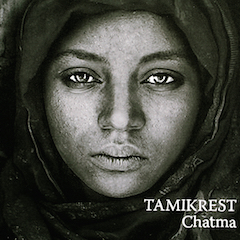
Chatma Tamikrest (GBLP 007, 2013)
This was the album that really helped to get us off the ground. My Glitterbeat partner Peter Weber and I met Tamikrest in the Malian desert at the famous Festival au Desert several years ago. That meeting in a sense created the whole idea of idea of Glitterbeat, and it was incredibly satisfying that some years later we were able to release this beautiful, innovative album.
Soutak Aziza Brahim (GBLP 008, 2014)
Aziza Brahim is a deeply political artist. Here artistic voice is entirely dedicated to the struggle of the displaced Saharawi people, who call Western Sahara their home.
I have produced both of her Glitterbeat albums and Soutak had an unprecedented run of three months at #1 on the World Music Charts Europe.
Arbina Noura Mint Seymali (GBLP 038, 2016)
This is Noura’s second album, and along with her first, Tzenni, it is certainly an international breakthrough for Mauritanian music, music that until recently has been all but unknown outside of the country.
Noura performed on the Syrian National Musicians tour this past summer at the invitation of Blur’s Damon Albarn and Arbina has been on a slew of year-end best-of-2016 lists (The Wire, NPR, Mojo, The Quietus, Uncut ect.).
Hologram İmparatorluğu Gaye Su Akyol (GBLP 040, 2016)
Gaye is a young Turkish singer who lives in Istanbul. She is in equal measure influenced by Nirvana and the legendary Turkish innovator Selda Bagcan. Glitterbeat released her first international album in November and the response has been phenomenal.
Her music, in part because of its surrealistic and psychedelic motifs, is seen as a potent critique of Turkey’s current political moment.
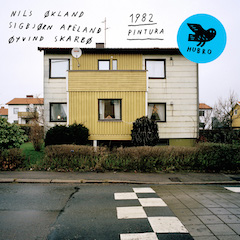
1982: Pintura (Hubro, 2011)
Omslaget til trioen 1982 viser igjen hverdagslige, realistiske bilder fra hvorsomhelstnorge, men musikken som skjuler seg innenfor er langt fra like tilforlatelig. Det er noe som rører seg bak gardinene. La oss kikke inn over potteplantene.
1982 kan plasseres i kategorien ’moderne improvisasjonsmusikk’, i seg selv et relativt grenseløst territorium. Med Nils Økland på hardingfele henvender de seg for eksempel inn i folkemusikalske kretser og bør ha umiddelbar interesse for leserne av herværende magasin. Men det er ikke folkemusikk vi har med å gjøre, ikke i tradisjonell betydning i hvert fall. 1982 er en fristilt kammertrio med den sjeldne kombinasjonen trøorgel/Wurlitzer (Sigbjørn Apeland), trommer (Øyvind Skarbø, født 1982) og altså fele/fiolin ved Økland. Mye av spenningsfeltet på Pintura ligger nettopp i instrumenteringen, mer enn at det nødvendigvis skjer direkte nybrottsarbeid med selve tonespråket.
‘Pintura’ betyr vel noe slikt som ’maleri’ på spansk, og her strykes det på med de fineste pensler. 1982 er en organisk og dynamisk enhet, med vekslende temperatur bringer de ørsmå detaljer opp i lyset og bygger opp til intense sammenstøt med like uanstrengt lekenhet. En del naturlige forutsetninger ligger til grunn for at dette har blitt en såpass vellykket: Vi har å gjøre med noen durkdrevne musikere, Apeland og Økland har sågar gjort ting sammen i nærmere 20 år, og med den musikalske tryggheten i ryggmargen våger de tre å møtes, utfordre hverandre og skape noe genuint sammen.
Mye av nøkkelen til å lykkes med et slik prosjekt ligger i denne tilnærmingen, som hviler både på en estetisk trygghet, håndverksmessig erfaring og stor musikalitet – men også at de involverte trives sammen. Det virker det som de gjør her. Som så ofte med god fri improvisasjon er den umiddelbare opplevelsen større enn noe konkret sluttresultat, men dette fungerer også som et album å lytte til.
Pintura er lett å høre på og bør være relativt lett å få utbytte av – men et godt sett hodetelefoner anbefales for maksimalt utbytte.
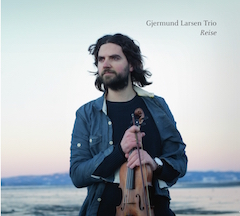
Gjermund Larsen Trio: Reise (Heilo, 2013)
Folkemusikk for de som ikke elsker folkemusikk: Gjermund Larsen Trio har med sine tre album gjort sitt for å bryte ned det som er av trangbodde skott. Folk, pop, samtid, jazz og klassisk smelter – nærmest bokstavelig talt – sammen i hendene på denne trioen. Det er da heller ikke sjangerbåsenes innsnevrende krefter som virker her, snarere den frie utfoldelse som opphøyes, og så lett, så lett inviteres vi med på nok en betagende reise inn i det vide landskapet.
For det høres lett ut når vi danser oss inn i velkomsten ”Reiseslått”, lettbeint og lekent, men det ’enkle’ i denne musikken er ikke ensbetydende med lettvint eller simpelt. Gjermund Larsen Trio er tuftet på dyp musikalsk forståelse og med en iboende åpen holdning som aldri blir insisterende eller virker å være i villrede. Dette er musikk som går inn i øret, tar plass i sjelen – og blir værende.
Gjermund Larsen (fele), Sondre Meisfjord (kontrabass) og Andreas Utnem (trøorgel, piano) innledet det som nå har blitt en trilogi med å melde sin Ankomst (2008), fulgte opp med Aurum (2010) og signaliserer at de fremdeles ikke har tenkt å slå seg til ro. Gleden over debuten og oppfølgerens finslipte formuleringer er naturligvis ikke like sterkt tilstede, overraskelsesmomentet mindre fremtredende. Det trenger ikke bety så mye, med mindre fornyelse er den viktigste forutsetningen. Reise skiller seg ikke nevneverdig ut fra forgjengerne, men kvaliteten i materialet er fremdeles av den mest slitesterke typen – særlig når de er på sitt mest dvelende og poetiske. Gjermund Larsen Trio har lykkes med å forene ulike disipliner, og ut av det skape noe høyst personlig og egenartet.
Folkemusikk for de som ikke elsker folkemusikk? Gjerne det. Og det er ikke negativt ment. Musikk for de som elsker musikk? I aller høyeste grad.
Unni Løvlid: Lux (Heilo, 2013)
Unni Løvlid tilhører ingen klasse, hun er en egen klasse.
Det har gått fem år siden Rite, en høyst vellykket fusjonering av folkemusikk, elektronika og samtidsmusikk. Nå er hun tilbake, og igjen viser hun seg som en artist hinsides det konvensjonelle, som streber etter det åndelige og som griper det ugjennomtrengelige.
Lux er en målingsenhet for lysstyrke, én lux er definert som månelys. Nattens dunkle glorie. Lys og mørke er gjennomgangstemaer på dette albumet, og da særlig overgangen fra lys til mørke. Lux rammes inn av en kort trall og en vuggesang, men er ellers en ferd inn i nattens og dødens rike, men også troens og håpets. ’Dagen viger og gaar bort/luften bliffver tyck og sort’ er de første, besnærende ordene som møter oss, som et anslag for det som kommer. Det tekstlige materialet er hentet fra rike kilder; salmediktere, religiøse doktriner og barokkdiktning. Tonene er også nennsomt plukket fra de gamle tradisjoner, folketoner fra hjembygda Hornindal, Selje og Sogn. Men det som kommer ut av dette er langt fra tradisjonelt.
Løvlid har denne gangen samarbeidet med Håkon Thelin (Poing, Oslo Sinfonietta) samt glassduoen Randi-Merete Roset og Liv-Jorun Bergset (fra Draup). Med effektiv og minimalistisk tonesetting av konstante uromomenter underbygges mystikken og den mørke stemningen, og den gir platen en vital puls. Over det hele, Unni Løvlids klare, klangrike stemme, i seg selv er en lysfontene, skaper balanse til både tekstene og musikken. Hun kan nok være hakket for insisterende i sine fraseringer i mine ører, men det er en smakssak. Hennes kvaliteter som sanger tør være ubestridte, jeg skulle likevel gjerne applaudert enda større spillerom for bare musikken her. Den er fantastisk.
Håkon Thelin poengterer noe viktig i sin fine albumtekst, der han blant annet skriver: ’Til tross for Unni sin ofte langsomme og sanselige kommunikasjon av tekstene, forblir melodiene glødende, som om ordene hører til på jorden og melodien strekker seg inn i en himmel fylt med lys.’
Hvor mange album kan man egentlig si noe slikt om. Lux er nok en kunstnerisk seier for Unni Løvlid, en fryd for øret til deg som lytter og noe av det mest magiske du kan forvente på et album i 2013.
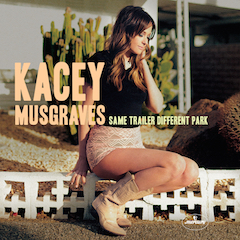
Før Kacey Musgraves ga oss Same Trailer Different Park (2013) hadde hun tre selvutgitte album bak seg, vært deltaker i talentkonkurransen Nashville Star (en country-variant av Idol), og skrevet låter for Miranda Lambert og Martina McBride.
Men det var først med major label debuten Same Trailer Different Park at det virkelig tok av for supertalentet fra Sulphur Springs, Texas. 12 glitrende countrylåter og et sett vittige, rørende og ikke minst skarpe observasjoner sentrert rundt småbylivets gode og dårligere sider er nøkkelen til at Kacey Musgraves kan regnes blant dagens store countrystemmer. Skiva gikk rett inn på andreplass på Billboard (#1 på countrylistene), er nominert til det som er av countrypriser i hjemlandet og med en påfølgende turné på begge sider av havet.
– The last few months and even year has been such a beautiful whirlwind. So many things have happened that have already blown my mind. I can’t wait to keep going on this journey I’m on. Det sier Musgraves da jeg spør henne hvordan hun selv har opplevd den siste tidens plutselige opptur.
Det er helt naturlig å plassere henne som en streit countryartist. Men hun trekker også mot andre uttrykk, og toucher innom både singer/songwriter, klassisk pop og rockabilly. Hun sier da også selv at hun lar seg inspirere av musikk fra alle steder og alle genre, men nevner spesielt Glen Campbell, Loretta Lynn, John Prine, Willie Nelson og Ryan Adams som viktige for henne – samt, kanskje noe uventet, band som Cake og Weezer.
Selv om musikken til Musgraves er iørefallende nok, er det særlig tekstene som skiller henne ut fra mange av sine samtidige. Hun åpner med å våkne opp ’on the wrong side of rock bottom’ og penser innom referanser til dop, drikking og tilfeldig sex i sine betraktninger der småbyen er bakteppe og dens innbyggere spiller hovedrollene. Kritikernestor Robert Christagu mente at Musgraves er ’the finest lyricist to rise up out of conscious country since Miranda Lambert, if not Bobby Pinson himself’.
Det kan være relevant å nevne Loretta Lynn i den sammenheng. Hun ankom Nashville på 60-tallet og ble berømt for tekster som for mange var uhørt på den tiden. Når Musgraves dro til countryhovedstaden noen tiår senere fikk hun oppmerksomhet for å ta opp lignende tematikk.
– I really respect Loretta Lynn for having the courage to come out with controversial songs when she did. She pulled it off in a sassy, intelligent way and has paved the way for artists and writers like me to say what we wanna say. I’m proud to be a part of that mentality – blending elements of traditional country and modern ideas, sier Musgraves da jeg trekker opp denne parallellen.
Det ser likevel ut til å være et mer tolerant miljø i dag, mens country-radio fremdeles er mer konservative i forhold til hva de spiller?
– Country radio’s conservatism, thankfully, hasn’t affected the message that I want to put out in the world. It excites me that so many people are open to my music.
’Water and electric and a place to drain the septic / Any KOA is A-OK as long as I’m with you’ (”My House”)
Dine observasjoner og beskrivelser av livene til ordinære folk fra små steder ser ut til å falle deg naturlig. Hvordan arbeider du fram dine historier, og hva hvor kommer de fra?
– I find inspiration in almost everything. Conversations, things I see, things other people I know have gone through or things that I have gone through. It starts with something simple and then the idea – if it’s a good one – builds and builds. Most of my messages are observational, I feel.
Du kommer fra østlige Texas, en region som har gitt oss så mange store artister, fra George Jones, Johnny Horton og Lee Ann Womack til Miranda Lambert. Hva er det i vannet der borte, egentlig?
– It might be because there’s nothing else to do! Haha, I’m not quite sure but it’s cool.
Det er det, og Kacey Musgraves er en naturlig del av denne rike tradisjonen. Vi gleder oss til å oppleve henne her i Norge, noe Musgraves selv gjengjelder:
– I’m excited to see the beautiful nature that Norway has to offer. Meet the people, eat the food, or at that point maybe just sleep, ler hun.
Beste låt du har hørt live:
“Ghost In This House” – Alison Krauss
En låt du selv skulle ønske at du hadde skrevet:
“You Were Always On My Mind” – Willie Nelson
Beste låta å bli forelsket til:
“At Last” – Etta James
En perfekt låt for en perfekt lørdagskveld:
“Southern Nights” med Glen Campbell — eller “Royals” av Lorde
Dette intervjuet ble foretatt i september 2013, og ble opprinnelig publisert på WiMPbloggen i forbindelse med hennes første konsert i Norge (John Dee, 3. oktober 2013).
— If you want it to be fast, play fast. If you wanna go slow, go slow. That’s all there is to it, it’s that easy to play guitar. Some people worry about chords and stuff, and that’s all right too. There are all kinds of music in this world. — Well, you do need chords in order to plug the guitar in, but that’s pretty much it.
Diligently recording and releasing unique music since the mid ‘70s, Half Japanese is an American outsider music institution, one that represents the true embodiment of cult heroes.
With Hear the Lions Roar (Fire Records, 2017), their 16th full-length studio effort to date, the underground icons have once again garnered widespread critical acclaim, celebrated for conjuring that same urgency and vitality first heard on record four decades ago.
Of the band’s most recent work, NPR states: “[The album] bolsters that Half Japanese tradition, with 13 diverse, attention-grabbing tunes that rival the band’s ’80s classics such as Charmed Life and The Band That Would Be King. Amid hard-riff jams, swinging ditties, lovelorn ballads and other catchy gems, Jad persistently breathes life into the Half Japanese repertoire, once described by his brother as ‘monster songs and love songs.’”
The Half Japanese story could easily be titled ‘songs about monsters and love.’ Brothers Jad and David Fair first started out playing as Half Japanese when their parents relocated from Michigan to Uniontown, Maryland in the 1970s. Half Japanese was then born in their bedroom in spite of the fact that the Fair brothers had little to no idea about how exactly to play their instruments. Instead, they enthusiastically hammered out homemade tunes peppered with humor, energy and innocence, with lyrics frequently concerned about horror flicks, monsters, tabloids and women.
It’s been said that they were heavily inspired by the abstract expressionism of Jackson Pollock. As such, and as a direct equivalent to Pollock’s form of action painting, Jad and David Fair relied more on their raw thirst for creation rather than on their technical shortcomings. They are rightfully considered to have spearheaded both the lo-fi and D.I.Y. movements, thereby foreshadowing a great deal of what the indie rock scene would come to explode in the ‘90s.
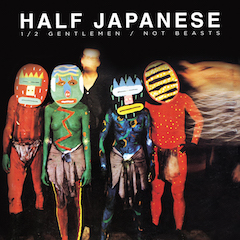
The band’s official recording career began with a characteristically ambitious triple album, 1/2 Gentlemen/Not Beasts (1980), later chosen by Rolling Stone as one of the top 100 most influential alternative albums of all time. Over the years, Half Japanese have faithfully released music at a tremendous pace, as Half Japanese, as solo artists and in numerous additional collaborations. And aside from David Fair, who handed over the duties to his brother in the early 1980s but has made occasional guest appearance over the years, the band features the same members who have been at Jad’s side since the late ’80s and early ’90s: John Sluggett (guitar, keys, timbales), Gilles-Vincent Rieder (drums, percussion, keys), Jason Willett (bass, keys), Mick Hobbs (guitar, glockenspiel).
They’ve never come close to breaking into mainstream but have consistently followed their own artistic vision all along, enjoying support from bands they’d influenced like Sonic Youth, Beat Happening, Yo La Tengo, Neutral Milk Hotel, and, of course, Nirvana. Kurt Cobain ranked them among his very favorites, chose them to open for Nirvana on the In Utero tour and was even wearing their T-shirt when he died.
Proudly to introduce the latest work from these underrated art-rockers with a round of 5 Albums That Changed My Life, answered by the one and only Jad Fair.
* * *
‘It’s difficult to choose the 5 albums that had the biggest impact on me,’ admits Fair. ‘There are so many albums that I’ve played over and over and over again. The five albums I chose are…’:
The Stooges: Fun House (Elektra, 1970)
I grew up in Michigan and I thought I was in the best place in the world for music. We had The MC5, Motown and The Stooges. I bought Fun House when it first came out and played it more than any other album I had. I loved its energy. I think it’s a perfect album.
The Shaggs: Philosophy of the World (Third Word, 1969)
I was given a cassette tape of Philosophy of the World in 1977 and was blown away by it. The music is great and the lyrics are sweet and pure. I was surprised to later find out that The Shaggs always used music sheets. Two years ago Dot Wiggin released a new album and asked me to do the cover art. I was thrilled to do it.
The Modern Lovers: The Modern Lovers (Beserkley, 1976)
I first heard about The Modern Lovers in 1974. Interview magazine had an interview with Jonathan Richman. The interview struck a chord with me. He was doing what I wanted to do. I bought the Modern Lovers album in ’76 and loved it. Everything about it is spot on. Jonathan is one of my favorite songwriters and performers. Excellent times ten.
Daniel Johnston: Hi, How Are You (self-released, 1983)
Half Japanese had a tour of the U.S. in 1986. At a show in Austin Daniel Johnston’s manager Jeff Tartakov gave me a tape of Hi, How Are You. While on tour we played it more times than any other album. Daniel is an amazing songwriter. I started writing to Daniel and was able to record with him in 1990. I’m so lucky to have Daniel as a friend.
Captain Beefheart and The Magic Band: Trout Mask Replica (Straight/Reprise, 1969)
My brother David had all of Captain Beefheart’s albums. Trout Mask Replica is an album I immediately flipped for. The Magic Band had a sound all their own. It was like nothing else I had heard. The blues roots were solid yet they took it to another level. The musicianship is top-notch.
Tompkins Square is the small but highly-respected label out of San Francisco. Founded and largely run alone by Josh Rosenthal, the young indie imprint is most renowned for their exquisite sense of quality and their deep diggings into the forgotten crates of 20th century American music.
Growing up in Long Island (fun fact: Together with Judd Apatow), Rosenthal was weaned on a rich musical diet, beginning with fellow Long Islanders Billy Joel and Lou Reed. As a teenager he interned at PolyGram Records, and subsequently worked at a major label for 15 years before venturing out to found his own label, Tompkins Square, in 2005.
They have shed new light on old artists like Robbie Basho, Charlie Louvin and Tim Buckley, also releasing new artists like Hiss Golden Messenger, Daniel Bachman and James Blackshaw. In just a decade Tompkins Square has also earned a well-deserved reputation for their archival collections, such as the Grammy-nominated box set People Take Warning! Murder Ballads & Disaster Songs, 1913-1938 and the fantastic gospel collection Fire In My Bones!: Raw + Rare + Otherworldly African-American Gospel, 1944-2007
Celebrating its first ten years in 2015 – not to mention a total of seven Grammy nominations so far – Tompkins Square just rereleased the cheekily-titled anniversary compilation, 10 Years of Tompkins Square: Some That You Recognize, Some That You’ve Hardly Even Heard Of. Josh Rosenthal also recently wrote the book, The Record Store of the Mind. Part memoir, part music criticism, he ruminates over unsung music heroes and reflects on thirty years of toil and fandom in the music business.
In his glowing recommendation of the book, legendary producer T Bone Burnett writes, ‘Josh Rosenthal is a record man’s record man. He is also a musician’s record man. He is in the line of Samuel Charters and Harry Smith. In this age where we have access to everything and know the value of nothing, musicians need people like Josh to hear them when no one else can.’
I talked to Rosenthal about Tompkins Square at ten, favorite moments from along the way and lessons learned after three decades in the music business.
The Old South Quartette
* * *
How did you get into the music business in the first place?
I recount a lot of this stuff in my new book, The Record Store of the Mind. I worked at a high school radio station in the ‘80s and interviewed bands like R.E.M. I saw The Replacements and Nirvana before they were signed to majors. I interned at PolyGram and hung with Richard Thompson and worked all the Velvet Underground reissues that were out for the first time. All that stuff was very formative to me.
Which labels where your own role models when you decide to start up Tompkins Square?
I love the ’60s and ’70s labels like Rounder, Yazoo, County, Blue Goose, and Folkways that kept churning out tons of great records. I wish I could be as prolific. There’s a certain aesthetic tied to those labels that really turns me on.
What does Tompkins Square stand for as an institution?
I’d leave that to others. I think we’ve had a pretty good quality ratio with the catalog, and we’ve exposed some new artists, as well as unearthed some great archival stuff. I hope I’m getting better. You always strive for that. If you can’t get better at something, why keep doing it?
Don Bikoff, 1967
What triggered you into the art of reissues?
I worked the Robert Johnson box set when that came out on Columbia in the early ‘90s. It was very exciting for an archival set like that to go Gold – it was pretty much unprecedented. That gave me my first taste, and then I initiated the Charlie Poole box set, which was nominated for a few Grammys. So I started getting into it.
What, in your opinion, is the greatest achievement in the 10 year history of Tompkins Square?
I’ve been really fortunate to work with great artists like Daniel Bachman, Ryley Walker, Peter Walker, Michael Chapman, Bob Brown, William Tyler, Charlie Louvin (Louvin Brothers), and more. And we’ve racked up seven Grammy noms, which is nice. Thanks for letting me brag!
Did you have an initial idea back then on what the label should be and how it could evolve in the future?
Not really. It started with one record, Imaginational Anthem. I compiled it, got a distribution deal for it. The record got on NPR and sold a bunch. So I kept going.
What makes you decide to release an album or not?
I always say the label does me, not the other way around. Things have a way of coming together and projects come into view. It’s not something I really can plan. The deciding factor has always been, how excited am I about this? It certainly doesn’t come down to sales!
How do you see Tompkins Square another 10 years down the line?
I don’t know. Ten years is a nice round number. Not really sure.
The music industry is going through a lot of changes these days. How have those challenges affected your work – and what is different running a label today compared to before?
Things are very fluid today. Your press lasts about a day, if you’re lucky enough to get any. You rely on a small core of people to evangelize for you: friends at indie retail, people on your mailing list. Usually those folks can carry you on the physical side, and then your catalog hopefully has a life online too. I am very excited about streaming. My daughter is 13 and she is discovering the whole history of music right now. It’s a miraculous development, something that would have seemed like pure science fiction even 15 years ago.
There’s no time for complaining. The new music business is challenging, but if you’re smart, you can make it work in your favor.
Any regrets? Anything you would do differently if you had a second chance?
I never scaled the label or hired a full-time employee alongside me. We’re not like many other indie labels out there with small armies of people. It’s just me and my hired art director and outside producers sometimes. So I might have scaled it more. But I’m pretty happy where it is.
A hit record would have been nice, although I’ve never played that game. It’s an expensive game to play.
Can you pick three of your favorite Tompkins Square releases?
Guitarist Bern Nix’s album Low Barometer was one of the first albums I recorded. Bern played with Ornette Coleman, and I used to see him around my neighborhood in the East Village. His harmolodic approach to guitar is fascinating and he is a giant of improvisation. Like Derek Bailey, not always the easiest listen, but a very satisfying one if you put yourself to the test.
Ran Blake is a hero of mine. I sought him out early on to record All That Is Tied, which got a ‘Crown’ in the Penguin Guide to Jazz albums. Quite an honor in a career full of them. Ran released two more albums on Tompkins Square; Driftwood, which is a tribute to his favorite vocalists, and Grey December: Live in Rome, which is a buried treasure in the Tompkins Square catalog for sure.
Sharon Van Etten emailed me cold in 2009 and told me to check William out. I didn’t know who she was at the time, it was a random email. So I signed Will, and then he told me about Hiss Golden Messenger, who I signed, and then Michael Taylor from HGM produced Alice Gerrard’s album, Follow The Music, which got Alice her first Grammy nom at age 80. All from one email! His LP [Behold The Spirit], with its sweeping arrangements, changed the game for acoustic guitar records. Everyone who follows the American Primitive genre knows this by now.
Musikkåret 2016 har vært preget av utrolig mange sterke album, ambisiøse verk som fortjener å oppleves i sin helhet og i tiltenkt sammenheng. Min liste over de 100 presumptivt beste ligger her, men for å oppsummere året litt mer lyttervennlig må jeg selvsagt også rangere 100 av de beste enkeltlåtene – eller i hvert fall de jeg har hørt mye på gjennom 2016. Det har vært en overskuddsoppgave, med god plass for flere. Har avgrenset til én låt pr. artist.
Toppen speiles av artister som nettopp har utgitt noen av årets sterkeste album; Cohen, Bowie, Solange, Woods og Kevin Morby – men helt øverst fant jeg plass for den kanskje aller sterkeste musikalske og visuelle opplevelsen fra 2016, med en artist som utvider begrepet om hvordan musikk kan lages og framføres. Enjoy.
Witchcraft: An Exorcism of Doubts
Signe Marie Rustad: The Space Song
William Bell: Poison in the Well
Mudcrutch: Trailer
Billy Bragg & Joe Henry: The L&N Don’t Stop Here Anymore
Big Ups: National Parks
Colin John: Gylden
Honduras Hollywood
Aaron Lee Tasjan: Little Movies
King Creosote: You Just Want
Nicolas Jaar: Killing Time
Side Brok: Pump Pump
Karl Blau: Fallin’ Rain
deLillos: Graham Nash
Surfer Blood: Six Flags in F or G
William Tyler: Kingdom of Jones
Kristoffer Lo: Front Row Gallows View
Heron Oblivion: Beneath Fields
Josefin Öhrn + The Liberation: In Madrid/Rainbow Lollipop
Deakin: Golden Chords
Residual Kid: Salsa
Jeremy & the Harlequins: Into the Night
Sir the Baptist feat. Killer Mike and ChuchPeople: Raising Hell
Michael Kiwanuka: Cold Little Heart
Danny Brown: Really Doe (feat. Kendrick Lamar, Ab-Soul & Earl Sweatshirt)
Moor Mother: Deadbeat Protest
Parquet Courts: Human Performance
Mystery Jets: Midnight’s Mirror
Hilde Selvikvåg: Indie
Hjerteslag: Sang til Sonja
Ryley Walker: The Roundabout
Lucy Dacus: I Don’t Wanna Be Funny Anymore
Christian Kjellvander: Dark Ain’t That Dark
Stein Torleif Bjella: Oppfølgingsprat
Lambchop: The Hustle
Max Jury: Numb
Motorpsycho: Lacuna/Sunrise
Childish Gambino: Me and Your Mama
YG feat. Nipsey Hussle: FDT
Mick Jenkins feat. Badbadnotgood: Drowning
Dirty Projectors: Keep Your Name
Doug Tuttle: It Calls On Me
case/lang/veirs: Atomic Number
St. Paul & the Broken Bones: Flow With It (You Got Me Feeling Like)
Foxygen: Follow the Leader
Mitski: Your Best American Girl
Angel Olsen: Shut Up Kiss Me
Mystery Lights: Follow Me Home
Mikey Erg: Comme Si About Me
The Sadies feat. Kurt Vile: It’s Easy (Walking Like That)
Steve Gunn: Park Bench Smile
King Gizzard & The Lizard Wizard: Rattlesnake
Badbadnotgood feat. Samuel T. Herring: Time Moves Slow
The Jayhawks: Lovers of the Sun
Agnes Obel: Familiar
Noname feat. Akenya & Eryn Allen Kane: Reality Check
Frøkedal: The Sign
ANOHNI: Drone Bomb Me
Vic Mensa: There’s Alot Going On
Amanda Shires: Harmless
Black Mountain: Space to Bakersfield
Posse: Voices
Nick Cave & the Bad Seeds: Jesus Alone
Rihanna: Work
Kendrick Lamar: untitled 02 | 06.23.2014
Marissa Nadler: All the Colors of the Dark
Sturgill Simpson: Welcome to Earth (Pollywog)
Radiohead: Burn the Witch
Car Seat Headrest: Drunk Drivers/Killer Whales
DJ Shadow feat. Run the Jewels: Nobody Speak
Jenny Hval: Female Vampire
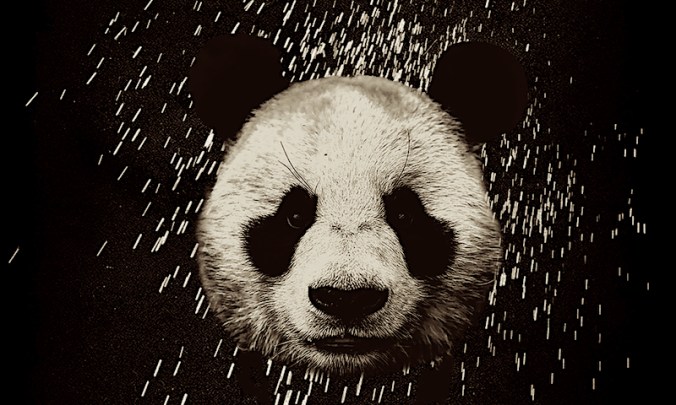
Desiigner: Panda
Cherry Glazerr: Told You I’d Be With the Guys
Hiss Golden Messenger: Tell Her I’m Just Dancing
Okkervil River: Okkervil River R.I.P
Pinegrove: Old Friends
Robert Ellis: California
Weyes Blood: Do You Need My Love
The Frightnrs: Nothing More to Say
Valerie June: Astral Plane
Anderson .Paak: Come Down
Maggie Rogers: Alaska
Chris Staples: Relatively Permanent
Night Moves: Carl Sagan
Ray LaMontagne: Part Two – In My Own Way
Nothing: The Dead Are Dumb
Cass McCombs: Low Flyin’ Bird
Kyle Dixon & Michael Stein: Stranger Things
Beyoncé feat. Kendrick Lamar: Freedom
Kanye West: Ultralight Beam
 Slagr: straum, stile (Ozella, 2011)
 Kurt Cobain once supposedly called them “the best band in the world,” while a slightly more sober Liam Gallagher ranked them as merely “the second best band in the world” (after Oasis, of course).
 In either case, Scotland’s own Teenage Fanclub is well worth knowing. Surpassing waves of slacker rock, Britpop and power-pop while managing to influence numerous generations of indie bands despite their cult status among connoisseurs of classic pop music, TFC is one of the most celebrated, cherished and simultaneously overlooked U.K. bands of the last 25 years.
 With their breakthrough album Bandwagonesque released just a year later by way of Alan McGee’s legendary Creation Records things really started to come together for the band. Immediately praised upon release for its exceptional take on power-pop (think The Beach Boys, The Byrds, Big Star), Bandwagonesque was to be found atop many of the year’s best of polls, with Spin Magazine even placing it ahead of landmark albums like Nevermind, Loveless, Out of Time and Screamadelica at #1.

 The Clash:
 Y
 Wire:
 Del Shannon:
 The Kinks:

 In the mid-2000s, Eckman founded Dirtmusic with Hugo Race (Nick Cave and the Bad Seeds) and Chris Brokaw (Codeine, Come). What seemed at first to be a desert band rooted in the US frontier tradition soon transformed into something else when they hooked up with Tuareg band Tamikrest while on a trip to Mali. Says Chris Eckman in our interview: “I had listened to a fair amount of African music and reggae and dub in the early 80’s and I found myself increasingly returning to that. And then I went to Mali to travel in 2006, and that sealed the deal. After that there was no looking back.”

 What motivated you to launch the label in the first place?


 What’s next for Glitterbeat?
 Chatma
 Soutak

 Hologram İmparatorluğu
 1982: Pintura
 Gjermund Larsen Trio: Reise
 Gjermund Larsen (fele), Sondre Meisfjord (kontrabass) og Andreas Utnem (trøorgel, piano) innledet det som nå har blitt en trilogi med å melde sin Ankomst (2008), fulgte opp med Aurum (2010) og signaliserer at de fremdeles ikke har tenkt å slå seg til ro. Gleden over debuten og oppfølgerens finslipte formuleringer er naturligvis ikke like sterkt tilstede, overraskelsesmomentet mindre fremtredende. Det trenger ikke bety så mye, med mindre fornyelse er den viktigste forutsetningen. Reise skiller seg ikke nevneverdig ut fra forgjengerne, men kvaliteten i materialet er fremdeles av den mest slitesterke typen – særlig når de er på sitt mest dvelende og poetiske. Gjermund Larsen Trio har lykkes med å forene ulike disipliner, og ut av det skape noe høyst personlig og egenartet.


 Før Kacey Musgraves ga oss Same Trailer Different Park (2013) hadde hun tre selvutgitte album bak seg, vært deltaker i talentkonkurransen Nashville Star (en country-variant av Idol), og skrevet låter for Miranda Lambert og Martina McBride.
 Men det var først med major label debuten Same Trailer Different Park at det virkelig tok av for supertalentet fra Sulphur Springs, Texas. 12 glitrende countrylåter og et sett vittige, rørende og ikke minst skarpe observasjoner sentrert rundt småbylivets gode og dårligere sider er nøkkelen til at Kacey Musgraves kan regnes blant dagens store countrystemmer. Skiva gikk rett inn på andreplass på Billboard (#1 på countrylistene), er nominert til det som er av countrypriser i hjemlandet og med en påfølgende turné på begge sider av havet.


 Diligently recording and releasing unique music since the mid ‘70s, Half Japanese is an American outsider music institution, one that represents the true embodiment of cult heroes.
 The band’s official recording career began with a characteristically ambitious triple album, 1/2 Gentlemen/Not Beasts (1980), later chosen by Rolling Stone as one of the top 100 most influential alternative albums of all time. Over the years, Half Japanese have faithfully released music at a tremendous pace, as Half Japanese, as solo artists and in numerous additional collaborations. And aside from David Fair, who handed over the duties to his brother in the early 1980s but has made occasional guest appearance over the years, the band features the same members who have been at Jad’s side since the late ’80s and early ’90s: John Sluggett (guitar, keys, timbales), Gilles-Vincent Rieder (drums, percussion, keys), Jason Willett (bass, keys), Mick Hobbs (guitar, glockenspiel).

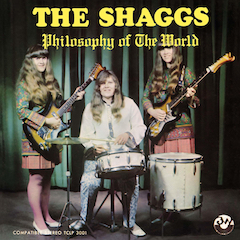 The Shaggs:
 Daniel Johnston:
 Tompkins Square is the small but highly-respected label out of San Francisco. Founded and largely run alone by Josh Rosenthal, the young indie imprint is most renowned for their exquisite sense of quality and their deep diggings into the forgotten crates of 20th century American music.
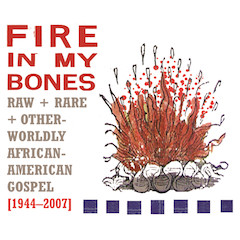 They have shed new light on old artists like Robbie Basho, Charlie Louvin and Tim Buckley, also releasing new artists like Hiss Golden Messenger, Daniel Bachman and James Blackshaw. In just a decade Tompkins Square has also earned a well-deserved reputation for their archival collections, such as the Grammy-nominated box set People Take Warning! Murder Ballads & Disaster Songs, 1913-1938 and the fantastic gospel collection Fire In My Bones!: Raw + Rare + Otherworldly African-American Gospel, 1944-2007


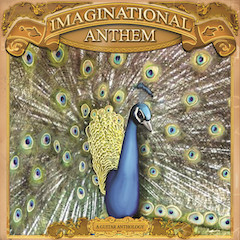 Did you have an initial idea back then on what the label should be and how it could evolve in the future?
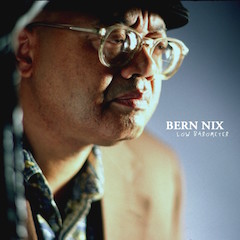 Guitarist Bern Nix’s album Low Barometer was one of the first albums I recorded. Bern played with Ornette Coleman, and I used to see him around my neighborhood in the East Village. His harmolodic approach to guitar is fascinating and he is a giant of improvisation. Like Derek Bailey, not always the easiest listen, but a very satisfying one if you put yourself to the test.
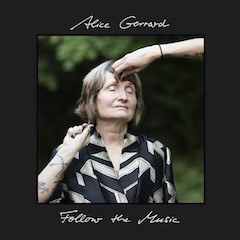 Sharon Van Etten emailed me cold in 2009 and told me to check William out. I didn’t know who she was at the time, it was a random email. So I signed Will, and then he told me about Hiss Golden Messenger, who I signed, and then Michael Taylor from HGM produced Alice Gerrard’s album, Follow The Music, which got Alice her first Grammy nom at age 80. All from one email! His LP [Behold The Spirit], with its sweeping arrangements, changed the game for acoustic guitar records. Everyone who follows the American Primitive genre knows this by now.