Chuck Prophet will forever be closely linked to his less than 10-year stint in the seminal Paisley Underground outfit Green On Red.
But despite his major contributions to the band, particularly on albums like Gas Food Lodging (1985) and The Killer Inside Me (1987), and his potentially career-defining role in shaping the alternative rock sound of the 1980s, Prophet has managed to maintain an eclectic and wholly worthwhile solo career since 1990.
Well established as a prominent singer, songwriter and genuine storyteller, Chuck Prophet draws from the rich well of Country and Folk as well as from Rock & Roll, putting out solo work on esteemed labels like Fire, Cooking Vinyl and Yep Roc, in addition to working with legendary artists like Lucinda Williams, Jonathan Richman, Alejandro Escovedo, Warren Zevon, Aimee Mann and more.
His solo catalog includes the critically-acclaimed Homemade Blood (1997), Age of Miracles (2004), ¡Let Freedom Ring! (2009) – a collection of political songs for non-political people – and his homage to his hometown of San Francisco, Temple Beautiful (2012). Out today, Bobby Fuller Died For Your Sins is a set in the style of California Noir, complete with songs about doomed love, inconsolable loneliness, rags to riches to rags again, and fast-paced, hard-boiled violence.
To celebrate his new album, we asked Chuck Prophet about 5 albums that changed his life.
* * *
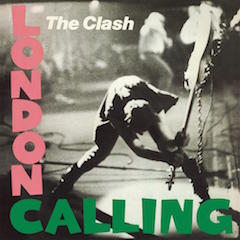
The Clash London Calling
Punk rock encouraged us all to pick up a guitar and form a band and lay it on the line in an effort to express ourselves. But for me, it was this record that showed us what was possible with punk rock. It’s all in there. The straight-up disco of “Train in Vain.” The Bo Diddley-goes-to-Jamaica of “Rudie Can’t Fail.” The rockabilly of “Brand New Cadillac.” This record, to this day, is a kind of gateway drug for the kind of records I aspire to make. It’s ultra-distilled. London Calling is The Clash’s 200-proof masterwork. The ultimate proof of anything.
Kelley Stoltz Antique Glow
I love all of Kelley’s records, but Antique Glow was where I came in and it will always hold a soft spot in my heart. Although a Detroit transplant, Kelley is a San Francisco treasure. If you’re ever in San Francisco and you’re a record geek and like to talk shop, or you just want to chat up someone with a PhD in Echo and the Bunnymen and a master’s degree in obscure Brit-folk, visit Grooves Records in SF. You might be lucky enough to show up on a day where Maestro Stoltz is behind the counter.
Big Star Third (a.k.a. Sister Lovers)
There are records that I get smitten with and then there are those few records that I return to again and again. This is Alex Chilton’s abstract expressionist masterpiece and a record that’s never let me down. With Jody Stephens behind the kit, John Fry behind the board and Jim Dickinson very much in his corner, Big Star’s Third (aka Sister Lovers) is a triumph. They say that Alex was bitter by the time Sister Lovers came around. Whatever. Hell, I don’t hear it (the bitterness). I hear beauty. The performances are loose. Effortless. Wild and free and off the cuff. But there’s nothing half-assed or anything. It’s a mystery to me how it all comes together. And I love it. I love when Alex sings, “I first saw you, you had on blue jeans . . .” It’s poetry. From the heart, from the soul. Compositionally, this record, it’s actually quite sophisticated. And with Alex’s 3 A.M. first takes and the beautiful Carl Marsh strings, it’s really the perfect marriage of the street and the regal.
J.J. Cale Naturally
There are those records that you can just turn people on to, ones you know will give pleasure. J.J. Cale’s Naturally was one record that we could all agree on in the Green on Red van. The songs are short. Very demo-y you might say. It’s a mystery that stays a mystery. It’s the best place to start with J.J. – at the beginning. Sure, he plays one hell of a slinky guitar and all that, and half the songs were covered by people who turned them into bona fide hit records (“Call Me the Breeze,” “After Midnight,” “Magnolia”), and he was a stone-cold cool cat, but what he really did with this record is show me how record making can be elevated to an art form. J.J.’s the OG sonic auteur. I don’t know how he made this. Maybe the trick is that J.J. engineered his own records. More likely, there’s no trick at all. Whatever . . . it’s a masterpiece. Check it out for yourself. The whole record is all of 30 minutes or so, what have you got to lose? His guitar and vocal are low in the mix. Lean in. It’s worth the lean.
Lou Reed New York
Ah man, I’ve worn that record out. It’s part of my DNA now. And giving credit where credit is due, it has had a massive influence on my writing. With every new record I make, if I’m lucky, I’ll catch a kind of inspirational virus, and if it keeps me interested, I can follow it through. The virus usually starts with two or three songs that take me someplace I haven’t been. Temple Beautiful was my San Francisco record, one where we tapped into the history, weirdness, energy, and spontaneity that brought me to San Francisco in the first place. I would never put myself next to Lou, but in a way, Temple Beautiful was my New York.
Med Rock & Science plasserer Ranheim seg i en tradisjon som egentlig ganske få norske rockere har utnyttet i særlig grad. Det er lyden av Steve Albini (Big Black, Shellac), de atonale støymagikerne Jesus Lizard, presise Helmet, og tungvekterne Melvins som skildres fra de trønderske tre.
Admiralen, som nærer en mistenkelig likhet til produktive Per Gisle Galåen (Del, Slowburn, The Birds med mer) besørger ikke bare de hvasse gitarene, men også bandets småskrudde tekstlinjer.
Jeg oppsøkte den alltid romfartskledde Admiral Ranheim på et maritimt sted, i et forsøk på å finne ut litt mer om dette bandet. Som for eksempel deres tydelige hengivenhet overfor hjemplassen.
Frustrert pappkasserock
– På grunn av papirfabrikken er det et typisk arbeiderklassested, og navnevalget dreier seg litt om stolthet over våre røtter, forklarer Admiralen. Dessuten gir det en del gratis oppmerksomhet, i hvert fall der oppe, men mest av alt synes vi at det er et kult navn på et band.
Kapteinen og Admiralen vokste opp sammen, og startet med å spille frustrert pappkasserock allerede på barneskolen, mens Don er noe eldre og tilhørte de tøffe, skumle guttene som de ikke turte å snakke med på den tiden. Da gikk det mest i populære artister som Bowie og Michael Jackson, før de falt i heavyrockens felle en gang på ungdomsskolen. Den store musikkinteressen førte etterhvert guttene bort fra papirfabrikken og mot Trondheims undergrunnsmiljø sentrert rundt UFFA-huset:
– Det var helt klart et viktig miljø, der man kunne møte likesinnede, gå på konserter fra man var 16 år og oppdage ny musikk. UFFA var veldig viktig for musikkscenen i Trondheim, i hvert fall da vi vokste opp der.
Den ultimate Shellac-platen
Ranheim er ikke landets mest produktive orkester. Debutplaten Rock & Science har vært mer eller mindre klar i halvannet år, øvinger skjer sporadisk grunnet geografiske avstander og konsertvirksomheten er flyktig. De tre er involvert i en rekke andre prosjekter, men Ranheim skiller seg noe ut fra det de ellers driver med.
– Vi startet vel med en tanke om å lage den ultimate Shellac-platen, men med årene fant vi vel ut at det ikke var mulig, og har heller utviklet oss til å gjøre mer våre egne ting.
Inspirasjonen er uansett ganske klar, og Admiral Ranheim forteller at dette bandet er et naturlig møtested for de tre medlemmene:
– Alle har rockebakgrunn, men vi både hører på og driver med mye annet, så lyden av oss er på en måte et kompromiss mellom det vi har felles, ikke minst band som Jesus Lizard, Melvins og mange av Steve Albinis prosjekter [som artist kjent fra Big Black, Rapeman og Shellac, som lydtekniker har han jobbet med tusenvis av artister, inkludert Nirvana, Pixies, og PJ Harvey]
De eldste låtene på Rock & Science stammer helt tilbake fra 1997. Selve platen ble spilt inn i 2004, men den har ligget til modning og godgjort seg i halvannet år. Hva tok egentlig så lang tid?
– Det har vært mest sløvhet fra min side, humrer Admiralen. Opptakene ble opprinnelig spilt inn på ett lydprogram, men de måtte overføres til et annet. Denne bouncingen dro litt ut kan du si, men da jeg først satte i gang var det hele gjort på fire dager. Det er ingen utpreget datostemplingen over denne musikken, og vi hadde heller ikke noe voldsom hast med å få den ut, forklarer gitaristen.
Jesus Lizard møter Jesus Jones
Innspillingen fant sted i Caliban studios med Tommy Hjelm foran knappene, som tidligere har jobbet med JR. Ewing og The Cumshots. Men miksingen ble foretatt av britiske John Fryer. Det kan virke som et noe merkelig valg. Fryer var husmikser i 4AD, har jobbet med artister som Nine Inch Nails, Cocteau Twins, Jesus Jones og Depeche Mode, og selv spilt i This Mortal Coil. Vi ber Admiralen om en nærmere forklaring:
– Det var mest tilfeldigheter. Vi spilte en konsert i Trondheim, og siden Fryer har kjæreste fra byen var han på denne. Han likte det vi gjorde og sa han kunne tenke seg å jobbe med oss hvis vi hadde behov for det. Fryer kjente godt til begrensningene som lå i selve innspillingen, og visste hva han kunne gjøre ut av det. Han ga platen det uttrykket vi ønsket; hardt og hissig. Han plasserte gitaren i den ene kanalen og bassen i den andre, noe jeg synes fungerte veldig fint.
Debutplaten preges av et helhetlig konsept rundt amerikansk romfart. Selve omslagsbildet er hentet fra en gammel jazz-skive, og formidler en slags framtidsoptimisme i all sin naivitet. Mellom de ti låtene er det brukt samples fra både Star Trek og gamle amerikanske hørespill. Det skaper litt humor, noe som ikke er fremmed for et band som gjerne slår av en skrøne i godt lag.
Historier verserer om at Ranheim ble dannet i Aberdeen, om det mystiske plateselskapet Evil Music, og en single som visstnok heter Live at Luton. Dette er noe journalisten gjerne vil komme til bunns i, men Admiral Ranheim hverken bekrefter eller avkrefter disse ryktene. Men som han sier med et skjelmsk flir:
– Selvhøytidelig musikk kan være ganske ille, og vi tar ikke oss selv så altfor høytidelig – humor does actually belong in music.
Hva skjer med Ranheim fremover – nå skal dere erobre verden?
– Vi har holdt på i dette gamet så lenge at vi har ikke har noen voldsomme ambisjoner om å leve av det, nei. Men det hadde så klart vært greit å spille litt mer ute. Det er slitsomt å booke konserter selv, så vi skulle i hvert fall skaffet oss en booking-agent for å få litt fart i sakene. avrunder Admiral, før han tar på seg månehjelmen, knepper igjen romdrakten og setter kursen mot nærmeste utskytningsrampe.
Bjørn Hammershaug
Dette intervjuet ble først publisert i ballade.no, juni 2006.
Slagr: straum, stile (Ozella, 2011)
Stille vann, dyp bunn
Andrei Tarkovskys Solaris (1972) er et psykologisk drama sentrert rundt omstendighetene på en romstasjon, en utenomjordisk vakker og hallusinerende film som etter gjentatte ganger setter seg langt inn i marg og bein. Slagr er den norske folkemusikkens ekvivalent til Tarkovsky. Deres debut Solaris (Nor-CD 2007) var et svært vellykket forsøk på å utforske de “lange linjers musikk” – eller dronemusikk om du vil. Preget av minimalismen (tenk Steve Reich, LaMonte Young) og med bakgrunn i tradisjonsmusikken, abstraherer Slagr de fleste av folkemusikkens bumerker og beveger seg fremdeles langs andre linjer enn de mest utforskede. Mer opptatt av klanglige farger enn melodiske strukturer skaper de kammerfolk med enkle virkemidler: Hardingfele (Anne Hytta), cello (Sigrun Eng) og vibrafon (Amund Sjølie Sveen) er den uvanlige, men effektive kombinasjonen.
Spor 2 på straum, stille er også titulert “Solaris”, og slik kan Tarkovskys filmatiske uttrykk atter en gang overføres på den norske trioen. Meditativt og grasiøst skaper de noe hinsides denne verden. Med dvelende tilnærming i langsomme, nesten drømmeaktige sekvenser møter de oss med det talende titulerte åpningssporet “Drifting Out Of Sleep”. Titler som “Quiet Rain” og “First Frost” beskriver atmosfæren i det som foreligger, innspillingen i Sofienberg kirke (av Nils Økland) underbygger ytterligere en katedralsk stemning som preger hele platen.
straum, stille består i hovedsak av innadvendt og kontemplerende materiale, som sikkert vil bli for stillestående for enkelte. For dette er mer sansemusikk enn dansemusikk, som kommer best til sin rett i et par gode hodetelefoner. Det er å anbefale å gi Slagr denne sjansen, sjansen for en berikende opplevelse i retur er stor. Bare en sjelden gang blir det mer straum enn stille, som i pågående “April” med sin krysning av av norske folketoner og post-rock.
Men det er ikke krusningene Slagr er mest opptatt av, det er understrømmene.
De har nok en gang levert en nydelig plate, der Tarkovskys blikk mot kosmos liksom vendes til en indre reise, og reflekterer noe dypt originalt – og dypt urnorsk.
Bjørn Hammershaug Opprinnelig publisert i bladet Folkemusikk i 2011
Kurt Cobain once supposedly called them “the best band in the world,” while a slightly more sober Liam Gallagher ranked them as merely “the second best band in the world” (after Oasis, of course).
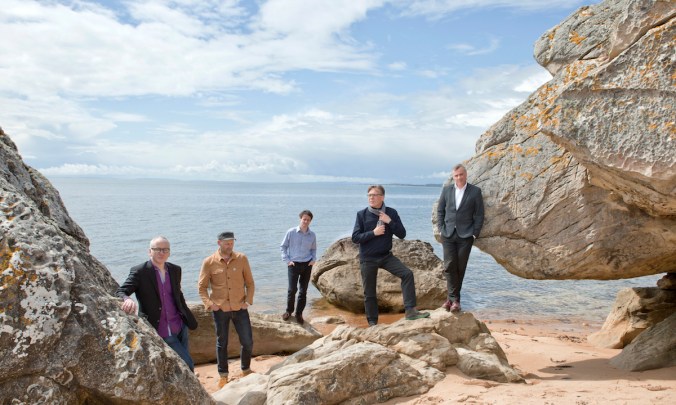
In either case, Scotland’s own Teenage Fanclub is well worth knowing. Surpassing waves of slacker rock, Britpop and power-pop while managing to influence numerous generations of indie bands despite their cult status among connoisseurs of classic pop music, TFC is one of the most celebrated, cherished and simultaneously overlooked U.K. bands of the last 25 years.
Though they could easily rest on their laurels, ‘the fannies’ are back at it again with their first new album in six years, one already praised by critics and fans alike. Here has been described by as Uncut as ‘maybe their best this millennium; a triangulation of mature soppiness, mitigated contentment and indelible tuneage.’ Meanwhile, Pitchfork points out how their music has evolved over the years as a long and stable love affair propelled by intimacy, comfort, and shared admiration, describing the album as ‘a series of quiet revelations, the kind of thoughts you have in moments of clarity, surrounded by people you love.’
Teenage Fanclub emerged out of the town of Bellshill, near Glasgow, flourishing in the local jangly indie scene alongside wonderful bands like BMX Bandits and The Soup Dragons. Their noisy album debut, A Catholic Education (1990), is commonly considered a predecessor to the coming grunge craze.
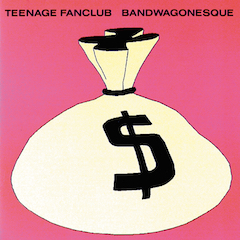
With their breakthrough album Bandwagonesque released just a year later by way of Alan McGee’s legendary Creation Records things really started to come together for the band. Immediately praised upon release for its exceptional take on power-pop (think The Beach Boys, The Byrds, Big Star), Bandwagonesque was to be found atop many of the year’s best of polls, with Spin Magazine even placing it ahead of landmark albums like Nevermind, Loveless, Out of Time and Screamadelica at #1.
Though they didn’t achieve the same commercial success with their underrated follow-up Thirteen (1993), TFC were far from history. Grand Prix (1995) and Songs From Northern Britain (1997) stand as pillars not only in their catalog, but also in the annals of ‘90s pop music. In the years since they have continued to explore new terrain, evolving as a band while still staying true to the formula of classic and elegant pop craftsmanship. Working with cult icon Jad Fair (Words of Wisdom and Hope, 2002), Tortoise’ John McEntire on Man-Made (2005) and flirting with various styles within their loose framework over the years, the band in question is still very much alive and well and potent as ever.
Here is described as a record that embraces maturity and experience and hugs them close while expertly consolidating nearly three decades of peerless songwriting amongst the band’s three founding members: Norman Blake, Raymond McGinley and Gerard Love. Long story short, Here marks but another victory for a seasoned act that’s still considered a cult band despite the fact that they ought to be rightfully praised as pop kings.
We invited main spokesman Norman Blake for a round of our series 5 Albums That Changed My Life.
* * *
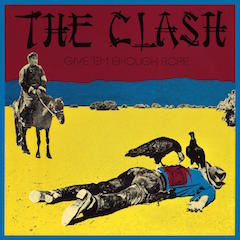
The Clash: Give Em’ Enough Rope (1978)
I could have picked anything by The Clash but this was the first record that I bought with my own money. Brilliant songs and it still sounds incredibly fresh and relevant.
Yo La Tengo: Painful (1993)
We toured with Yo La Tengo when this album was released 23 years ago. Very fond memories of hearing these songs every night on the tour. We ended up covering “I Heard You Looking.” Yo La Tengo are still good friends.
Wire: Chairs Missing (1978)
Wire were the most idiosyncratic band plying their trade in the UK in the late 70’s. There is no one quite like them and their music is instantly recognizable. They could be abstract and angular on a song like “Another The Letter,” and then write the most sublime pop song in “Outdoor Miner.” Brilliant album.
Del Shannon: Home & Away (1967/2006)
Recorded in 1967 but unreleased until 1978. Produced by Andrew Loog Oldham. Del’s best and most interesting album, and completely overlooked at the time. I suppose they thought that at 33, Del was past his best. Loog Oldham’s orchestral arrangements are beautiful as is Del’s voice.
The Kinks: The Kinks Are The Village Green Preservation Society (1968)
Ray Davies is a master songwriter and this is his masterpiece. Brilliant melodies with great lyrics. Nuff’ said. If you’ve never heard this album, do yourself a favour and purchase a copy immediately. God save the Village Green.
Bjørn Hammershaug
Opprinnelig publisert på read.tidal.com, september 2016
Chris Eckman has been on a musical quest his whole life, restlessly walking untrodden paths from the Pacific Northwest to the African desert and beyond.
His lifelong journey is paved with passion, not fame and fortune. A career marked by open-mindedness and praiseworthy craftsmanship on all levels, whether as a highly underrated singer and songwriter, producer or label manager. It’s an honor to present the musical world according to Mr. Eckman and to talk specifically about his exciting work with the label Glitterbeat – a home for vibrant global sounds. But first, we need to introduce him properly.
Chris Eckman rose to fame in the 1980s as one of the core members of the beloved and now defunct Seattle rock band The Walkabouts. Together with his main band partner Carla Torgerson, The Walkabouts started out combining introspective jangle pop with dark and moody folk rock on brilliant albums like Scavenger (Sub Pop, 1990) and New West Motel (Sub Pop, 1993). The band gradually expanded their sonic palette, widening their musical horizons to encapsulate a more cinematic sound while simultaneously conjuring “European elegance” on albums like Devil’s Road (1996, recorded with Warsaw Philharmonic Orchestra) and Nighttown (1997). reminiscent of the musical landscapes of Tindersticks, Nick Cave and Leonard Cohen.
Eckman & Torgerson also started up the mainly acoustic offshoot Chris & Carla, a project following somewhat in the footsteps of their mother-band as equally at home playing with anyone from Greek folk musicians to members of R.E.M and Camper Van Beethoven. In the early 2000s, Eckman relocated to Ljubljana, Slovenia, and has kept more than busy on European soil as a solo artist and producer, making music for films and more while also working with the somber trio Distance, Light & Sky.
In the mid-2000s, Eckman founded Dirtmusic with Hugo Race (Nick Cave and the Bad Seeds) and Chris Brokaw (Codeine, Come). What seemed at first to be a desert band rooted in the US frontier tradition soon transformed into something else when they hooked up with Tuareg band Tamikrest while on a trip to Mali. Says Chris Eckman in our interview: “I had listened to a fair amount of African music and reggae and dub in the early 80’s and I found myself increasingly returning to that. And then I went to Mali to travel in 2006, and that sealed the deal. After that there was no looking back.”
Enamored with his experience, Chris Eckman finally formed the Glitterbeat label in 2012 together with Peter Weber (former manager of Tamikrest and head of the German imprint Glitterhouse) in order to release records that embrace both evolving global textures and localized roots traditions. In their own words: Glitterbeat specializes in vibrant global sounds from Africa and beyond.
Though Glitterbeat only just released their first album back in 2013, the label has already established itself as a noted home for music originating from outside of the Western hemisphere as a result of releasing albums by the likes of Tamikrest, Aziza Brahim (Western Sahara), Noura Mint Seymali (Mauritania), Bassekou Kouyaté (Mali) and Bixiga 70 (Brazil). The label has won the WOMEX Label Award in 2016, 2015 and 2014 to date.
* * *
Chris, can you please offer a brief history of Glitterbeat and how it came to life?
My band Dirtmusic went to Mali in 2008 to play the famous Festival au Desert, which used to take place deep in the Malian desert every January. My Glitterbeat partner Peter Weber came with us and during that brief trip we met a young Tuareg rock band called Tamikrest. That changed everything. Peter ended up managing Tamikrest and signing them to his other label Glitterhouse and Dirtmusic and I returned to Mali in 2009 to record a collaborative album with Tamikrest called BKO.
Peter and I returned to Mali a couple more times to produce records, and from those experiences we began to develop an idea to make a label dedicated to this fabulous music we were encountering and working with.
What motivated you to launch the label in the first place?
I think the motivation was, in part, that we thought we could do a bit different type of label. A label that embraced global musics as contemporary sounds and not as decidedly folkloric or traditional or “other.”
Of course, some labels had taken similar approaches in the past but we thought there was room for a fresh take on that idea. Also we wanted to fight hard to have our artists featured beyond specialist “world music” media outlets. In fact, we consciously never use the words “world music.” We feel there are too many biases built into that term at this point.
There is no reason that artists like Tamikrest or Noura Mint Seymali or Aziza Brahim shouldn’t be featured in rock magazines or on portals that usually cover indie or experimental music. We certainly have proven this is possible, or should I say, our artists have made that possible. They of course make the music that crosses these borders.
What other labels, if any, where role models or guiding stars when you started up, and why?
Certainly Real World has been groundbreaking and influential. They did so much to introduce global sounds into the western consciousness. Also I really admire the fearless approach of smaller imprints like Sahel Sounds and Sublime Frequencies. Both of those labels have a very punk rock attitude. They are not obsessed with watering the music down; in fact, they celebrate the rawness. I think they helped to create an essential reset of people’s expectations about global music.
Too often the approach had been to market genteel, coffee-table versions of ethnic music. Some of the newer labels have worked hard to overturn all of that. We certainly align ourselves with this new turn.
Gaye Su Akyol (Ali Güçlü Şimşek)
What does Glitterbeat represent or stand for as an institution?
Hopefully we will always be more or less non-institutional. Hopefully we will always be taking chances and obsessed with new ideas.
What, in your opinion, is the greatest achievement in the history of Glitterbeat thus far?
I think making it through the first year was a big thing. We didn’t know if we were going to eventually release 3 records or 30. We started with a very open concept. By the end of 2017, we will have released 50 records.
But I think the biggest accomplishment has been to create a place that artists want to be a part of. That feels really satisfying. The more it feels like a family, rather than a cold and calculating business, the more we are satisfied. And I think at the level we are at, that is also good business sense. It is a very chaotic and quick changing industry and the more connected and supportive we all are; the better the chance is that we will collectively survive.
What makes you decide whether or not to work with an artist and/or release an album?
The first criteria are really simple: do we love the music and do we think it is music that stands apart from the crowd – is it luminous? Is it undeniable? After that we start asking business questions, but there are more fundamental questions than whether or not we think it will sell. Lots of strange music has sold in reasonable quantities.
But average music doesn’t stand much of a chance to surprise. We try and stay away from average.
What attracted you to music outside of the Western Hemisphere in the first place?
I think it in part came from an exhaustion with the deluge of western music that all starts to sound the same. Heavily codified genres that spend a lot of time cannibalizing the past. I had listened to a fair amount of African music and reggae and dub in the early 80’s and I found myself increasingly returning to that.
And then I went to Mali to travel in 2006, and that sealed the deal. After that there was no looking back.
Samba Touré (Philippe Sanmiguel)
Where, in your opinion, are the most interesting areas of the world for music today?
I think the flame is burning hot in many places right now. The African urban music scene is growing fast and is, for the first time, regularly turning out both hip-hop and electronic sounds that have their own regional vibe. Global and local at the same time. That is a scene that is going to grow fast in the next years and will become every bit as influential on the direction of music as scenes in Berlin, Los Angeles or London are.
Are there any undiscovered territories that you’d like to discover further?
It is hard to talk about “undiscovered” territories in the 21st century – we are all so inter-connected that even the most remote regions are tapped into the global conversation.
But certain musical regions are better documented than others. I recently heard some ritualistic music from the Banga people who live deep in the desert of Tunisia. It sounded completely new to me. It sounded like something I would like to hear more of.
What’s next for Glitterbeat?
At least for now, it seems we have too many ideas as opposed to not enough. Our release schedule for 2017 is already filled up. Look for new releases from Tuareg rockers Tamikrest, a fabulous career-spanning compilation from Turkish psych-pioneers Baba Zula, a new futuristic Arabic roots album from Tunisia’s Bargou 08 and a wild, punchy new album from King Ayisoba from Ghana. And that takes us to April 1st. It is going to be another busy year.
Where can folks experience your music in the near future?
On TIDAL of course, but also via LPs and CD. We are still committed to putting out physical music, at least for now. And, of course, many of our bands are on tour. In the winter Baba Zula will be doing a big European tour and Tamikrest will follow in April.
* * *
We asked Chris Eckman to select and annotate a couple albums that tell the story of the label:
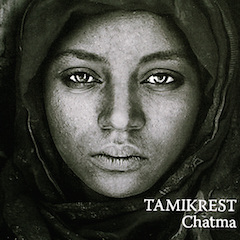
Chatma Tamikrest (GBLP 007, 2013)
This was the album that really helped to get us off the ground. My Glitterbeat partner Peter Weber and I met Tamikrest in the Malian desert at the famous Festival au Desert several years ago. That meeting in a sense created the whole idea of idea of Glitterbeat, and it was incredibly satisfying that some years later we were able to release this beautiful, innovative album.
Soutak Aziza Brahim (GBLP 008, 2014)
Aziza Brahim is a deeply political artist. Here artistic voice is entirely dedicated to the struggle of the displaced Saharawi people, who call Western Sahara their home.
I have produced both of her Glitterbeat albums and Soutak had an unprecedented run of three months at #1 on the World Music Charts Europe.
Arbina Noura Mint Seymali (GBLP 038, 2016)
This is Noura’s second album, and along with her first, Tzenni, it is certainly an international breakthrough for Mauritanian music, music that until recently has been all but unknown outside of the country.
Noura performed on the Syrian National Musicians tour this past summer at the invitation of Blur’s Damon Albarn and Arbina has been on a slew of year-end best-of-2016 lists (The Wire, NPR, Mojo, The Quietus, Uncut ect.).
Hologram İmparatorluğu Gaye Su Akyol (GBLP 040, 2016)
Gaye is a young Turkish singer who lives in Istanbul. She is in equal measure influenced by Nirvana and the legendary Turkish innovator Selda Bagcan. Glitterbeat released her first international album in November and the response has been phenomenal.
Her music, in part because of its surrealistic and psychedelic motifs, is seen as a potent critique of Turkey’s current political moment.
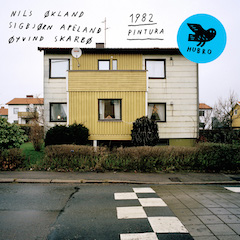
1982: Pintura (Hubro, 2011)
Omslaget til trioen 1982 viser igjen hverdagslige, realistiske bilder fra hvorsomhelstnorge, men musikken som skjuler seg innenfor er langt fra like tilforlatelig. Det er noe som rører seg bak gardinene. La oss kikke inn over potteplantene.
1982 kan plasseres i kategorien ’moderne improvisasjonsmusikk’, i seg selv et relativt grenseløst territorium. Med Nils Økland på hardingfele henvender de seg for eksempel inn i folkemusikalske kretser og bør ha umiddelbar interesse for leserne av herværende magasin. Men det er ikke folkemusikk vi har med å gjøre, ikke i tradisjonell betydning i hvert fall. 1982 er en fristilt kammertrio med den sjeldne kombinasjonen trøorgel/Wurlitzer (Sigbjørn Apeland), trommer (Øyvind Skarbø, født 1982) og altså fele/fiolin ved Økland. Mye av spenningsfeltet på Pintura ligger nettopp i instrumenteringen, mer enn at det nødvendigvis skjer direkte nybrottsarbeid med selve tonespråket.
‘Pintura’ betyr vel noe slikt som ’maleri’ på spansk, og her strykes det på med de fineste pensler. 1982 er en organisk og dynamisk enhet, med vekslende temperatur bringer de ørsmå detaljer opp i lyset og bygger opp til intense sammenstøt med like uanstrengt lekenhet. En del naturlige forutsetninger ligger til grunn for at dette har blitt en såpass vellykket: Vi har å gjøre med noen durkdrevne musikere, Apeland og Økland har sågar gjort ting sammen i nærmere 20 år, og med den musikalske tryggheten i ryggmargen våger de tre å møtes, utfordre hverandre og skape noe genuint sammen.
Mye av nøkkelen til å lykkes med et slik prosjekt ligger i denne tilnærmingen, som hviler både på en estetisk trygghet, håndverksmessig erfaring og stor musikalitet – men også at de involverte trives sammen. Det virker det som de gjør her. Som så ofte med god fri improvisasjon er den umiddelbare opplevelsen større enn noe konkret sluttresultat, men dette fungerer også som et album å lytte til.
Pintura er lett å høre på og bør være relativt lett å få utbytte av – men et godt sett hodetelefoner anbefales for maksimalt utbytte.
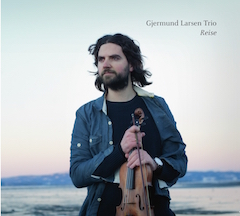
Gjermund Larsen Trio: Reise (Heilo, 2013)
Folkemusikk for de som ikke elsker folkemusikk: Gjermund Larsen Trio har med sine tre album gjort sitt for å bryte ned det som er av trangbodde skott. Folk, pop, samtid, jazz og klassisk smelter – nærmest bokstavelig talt – sammen i hendene på denne trioen. Det er da heller ikke sjangerbåsenes innsnevrende krefter som virker her, snarere den frie utfoldelse som opphøyes, og så lett, så lett inviteres vi med på nok en betagende reise inn i det vide landskapet.
For det høres lett ut når vi danser oss inn i velkomsten ”Reiseslått”, lettbeint og lekent, men det ’enkle’ i denne musikken er ikke ensbetydende med lettvint eller simpelt. Gjermund Larsen Trio er tuftet på dyp musikalsk forståelse og med en iboende åpen holdning som aldri blir insisterende eller virker å være i villrede. Dette er musikk som går inn i øret, tar plass i sjelen – og blir værende.
Gjermund Larsen (fele), Sondre Meisfjord (kontrabass) og Andreas Utnem (trøorgel, piano) innledet det som nå har blitt en trilogi med å melde sin Ankomst (2008), fulgte opp med Aurum (2010) og signaliserer at de fremdeles ikke har tenkt å slå seg til ro. Gleden over debuten og oppfølgerens finslipte formuleringer er naturligvis ikke like sterkt tilstede, overraskelsesmomentet mindre fremtredende. Det trenger ikke bety så mye, med mindre fornyelse er den viktigste forutsetningen. Reise skiller seg ikke nevneverdig ut fra forgjengerne, men kvaliteten i materialet er fremdeles av den mest slitesterke typen – særlig når de er på sitt mest dvelende og poetiske. Gjermund Larsen Trio har lykkes med å forene ulike disipliner, og ut av det skape noe høyst personlig og egenartet.
Folkemusikk for de som ikke elsker folkemusikk? Gjerne det. Og det er ikke negativt ment. Musikk for de som elsker musikk? I aller høyeste grad.
Unni Løvlid: Lux (Heilo, 2013)
Unni Løvlid tilhører ingen klasse, hun er en egen klasse.
Det har gått fem år siden Rite, en høyst vellykket fusjonering av folkemusikk, elektronika og samtidsmusikk. Nå er hun tilbake, og igjen viser hun seg som en artist hinsides det konvensjonelle, som streber etter det åndelige og som griper det ugjennomtrengelige.
Lux er en målingsenhet for lysstyrke, én lux er definert som månelys. Nattens dunkle glorie. Lys og mørke er gjennomgangstemaer på dette albumet, og da særlig overgangen fra lys til mørke. Lux rammes inn av en kort trall og en vuggesang, men er ellers en ferd inn i nattens og dødens rike, men også troens og håpets. ’Dagen viger og gaar bort/luften bliffver tyck og sort’ er de første, besnærende ordene som møter oss, som et anslag for det som kommer. Det tekstlige materialet er hentet fra rike kilder; salmediktere, religiøse doktriner og barokkdiktning. Tonene er også nennsomt plukket fra de gamle tradisjoner, folketoner fra hjembygda Hornindal, Selje og Sogn. Men det som kommer ut av dette er langt fra tradisjonelt.
Løvlid har denne gangen samarbeidet med Håkon Thelin (Poing, Oslo Sinfonietta) samt glassduoen Randi-Merete Roset og Liv-Jorun Bergset (fra Draup). Med effektiv og minimalistisk tonesetting av konstante uromomenter underbygges mystikken og den mørke stemningen, og den gir platen en vital puls. Over det hele, Unni Løvlids klare, klangrike stemme, i seg selv er en lysfontene, skaper balanse til både tekstene og musikken. Hun kan nok være hakket for insisterende i sine fraseringer i mine ører, men det er en smakssak. Hennes kvaliteter som sanger tør være ubestridte, jeg skulle likevel gjerne applaudert enda større spillerom for bare musikken her. Den er fantastisk.
Håkon Thelin poengterer noe viktig i sin fine albumtekst, der han blant annet skriver: ’Til tross for Unni sin ofte langsomme og sanselige kommunikasjon av tekstene, forblir melodiene glødende, som om ordene hører til på jorden og melodien strekker seg inn i en himmel fylt med lys.’
Hvor mange album kan man egentlig si noe slikt om. Lux er nok en kunstnerisk seier for Unni Løvlid, en fryd for øret til deg som lytter og noe av det mest magiske du kan forvente på et album i 2013.
Bloodshot Records was born in a late-night Chicago bar, with some simple ideas scrawled out on a cocktail napkin.
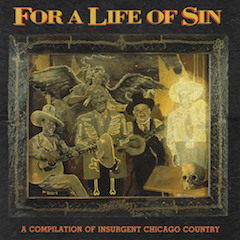
Ever since its very first album release in 1994, For a Life of Sin: A Compilation of Insurgent Chicago Country, the esteemed label has been a bright and steady beacon in a shifting musical landscape. That very first compilation included local Midwestern greatness like The Bottle Rockets, Robbie Fulks, The Handsome Family, Freakwater, and of course Jon Langford (The Mekons), whose commitment to bands like The Waco Brothers and Pine Valley Cosmonauts – not to mention his striking visual art – is closely connected to the history of Bloodshot, spawning the term “insurgent country” for which the label is known.
Predating the Americana wave to come later in the ’90s, Bloodshot soon spread out across the nation to become nearly synonymous with rootsy rock ‘n’ roll, country punk, and shining singer-songwriters seemingly unfit to belong anywhere else. Initially dropping releases from the likes of Old 97’s, Neko Case, Waco Brothers, and Ryan Adams (Heartbreaker being Bloodshot’s biggest seller of all time) laid the foundation that the label would carefully built and gradually developed over the years.
More recent signings include Justin Townes Earle, Lydia Loveless, Luke Winslow-King, and Maggie Björklund, as well as long-time main stayers as Graham Parker, Andre Williams, The Sadies, and Alejandro Escovedo. And even though Bloodshot has always stayed true to its roots, it has never stop growing and expanding and has continued to consistently release quality music. Going through Bloodshot’s massive catalog and choosing highlights is both an exciting and monumental task, one that serves as a reminder of how vital, diverse, and fun the label’s output has been.
Justin Townes Earle (Credit: Bloodshot/Joshua Black Wilkins)
I hooked up with original label founders Nan Warshaw and Rob Miller to get to know beloved Bloodshot a little better. Read on to learn about the label that draws lines from the Dead Kennedys straight back to Johnny Cash, to hear a compelling story about longevity without compromising guiding principles and to understand how the devaluation of creative content these days makes us all culturally poorer.
* * *
Can you please give a brief history of Bloodshot and how it was founded?
Rob Miller: Three music freaks walked into bar… Bloodshot started the same way a great many ridiculous enterprises began: ignorance, stubbornness, naiveté, and boundless enthusiasm for music that others seemed to be ignoring. And liquor.
In retrospect, there was remarkably little awareness as to what we might be doing. In the hazy-crazy post-Nirvana days, everyone was looking for the next big thing. The notion of ‘alternative music’ that we’d grown up on was being used to soundtrack jeans commercials, Martha Stewart was telling the world how to throw a ‘grunge party’ and the whole thing was a depressing co-opting of a lifestyle and worldview.
At the same time, we saw a vibrant and, to us, under-recognized scene in Chicago full of bands dipping their toes into the rootsy music underbelly. It was fresh, inventive, unconstricted by rules or expectations. And it was honest and straightforward. It drew the line from the Dead Kennedys straight back to Johnny Cash. We thought ‘hey, why not gather up a bunch of songs and put them on a CD and have a show!’ It was that simple and that, I dunno, pure in its genesis. There was no planning for step #2. It was, at the time, a distraction from my day job of painting houses and getting the infrequent tiny check for writing an album review or something.
But we struck a chord, and the enterprise snowballed and here we are, 22 years later, still waiting for someone to say “Hey! You can’t do that!!”
What motivated you to enter the music business in the first place?
RM: My first concert was Alice Cooper at the Cobo Hall in Detroit in 1979. I hated it all. The whole ‘Detroit Rock City’ vibe. The weed, the long hair, the pure dumb-assery of it all. Listening to “Stairway to Heaven” on the radio made we wonder why people liked music at all. It was so tedious and spoke not a whit to the hellishness of the bullying and alienation I was experiencing in high school. Then I saw Devo. Then the Ramones, then Black Flag, then X, Circle Jerks, The Cramps, The Gun Club…. all in the space of about two months. And that was it: The energy, the anger, the weirdness, the freedom.
Looking back, I guess it wasn’t a matter of IF I’d be involved in music, but a matter of when and how. After a couple years of DJ’ing in college, and a stint as a roadie, as a stage manager, as a production manager and as an occasional tour manager in addition to doing lots of writing in my spare time, I moved to Chicago to get away from music. That didn’t turn out too well.
What labels, if any, where your personal role models or guiding stars?
RM: Being a full-fledged music geek, I started paying attention to the labels themselves early on and to the identities and histories they had. Stax/Volt, Sun, Chess and being from Detroit, obviously Motown and Fortune. Plus all those crazy regional labels like King and a thousand others. When I started getting into punk and hardcore, there was such a strong bond and association between bands, fans and labels. Dischord, Slash, SST, Touch and Go were all models – perhaps unwittingly – for the notion that if you want to do something, DO IT. Don’t wait for a major label or some other sort monolithic power structure to tell you how things should be done. Building a community around the label seemed so natural in the days of Sub Pop, Estrus, Sympathy for the Record Industry, K, In the Red, we didn’t really sit down and go “this is a good business move,” it was just a natural extension of our participation in the underground music scene.
What do you represent or stand for as an institution?
RM: Well, what we represent is for others to decide, I suppose. We’ve never got too bogged down with questions like ‘what is the BS sound?’ or ‘how much do you represent a counterview to the Nashville Country Music Industry?’ or other such things. We’re too busy doing the work and moving forward.
We’d like to be thought of, by both our fans and our artists, as a bunch of music fans who worked hard, believed in what we did, never took the support we’ve received for granted, and never took the art entrusted to us lightly.
And that we threw some pretty fun parties.
What, in your opinion, is the greatest achievement in the history of Bloodshot Records? What are you most proud of achieving since starting the label?
RM: Longevity without compromising our principles. It’s impossible for me to pick ONE moment, or ONE album, that would mean that I’m always looking back, and I try not to do that. The joy and sense of accomplishment comes from the long view; watching an artist’s career arc, still believing in what we do. I’m proud that people still find that occasional spark in our releases, that they trust us and stick around for the ride.
Did you have an initial idea back then on what the label ought to be and how it could evolve in the future?
RM: Not to be glib, but we had no idea what we were doing or getting ourselves into back then. Or now, for that matter. There was no expectation of a “future” when we started – ignorance can be very liberating – and there are always new surprises and challenges. Often, especially as a result of changing technologies, evolution is thrust upon us and we do the best we can.
The Bottle Rockets (Credit: Bloodshot/Todd Fox)
* * *
How will you describe your music scene at the moment?
Nan Warshaw: Bloodshot is in the wonderful position of having many loyal fans who buy music to support the artists they love. Many of our fans come from an indie rock background and most are seeking out unique music that speaks to them. Bloodshot has never fit neatly within a genre package, our bands tend to be too edgy for Americana and Folk, and too roots based for straight ahead indie rock and punk – which is exactly why they stand out.
How do you decide whether to release an album or not?
NW: Once we commit to working with an artist, we’re in for a penny and in for a pound. We give our bands full artistic reign. We have never not released an album delivered by one of our. Our “judging” process happens earlier, when we’re deciding if an artist is the right fit for Bloodshot. First, we have to love the music and believe we can be that artist’s best label home. These days we can only afford to work with artists that are already touring a lot, artists who already have the rest of their business side together.
So, where do you see Bloodshot another 20 odd years down the line?
NW: How will music be consumed in 20 years?!? We have no clue! What we do know is, as that change is happening, we must remain nimble and adapt quickly.
The music industry goes through rapid changes these days. How have those challenges and changes affected your work, if at all, and what is different running a label today compared to before?
We have to work harder and smarter to earn one third the amount we did a decade ago. For example, an artist seeing the success of Lydia Loveless today is comparable to what Justin Townes Earle saw six years ago, yet sales don’t compare at all. More than an entire generation is accustomed to getting creative content free, or almost free. People inoculate themselves against ‘illegal’ by paying a pittance for a streaming service, they then don’t feel guilty yet they’re not paying enough to support the artists they claim to love. Bloodshot is getting more media and fan attention than ever for our artists, but it isn’t reflected in record sales or streaming income. In other words, the loss caused by a sharp decline in physical sales has not been made up for by the increase in digital revenue. As usual, the major labels have an unfair advantage over the indie labels. They invest in or own the digital services, and those services have cut them into income streams (such as breakage) that indie labels rarely see a part of. Then the major labels don’t share that additional income with their artists.
We used to be able to release an album because we loved it; so long as it was recorded affordably, we could sell a few thousand copies and break even. Those days are gone. Both our country and the world at large is missing out on great music because the vast majority of music listeners are no longer paying a fair price for their music consumption. Ironically, despite the fact that both truly affordable home recording and tremendously broadened access to music dissemination allow many musicians to create more easily than ever before, we’ve stopped financially supporting creative content as a culture. So the same story goes in all creative content forms from film to journalism to photography.
This shift to devalue creative content makes us all culturally poorer.
What’s coming next for Bloodshot?
We have exciting new albums in the works from Scott Biram, Cory Branan, Ha Ha Tonka, Banditos, and Yawpers. Plus, a seminal vinyl LP release from the Old 97s. Most recently, we released a new, yet classic, juke-joint swing album Slingin’ Rhythm by Wayne Hancock, and a vocal-pop-jazz (think Harry Nilsson, Beach Boys) album It’s a World of Love and Hope from Chicago all-stars The Flat Five.
Where can folks experience your music in the near future?
Our bands are constantly touring. You can see all the upcoming dates here. If you want to be notified about new releases and your favorite Bloodshot artists coming to your town, sign up here.
Any regrets? Anything you would do differently given a second chance?
Since I don’t have a time machine and might accidentally dial in the wrong date if I did have one – anyway, I’d rather go back to re-live a great show! – I’ll avoid re-living my failures and the risk of my little historical changes causing WWIII. On that happy note, I’ll add that we’ve had the absolute pleasure and honor of working with our musical heroes – there is nothing better than watching a stellar show where the artist plays a new song that almost goes off the track but amazingly manages to stay on, or where harmonies send chills down your spine while there are twice as many enthusiastic fans watching than the last time.
* * *
We also asked the kind people over at Bloodshot to select 5 memorable or important albums (impossible task, we know) that tell the story of the label. Mr. Miller kindly returned with these gems from over the years:
Old 97’s: Wreck Your Life (BS 009, 1995)
The first record we released that made us think ‘um….we might be onto something.’ They came on like a gang and found that heavenly sweet spot between true punk, metal and deep country soul. They perfected a template that has had no relevant usurpers.
Ryan Adams: Heartbreaker (BS 071, 2000)
No in depth history of Bloodshot would be complete without a mention of this masterpiece. A stone cold classic. The sine qua non of Ryan’s albums. Where promise met execution head on. As life piles on the weirdness and hardships, this album gets nothing but better. It took off like a rocket and we all had to hang on for the ride, learning a lot of lessons along the way.
Lydia Loveless: Somewhere Else (BS 219, 2014)
As a music geek, one of the ongoing thrills of the job is the act of discovery. Finding a young, rough talent and watching them find their voice and develop an artistic footing. We’ve been fortunate to be along on such journeys with Neko Case, Justin Townes Earle and many others. Recently, we’ve been lucky enough to be a part of the creative and popular ascendance of Lydia Loveless. On her first Bloodshot release (2011’s Indestructible Machine) there were fevered comparisons to acknowledged music icons like Loretta Lynn, Stevie Nicks, the Replacements, and more: She’s half this, half that, one part something else. We hate math. But, now Lydia Loveless is a reference point all her own. The arc of her development is an inspiring and exciting one.
Roger Knox: Stranger in My Land (BS 179, 2013)
Made with an all-star cast, headed by Jon Langford (Mekons, Waco Brothers), this is a record of great importance. It traces the influence of American country & western on the aboriginal Australian community. It is powerful and moving material, heartbreaking and hilarious, downtrodden and uplifting, suffused with longing, alienation, resilience and hope; universal themes arising out of largely unexplored context. It possesses the urgency of an Alan Lomax field recording, but with a spirit that remains relevant in today’s world. Most of our music is for entertainment’s sake, but this a record with profound historical reach.
Robbie Fulks: Upland Stories (BS 242, 2016)
We worked with Robbie on our very first release, the Chicago-centric compilation For A Life Of Sin. After that, we put out a few of his albums and several other compilation tracks. Our paths meandered over the years, but recently we have re-connected for a couple of stellar releases, the most recent being Upland Stories. That Robbie is not a widely celebrated name in households across the world as one of the premiere songwriters of this generation, is a pox upon us all. To be a part of his evolving talents is a listener’s delight.
Bjørn Hammershaug
Opprinnelig publisert på read.tidal.com, november 2016
Før Kacey Musgraves ga oss Same Trailer Different Park (2013) hadde hun tre selvutgitte album bak seg, vært deltaker i talentkonkurransen Nashville Star (en country-variant av Idol), og skrevet låter for Miranda Lambert og Martina McBride.
Men det var først med major label debuten Same Trailer Different Park at det virkelig tok av for supertalentet fra Sulphur Springs, Texas. 12 glitrende countrylåter og et sett vittige, rørende og ikke minst skarpe observasjoner sentrert rundt småbylivets gode og dårligere sider er nøkkelen til at Kacey Musgraves kan regnes blant dagens store countrystemmer. Skiva gikk rett inn på andreplass på Billboard (#1 på countrylistene), er nominert til det som er av countrypriser i hjemlandet og med en påfølgende turné på begge sider av havet.
– The last few months and even year has been such a beautiful whirlwind. So many things have happened that have already blown my mind. I can’t wait to keep going on this journey I’m on. Det sier Musgraves da jeg spør henne hvordan hun selv har opplevd den siste tidens plutselige opptur.
Det er helt naturlig å plassere henne som en streit countryartist. Men hun trekker også mot andre uttrykk, og toucher innom både singer/songwriter, klassisk pop og rockabilly. Hun sier da også selv at hun lar seg inspirere av musikk fra alle steder og alle genre, men nevner spesielt Glen Campbell, Loretta Lynn, John Prine, Willie Nelson og Ryan Adams som viktige for henne – samt, kanskje noe uventet, band som Cake og Weezer.
Selv om musikken til Musgraves er iørefallende nok, er det særlig tekstene som skiller henne ut fra mange av sine samtidige. Hun åpner med å våkne opp ’on the wrong side of rock bottom’ og penser innom referanser til dop, drikking og tilfeldig sex i sine betraktninger der småbyen er bakteppe og dens innbyggere spiller hovedrollene. Kritikernestor Robert Christagu mente at Musgraves er ’the finest lyricist to rise up out of conscious country since Miranda Lambert, if not Bobby Pinson himself’.
Det kan være relevant å nevne Loretta Lynn i den sammenheng. Hun ankom Nashville på 60-tallet og ble berømt for tekster som for mange var uhørt på den tiden. Når Musgraves dro til countryhovedstaden noen tiår senere fikk hun oppmerksomhet for å ta opp lignende tematikk.
– I really respect Loretta Lynn for having the courage to come out with controversial songs when she did. She pulled it off in a sassy, intelligent way and has paved the way for artists and writers like me to say what we wanna say. I’m proud to be a part of that mentality – blending elements of traditional country and modern ideas, sier Musgraves da jeg trekker opp denne parallellen.
Det ser likevel ut til å være et mer tolerant miljø i dag, mens country-radio fremdeles er mer konservative i forhold til hva de spiller?
– Country radio’s conservatism, thankfully, hasn’t affected the message that I want to put out in the world. It excites me that so many people are open to my music.
’Water and electric and a place to drain the septic / Any KOA is A-OK as long as I’m with you’ (”My House”)
Dine observasjoner og beskrivelser av livene til ordinære folk fra små steder ser ut til å falle deg naturlig. Hvordan arbeider du fram dine historier, og hva hvor kommer de fra?
– I find inspiration in almost everything. Conversations, things I see, things other people I know have gone through or things that I have gone through. It starts with something simple and then the idea – if it’s a good one – builds and builds. Most of my messages are observational, I feel.
Du kommer fra østlige Texas, en region som har gitt oss så mange store artister, fra George Jones, Johnny Horton og Lee Ann Womack til Miranda Lambert. Hva er det i vannet der borte, egentlig?
– It might be because there’s nothing else to do! Haha, I’m not quite sure but it’s cool.
Det er det, og Kacey Musgraves er en naturlig del av denne rike tradisjonen. Vi gleder oss til å oppleve henne her i Norge, noe Musgraves selv gjengjelder:
– I’m excited to see the beautiful nature that Norway has to offer. Meet the people, eat the food, or at that point maybe just sleep, ler hun.
Beste låt du har hørt live:
“Ghost In This House” – Alison Krauss
En låt du selv skulle ønske at du hadde skrevet:
“You Were Always On My Mind” – Willie Nelson
Beste låta å bli forelsket til:
“At Last” – Etta James
En perfekt låt for en perfekt lørdagskveld:
“Southern Nights” med Glen Campbell — eller “Royals” av Lorde
Dette intervjuet ble foretatt i september 2013, og ble opprinnelig publisert på WiMPbloggen i forbindelse med hennes første konsert i Norge (John Dee, 3. oktober 2013).
 Chuck Prophet will forever be closely linked to his less than 10-year stint in the seminal Paisley Underground outfit Green On Red.
 The Clash
 Kelley Stoltz
 Big Star
 J.J. Cale
 Lou Reed
 Med Rock & Science plasserer Ranheim seg i en tradisjon som egentlig ganske få norske rockere har utnyttet i særlig grad. Det er lyden av Steve Albini (Big Black, Shellac), de atonale støymagikerne Jesus Lizard, presise Helmet, og tungvekterne Melvins som skildres fra de trønderske tre.
 Den ultimate Shellac-platen
 Slagr: straum, stile (Ozella, 2011)
 Kurt Cobain once supposedly called them “the best band in the world,” while a slightly more sober Liam Gallagher ranked them as merely “the second best band in the world” (after Oasis, of course).
 In either case, Scotland’s own Teenage Fanclub is well worth knowing. Surpassing waves of slacker rock, Britpop and power-pop while managing to influence numerous generations of indie bands despite their cult status among connoisseurs of classic pop music, TFC is one of the most celebrated, cherished and simultaneously overlooked U.K. bands of the last 25 years.
 With their breakthrough album Bandwagonesque released just a year later by way of Alan McGee’s legendary Creation Records things really started to come together for the band. Immediately praised upon release for its exceptional take on power-pop (think The Beach Boys, The Byrds, Big Star), Bandwagonesque was to be found atop many of the year’s best of polls, with Spin Magazine even placing it ahead of landmark albums like Nevermind, Loveless, Out of Time and Screamadelica at #1.
 The Clash:
 Y
Y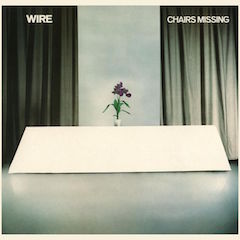 Wire:
Wire: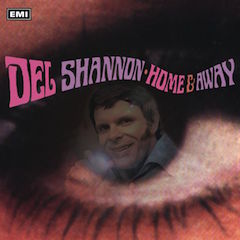 Del Shannon:
 The Kinks:
 In the mid-2000s, Eckman founded Dirtmusic with Hugo Race (Nick Cave and the Bad Seeds) and Chris Brokaw (Codeine, Come). What seemed at first to be a desert band rooted in the US frontier tradition soon transformed into something else when they hooked up with Tuareg band Tamikrest while on a trip to Mali. Says Chris Eckman in our interview: “I had listened to a fair amount of African music and reggae and dub in the early 80’s and I found myself increasingly returning to that. And then I went to Mali to travel in 2006, and that sealed the deal. After that there was no looking back.”
 What motivated you to launch the label in the first place?

 What’s next for Glitterbeat?
 Chatma
 Soutak
 Hologram İmparatorluğu
 1982: Pintura
 Gjermund Larsen Trio: Reise
 Gjermund Larsen (fele), Sondre Meisfjord (kontrabass) og Andreas Utnem (trøorgel, piano) innledet det som nå har blitt en trilogi med å melde sin Ankomst (2008), fulgte opp med Aurum (2010) og signaliserer at de fremdeles ikke har tenkt å slå seg til ro. Gleden over debuten og oppfølgerens finslipte formuleringer er naturligvis ikke like sterkt tilstede, overraskelsesmomentet mindre fremtredende. Det trenger ikke bety så mye, med mindre fornyelse er den viktigste forutsetningen. Reise skiller seg ikke nevneverdig ut fra forgjengerne, men kvaliteten i materialet er fremdeles av den mest slitesterke typen – særlig når de er på sitt mest dvelende og poetiske. Gjermund Larsen Trio har lykkes med å forene ulike disipliner, og ut av det skape noe høyst personlig og egenartet.


 Ever since its very first album release in 1994, For a Life of Sin: A Compilation of Insurgent Chicago Country, the esteemed label has been a bright and steady beacon in a shifting musical landscape. That very first compilation included local Midwestern greatness like The Bottle Rockets, Robbie Fulks, The Handsome Family, Freakwater, and of course Jon Langford (The Mekons), whose commitment to bands like The Waco Brothers and Pine Valley Cosmonauts – not to mention his striking visual art – is closely connected to the history of Bloodshot, spawning the term “insurgent country” for which the label is known.
 In retrospect, there was remarkably little awareness as to what we might be doing. In the hazy-crazy post-Nirvana days, everyone was looking for the next big thing. The notion of ‘alternative music’ that we’d grown up on was being used to soundtrack jeans commercials, Martha Stewart was telling the world how to throw a ‘grunge party’ and the whole thing was a depressing co-opting of a lifestyle and worldview.
 What labels, if any, where your personal role models or guiding stars?
 So, where do you see Bloodshot another 20 odd years down the line?
 We used to be able to release an album because we loved it; so long as it was recorded affordably, we could sell a few thousand copies and break even. Those days are gone. Both our country and the world at large is missing out on great music because the vast majority of music listeners are no longer paying a fair price for their music consumption. Ironically, despite the fact that both truly affordable home recording and tremendously broadened access to music dissemination allow many musicians to create more easily than ever before, we’ve stopped financially supporting creative content as a culture. So the same story goes in all creative content forms from film to journalism to photography.
 Old 97’s: Wreck Your Life
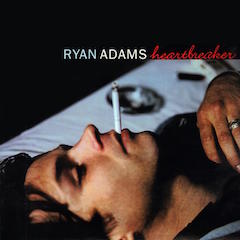 Ryan Adams: Heartbreaker
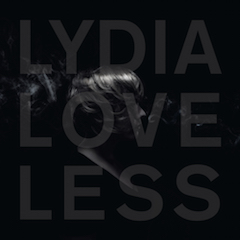 Lydia Loveless: Somewhere Else
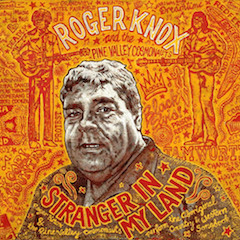 Roger Knox: Stranger in My Land
 Robbie Fulks:
  Før Kacey Musgraves ga oss Same Trailer Different Park (2013) hadde hun tre selvutgitte album bak seg, vært deltaker i talentkonkurransen Nashville Star (en country-variant av Idol), og skrevet låter for Miranda Lambert og Martina McBride.
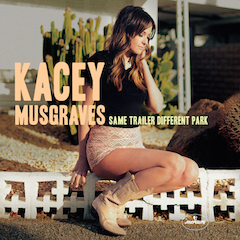 Men det var først med major label debuten Same Trailer Different Park at det virkelig tok av for supertalentet fra Sulphur Springs, Texas. 12 glitrende countrylåter og et sett vittige, rørende og ikke minst skarpe observasjoner sentrert rundt småbylivets gode og dårligere sider er nøkkelen til at Kacey Musgraves kan regnes blant dagens store countrystemmer. Skiva gikk rett inn på andreplass på Billboard (#1 på countrylistene), er nominert til det som er av countrypriser i hjemlandet og med en påfølgende turné på begge sider av havet.

 The Big Beast