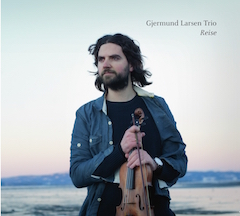
Gjermund Larsen Trio: Reise

gjermund_larsen_trioGjermund Larsen Trio: Reise
(Heilo, 2013)
Folkemusikk for de som ikke elsker folkemusikk: Gjermund Larsen Trio har med sine tre album gjort sitt for å bryte ned det som er av trangbodde skott. Folk, pop, samtid, jazz og klassisk smelter – nærmest bokstavelig talt – sammen i hendene på denne trioen. Det er da heller ikke sjangerbåsenes innsnevrende krefter som virker her, snarere den frie utfoldelse som opphøyes, og så lett, så lett inviteres vi med på nok en betagende reise inn i det vide landskapet.

For det høres lett ut når vi danser oss inn i velkomsten ”Reiseslått”, lettbeint og lekent, men det ’enkle’ i denne musikken er ikke ensbetydende med lettvint eller simpelt. Gjermund Larsen Trio er tuftet på dyp musikalsk forståelse og med en iboende åpen holdning som aldri blir insisterende eller virker å være i villrede. Dette er musikk som går inn i øret, tar plass i sjelen – og blir værende.

gjermund_larsen_trio_reiseGjermund Larsen (fele), Sondre Meisfjord (kontrabass) og Andreas Utnem (trøorgel, piano) innledet det som nå har blitt en trilogi med å melde sin Ankomst (2008), fulgte opp med Aurum (2010) og signaliserer at de fremdeles ikke har tenkt å slå seg til ro. Gleden over debuten og oppfølgerens finslipte formuleringer er naturligvis ikke like sterkt tilstede, overraskelsesmomentet mindre fremtredende. Det trenger ikke bety så mye, med mindre fornyelse er den viktigste forutsetningen. Reise skiller seg ikke nevneverdig ut fra forgjengerne, men kvaliteten i materialet er fremdeles av den mest slitesterke typen – særlig når de er på sitt mest dvelende og poetiske. Gjermund Larsen Trio har lykkes med å forene ulike disipliner, og ut av det skape noe høyst personlig og egenartet.

Folkemusikk for de som ikke elsker folkemusikk? Gjerne det. Og det er ikke negativt ment. Musikk for de som elsker musikk? I aller høyeste grad.

Bjørn Hammershaug

Unni Løvlid: Lux

Foto: Ingrid Skeie Ljones

Foto: Ingrid Skeie Ljones

Unni Løvlid: Lux (Heilo, 2013)
Unni Løvlid tilhører ingen klasse, hun er en egen klasse.

Det har gått fem år siden Rite, en høyst vellykket fusjonering av folkemusikk, elektronika og samtidsmusikk. Nå er hun tilbake, og igjen viser hun seg som en artist hinsides det konvensjonelle, som streber etter det åndelige og som griper det ugjennomtrengelige.

Lux er en målingsenhet for lysstyrke, én lux er definert som månelys. Nattens dunkle glorie. Lys og mørke er gjennomgangstemaer på dette albumet, og da særlig overgangen fra lys til mørke. Lux rammes inn av en kort trall og en vuggesang, men er ellers en ferd inn i nattens og dødens rike, men også troens og håpets. ’Dagen viger og gaar bort/luften bliffver tyck og sort’ er de første, besnærende ordene som møter oss, som et anslag for det som kommer. Det tekstlige materialet er hentet fra rike kilder; salmediktere, religiøse doktriner og barokkdiktning. Tonene er også nennsomt plukket fra de gamle tradisjoner, folketoner fra hjembygda Hornindal, Selje og Sogn. Men det som kommer ut av dette er langt fra tradisjonelt.

unni_lovlid_lux

Løvlid har denne gangen samarbeidet med Håkon Thelin (Poing, Oslo Sinfonietta) samt glassduoen Randi-Merete Roset og Liv-Jorun Bergset (fra Draup). Med effektiv og minimalistisk tonesetting av konstante uromomenter underbygges mystikken og den mørke stemningen, og den gir platen en vital puls. Over det hele, Unni Løvlids klare, klangrike stemme, i seg selv er en lysfontene, skaper balanse til både tekstene og musikken. Hun kan nok være hakket for insisterende i sine fraseringer i mine ører, men det er en smakssak. Hennes kvaliteter som sanger tør være ubestridte, jeg skulle likevel gjerne applaudert enda større spillerom for bare musikken her. Den er fantastisk.

Håkon Thelin poengterer noe viktig i sin fine albumtekst, der han blant annet skriver: ’Til tross for Unni sin ofte langsomme og sanselige kommunikasjon av tekstene, forblir melodiene glødende, som om ordene hører til på jorden og melodien strekker seg inn i en himmel fylt med lys.’

Hvor mange album kan man egentlig si noe slikt om. Lux er nok en kunstnerisk seier for Unni Løvlid, en fryd for øret til deg som lytter og noe av det mest magiske du kan forvente på et album i 2013.

Bjørn Hammershaug

Bloodshot Records: A Life of Sin

bloodshot_1


Bloodshot Records was born in a late-night Chicago bar, with some simple ideas scrawled out on a cocktail napkin.

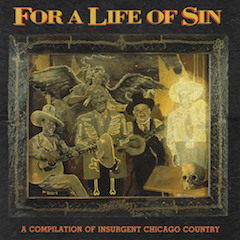
for-a-life-of-sinEver since its very first album release in 1994, For a Life of Sin: A Compilation of Insurgent Chicago Country, the esteemed label has been a bright and steady beacon in a shifting musical landscape. That very first compilation included local Midwestern greatness like The Bottle Rockets, Robbie Fulks, The Handsome Family, Freakwater, and of course Jon Langford (The Mekons), whose commitment to bands like The Waco Brothers and Pine Valley Cosmonauts – not to mention his striking visual art – is closely connected to the history of Bloodshot, spawning the term “insurgent country” for which the label is known.

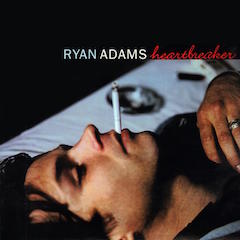
Predating the Americana wave to come later in the ’90s, Bloodshot soon spread out across the nation to become nearly synonymous with rootsy rock ‘n’ roll, country punk, and shining singer-songwriters seemingly unfit to belong anywhere else. Initially dropping releases from the likes of Old 97’s, Neko Case, Waco Brothers, and Ryan Adams (Heartbreaker being Bloodshot’s biggest seller of all time) laid the foundation that the label would carefully built and gradually developed over the years.

More recent signings include Justin Townes Earle, Lydia Loveless, Luke Winslow-King, and Maggie Björklund, as well as long-time main stayers as Graham Parker, Andre Williams, The Sadies, and Alejandro Escovedo. And even though Bloodshot has always stayed true to its roots, it has never stop growing and expanding and has continued to consistently release quality music. Going through Bloodshot’s massive catalog and choosing highlights is both an exciting and monumental task, one that serves as a reminder of how vital, diverse, and fun the label’s output has been.

unnamed-1

Justin Townes Earle (Credit: Bloodshot/Joshua Black Wilkins)

I hooked up with original label founders Nan Warshaw and Rob Miller to get to know beloved Bloodshot a little better. Read on to learn about the label that draws lines from the Dead Kennedys straight back to Johnny Cash, to hear a compelling story about longevity without compromising guiding principles and to understand how the devaluation of creative content these days makes us all culturally poorer.

*   *   *

Can you please give a brief history of Bloodshot and how it was founded? 

Rob Miller: Three music freaks walked into bar… Bloodshot started the same way a great many ridiculous enterprises began: ignorance, stubbornness, naiveté, and boundless enthusiasm for music that others seemed to be ignoring. And liquor.

executioners_last_songsIn retrospect, there was remarkably little awareness as to what we might be doing. In the hazy-crazy post-Nirvana days, everyone was looking for the next big thing. The notion of ‘alternative music’ that we’d grown up on was being used to soundtrack jeans commercials, Martha Stewart was telling the world how to throw a ‘grunge party’ and the whole thing was a depressing co-opting of a lifestyle and worldview.

At the same time, we saw a vibrant and, to us, under-recognized scene in Chicago full of bands dipping their toes into the rootsy music underbelly. It was fresh, inventive, unconstricted by rules or expectations. And it was honest and straightforward. It drew the line from the Dead Kennedys straight back to Johnny Cash. We thought ‘hey, why not gather up a bunch of songs and put them on a CD and have a show!’ It was that simple and that, I dunno, pure in its genesis. There was no planning for step #2. It was, at the time, a distraction from my day job of painting houses and getting the infrequent tiny check for writing an album review or something.

But we struck a chord, and the enterprise snowballed and here we are, 22 years later, still waiting for someone to say “Hey! You can’t do that!!”

What motivated you to enter the music business in the first place?

RM: My first concert was Alice Cooper at the Cobo Hall in Detroit in 1979. I hated it all. The whole ‘Detroit Rock City’ vibe. The weed, the long hair, the pure dumb-assery of it all. Listening to “Stairway to Heaven” on the radio made we wonder why people liked music at all. It was so tedious and spoke not a whit to the hellishness of the bullying and alienation I was experiencing in high school. Then I saw Devo. Then the Ramones, then Black Flag, then X, Circle Jerks, The Cramps, The Gun Club…. all in the space of about two months. And that was it: The energy, the anger, the weirdness, the freedom.

Looking back, I guess it wasn’t a matter of IF I’d be involved in music, but a matter of when and how. After a couple years of DJ’ing in college, and a stint as a roadie, as a stage manager, as a production manager and as an occasional tour manager in addition to doing lots of writing in my spare time, I moved to Chicago to get away from music. That didn’t turn out too well.

waco_cowboyWhat labels, if any, where your personal role models or guiding stars?

RM: Being a full-fledged music geek, I started paying attention to the labels themselves early on and to the identities and histories they had. Stax/Volt, Sun, Chess and being from Detroit, obviously Motown and Fortune. Plus all those crazy regional labels like King and a thousand others. When I started getting into punk and hardcore, there was such a strong bond and association between bands, fans and labels. Dischord, Slash, SST, Touch and Go were all models – perhaps unwittingly – for the notion that if you want to do something, DO IT. Don’t wait for a major label or some other sort monolithic power structure to tell you how things should be done. Building a community around the label seemed so natural in the days of Sub Pop, Estrus, Sympathy for the Record Industry, K, In the Red, we didn’t really sit down and go “this is a good business move,” it was just a natural extension of our participation in the underground music scene.

What do you represent or stand for as an institution?

RM: Well, what we represent is for others to decide, I suppose. We’ve never got too bogged down with questions like ‘what is the BS sound?’ or ‘how much do you represent a counterview to the Nashville Country Music Industry?’ or other such things. We’re too busy doing the work and moving forward.

We’d like to be thought of, by both our fans and our artists, as a bunch of music fans who worked hard, believed in what we did, never took the support we’ve received for granted, and never took the art entrusted to us lightly.

And that we threw some pretty fun parties.

What, in your opinion, is the greatest achievement in the history of Bloodshot Records? What are you most proud of achieving since starting the label?

RM: Longevity without compromising our principles. It’s impossible for me to pick ONE moment, or ONE album, that would mean that I’m always looking back, and I try not to do that. The joy and sense of accomplishment comes from the long view; watching an artist’s career arc, still believing in what we do.  I’m proud that people still find that occasional spark in our releases, that they trust us and stick around for the ride.

Did you have an initial idea back then on what the label ought to be and how it could evolve in the future?

RM: Not to be glib, but we had no idea what we were doing or getting ourselves into back then. Or now, for that matter. There was no expectation of a “future” when we started – ignorance can be very liberating – and there are always new surprises and challenges. Often, especially as a result of changing technologies, evolution is thrust upon us and we do the best we can.

The Bottle Rockets (Credit: Bloodshot/Todd Fox)

The Bottle Rockets (Credit: Bloodshot/Todd Fox)

*   *   *

How will you describe your music scene at the moment?

Nan Warshaw: Bloodshot is in the wonderful position of having many loyal fans who buy music to support the artists they love. Many of our fans come from an indie rock background and most are seeking out unique music that speaks to them. Bloodshot has never fit neatly within a genre package, our bands tend to be too edgy for Americana and Folk, and too roots based for straight ahead indie rock and punk – which is exactly why they stand out.

How do you decide whether to release an album or not?

NW: Once we commit to working with an artist, we’re in for a penny and in for a pound. We give our bands full artistic reign. We have never not released an album delivered by one of our. Our “judging” process happens earlier, when we’re deciding if an artist is the right fit for Bloodshot. First, we have to love the music and believe we can be that artist’s best label home. These days we can only afford to work with artists that are already touring a lot, artists who already have the rest of their business side together.

earle_harlemriverSo, where do you see Bloodshot another 20 odd years down the line?

NW: How will music be consumed in 20 years?!? We have no clue! What we do know is, as that change is happening, we must remain nimble and adapt quickly.

The music industry goes through rapid changes these days. How have those challenges and changes affected your work, if at all, and what is different running a label today compared to before?

We have to work harder and smarter to earn one third the amount we did a decade ago. For example, an artist seeing the success of Lydia Loveless today is comparable to what Justin Townes Earle saw six years ago, yet sales don’t compare at all. More than an entire generation is accustomed to getting creative content free, or almost free. People inoculate themselves against ‘illegal’ by paying a pittance for a streaming service, they then don’t feel guilty yet they’re not paying enough to support the artists they claim to love. Bloodshot is getting more media and fan attention than ever for our artists, but it isn’t reflected in record sales or streaming income. In other words, the loss caused by a sharp decline in physical sales has not been made up for by the increase in digital revenue. As usual, the major labels have an unfair advantage over the indie labels. They invest in or own the digital services, and those services have cut them into income streams (such as breakage) that indie labels rarely see a part of. Then the major labels don’t share that additional income with their artists.

under-the-savage-skyWe used to be able to release an album because we loved it; so long as it was recorded affordably, we could sell a few thousand copies and break even. Those days are gone. Both our country and the world at large is missing out on great music because the vast majority of music listeners are no longer paying a fair price for their music consumption. Ironically, despite the fact that both truly affordable home recording and tremendously broadened access to music dissemination allow many musicians to create more easily than ever before, we’ve stopped financially supporting creative content as a culture. So the same story goes in all creative content forms from film to journalism to photography.

This shift to devalue creative content makes us all culturally poorer.

What’s coming next for Bloodshot?

We have exciting new albums in the works from Scott Biram, Cory Branan, Ha Ha Tonka, Banditos, and Yawpers. Plus, a seminal vinyl LP release from the Old 97s. Most recently, we released a new, yet classic, juke-joint swing album Slingin’ Rhythm by Wayne Hancock, and a vocal-pop-jazz (think Harry Nilsson, Beach Boys) album It’s a World of Love and Hope from Chicago all-stars The Flat Five.

Where can folks experience your music in the near future?

Our bands are constantly touring. You can see all the upcoming dates here. If you want to be notified about new releases and your favorite Bloodshot artists coming to your town, sign up here.

Any regrets? Anything you would do differently given a second chance?

Since I don’t have a time machine and might accidentally dial in the wrong date if I did have one – anyway, I’d rather go back to re-live a great show! – I’ll avoid re-living my failures and the risk of my little historical changes causing WWIII. On that happy note, I’ll add that we’ve had the absolute pleasure and honor of working with our musical heroes – there is nothing better than watching a stellar show where the artist plays a new song that almost goes off the track but amazingly manages to stay on, or where harmonies send chills down your spine while there are twice as many enthusiastic fans watching than the last time.

*   *   *

We also asked the kind people over at Bloodshot to select 5 memorable or important albums (impossible task, we know) that tell the story of the label. Mr. Miller kindly returned with these gems from over the years:

old97_wreckOld 97’s: Wreck Your Life
(BS 009, 1995)

The first record we released that made us think ‘um….we might be onto something.’ They came on like a gang and found that heavenly sweet spot between true punk, metal and deep country soul. They perfected a template that has had no relevant usurpers.

ryan_adams_heartbreakerRyan Adams: Heartbreaker
(BS 071, 2000)

No in depth history of Bloodshot would be complete without a mention of this masterpiece. A stone cold classic. The sine qua non of Ryan’s albums. Where promise met execution head on. As life piles on the weirdness and hardships, this album gets nothing but better. It took off like a rocket and we all had to hang on for the ride, learning a lot of lessons along the way.

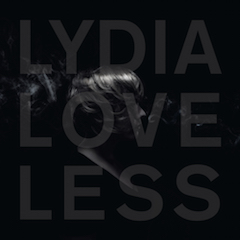
Lydia Loveless: Somewhere Else
(BS 219, 2014)

As a music geek, one of the ongoing thrills of the job is the act of discovery. Finding a young, rough talent and watching them find their voice and develop an artistic footing. We’ve been fortunate to be along on such journeys with Neko Case, Justin Townes Earle and many others. Recently, we’ve been lucky enough to be a part of the creative and popular ascendance of Lydia Loveless. On her first Bloodshot release (2011’s Indestructible Machine) there were fevered comparisons to acknowledged music icons like Loretta Lynn, Stevie Nicks, the Replacements, and more: She’s half this, half that, one part something else. We hate math. But, now Lydia Loveless is a reference point all her own. The arc of her development is an inspiring and exciting one.

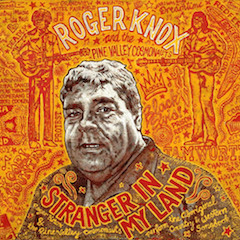
roger_knoxRoger Knox: Stranger in My Land
(BS 179, 2013)

Made with an all-star cast, headed by Jon Langford (Mekons, Waco Brothers), this is a record of great importance. It traces the influence of American country & western on the aboriginal Australian community. It is powerful and moving material, heartbreaking and hilarious, downtrodden and uplifting, suffused with longing, alienation, resilience and hope; universal themes arising out of largely unexplored context. It possesses the urgency of an Alan Lomax field recording, but with a spirit that remains relevant in today’s world. Most of our music is for entertainment’s sake, but this a record with profound historical reach.

robbie_fulks_uplandRobbie Fulks: Upland Stories
(BS 242, 2016)

We worked with Robbie on our very first release, the Chicago-centric compilation For A Life Of Sin. After that, we put out a few of his albums and several other compilation tracks. Our paths meandered over the years, but recently we have re-connected for a couple of stellar releases, the most recent being Upland Stories. That Robbie is not a widely celebrated name in households across the world as one of the premiere songwriters of this generation, is a pox upon us all. To be a part of his evolving talents is a listener’s delight.

Bjørn Hammershaug

Opprinnelig publisert på read.tidal.com, november 2016

Kacey Musgraves: Jenta fra Trailerparken

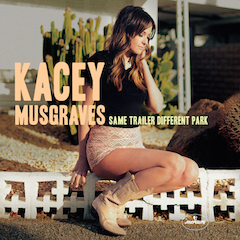
kacey_musgraves_1Før Kacey Musgraves ga oss Same Trailer Different Park (2013) hadde hun tre selvutgitte album bak seg, vært deltaker i talentkonkurransen Nashville Star (en country-variant av Idol), og skrevet låter for Miranda Lambert og Martina McBride.

kacey_trailerMen det var først med major label debuten Same Trailer Different Park at det virkelig tok av for supertalentet fra Sulphur Springs, Texas. 12 glitrende countrylåter og et sett vittige, rørende og ikke minst skarpe observasjoner sentrert rundt småbylivets gode og dårligere sider er nøkkelen til at Kacey Musgraves kan regnes blant dagens store countrystemmer. Skiva gikk rett inn på andreplass på Billboard (#1 på countrylistene), er nominert til det som er av countrypriser i hjemlandet og med en påfølgende turné på begge sider av havet.

– The last few months and even year has been such a beautiful whirlwind. So many things have happened that have already blown my mind. I can’t wait to keep going on this journey I’m on. Det sier Musgraves da jeg spør henne hvordan hun selv har opplevd den siste tidens plutselige opptur.

Det er helt naturlig å plassere henne som en streit countryartist. Men hun trekker også mot andre uttrykk, og toucher innom både singer/songwriter, klassisk pop og rockabilly. Hun sier da også selv at hun lar seg inspirere av musikk fra alle steder og alle genre, men nevner spesielt Glen Campbell, Loretta Lynn, John Prine, Willie Nelson og Ryan Adams som viktige for henne – samt, kanskje noe uventet, band som Cake og Weezer.

Selv om musikken til Musgraves er iørefallende nok, er det særlig tekstene som skiller henne ut fra mange av sine samtidige. Hun åpner med å våkne opp ’on the wrong side of rock bottom’ og penser innom referanser til dop, drikking og tilfeldig sex i sine betraktninger der småbyen er bakteppe og dens innbyggere spiller hovedrollene. Kritikernestor Robert Christagu mente at Musgraves er ’the finest lyricist to rise up out of conscious country since Miranda Lambert, if not Bobby Pinson himself’.

Det kan være relevant å nevne Loretta Lynn i den sammenheng. Hun ankom Nashville på 60-tallet og ble berømt for tekster som for mange var uhørt på den tiden. Når Musgraves dro til countryhovedstaden noen tiår senere fikk hun oppmerksomhet for å ta opp lignende tematikk.

– I really respect Loretta Lynn for having the courage to come out with controversial songs when she did. She pulled it off in a sassy, intelligent way and has paved the way for artists and writers like me to say what we wanna say. I’m proud to be a part of that mentality – blending elements of traditional country and modern ideas, sier Musgraves da jeg trekker opp denne parallellen.

kacey_musgraves_3

Det ser likevel ut til å være et mer tolerant miljø i dag, mens country-radio fremdeles er mer konservative i forhold til hva de spiller?

– Country radio’s conservatism, thankfully, hasn’t affected the message that I want to put out in the world. It excites me that so many people are open to my music.

’Water and electric and a place to drain the septic / Any KOA is A-OK as long as I’m with you’
(”My House”)

Dine observasjoner og beskrivelser av livene til ordinære folk fra små steder ser ut til å falle deg naturlig. Hvordan arbeider du fram dine historier, og hva hvor kommer de fra?

– I find inspiration in almost everything. Conversations, things I see, things other people I know have gone through or things that I have gone through. It starts with something simple and then the idea – if it’s a good one – builds and builds. Most of my messages are observational, I feel.

Du kommer fra østlige Texas, en region som har gitt oss så mange store artister, fra George Jones, Johnny Horton og Lee Ann Womack til Miranda Lambert. Hva er det i vannet der borte, egentlig?

– It might be because there’s nothing else to do! Haha, I’m not quite sure but it’s cool.

Det er det, og Kacey Musgraves er en naturlig del av denne rike tradisjonen. Vi gleder oss til å oppleve henne her i Norge, noe Musgraves selv gjengjelder:

– I’m excited to see the beautiful nature that Norway has to offer. Meet the people, eat the food, or at that point maybe just sleep, ler hun.

Beste låt du har hørt live:
“Ghost In This House” – Alison Krauss

En låt du selv skulle ønske at du hadde skrevet:
“You Were Always On My Mind” – Willie Nelson

Beste låta å bli forelsket til:
“At Last” – Etta James

En perfekt låt for en perfekt lørdagskveld:
“Southern Nights” med Glen Campbell — eller “Royals” av Lorde

Dette intervjuet ble foretatt i september 2013, og ble opprinnelig publisert på WiMPbloggen i forbindelse med hennes første konsert i Norge (John Dee, 3. oktober 2013).

kacey_musgraves_meet_greet

Bjørn Hammershaug

Half Japanese: Jad Fair on 5 Albums That Changed His Life

half_japanese_2

— If you want it to be fast, play fast. If you wanna go slow, go slow. That’s all there is to it, it’s that easy to play guitar. Some people worry about chords and stuff, and that’s all right too. There are all kinds of music in this world.
— Well, you do need chords in order to plug the guitar in, but that’s pretty much it.

Jad & David Fair on playing guitar,
Half Japanese: The Band That Would Be King (1993)

*   *   *

half_japanese_lionsDiligently recording and releasing unique music since the mid ‘70s, Half Japanese is an American outsider music institution, one that represents the true embodiment of cult heroes.

With Hear the Lions Roar (Fire Records, 2017), their 16th full-length studio effort to date, the underground icons have once again garnered widespread critical acclaim, celebrated for conjuring that same urgency and vitality first heard on record four decades ago.

Of the band’s most recent work, NPR states: “[The album] bolsters that Half Japanese tradition, with 13 diverse, attention-grabbing tunes that rival the band’s ’80s classics such as Charmed Life and The Band That Would Be King. Amid hard-riff jams, swinging ditties, lovelorn ballads and other catchy gems, Jad persistently breathes life into the Half Japanese repertoire, once described by his brother as ‘monster songs and love songs.’”

The Half Japanese story could easily be titled ‘songs about monsters and love.’ Brothers Jad and David Fair first started out playing as Half Japanese when their parents relocated from Michigan to Uniontown, Maryland in the 1970s. Half Japanese was then born in their bedroom in spite of the fact that the Fair brothers had little to no idea about how exactly to play their instruments. Instead, they enthusiastically hammered out homemade tunes peppered with humor, energy and innocence, with lyrics frequently concerned about horror flicks, monsters, tabloids and women.

It’s been said that they were heavily inspired by the abstract expressionism of Jackson Pollock. As such, and as a direct equivalent to Pollock’s form of action painting, Jad and David Fair relied more on their raw thirst for creation rather than on their technical shortcomings. They are rightfully considered to have spearheaded both the lo-fi and D.I.Y. movements, thereby foreshadowing a great deal of what the indie rock scene would come to explode in the ‘90s.

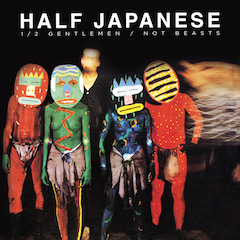
half_japanese_gentlemenThe band’s official recording career began with a characteristically ambitious triple album, 1/2 Gentlemen/Not Beasts (1980), later chosen by Rolling Stone as one of the top 100 most influential alternative albums of all time. Over the years, Half Japanese have faithfully released music at a tremendous pace, as Half Japanese, as solo artists and in numerous additional collaborations. And aside from David Fair, who handed over the duties to his brother in the early 1980s but has made occasional guest appearance over the years, the band features the same members who have been at Jad’s side since the late ’80s and early ’90s: John Sluggett (guitar, keys, timbales), Gilles-Vincent Rieder (drums, percussion, keys), Jason Willett (bass, keys), Mick Hobbs (guitar, glockenspiel).

They’ve never come close to breaking into mainstream but have consistently followed their own artistic vision all along, enjoying support from bands they’d influenced like Sonic Youth, Beat Happening, Yo La Tengo, Neutral Milk Hotel, and, of course, Nirvana. Kurt Cobain ranked them among his very favorites, chose them to open for Nirvana on the In Utero tour and was even wearing their T-shirt when he died.

Proudly to introduce the latest work from these underrated art-rockers with a round of 5 Albums That Changed My Life, answered by the one and only Jad Fair.

half_japanese_1

* * *

‘It’s difficult to choose the 5 albums that had the biggest impact on me,’ admits Fair. ‘There are so many albums that I’ve played over and over and over again. The five albums I chose are…’:

The Stooges:
Fun House
(Elektra, 1970)
I grew up in Michigan and I thought I was in the best place in the world for music. We had The MC5, Motown and The Stooges. I bought Fun House when it first came out and played it more than any other album I had. I loved its energy. I think it’s a perfect album.

shaggsThe Shaggs:
Philosophy of the World
(Third Word, 1969)
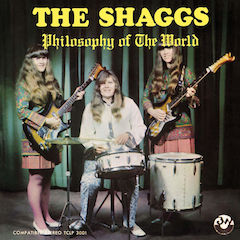
I was given a cassette tape of Philosophy of the World in 1977 and was blown away by it. The music is great and the lyrics are sweet and pure. I was surprised to later find out that The Shaggs always used music sheets. Two years ago Dot Wiggin released a new album and asked me to do the cover art. I was thrilled to do it.


The Modern Lovers:
The Modern Lovers
(Beserkley, 1976)
I first heard about The Modern Lovers in 1974. Interview magazine had an interview with Jonathan Richman. The interview struck a chord with me. He was doing what I wanted to do. I bought the Modern Lovers album in ’76 and loved it. Everything about it is spot on. Jonathan is one of my favorite songwriters and performers. Excellent times ten.

daniel_hiDaniel Johnston:
Hi, How Are You
(self-released, 1983)
Half Japanese had a tour of the U.S. in 1986. At a show in Austin Daniel Johnston’s manager Jeff Tartakov gave me a tape of Hi, How Are You. While on tour we played it more times than any other album. Daniel is an amazing songwriter. I started writing to Daniel and was able to record with him in 1990. I’m so lucky to have Daniel as a friend.


Captain Beefheart and The Magic Band:
Trout Mask Replica
(Straight/Reprise, 1969)
My brother David had all of Captain Beefheart’s albums. Trout Mask Replica is an album I immediately flipped for. The Magic Band had a sound all their own. It was like nothing else I had heard. The blues roots were solid yet they took it to another level. The musicianship is top-notch.

Bjørn Hammershaug

Tompkins Square: The Record Store of the Mind

tsq-black_1200Tompkins Square is the small but highly-respected label out of San Francisco. Founded and largely run alone by Josh Rosenthal, the young indie imprint is most renowned for their exquisite sense of quality and their deep diggings into the forgotten crates of 20th century American music.

Growing up in Long Island (fun fact: Together with Judd Apatow), Rosenthal was weaned on a rich musical diet, beginning with fellow Long Islanders Billy Joel and Lou Reed. As a teenager he interned at PolyGram Records, and subsequently worked at a major label for 15 years before venturing out to found his own label, Tompkins Square, in 2005.

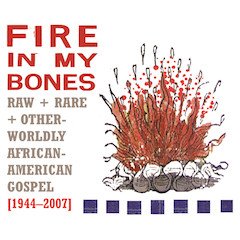
fireinmybonesThey have shed new light on old artists like Robbie Basho, Charlie Louvin and Tim Buckley, also releasing new artists like Hiss Golden Messenger, Daniel Bachman and James Blackshaw. In just a decade Tompkins Square has also earned a well-deserved reputation for their archival collections, such as the Grammy-nominated box set People Take Warning! Murder Ballads & Disaster Songs, 1913-1938 and the fantastic gospel collection Fire In My Bones!: Raw + Rare + Otherworldly African-American Gospel, 1944-2007

Celebrating its first ten years in 2015 – not to mention a total of seven Grammy nominations so far – Tompkins Square just rereleased the cheekily-titled anniversary compilation, 10 Years of Tompkins Square: Some That You Recognize, Some That You’ve Hardly Even Heard Of. Josh Rosenthal also recently wrote the book, The Record Store of the Mind. Part memoir, part music criticism, he ruminates over unsung music heroes and reflects on thirty years of toil and fandom in the music business.

In his glowing recommendation of the book, legendary producer T Bone Burnett writes, ‘Josh Rosenthal is a record man’s record man. He is also a musician’s record man. He is in the line of Samuel Charters and Harry Smith. In this age where we have access to everything and know the value of nothing, musicians need people like Josh to hear them when no one else can.’

I talked to Rosenthal about Tompkins Square at ten, favorite moments from along the way and lessons learned after three decades in the music business.

The Old South Quartette

The Old South Quartette

* * *

How did you get into the music business in the first place?

I recount a lot of this stuff in my new book, The Record Store of the Mind. I worked at a high school radio station in the ‘80s and interviewed bands like R.E.M. I saw The Replacements and Nirvana before they were signed to majors. I interned at PolyGram and hung with Richard Thompson and worked all the Velvet Underground reissues that were out for the first time. All that stuff was very formative to me.

Which labels where your own role models when you decide to start up Tompkins Square?

I love the ’60s and ’70s labels like Rounder, Yazoo, County, Blue Goose, and Folkways that kept churning out tons of great records. I wish I could be as prolific. There’s a certain aesthetic tied to those labels that really turns me on.

What does Tompkins Square stand for as an institution?

I’d leave that to others. I think we’ve had a pretty good quality ratio with the catalog, and we’ve exposed some new artists, as well as unearthed some great archival stuff. I hope I’m getting better. You always strive for that. If you can’t get better at something, why keep doing it?

don-bikoff-1967

Don Bikoff, 1967

What triggered you into the art of reissues?

I worked the Robert Johnson box set when that came out on Columbia in the early ‘90s. It was very exciting for an archival set like that to go Gold – it was pretty much unprecedented. That gave me my first taste, and then I initiated the Charlie Poole box set, which was nominated for a few Grammys. So I started getting into it.

What, in your opinion, is the greatest achievement in the 10 year history of Tompkins Square?

I’ve been really fortunate to work with great artists like Daniel Bachman, Ryley Walker, Peter Walker, Michael Chapman, Bob Brown, William Tyler, Charlie Louvin (Louvin Brothers), and more. And we’ve racked up seven Grammy noms, which is nice. Thanks for letting me brag!

imaginational_anthemDid you have an initial idea back then on what the label should be and how it could evolve in the future?

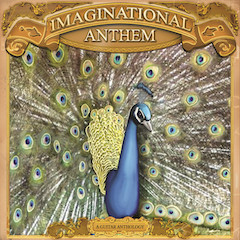
Not really. It started with one record, Imaginational Anthem. I compiled it, got a distribution deal for it. The record got on NPR and sold a bunch. So I kept going.

What makes you decide to release an album or not?

I always say the label does me, not the other way around. Things have a way of coming together and projects come into view. It’s not something I really can plan. The deciding factor has always been, how excited am I about this? It certainly doesn’t come down to sales!

How do you see Tompkins Square another 10 years down the line?

I don’t know. Ten years is a nice round number. Not really sure.

The music industry is going through a lot of changes these days. How have those challenges affected your work – and what is different running a label today compared to before?

Things are very fluid today. Your press lasts about a day, if you’re lucky enough to get any. You rely on a small core of people to evangelize for you: friends at indie retail, people on your mailing list. Usually those folks can carry you on the physical side, and then your catalog hopefully has a life online too. I am very excited about streaming. My daughter is 13 and she is discovering the whole history of music right now. It’s a miraculous development, something that would have seemed like pure science fiction even 15 years ago.

There’s no time for complaining. The new music business is challenging, but if you’re smart, you can make it work in your favor.

Any regrets? Anything you would do differently if you had a second chance?

I never scaled the label or hired a full-time employee alongside me. We’re not like many other indie labels out there with small armies of people. It’s just me and my hired art director and outside producers sometimes. So I might have scaled it more. But I’m pretty happy where it is.

A hit record would have been nice, although I’ve never played that game. It’s an expensive game to play.

Can you pick three of your favorite Tompkins Square releases?

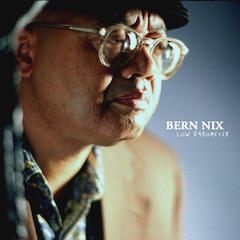
bernie_nixGuitarist Bern Nix’s album Low Barometer was one of the first albums I recorded. Bern played with Ornette Coleman, and I used to see him around my neighborhood in the East Village. His harmolodic approach to guitar is fascinating and he is a giant of improvisation. Like Derek Bailey, not always the easiest listen, but a very satisfying one if you put yourself to the test.

Ran Blake is a hero of mine. I sought him out early on to record All That Is Tied, which got a ‘Crown’ in the Penguin Guide to Jazz albums. Quite an honor in a career full of them. Ran released two more albums on Tompkins Square; Driftwood, which is a tribute to his favorite vocalists, and Grey December: Live in Rome, which is a buried treasure in the Tompkins Square catalog for sure.

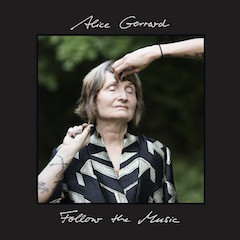
alice_gerrardSharon Van Etten emailed me cold in 2009 and told me to check William out. I didn’t know who she was at the time, it was a random email. So I signed Will, and then he told me about Hiss Golden Messenger, who I signed, and then Michael Taylor from HGM produced Alice Gerrard’s album, Follow The Music, which got Alice her first Grammy nom at age 80. All from one email! His LP [Behold The Spirit], with its sweeping arrangements, changed the game for acoustic guitar records. Everyone who follows the American Primitive genre knows this by now.

Bjørn Hammershaug

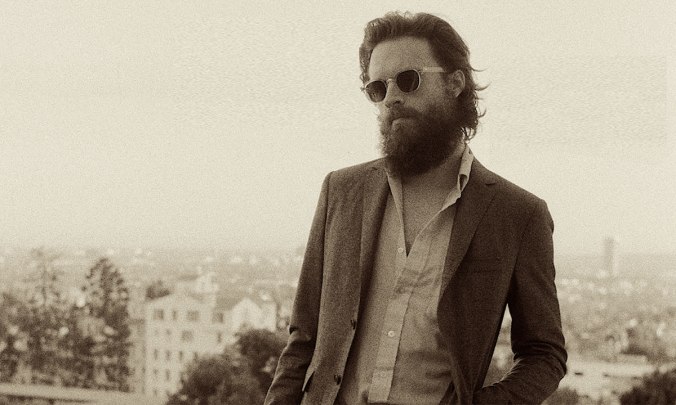
Father John Misty: Charlatan of the Canyon

father_john_misty_1200


This piece was written in February 2015, around the release of Father John Misty’s sophomore LP, I Love You, Honeybear

Father John Misty is a two-faced son of a bitch.

He might look like another bearded singer-songwriter, heck, he even used to be another bearded singer-songwriter with a strong affinity for smooth folk-rock. But Father John Misty (alias: Josh Tillman) is – down to his very essence – not what he appears.

honeybear_mistyStewing with sex, violence, profanity and excavations of the male psyche – gift-wrapped in gorgeous melodies that would woo Neil Diamond – Misty’s sophomore LP, I Love You, Honeybear, is a stunning work of duplicitous harmony. This show his relies on his ability to juggle contradictions – romance and tragedy, sorrow and slapstick, cynicism and sincerity – with casual serendipity.

Honeybear’s first single, “Bored in the USA”, remains the album’s definitive track, which Pitchfork described as, “passionate and disillusioned, tender and angry, so cynical it’s repulsive and so openhearted it hurts.”

Father John Misty garnered major attention last November when he played the tune on The Late Show with David Letterman. Quite akin to how Future Islands managed to boost their career when they turned “Seasons (Waiting On You)” into a viral hit from the same stage.

The performance was finely planned and brilliantly orchestrated. Sharply dressed, hair slicked back, he begins playing behind the keys of a dark grand piano, flanked by a 22-man string orchestra.

Then, à la David Lynch’s Mulholland Drive, he openly reveals that the audience is being fooled. After the first verse, Misty stands and turns to the audience as the piano continues to play by itself. He casually swings the mic, crawls onto the piano like a cabaret singer, and pleads for salvation. Meanwhile, canned laughter and boxed applause underline the song’s underlying textures of sarcasm, wit, and social and religious criticism.

Yet as melodramatic and conspicuously phony as elements of the presentation are, the passion and grace with which he delivers leaves no doubt that Father John Misty takes his music, and his persona, quite seriously.

Having grown up among an evangelical Christian community in Maryland, Tillman is familiar with mega-church theatrics. And just as the shiny TV pastors who believes in the gospel he spreads, even while he himself siphons the water for wine, Father John Misty doesn’t see an inherent conflict between candor and showmanship.

In an essay on the song and the Letterman appearance, Impose Magazine’s Geoff Nelson wrote:

There is no such thing as not worshiping. Everybody worships. The only choice we get is what to worship. The secular brand of worship is no less damaging than the evangelical’s bizarro landscape of White Jesus. We worship our bodies, minds, our stuff – hell, we worship independent rock artists like Tillman, worrying over their artistic choices like scripture. None of us are clean.

Tillman’s world – it is our own, he suggests – requires a fistful of pills to keep leveled out. Asking for salvation again, Tillman wails, “Save me, President Jesus,” invoking a uniquely American brand of religiosity and nationalism where the best and worst day of every passing cultural year is Super Bowl Sunday.

And the paradoxes run deeper still.

In micro and meta terms, the title and chorus of “Bored in the USA” make a clever and not-so-subtle play on Bruce Springsteen’s “Born in the USA” – an anti-war tune that is mistakenly embraced as a patriotic anthem – further unveiling the duality in both himself and his songs. Underlined by the artificial laughter when he croons about “useless education” and “sub-prime loans,” Nelson continues, “If nothing else, the brilliance and the irritation of this moment lies in the hijacking of the real people who came to laugh at Letterman and found themselves the straight man in Misty’s joke.”

“It is a concept album about a guy named Josh Tillman who spends quite a bit of time banging his head against walls, cultivating weak ties with strangers and generally avoiding intimacy at all costs,” says Father John Misty of the album, intentionally confusing his real-life identity as the protagonist of his stories. “This all serves to fuel a version of himself that his self-loathing narcissism can deal with. We see him engaging in all manner of regrettable behavior.”

***

I Love You, Honeybear is the second album by Father John Misty, but Tillman is by no means a newcomer.

He’s recognized by many as the drummer in Fleet Foxes, and as a folk-heavy solo artist under the name J. Tillman. After moving to Seattle in his early 2000s. Tillman befriended Damien Jurado, who helped jump-start his career. He released seven of albums as J. Tillman, between 2004 and 2010, joining the beloved indie-folk band Fleet Foxes in 2008 before departing in 2012.

Finally, Tillman packed is bags and headed south with nowhere to go. High on mushrooms and great ideas, he ended up in Laurel Canyon where he found a new voice – and new name – as Father John Misty. Paraphrasing author Philip Roth on how he came up with the new moniker, he said, “It’s all of me and none of me, if you can’t see that, you won’t get it.”

Honeybear was recorded between 2013 to 2014 in Los Angeles with producer Jonathan Wilson, who also recorded and produced Misty’s 2012 debut, Fear Fun, with mixing by Phil Ek and mastering by Greg Calbi at Sterling Sound.

Bjørn Hammershaug

Messing With Classics

mclemore_1200_720

Reinventing the wheel is dangerous business.

Having remade Pink Floyd’s The Dark Side Of The Moon in 2009 as well as releasing a very rare take of The Stone Roses’ self titled debut in 2013, The Flaming Lips have made a name for themselves as a band unafraid to tackle classic material on their own terms. They continue in that same vein with their new rendition of The Beatles’ 1967 Sgt. Pepper’s Lonely Hearts Club Band.

Says Lips’ Wayne Coyne: ‘Mostly we do it because it’s fun… I don’t think we have any agenda. I mean we make so, so much music that it can be a relief not to be working on your own songs…everyone who makes their own music has this secret joy of playing songs that aren’t theirs.’

Coyne goes on to suggest that these albums we call ‘classics’ aren’t as sacred as we hold them to be, their resonance in people being, to an extent, ‘dumb luck.’ While there may be some truth to this statement, any artist so bold as to take on one of these works ought to anticipate the expectations they are setting up for themselves.

An act far beyond covering a single track, and far more rare, remaking a full album is a risky business, especially when it comes to legends as the Pink Floyd or The Beatles. The Flaming Lips do it their own way and for their own reasons, but they’re not the only ones stepping into thin air. Here are 10 other interesting attempts at full album covers.

Easy All-Stars:
Dub Side Of The Moon
(Easy Star, 2003)

dark_sideThe original:
Pink Floyd:
The Dark Side Of The Moon
(Harvest, 1973)
The Dark Side Of The Moon is quite simply one of the most iconic, best known and best-selling albums of all time, remaining on the Billboard charts for a stunning 741 weeks in a row. That’s 14 years, folks! Using some of the most advanced studio techniques, such as multi track recording and tape loops, this was state-of-the-art at the time – but its the human quality of the songs and the artistry of entire album that make it simply timeless.

dubside_240What is this about?
This is the debut album by the New York-based reggae collective Easy Star All-Stars, and one that gave them instant stardom. Just as the original album has been a regular on the world’s sales charts since the release, Dub Side of the Moon has steadily remained on the Reggae charts all the way since 2003. The band followed up their success with Radiodread (2006) and Easy Star’s Lonely Hearts Dub Band (2009), and of course, Dubber Side of the Moon in 2010.

Why should I listen to it?
Does a dub-reggae interpretation of The Dark Side of the Moon sound a good idea? Well, not really, but this actually works out amazingly well. This is a complete makeover, though with the actual song structures kept fairly intact, even sticking to the same time-pace as Pink Floyd, which many have said synchs perfectly with the first hour of The Wizard of Oz. Try to leave your stoner jokes at the door, but it’s hard not to giggle when the chiming of clocks on “Time” is replaced with the bubbling of a bong, followed by a smokey cough. Bringing their own kind of psychedelic haze into the magical mystery tour of the original songs, including roots reggae, jungle and dancehall, Dub Side of the Moon is heading for the same directions, but on a different space shuttle.

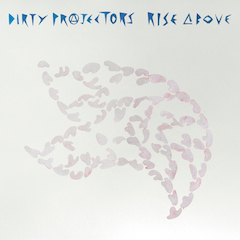
The Dirty Projectors:
Rise Above
(Dead Oceans, 2007)

black_damagedThe Original:
Black Flag:
Damaged
(SST, 1981)
A true hardcore cornerstone; Damaged is one of the most influential punk albums of all time. Black Flag defined the entire L.A punk scene and paved way for American underground rock with ferocious anger and rambling anthems like “Gimmie Gimmie Gimmie,” “T.V. Party,” and “Police Story.”

dirty_riseWhat is this about?
Dirty Projector mastermind Dave Longstreth hadn’t heard Damaged in 15 years when he decided to remake it basically from how he remembered it in his youth. Longstreth, being a complete opposite of Henry Rollins in every way, turns angry riffs into lush orchestration, and angry yelling into sweet harmonies.

Why should I listen to it?
This is something completely different, that’s for sure, and not an album aimed at the typical Black Flag-fan – or hardcore enthusiast at all. Longstreth and his Dirty Projectors reache far beyond such categorization, and this is probably a love-hate kind of work. The critic’s stayed mainly positive, ‘That the album has a concept – a song-by-song ‘reimagining’ of Black Flag’s Damaged – scarcely matters to the listener, although it seems good for Longstreth: It gives the illusion of an anchor,’ wrote Pitchfork (8.1/10), while in a more lukewarm response, Paste Magazine stated, ‘This is either one of 2007’s most refreshing or most grating albums, and there’s a hair’s breadth in between.’

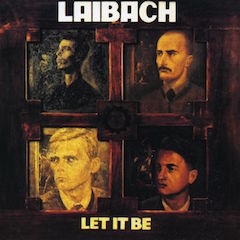
Laibach:
Let It Be
(Mute, 1988)

beatles_beThe Original:
The Beatles:
Let It Be
(Apple, 1970)
The final studio album released by The Beatles, even though it was mostly recorded prior to Abbey Road in the early months of 1969. The quartet was already in steaming ruins at the time of its release in May 1970, but the grandiose, orchestral production of Phil Spector manages to even out the frictions within the band. A second proper version of the album was released in 2003 without his heavy-handed touch, as Let It Be… Naked.

laiback_beWhat is this about?
In the history of odd combinations, this one really stands out. The industrial/neo-classical Slovenian outfit Laibach doesn’t compromise their strict, military sound and guttural singing when turning towards the gentle pop of The Beatles. Their beautiful version of “Across The Universe” aside, this shows another side of The Beatles. Laibach decided to drop the title track on their version, and replaced “Maggie Mae” with a German folk tune.


Why should I listen to it?
For Beatles-lovers, mainly because you’ve never heard The Beatles like this before. As All Music Guide puts it, ‘In some respects, Let It Be wasn’t that hard of an effort – songs like “Get Back”, “I Me Mine,” and “One After 909” simply had to have the Laibach elements applied (growled vocals, martial drums, chanting choirs, overpowering orchestrations, insanely over-the-top guitar solos) to be turned into bizarre doppelgängers. The sheer creepiness of hearing such well-known songs transformed, though, is more than enough reason to listen in.” But this is also a political statement. Made at the dawn of the Slovenian independence movement, it evokes living behind the Iron Curtain at a time when the people no longer would ‘let it be.’

Booker T. & M.G.’s:
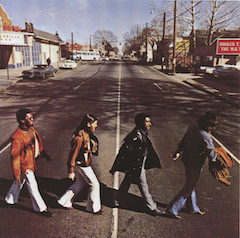
McLemore Avenue
(Stax, 1970)

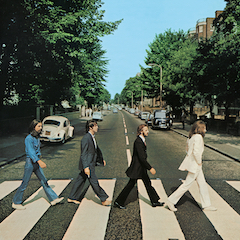
abbey_beatlesThe Original:
The Beatles:
Abbey Road
(Apple, 1969)
The real swan song by The Beatles, and the last sessions where they all participated, is nothing short of a masterpiece, bringing them into brave new musical directions (again and for the last time), completed with standout tracks like “Something,” “Sun King,” and “Come Together” – and of course the iconic cover art. Fun fact: a 19-year-old Alan Parsons worked as an assistant engineer in the studio. Known not only for his own subsequent artistic career, he also did the engineering on the aforementioned The Dark Side of the Moon.

booker_mclemoreWhat is this about?
Booker T. Jones was so awestruck when he heard Abbey Road, he just had to pay immediate homage to it, and together with Donald “Duck” Dunn, drummer Al Jackson and the rest of the M.G’s, he made McLemore Avenue just a couple of weeks after its release. The album cover is even a remake of the original, McLemore Avenue being the street passing Stax studios in Memphis. You can even spot the famous “Hitsville USA” sign back there.

Why should I listen to it?
This is a soulful, instrumental and quite improvisational interpretation, where the single tracks are bundled into three lengthy medleys – except for “Something”, the only standalone track – securing a sweet Southern flow that suits the songs surprisingly well.

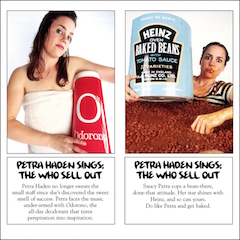
Petra Haden:
Petra Haden Sings the Who Sell Out
(Bar/None, 2005)

who_selloutThe original:
The Who:
The Who Sell Out
(Decca, 1967)
A concept based tribute album to pirate radio, complete with fake commercials and jingles in-between the songs. A milestone in their catalog, The Who Sell Out is far from a sell-out. This masterpiece is a perfect blend of mod pop and hard rock, wonderful vocal harmonies and with some of the bands finest songs, including “I Can See For Miles.”

haden_selloutWhat is this about?
This daring project came to life when Mike Watt (of Minutemen fame) handed his friend, singer-violinist Petra Haden (that dog, The Decemberists, many others), an 8-track cassette tape with the original Who album recorded onto one track and the other seven empty, for her to fill with intricate vocal harmonies. Haden decided to remake the classic by herself, and only herself. This a cappella version features just her, singing all the voices, all the instruments and yeah, even the jingles and the mock radio commercials.

Why should I listen to it?
This could’ve ended up a total train wreck in the hands of others, but Petra Haden has the vocal capability and keen musical understanding to transform one masterpiece into another. And Pete Townsend himself approved of it, speaking with Entertainment Weekly in 2005, ‘”I heard the music as if for the first time. I listened all the way through in one sitting and was struck by how beautiful a lot of the music was. Petra’s approach is so tender and generous. I adore it.”

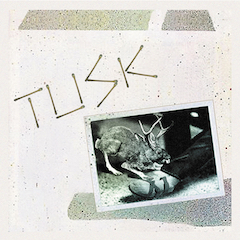
Camper Van Beethoven:
Tusk
(Pitch-A-Tent, 2003)

fleetwood_tuskThe original:
Fleetwood Mac:
Tusk
(Warner, 1979)
Actually the most expensive album made at that time, with a stunning $1 million price tag. According to author Rob Trucks’ in his 33 1/3 book Fleetwood Mac’s Tusk, the group started their recording session with a cocaine fueled celebration of Mick Fleetwood’s new $70,000 sports car, before he got a phone call saying that the uninsured car was broadsided and demolished while being towed to his home. The album itself also became a commercial car crash, selling ‘only’ four million copies – something like 20 millions less than Rumours. It is now generally hailed as a keystone album within the AOR segment.

camper_tuskWhat is this about?
This is nothing less than a re-recording of a re-recording. First done by Camper Van Beethoven in 1987 around spare time of making their delightful Our Beloved Revolutionary Sweetheart. This song-for-song remake didn’t get a proper release until 2003 when they returned from a 12-year long hiatus. They dug up these old demo tapes, and decided to give it another shot, more or less as an experiment to see if they still could play together and work as a group.

Why should I listen to it?
And they sure could. Camper Van Beethoven gained popularity as one the most beloved alternative rock bands in the mid ‘80s; combining garage/punk roots with jangle pop, ska and country-folk. All elements are present here, on a collection where the song material of course is excellent – the performance loose and joyous. Even if it’s not up there with Camper’s best albums, it’s still a treat.

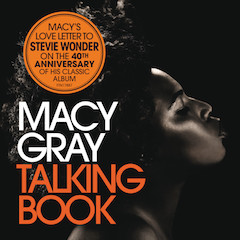
Macy Gray:
Talking Book
(429/Savoy, 2012)

wonder_talkingThe original:
Stevie Wonder:
Talking Book
(Tamla, 1972)
An undisputed classic from the glorious creative highpoint of Stevie Wonder; Talking Book secured him multi-platinum sales, several hit songs (“Superstition”, “You Are The Sunshine Of My Life”) and a swath of Grammys.


macy_talkingWhat is this about?
Not promoted as a covers album, but rather labeled a ‘love letter’ to Stevie Wonder on the occasion of the original’s 40th anniversary, Macy Gray did her tribute in a pretty straightforward way, leaning on her raspy voice and keeping the funky edge more or less intact.

Why should I listen to it?
This album received various critics. Popmatters.com stated that ‘some of these versions just seem unnecessary, more a product of the let’s-cover-the-whole-album concept rather than songs that anyone was dying to re-record;’ while The New Yorker wrote in a much more positive review, ‘Gray hits all the right notes, both as a singer and an interpreter: it’s a marvelous, expansive, eccentric performance that lifts off into gospel toward the end. The original version was about romantic love. This one may be about matters more divine (there’s one explicit mention of prayer), unless it’s just Gray’s way of reiterating her devotion for Talking Book itself. Either way, it’s a stirring closer, and a reminder that the most important thing about a love letter is how it ends,’ referencing the closer, “I Believe (When I Fall In Love It Will Be Forever).”

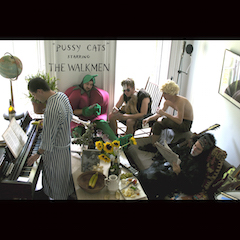
The Walkmen:
Pussy Cats
(Record Collection, 2006)

harry_catsThe original:
Harry Nilsson:
Pussy Cats
(RCA, 1974)
In 1974 John Lennon temporarily separated from Yoko Ono and left New York for a period, settling in Los Angeles and rambling around with Harry Nilsson in what is commonly known as the “Lost Weekend.” Fueled by large amounts of booze, the pair entered the studio together and recorded Pussy Cats, with a worn-out Harry Nilsson at the microphone and Lennon filling in as producer. The album is guested by, amongst others, Ringo Starr, Jim Keltner and Keith Moon. It must have been a hell of a party.

walkmen_catsWhat is this about?
It started out as a joke, but ended up as a full album. Indie/post-punk outfit The Walkmen did a track-by-track, note-by-note remake of one their favorite albums, recorded in the last days of their Marcata studio in New York City. Together with a bunch of friends they created their own Lost Weekend while the studio fell apart around them. Oddly enough, we get a couple of covers of covers here as well, since Nilsson/Lennon themselves versions of “Many Rivers To Cross” and Dylan’s “Subterranean Homesick Blues.”

Why should I listen to it?
It’s kind of hard to revitalize the ramblings of the drinking buddies, and wisely enough, singer Hamilton Leithauser does not try to impersonate Nilsson growls. As the little sister to the band’s main album of that year, A Hundred Miles Off, this one might be considered a parenthesis in their own catalog; but it’s in some ways just as good. The band catches the vibe while creating their own mood into it. And hopefully it helped gain more attention to an often-overlooked gem from the mid-‘70s.

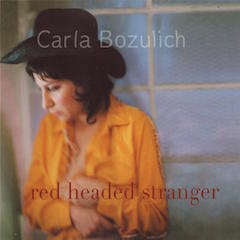
Carla Bozulich:
Red Headed Stranger
(DiCristina Stairbuilders, 2003)

willie_strangerThe original:
Willie Nelson:
Red Headed Stranger
(Columbia, 1975)
Being dissatisfied with is relations with Atlantic Records, outlaw cowboy Willie Nelson turned to Columbia in 1975 for more artistic freedom. His first statement was Red Headed Stranger, a concept album about a fugitive on the run from the law after killing his wife and her lover. With a production so sparse even Columbia thought it was just demo tapes, but they kept their promise of artistic liberty and hesitantly released Stranger – to wide acclaim from the public and critics alike. It was Nelson’s big breakthrough, sold multi-platinum and is generally ranked among his finest works to date.

carla_strangerWhat is this about?
Singer/songwriter Carla Bozulich first gained attention as the singer in Ethyl Meatplow and country-based post-punk band The Geraldine Fibbers, later performing as Evangelista. Red Headed Stranger is her first solo album, and an escape from the pressure of writing new songs. She turned to this classic, aided by, amongst others, longtime partner Nels Cline, Alan Sparhawk of Low – and hey, Willie Nelson himself.

Why should I listen to it?
The result is nothing short of gorgeous. Adding instruments like Autoharp, electric mbira and tamboura into the mix, Bozulich does more than a remake, this is a true rediscovery with new soundscapes within a whole different aural texture. As All Music sums it up in their rave review, ‘As downtrodden and spiritually haunting as its predecessor, this new Red Headed Stranger is vital and necessary, a work of new Americana — not the radio format, but the mythos itself.’

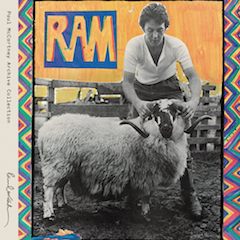
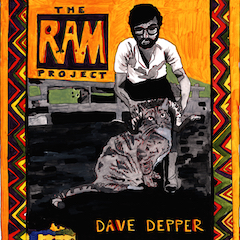
Dave Depper:
The RAM Project
(Jackpot/City Slang)

macca_ramThe original:
Paul McCartney:
Ram
(Apple, 1971)
The second solo album from Macca, made in the shadows of breaking up The Beatles and darkened by his sour relationship with John Lennon. Ram was not received favorably in its time (nothing less than “monumentally irrelevant” according to Rolling Stone’s Jon Landau), but its reputation has grown steadily throughout the years, and it is now considered as on his best solo albums. Same Rolling Stone, different writer, called it, in-retrospect, a ‘daffy masterpiece.’

01, 12/7/10, 3:42 PM, 8C, 4920x4936 (528+1736), 100%, Custom, 1/60 s, R46.0, G28.0, B51.0

01, 12/7/10, 3:42 PM, 8C, 4920×4936 (528+1736), 100%, Custom, 1/60 s, R46.0, G28.0, B51.0

What is this about?
In 2010 Dave Depper decided to re-do Paul McCartney’s Ram completely by himself in is own bedroom. For one month he carefully recorded every single instrument, with just a little aid from Joan Hiller in the role of Linda McCartney. What started as a bedroom project turned out to be a proper release, and one that has continued to live on for Depper, being something much bigger than he initially intended.

Why should I listen to it?
This is a pretty impressive piece of work, clearly done with lots of passion and love. More a re-built creation than anything else, an exercise in imitation. As with the approach of the Flaming Lips, sometimes music is just about having a good time, and stumble upon brilliance now and then, even if that brilliance belongs to other people.

Bjørn Hammershaug

Earache: Grindcrusher Since 1985

entombed

Digby Pearson founded Earache Records in 1986.

A longtime fan of ’80s hardcore (MDC, DRI, Discharge), Digby was deeply involved in the underground music scene early on — working as a roadie, writing for fanzine Maximum RocknRoll and doing promotion for bands on the road. His obsession with rock and roll in its hardest and heaviest forms eventually materialized into starting his own label, which he began from his Nottingham, England apartment.

morbid_angel_altarsFocusing on the more extreme outskirts of metal, Earache immediately struck gold with Birmingham grindcore pioneers Napalm Death, releasing their groundbreaking debut, Scum, in 1987. As records sold, Earache gradually grew into a more organized business, and soon incorporated Florida’s Morbid Angel, Sweden’s Entombed and Liverpool’s Carcass into it roster, while expanding beyond its grind and death metal origins to include other extreme sub-genres like industrial metal (Godflesh), doom (Cathedral) and stoner (Sleep).

By the early 1990s, Earache Records was the unequalled leading label for extreme metal in all shapes and forms.

And as metal started to gain audience with a larger public, several major releases found their way onto worldwide album charts.

carcass_heartworkEarache struck a U.S. licensing deal with Sony Music in 1993, but disappointing sale figures turned it into a short-lived venture. As it turned out, the mainstream masses weren’t quite ready for the extremes after all. Earache came out wounded in the aftermath, with many of the most important bands signing deals with major labels: Carcass to Sony, Morbid Angel to Giant, Entombed to EastWest.

Not easily broken, Earache refortified around its fiercely independent status and strong, extensive back catalogue. After the Sony deal, they once again scored a big-time signing with Swedish melodic death metal band At The Gates, and continued to branch out the label’s musical roots with such acts as cyber-techno-band Ultraviolence and reggae-punkers Dub War, who scored a Top 5 hit in the U.K.

By the turn of the millennium, Earache Records was more vivacious than ever.

The Wicked World imprint was founded to foster underground metal talent, such as Decapitated and Hate Eternal, while still developing breakthrough bands like Swedish super-group The Haunted, Norwegian dark-goth Mortiis and Australian grind mutants The Berzerker.

Earache was the central catalyst in the metal explosion of the new century despite having no direct involvement in the new set of bands conquering the album charts (Slipknot, Nightwish, Hatebreed), sticking to bands with a more individualistic takes on the extreme metal ethos and having modest success with acts like Mortiis, Cult of Luna and veterans Deicide, who signed to Earache after their long stint with Roadrunner.

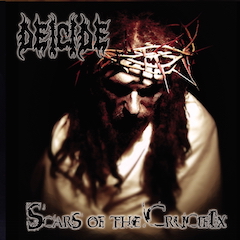
deicide_scarsDeicide’s 2004 debut for Earache, Scars of the Crucifix, returned the label’s name to the American Billboard charts and went on to be Earache’s best-selling album in years. Toward the end of the decade the label incubated a thrash metal renaissance, with bands like Evile and Municipal Waste enjoying worldwide success.

The signing of Rival Sons in 2010 signaled a move into the commercial rock, and a new era of success has ensued. Since then, Earache has shifted gears to sign and release more widely appealing rock and roll, with acts like Blackberry Smoke, which joined the party in early 2014, and The Temperance Movement, who signed in summer 2013. The two most recent additions to Earache’s roster – Kagoule and Biters – epitomize Earache and Digby’s willingness to evolve and reinvent.

Known worldwide as the label for all things extreme in music, Earache’s contribution to the underground scene is immense.

They’ve signed a stunning number of leading and innovative acts in their nearly three-decade run, selling millions of records while remaining a wholly independent and loyal to the up and coming bands.

As Digby Pearson says in our below interview, “We stand for taking wholly unfashionable scenes and underdog bands, and making them household names. The prevailing trends we generally ignore. I’m attracted to bands that stand out like a sore thumb, those pushing against the grain.”

Digby Pearson is this year’s recipient of the Pioneer Award at the AIM Independent Music Awards. Taking place September 8 in London, Pearson is the fifth recipient of the honor, following previous winners Martin Mills (Beggars Group), Geoff Travis (Rough Trade), Daniel Miller (Mute) and Laurence Bell (Domino).

*   *   *

Deafen People with Noise
Q&A with Digby Pearson

digby_earache

How did you get into the music business in the first place?

I got into music first, business second. Purely as a fan, helping out local friends in bands, from behind the scenes, promoting pub shows, zine, roadie, everything. It was the DIY punk/hardcore scene that welcomed all comers. The feeling was “anyone could have a go,” so I did. I promoted Napalm Death’s second-ever show, four years before I released their debut album.

What labels where your own role models or guiding stars, when you started up?

Labels in the HC/punk scene were my education: SST, Dischord, Clay… and John Peel of BBC Radio 1, of course. Aside from that I was a fan of Def Jam as it was created. I watched from afar, transfixed – the whole street level ethos of the label, even though it was early hip-hop genre. I kinda tried to replicate that ethos for Earache, minus the gold chains… [laughs] Rick Rubin is a total hero of mine.

What does Earache stand for as an institution?

We stand for taking wholly unfashionable scenes and underdog bands, and making them household names. The prevailing trends we generally ignore. I’m attracted to bands that stand out like a sore thumb, those pushing against the grain.

In your opinion, what is the greatest achievement in the nearly 30 year history of Earache?

Giving anti-establishment bands a voice, and a platform. The now-thriving global genre of ‘Extreme Metal’ was pretty much born during the explosive first 20-odd releases of the label, out of a bedroom in Nottingham. I released all the major players, one after another.

What’s the secret behind keeping the spirit alive for such a long time?

Just being positive and enthusiastic about music 24/7. Even almost 30 years on, I crave new sounds and listen to new bands daily. I’m really into new young bands playing blues-rock and southern rock these days, several of the signings hit the U.K. Top 10 and European charts in last two years: Rival Sons, The Temperance Movement, Blackberry Smoke.

Did you have an initial idea back then on what Earache should be and how it could evolve in the future?

No lofty ideas at all, except to deafen people with noise! It’s not what you’d call a business plan, but the single-mindedness of purpose is what I guess attracted fans to the sound.

What makes you decide to sign a band or not?

Again, having an absolutely contemporary sound is what gets my attention, which is often not the prevailing trend. It helps that Earache is 100-percent independent — no one has any stake or input on the label. We do what we damn well want. Bands have absolute creative freedom, which some have only come to appreciate once they moved on.

Pick three of your favorite Earache releases.

napalm_death_scumNapalm Death
Scum (1987)
Unprecedented at the time in ‘not giving a fuck.’
It kick-started the extreme metal genre.


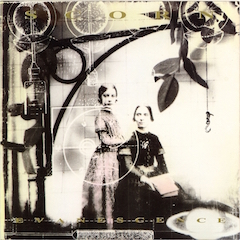
scorn_evanescenceScorn
Evanescence (1994)
Ex-members of Napalm Death experimenting with samples, drum loops, and deafening dubby bass-lines.
Way ahead of its time. Made in ‘95, sounds contemporary even in 2015.


rivalsons_headRival Sons
Head Down (2012)
Bluesy rock from Long Beach, played with an intensity and honesty that electrified the corpse of rock ‘n’ roll in recent years.


The metal scene and the music itself have gone through various mutations over the years. In what way does these changes reflect the history of Earache?

Yeah, Earache has been in the midst of most of the metal scenes and micro genres over two decades. We swerved a couple of scenes — gothic metal, nu-metal — as they weren’t to my tastes, but in hindsight that was probably a bad decision as they became the biggest metal sellers of recent times. Oops.

The music industry also goes through changes. How have those challenges affected you?

Obviously the digital revolution is changing things as we speak. Downloads and now streams; we’ve seen it coming, luckily, so we adapted with plenty of time.

Any regrets? Anything you would do differently if you had a second chance?

I honestly would have decided to sign commercial-ish music earlier, instead of waiting 25 years.

Bjørn Hammershaug

Black Power, Resistance and Consciousness in Album Cover Art

black_power_1200The birth of the Civil Rights Movement in the 1950s marked the beginning of a social, political and cultural revolution that drastically changed American society.

What began as a peaceful and pacifistic movement aimed at ending racial segregation, embodied by protest marches, sit-ins, Freedom Riders and figures like Rosa Parks and Martin Luther King, Jr., gradually evolved and splintered into a more militant climate. While legal and symbolic victories like the defeat of Jim Crow laws were major milestones of progress, they did not necessarily lead to better living conditions for the common man, and from the mid-1960s onward many started seeking different strategies for socio-political empowerment, leading to the rise of Black nationalism.

Black nationalism and separatism challenged the Civil Rights Movement, with ‘Black Power’ used as a strong political slogan emphasizing racial pride and the creation of black political and cultural institutions. Key leaders of this movement included Stokely Carmichael, Malcolm X and Bobby Seale, co-founder of the Black Panther Party. Along with intensified friction within the different fractions, the combination of inner city riots, the Vietnam War and economic downtimes added fuel to the fire in the late ’60s and early ’70s. And there’s a straight line connecting that era and the ongoing debates about police brutality, economic inequality, mass incarceration, underrepresentation and other major disadvantages still facing African Americans in 2016.

Black Power had a significant impact on pop culture and music, not the least of which occurred in the decade between 1965 and 1975.

In his book Listen Whitey! The Sights and Sound of Black Power, Pat Thomas writes: ‘As the Black Power movement expanded, it influenced established artists such as Marvin Gaye, James Brown and the Isley Brothers. The movement would shape the voice of emerging songwriters like Sly Stone and Gil Scott-Heron (…). It would force Jimi Hendrix (…) to reconsider his apolitical stance. There would be rank-and-file Black Panther members like Nile Rodgers of Chic and Chaka Khan of Rufus who would go on to pop music fame in the 1970s.’

Below are just some album covers with a discernible message related to Black Power, resistance and consciousness, albums as worthy of seeing as they are worth listening to, chronologically connecting Max Roach and Gil Scott-Heron with Nas and Kendrick Lamar.

* * *

Max Roach:
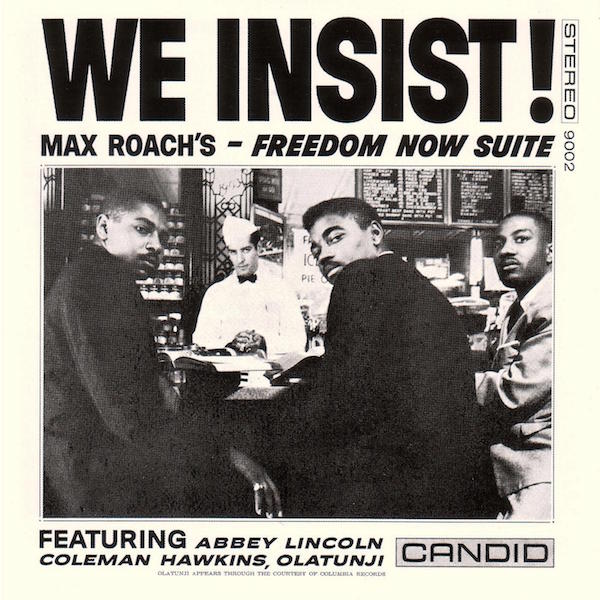
We Insist! Max Roach’s Freedom Now Suite
(Candid, 1960)
max_roach_insist
This avant-garde jazz album led by drummer Max Roach consists of five parts concerning the Emancipation Proclamation and the growing African independence movements of the 1950s. All Music Guide calls the record a ‘pivotal work in the early-’60s African-American protest movement [that] continues to be relevant in its message and tenacity. It represents a lesson in living as to how the hundreds of years prior were an unnecessary example of how oppression kept slaves and immigrants in general in their place.’ The cover references the sit-ins of the Civil Rights Movement: a black-and-white photograph of three black men in a diner, staring directly into the camera while being tended by a white waiter behind the counter. The image might seem like an ordinary scene today, but in 1960 it was certainly meant as a political and provocative statement.

Elaine Brown:
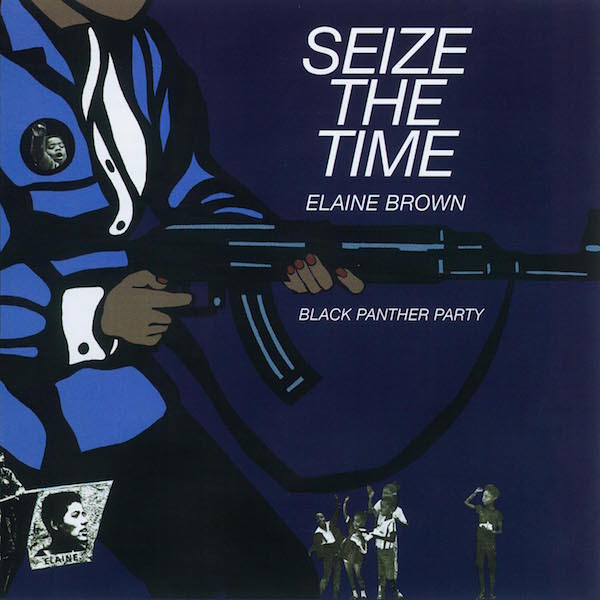
Seize The Time – Black Panther Party
(Vault, 1969)
elaine_brown_time
Songwriter and pianist Elaine Brown was among the most noteworthy musicians to emerge from within the Black Panther movement. Her debut album, Seize the Time, includes the Panther anthem “The Meeting.” In a 1970-printed ad for the album, Brown herself writes: ‘Songs are a part of the culture of society. Art, in general, is that. Songs, like all art forms are expressions of feelings and thoughts. A song cannot change a situation, because songs do not live or breathe. People do. And so the songs in this album are a statement – by, of and for the people. All the people.’ The cover was made by Panther-illustrator Emory Douglas and it’s strikingly symbolic both in the use of the AK-47 (a symbol of solidarity with the North Vietnamese) and the fact that the hands holding the gun are wearing nail polish. In other words, black and female power combined.

Sun Ra:
The Nubians of Plutonia
(Saturn Research 1959/1966; below cover featured on 1974 Impulse re-release)

sun_ra_nubians
The Nubians of Plutonia dates back to the late 1950s, when it was originally recorded, but it wasn’t released for almost a decade, ultimately on Sun Ra’s own Saturn label in 1966. It’s a groundbreaking cosmic jazz masterpiece its own right, laced with tribal African grooves and hints of funk and space-age exotica, but the main reason for featuring the album here is the stunning artwork from the 1974 reissue on Impulse. The label acquired the rights to 21 albums originally made on Saturn, cleaning up the sound and providing them with brand new full-color covers, and the design for The Nubians of Plutonia is especially wonderful, embracing its afro-centric focus in line with the pan-African vibes of the era.

Gil Scott-Heron:
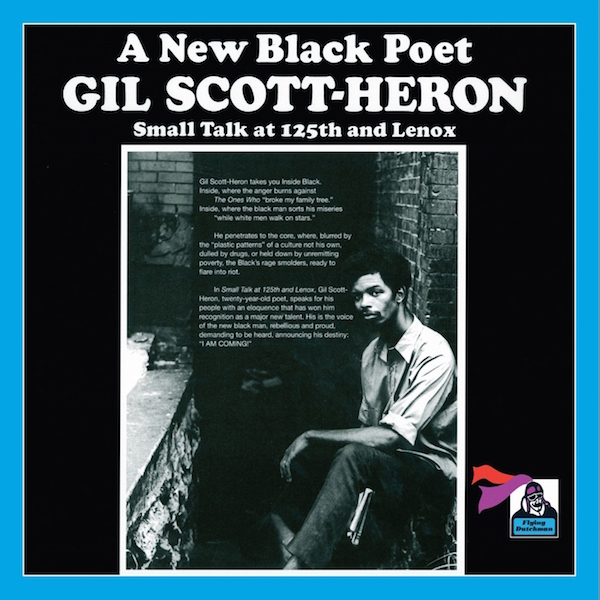
A New Black Poet: Small Talk at 125th and Lenox
(RCA, 1970)
gilscott_lenox
Gil Scott-Heron was only 21 years old at the time of his debut album’s release, a poignant and politically passionate set of spoken-word, percussive rhythms (bongo drums and congas) and proto-rapping recorded live in a New York City nightclub located at the address indicated by the title. The album, along with Scott-Heron’s greater career, is widely considered a presage of hip-hop, and includes the iconic and heavily-sampled “The Revolution Will Not Be Televised.” The black-and-white cover photo by Charles Stewart captures Scott-Heron in a back alley, with a written introduction on him as the centerpiece: ‘He is the voice of the new black man, rebellious and proud, demanding to be heard, announcing his destiny: ‘I AM COMING!”

The Upsetters:
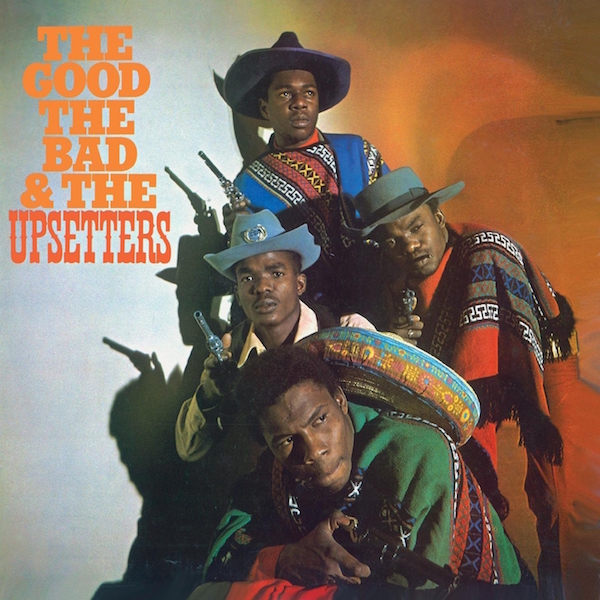
The Good, The Bad And The Upsetters
(Trojan, 1970)
upsetters_good_bad
Not exactly a cover referring to anything associated with the Black Power movement, but a wonderful shot in its own right with The Upsetters posing in Spaghetti Western garb. This album stirred conflict on a different matter, though. The Upsetters were the house band for legendary Jamaican producer Lee “Scratch” Perry, and the original U.K. edition of The Good, The Bad And The Upsetters was released on Trojan in 1970 without Perry’s involvement. Angered by this, Perry issued another version of the album in Jamaica using the same Trojan album artwork but with totally different songs on it.

Joe McPhee:
Nation Time
(CjR, 1970)
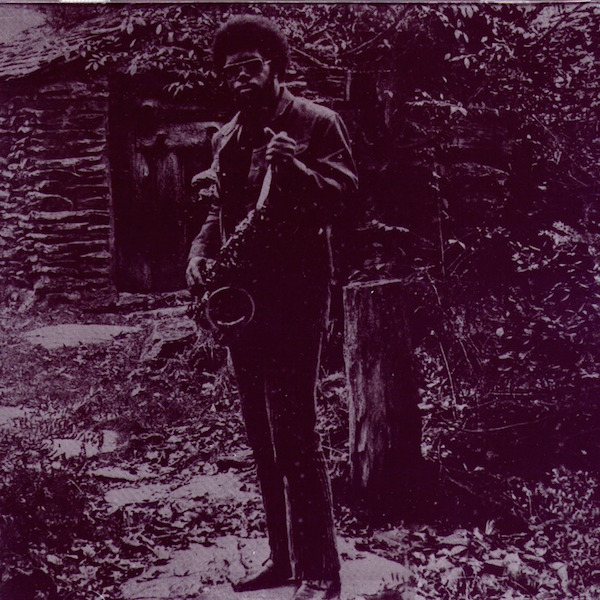
joemcphee_nation
This free jazz masterpiece by saxophonist and trumpeter Joe McPhee, once described by The Guardian as ‘a grinning punk cousin to Miles Davis’s brutal and brilliant Bitches Brew,’ is closely connected to the emerging Black Power movement. Nation Time was recorded live at the Urban Center for Black Studies at Vassar College in 1970, where McPhee himself taught classes in ‘Revolution in Sound.’ The album sounds as groundbreaking today as it did back in 1970, and is a total must-hear. On the cover, shot by photographer Ken Brunton, McPhee is posing in a Black Panther-style outfit, holding the saxophone instead of a gun, in front of an old slave-shack. Bringing the African call-and-response tradition into the Black Power movement, McPhee shouts out the rhetorical question, ‘What time is it??,’ in the title track, with the audience enthusiastically chanting back, ‘It’s Nation Time!!’

Isaac Hayes:
Black Moses
(Stax/Enterprise, 1971)

black_moses_full_cover
Black Moses is the fifth album by legendary soul singer Isaac Hayes, following up his soundtrack to Shaft with yet another chartbuster. This was his second double-LP of 1971, his second consecutive release to top the Billboard R&B chart, and his second consecutive Grammy-winner. Stax Records boss Dino Woodward is credited for coming up with the ‘Black Moses’ tag. As pulled from the book Soulsville U.S.A.: The Story of Stax Records: ‘Dino said, ‘Man, look at these people out there,’ explains Isaac. ‘Do you know what you’re bringing into their lives? Look at these guys from Vietnam, man, how they’re crying when they see you, how you helped them through when they was out there in the jungle and they stuck to your music. You like a Moses, man. You just like Black Moses, you the modern-day Moses!’ Hayes himself disapproved of both the title and the concept, but changed his mind after release. The LP itself came in iconic packaging: a fold-out, cross-shaped cover showing him as a modern-day Moses. “It raised the level of black consciousness in the States,” he later said. ‘People were proud to be black. Black men could finally stand up and be men because here’s Black Moses, he’s the epitome of black masculinity. Chains that once represented bondage and slavery can now be a sign of power and strength and sexuality and virility.’

The Last Poets:
This is Madness
(Douglas, 1971)
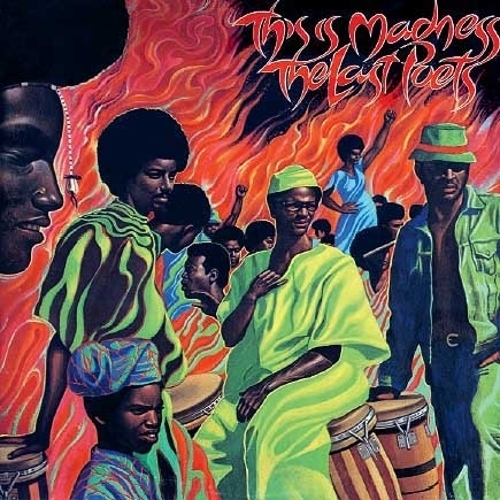
last_poets_madness
Closely linked with the Black Panthers and Black Nationalism, The Last Poets performed their live debut in Harlem in May 1968, at an event marking the recent killing of Malcolm X. They described their music as ‘jazzoetry,’ combining jazz, poetry and rapping. The cover for This is Madness, in striking colors and raised fists, is a painting by Abdul Mati and based on a photograph by Bilal Farid.

The Pharaohs:
The Awakening
(Scarab, 1971)
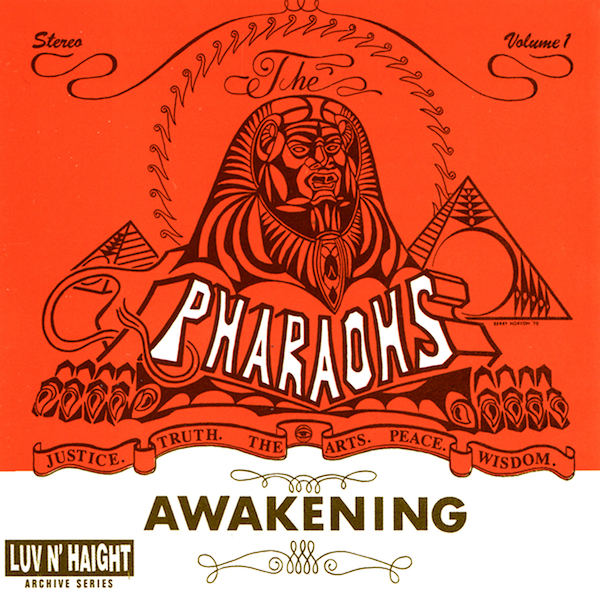
pharaohs_awakening
Rooted on the South Side of Chicago, The Pharaohs were closely connected to Chess Records (the esteemed label known as a quality stamp for funk, blues, rhythm & blues, jazz and soul), formed in part by a group called the Jazzmen and the Afro Arts Theatre and the Association for the Advancement of Creative Musicians (AACM) in Chicago. On the back cover they describe their debut album as ‘the sounds of the pygmies blended with the Soul Sounds of 39th street in Chicago.’ The cover itself is mixes Egyptian imagery (a style Earth, Wind and Fire later would employ) and pan-African interest. From the flipside of the LP version: ‘Once upon a time there is a group of young men who came together and formulated a dream. They dared to dream that hey could create an approach to the arts that would encompass their experiences in America, the soul of their motherland… Africa, and the spirit of the oneness of the Universe.’

Pharoah Sanders:
Black Unity
(Impulse!, 1971)
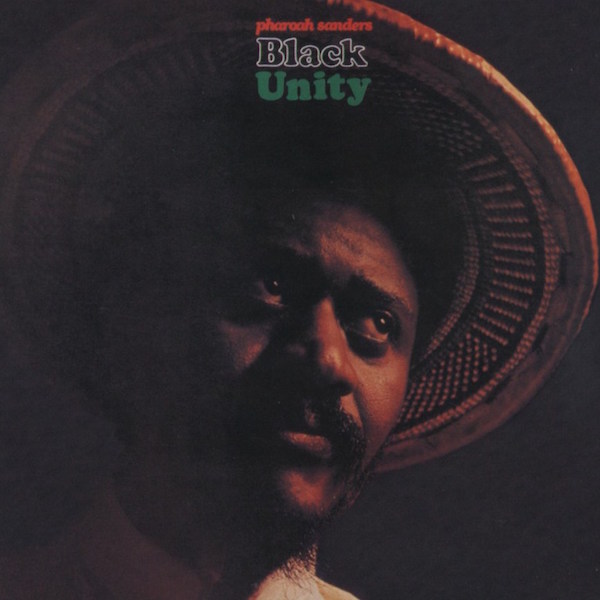
sanders_unity
Gigging with the likes of Don Cherry, Sun Ra and John Coltrane, Pharoah Sanders turned out to become one of the most revolutionary jazz saxophonists of all time and a key figure in pioneering astral jazz. Black Unity is truly essential listening, a 37-minute long, tight, rhythmic and energetic improvisational piece that fully embraces the pan-African ideals of the time. All Music Guide describes it as ‘pure Afro-blue investigation into the black sounds of Latin music, African music, aborigine music, and Native American music.’ The multi-ethnic musical amalgam and spiritual freedom is equally reflected in the music, the title and on the front cover.

Bob Marley & The Wailers:
Soul Revolution Part 2
(Upsetter, 1971)

marley_soul
Soul Revolution Part 2 was released in Jamaica, as a kind of sequel to Soul Rebels the year prior, and was a part of Bob Marley & The Wailers’ collaboration with Lee ‘Scratch’ Perry. The album, not properly released outside of Jamaica for several decades, found them moving further away from their ska and rocksteady roots and into an early form of reggae. Their growing social concerns are being elevated to new heights with this original album cover art, showing the band dressed in full guerrilla warfare outfit, armed and ready for action. The rifles were perhaps fake, but he imagery is still as stark today.

The Watts Prophets:
Rappin’ Black In A White World
(Ala, 1971)
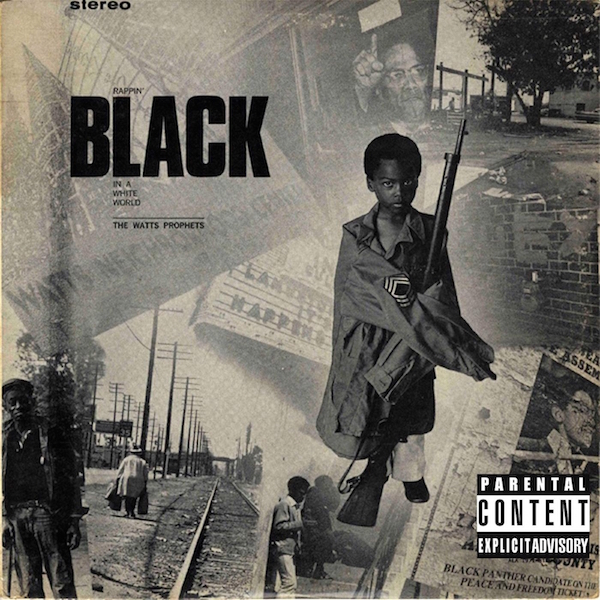
watts_prophets
The West Coast equivalent to Harlem’s The Last Poets (above), The Watts Prophets (from Watts, Los Angeles) is a group of musicians and poets. Beginning in the late 1960s, their combination of jazz and socially conscious poetry made them (like The Last Poets) among the forerunners for establishing hip-hop as a music form. Actually, the title itself is supposedly the first time ‘rappin’ came into use, and The Watts Prophets have been described a living bridge from the Civil Rights of the ’60s to the Hip Hop generation of today.

Miles Davis:
On the Corner
(Columbia, 1972)
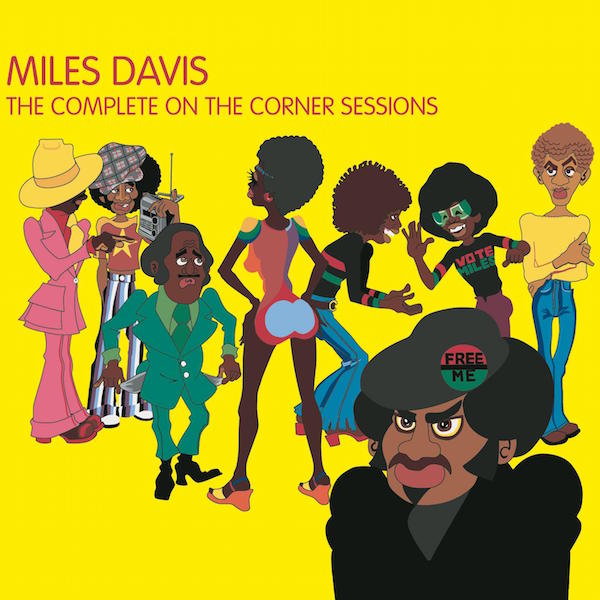
miles_onthecorner
It received lousy reviews, didn’t sell, and has been called ‘the most hated album in Jazz.’ But history has proven many of the worst critics wrong, and today On the Corner is rightfully considered one of Miles Davis’ best and one of the most influential albums of all time. Miles mixed rock, jazz and funk in a way that is hailed as a proto-album both for hip-hop and electronic music, and All Music Guide says ‘the music on the album itself influenced every single thing that came after it in jazz, rock, soul, funk, hip-hop, electronic and dance music, ambient music, and even popular world music, directly or indirectly.’ Miles Davis aimed to reconnect with the African-American communities for this album, and the cover art mirrored the social transformations of the time. He also named one of the tracks “Mr. Freedom X,” in reference to Malcom X.

Huey Newton:
Huey! Listen, Whitey!
(Folkways, 1972)

huey_whitey
Huey P. Newton, one of the founding members of the Black Panther Party, was arrested in the late 1960s on charges of shooting a police officer. An album in two parts, Huey! is a representation of the support Newton received from the Panthers and other members of the community during his trial, while Listen Whitey! chronicles the reaction of the black community immediately following the assassination of Dr. Martin Luther King, Jr. Unrehearsed, the people’s voices on this album offer an unblemished glimpse of two difficult moments in African American history. The album’s cover shows Stokey Carmichael at the lectern of the Oakland Auditorium in February, 1968, speaking at the “Free Huey Rally.”

Eddie Kendricks:
People… Hold On
(Tamla/Motown, 1972)
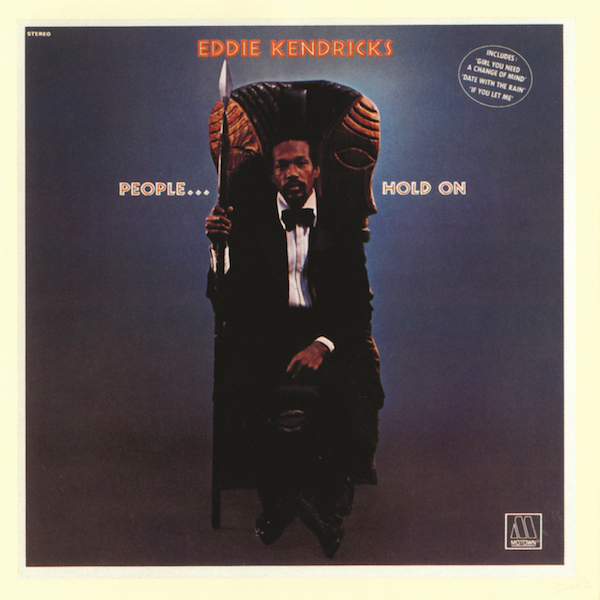
eddie_kendricks_holdon
Led by the club hit “Girl You Need a Change of Mind,” the second solo album from the former Temptations vocalist Eddie Kendricks turned out to be his breakthrough. The album cover is a remake of the iconic photo of Huey Newton, conceived by Eldridge Cleaver, with Kendricks sitting in a large African chair, spear in hand.

Jimmy Cliff:
Struggling Man
(Island, 1973)

cliff_struggling
The title might refer to the strife Jimmy Cliff went through following the death of his producer Leslie Kong’s in 1972. As All Music Guide writes: ‘it’s the intensity of the singer’s struggle during this period that fuels this set, his pain, confusion, and turmoil are raw, packing the set with an emotional intensity that he’ll never quite equal elsewhere.’ The album cover itself combines his emotional turmoil with inner city despair. The drawing by David Dragon shows a rather grim street with empty-looking faces strolling behind Cliff as the focal point. A struggling man, in a struggling world, this is a great reggae album with an iconic cover.

Curtis Mayfield:
There’s No Place Like America Today
(Curtom, 1975)
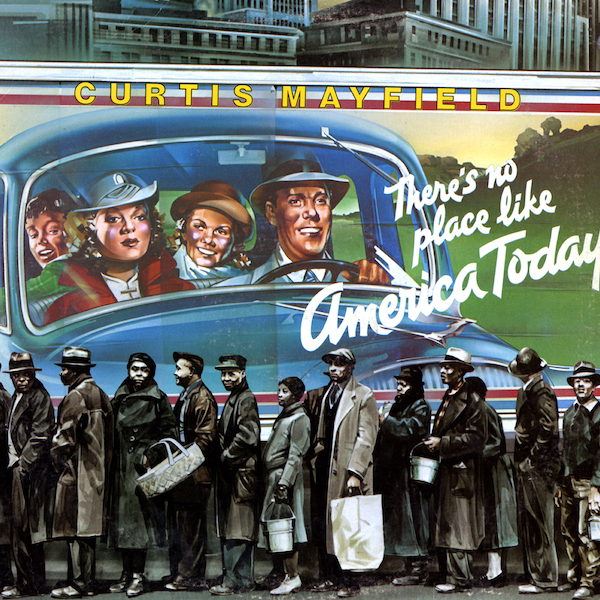
curtis_america
This album cover is based on a famous photograph by Margaret Bourke-White of flood victims, originally published in the February 15, 1937 edition of LIFE magazine. When David Bennun revisited this underrated classic for The Quietus, he wrote of the cover: ‘He couldn’t have picked a more apt one; the record evokes its own time and place as surely as the picture represents the chasm between American dreams and street-level reality. 1975 was, for many in the cities of the USA, a particularly wretched time, one which even now carries the aura of winter, of hangover, of chills and meanness and struggle.’

Steel Pulse:
Tribute to Martyrs
(Island, 1979)
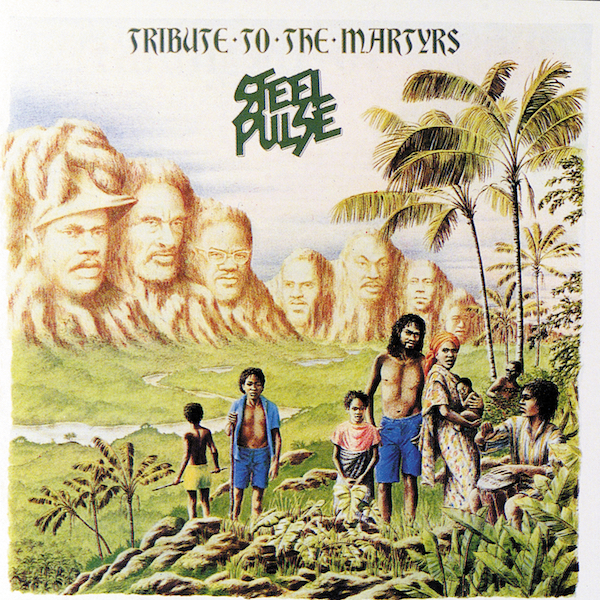
steel_pulse_martyrs
Tribute to the Martyrs is the second studio album by English roots reggae band Steel Pulse. The album cover, illustrated by Jene Hawkins and designed by Bloomfield & Travis (Barrington Levy, John Cale), is packed with socio-political references. The scene’s background features an alternative Mount Rushmore-styled carving of seven heads, composed of Malcolm X, Steve Biko, Martin Luther King, Jr., Jamaican Pan-Africanist Marcus Garvey, Emperor Haile Selassie and others, who look over an island-dwelling family exploring their homeland.

Bad Brains:
Bas Brains
(ROIR, 1982)

bad_brains
The first LP by Bad Brains is a seminal masterpiece. The D.C. band of African-American Rastafarians, in itself an anomaly in hardcore circles, came to be known as pioneers in the way they fused punk, hard rock and reggae. Their debut album is not only considered a masterpiece in the evolving of hardcore, but stands out as one the strongest albums of its decade no matter the genre. Commonly known as one the fastest albums ever recorded at the time of its 1982 release, this crucial record features classics cuts like “Banned in D.C” and “Pay to Cum.” And of course its striking yellow, green and red cover art depicting the dome of the United States Capitol building being split apart by thunder and lightning.

Public Enemy:
It Takes A Nation Of Millions To Hold Us Back
(Def Jam, 1988)

public_enemy_nation
On their iconic second album, Public Enemy set out to make an updated version of Marvin Gaye’s socially conscious What’s Going On, with the goal to ‘teach the bourgeois and rock the boulevards.’ This landmark LP, one of the greatest, most important and influential hip-hop albums ever made, sports an equally striking cover art of Chuck D and clock-wearing Flavor Flav behind bars. No way any jail could stop this revolution.

The Roots:
Things Fall Apart
(MCA/Geffen, 1999)
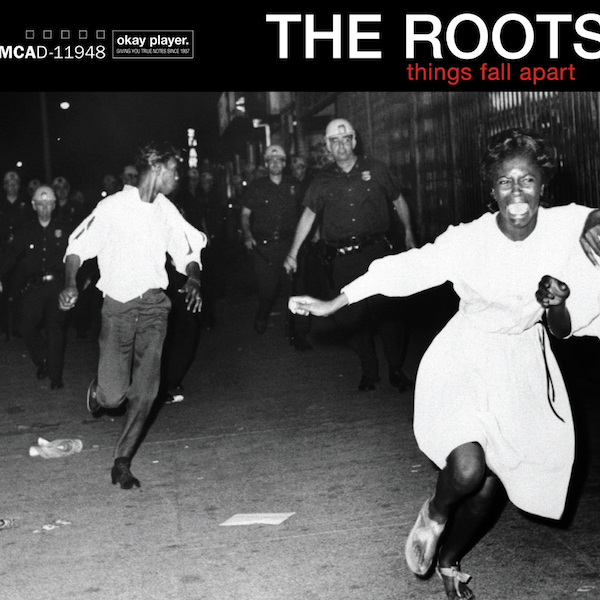
roots_things
Things Fall Apart was The Roots’ breakthrough album, earning them a Grammy and Platinum sales, and hailed as a cornerstone for conscious rap. They borrowed the album title from the highly acclaimed 1958 novel by Nigerian author Chinua Achebe, considered an essential writer on African identity, nationalism and decolonization. The default album cover (it came in five different versions) is a picture from the 1960s, shows police chasing two African-American teens on the streets of Bedford-Stuyvesant, Brooklyn during a riot. Art director Kenny Gravillis later described it like something the urban community could really relate to: ‘Seeing real fear in the woman’s face is very affecting. It feels unflinching and aggressive in its commentary on society.’

Dead Prez:
Let’s Get Free
(Columbia, 2000)

dead_prez_free
The debut album by politically-charged hip-hop duo Dead Prez has been called the most politically conscious rap since Public Enemy, raising awareness of inner-city issues like racism, police brutality, education and political injustice. They also touch on Pan-Africanism in their lyrics (‘I’m an African/Never was an African-American’) and the Black Panthers (‘I don’t believe Bob Marley died from cancer/31 years ago I would’ve been a panther/They killed Huey cause they knew he had the answer/The views that you see in the news is propaganda’). Their call to action, revolution and Black liberation is clearly reflected in the album cover, an photo of South African schoolchildren raising their rifles during the 1976 Soweto uprising, fighting for their right to education under an oppressive regime.

Nas:
Untitled
(Columbia, 2008)
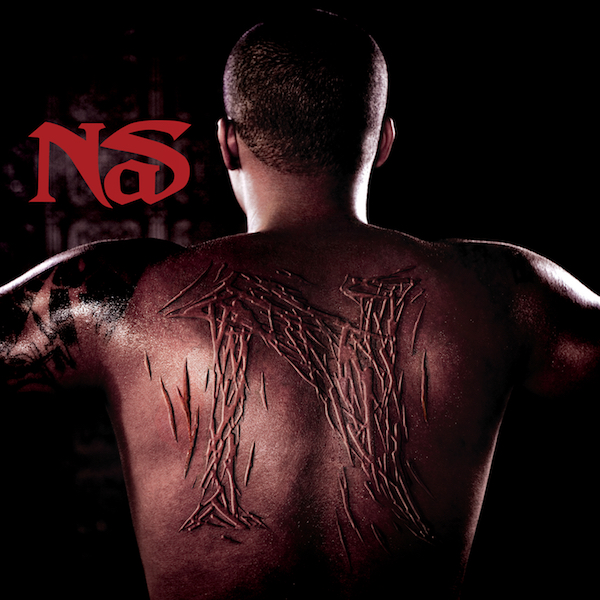
nas_untitled
Nas changed the title of this album from the full N-word to just calling it Untitled, keeping the N brandished into his back depicting the whippings common in the age of slavery. In a 2008 interview with CNN, Nas explained how he didn’t seek out to upset on the original title, but rather to upend a society that focuses more on pejoratives than the racial plights that spawn them: ‘There’s still so much wrong in the whole world with people – poor people, people of color – I just felt like a nice watch couldn’t take that away, make me forget about that. A nice day on a yacht with rich friends couldn’t make me forget about reality, what’s going on. That’s why I named the album that – not just that the word is horrible, but the history behind the word, and how it relates to me, how it’s affected me, offended me.’

Kendrick Lamar:
To Pimp a Butterfly
(Aftermath/Interscope, 2015)

kendrick_pimp
This feature end with one of the most strikingly symbolic album covers of recent times: Kendrick Lamar holding a baby in front of the White House with a group of basically shirtless young men flashing cash and champagne (and what appears to be a dead or passed out white judge laying on the lawn underneath them). To Pimp a Butterfly is packed with references of black American music and culture, including some of the albums and artists already mentioned above. This is the picture of the aftermath of the very same black revolution first subtly indicated by Max Roach on top of this list, seeking the same kind of liberation and freedom that has here finally been crossed out like the eyes of the judge.

* * *

Sources & Links of Interest:

Pat Thomas: Listen Whitey! The Sights and Sound of Black Power, 1965-1975 (Fantagraphic, 2012)
Giles Peterson and Stuart Baker: Freedom Rhythm & Sound: Revolutionary Jazz Original Album Art 1965-83 (SJR, 2009)
Ashley Kahn: The House That Trane Built: The Story of Impulse Records (Granta, 2006)
The Independent: Heart on sleeves: 50 years of Jamaican album covers tell the story of a nation
Dangerous Minds: Isaac Hayes’ Black Moses – The Story of One of the Greatest Album Covers Ever
The Quietus: Revisiting Curtis Mayfield’s There’s No Place Like America Today
42 Reggae Album Cover Designs: The Art & Culture of Jamaica
Complex: Art Director Kenny Gravillis Tells the Stories Behind The Roots’ 5 “Things Fall Apart” Album Covers
Let’s Get Free: Living Hip-Hop History Fifteen Years Later
The Guardian: Kendrick Lamar’s To Pimp a Butterfly album cover: an incendiary classic
Smithsonian Folkways
Wikipedia
AllMusicGuide