Bloodshot Records: A Life of Sin

bloodshot_1


Bloodshot Records was born in a late-night Chicago bar, with some simple ideas scrawled out on a cocktail napkin.
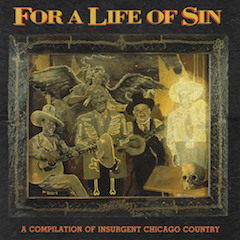
for-a-life-of-sinEver since its very first album release in 1994, For a Life of Sin: A Compilation of Insurgent Chicago Country, the esteemed label has been a bright and steady beacon in a shifting musical landscape. That very first compilation included local Midwestern greatness like The Bottle Rockets, Robbie Fulks, The Handsome Family, Freakwater, and of course Jon Langford (The Mekons), whose commitment to bands like The Waco Brothers and Pine Valley Cosmonauts – not to mention his striking visual art – is closely connected to the history of Bloodshot, spawning the term “insurgent country” for which the label is known.

Predating the Americana wave to come later in the ’90s, Bloodshot soon spread out across the nation to become nearly synonymous with rootsy rock ‘n’ roll, country punk, and shining singer-songwriters seemingly unfit to belong anywhere else. Initially dropping releases from the likes of Old 97’s, Neko Case, Waco Brothers, and Ryan Adams (Heartbreaker being Bloodshot’s biggest seller of all time) laid the foundation that the label would carefully built and gradually developed over the years.

More recent signings include Justin Townes Earle, Lydia Loveless, Luke Winslow-King, and Maggie Björklund, as well as long-time main stayers as Graham Parker, Andre Williams, The Sadies, and Alejandro Escovedo. And even though Bloodshot has always stayed true to its roots, it has never stop growing and expanding and has continued to consistently release quality music. Going through Bloodshot’s massive catalog and choosing highlights is both an exciting and monumental task, one that serves as a reminder of how vital, diverse, and fun the label’s output has been.

unnamed-1

Justin Townes Earle (Credit: Bloodshot/Joshua Black Wilkins)

I hooked up with original label founders Nan Warshaw and Rob Miller to get to know beloved Bloodshot a little better. Read on to learn about the label that draws lines from the Dead Kennedys straight back to Johnny Cash, to hear a compelling story about longevity without compromising guiding principles and to understand how the devaluation of creative content these days makes us all culturally poorer.

*   *   *

Can you please give a brief history of Bloodshot and how it was founded? 

Rob Miller: Three music freaks walked into bar… Bloodshot started the same way a great many ridiculous enterprises began: ignorance, stubbornness, naiveté, and boundless enthusiasm for music that others seemed to be ignoring. And liquor.

executioners_last_songsIn retrospect, there was remarkably little awareness as to what we might be doing. In the hazy-crazy post-Nirvana days, everyone was looking for the next big thing. The notion of ‘alternative music’ that we’d grown up on was being used to soundtrack jeans commercials, Martha Stewart was telling the world how to throw a ‘grunge party’ and the whole thing was a depressing co-opting of a lifestyle and worldview.

At the same time, we saw a vibrant and, to us, under-recognized scene in Chicago full of bands dipping their toes into the rootsy music underbelly. It was fresh, inventive, unconstricted by rules or expectations. And it was honest and straightforward. It drew the line from the Dead Kennedys straight back to Johnny Cash. We thought ‘hey, why not gather up a bunch of songs and put them on a CD and have a show!’ It was that simple and that, I dunno, pure in its genesis. There was no planning for step #2. It was, at the time, a distraction from my day job of painting houses and getting the infrequent tiny check for writing an album review or something.

But we struck a chord, and the enterprise snowballed and here we are, 22 years later, still waiting for someone to say “Hey! You can’t do that!!”

What motivated you to enter the music business in the first place?

RM: My first concert was Alice Cooper at the Cobo Hall in Detroit in 1979. I hated it all. The whole ‘Detroit Rock City’ vibe. The weed, the long hair, the pure dumb-assery of it all. Listening to “Stairway to Heaven” on the radio made we wonder why people liked music at all. It was so tedious and spoke not a whit to the hellishness of the bullying and alienation I was experiencing in high school. Then I saw Devo. Then the Ramones, then Black Flag, then X, Circle Jerks, The Cramps, The Gun Club…. all in the space of about two months. And that was it: The energy, the anger, the weirdness, the freedom.

Looking back, I guess it wasn’t a matter of IF I’d be involved in music, but a matter of when and how. After a couple years of DJ’ing in college, and a stint as a roadie, as a stage manager, as a production manager and as an occasional tour manager in addition to doing lots of writing in my spare time, I moved to Chicago to get away from music. That didn’t turn out too well.

waco_cowboyWhat labels, if any, where your personal role models or guiding stars?

RM: Being a full-fledged music geek, I started paying attention to the labels themselves early on and to the identities and histories they had. Stax/Volt, Sun, Chess and being from Detroit, obviously Motown and Fortune. Plus all those crazy regional labels like King and a thousand others. When I started getting into punk and hardcore, there was such a strong bond and association between bands, fans and labels. Dischord, Slash, SST, Touch and Go were all models – perhaps unwittingly – for the notion that if you want to do something, DO IT. Don’t wait for a major label or some other sort monolithic power structure to tell you how things should be done. Building a community around the label seemed so natural in the days of Sub Pop, Estrus, Sympathy for the Record Industry, K, In the Red, we didn’t really sit down and go “this is a good business move,” it was just a natural extension of our participation in the underground music scene.

What do you represent or stand for as an institution?

RM: Well, what we represent is for others to decide, I suppose. We’ve never got too bogged down with questions like ‘what is the BS sound?’ or ‘how much do you represent a counterview to the Nashville Country Music Industry?’ or other such things. We’re too busy doing the work and moving forward.

We’d like to be thought of, by both our fans and our artists, as a bunch of music fans who worked hard, believed in what we did, never took the support we’ve received for granted, and never took the art entrusted to us lightly.

And that we threw some pretty fun parties.

What, in your opinion, is the greatest achievement in the history of Bloodshot Records? What are you most proud of achieving since starting the label?

RM: Longevity without compromising our principles. It’s impossible for me to pick ONE moment, or ONE album, that would mean that I’m always looking back, and I try not to do that. The joy and sense of accomplishment comes from the long view; watching an artist’s career arc, still believing in what we do.  I’m proud that people still find that occasional spark in our releases, that they trust us and stick around for the ride.

Did you have an initial idea back then on what the label ought to be and how it could evolve in the future?

RM: Not to be glib, but we had no idea what we were doing or getting ourselves into back then. Or now, for that matter. There was no expectation of a “future” when we started – ignorance can be very liberating – and there are always new surprises and challenges. Often, especially as a result of changing technologies, evolution is thrust upon us and we do the best we can.

The Bottle Rockets (Credit: Bloodshot/Todd Fox)

The Bottle Rockets (Credit: Bloodshot/Todd Fox)

*   *   *

How will you describe your music scene at the moment?

Nan Warshaw: Bloodshot is in the wonderful position of having many loyal fans who buy music to support the artists they love. Many of our fans come from an indie rock background and most are seeking out unique music that speaks to them. Bloodshot has never fit neatly within a genre package, our bands tend to be too edgy for Americana and Folk, and too roots based for straight ahead indie rock and punk – which is exactly why they stand out.

How do you decide whether to release an album or not?

NW: Once we commit to working with an artist, we’re in for a penny and in for a pound. We give our bands full artistic reign. We have never not released an album delivered by one of our. Our “judging” process happens earlier, when we’re deciding if an artist is the right fit for Bloodshot. First, we have to love the music and believe we can be that artist’s best label home. These days we can only afford to work with artists that are already touring a lot, artists who already have the rest of their business side together.

earle_harlemriverSo, where do you see Bloodshot another 20 odd years down the line?

NW: How will music be consumed in 20 years?!? We have no clue! What we do know is, as that change is happening, we must remain nimble and adapt quickly.

The music industry goes through rapid changes these days. How have those challenges and changes affected your work, if at all, and what is different running a label today compared to before?

We have to work harder and smarter to earn one third the amount we did a decade ago. For example, an artist seeing the success of Lydia Loveless today is comparable to what Justin Townes Earle saw six years ago, yet sales don’t compare at all. More than an entire generation is accustomed to getting creative content free, or almost free. People inoculate themselves against ‘illegal’ by paying a pittance for a streaming service, they then don’t feel guilty yet they’re not paying enough to support the artists they claim to love. Bloodshot is getting more media and fan attention than ever for our artists, but it isn’t reflected in record sales or streaming income. In other words, the loss caused by a sharp decline in physical sales has not been made up for by the increase in digital revenue. As usual, the major labels have an unfair advantage over the indie labels. They invest in or own the digital services, and those services have cut them into income streams (such as breakage) that indie labels rarely see a part of. Then the major labels don’t share that additional income with their artists.
under-the-savage-skyWe used to be able to release an album because we loved it; so long as it was recorded affordably, we could sell a few thousand copies and break even. Those days are gone. Both our country and the world at large is missing out on great music because the vast majority of music listeners are no longer paying a fair price for their music consumption. Ironically, despite the fact that both truly affordable home recording and tremendously broadened access to music dissemination allow many musicians to create more easily than ever before, we’ve stopped financially supporting creative content as a culture. So the same story goes in all creative content forms from film to journalism to photography.

This shift to devalue creative content makes us all culturally poorer.

What’s coming next for Bloodshot?

We have exciting new albums in the works from Scott Biram, Cory Branan, Ha Ha Tonka, Banditos, and Yawpers. Plus, a seminal vinyl LP release from the Old 97s. Most recently, we released a new, yet classic, juke-joint swing album Slingin’ Rhythm by Wayne Hancock, and a vocal-pop-jazz (think Harry Nilsson, Beach Boys) album It’s a World of Love and Hope from Chicago all-stars The Flat Five.

Where can folks experience your music in the near future?

Our bands are constantly touring. You can see all the upcoming dates here. If you want to be notified about new releases and your favorite Bloodshot artists coming to your town, sign up here.

Any regrets? Anything you would do differently given a second chance?

Since I don’t have a time machine and might accidentally dial in the wrong date if I did have one – anyway, I’d rather go back to re-live a great show! – I’ll avoid re-living my failures and the risk of my little historical changes causing WWIII. On that happy note, I’ll add that we’ve had the absolute pleasure and honor of working with our musical heroes – there is nothing better than watching a stellar show where the artist plays a new song that almost goes off the track but amazingly manages to stay on, or where harmonies send chills down your spine while there are twice as many enthusiastic fans watching than the last time.

*   *   *

We also asked the kind people over at Bloodshot to select 5 memorable or important albums (impossible task, we know) that tell the story of the label. Mr. Miller kindly returned with these gems from over the years:

old97_wreckOld 97’s: Wreck Your Life
(BS 009, 1995)

The first record we released that made us think ‘um….we might be onto something.’ They came on like a gang and found that heavenly sweet spot between true punk, metal and deep country soul. They perfected a template that has had no relevant usurpers.
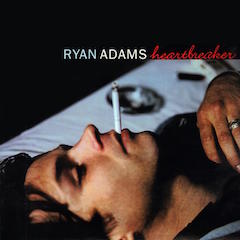
ryan_adams_heartbreakerRyan Adams: Heartbreaker
(BS 071, 2000)

No in depth history of Bloodshot would be complete without a mention of this masterpiece. A stone cold classic. The sine qua non of Ryan’s albums. Where promise met execution head on. As life piles on the weirdness and hardships, this album gets nothing but better. It took off like a rocket and we all had to hang on for the ride, learning a lot of lessons along the way.
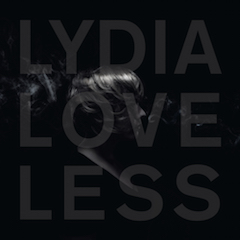
Lydia Loveless: Somewhere Else
(BS 219, 2014)

As a music geek, one of the ongoing thrills of the job is the act of discovery. Finding a young, rough talent and watching them find their voice and develop an artistic footing. We’ve been fortunate to be along on such journeys with Neko Case, Justin Townes Earle and many others. Recently, we’ve been lucky enough to be a part of the creative and popular ascendance of Lydia Loveless. On her first Bloodshot release (2011’s Indestructible Machine) there were fevered comparisons to acknowledged music icons like Loretta Lynn, Stevie Nicks, the Replacements, and more: She’s half this, half that, one part something else. We hate math. But, now Lydia Loveless is a reference point all her own. The arc of her development is an inspiring and exciting one.
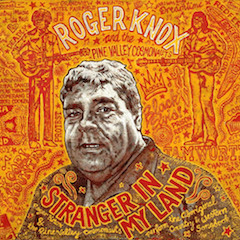
roger_knoxRoger Knox: Stranger in My Land
(BS 179, 2013)

Made with an all-star cast, headed by Jon Langford (Mekons, Waco Brothers), this is a record of great importance. It traces the influence of American country & western on the aboriginal Australian community. It is powerful and moving material, heartbreaking and hilarious, downtrodden and uplifting, suffused with longing, alienation, resilience and hope; universal themes arising out of largely unexplored context. It possesses the urgency of an Alan Lomax field recording, but with a spirit that remains relevant in today’s world. Most of our music is for entertainment’s sake, but this a record with profound historical reach.

robbie_fulks_uplandRobbie Fulks: Upland Stories
(BS 242, 2016)

We worked with Robbie on our very first release, the Chicago-centric compilation For A Life Of Sin. After that, we put out a few of his albums and several other compilation tracks. Our paths meandered over the years, but recently we have re-connected for a couple of stellar releases, the most recent being Upland Stories. That Robbie is not a widely celebrated name in households across the world as one of the premiere songwriters of this generation, is a pox upon us all. To be a part of his evolving talents is a listener’s delight.

Bjørn Hammershaug

Opprinnelig publisert på read.tidal.com, november 2016
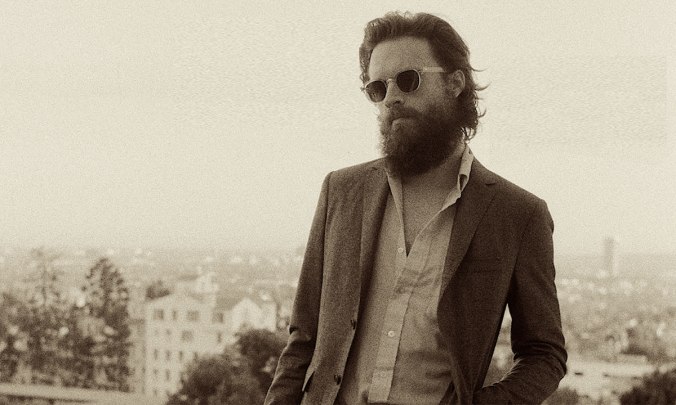
Father John Misty: Charlatan of the Canyon

father_john_misty_1200


This piece was written in February 2015, around the release of Father John Misty’s sophomore LP, I Love You, Honeybear

Father John Misty is a two-faced son of a bitch.

He might look like another bearded singer-songwriter, heck, he even used to be another bearded singer-songwriter with a strong affinity for smooth folk-rock. But Father John Misty (alias: Josh Tillman) is – down to his very essence – not what he appears.

honeybear_mistyStewing with sex, violence, profanity and excavations of the male psyche – gift-wrapped in gorgeous melodies that would woo Neil Diamond – Misty’s sophomore LP, I Love You, Honeybear, is a stunning work of duplicitous harmony. This show his relies on his ability to juggle contradictions – romance and tragedy, sorrow and slapstick, cynicism and sincerity – with casual serendipity.

Honeybear’s first single, “Bored in the USA”, remains the album’s definitive track, which Pitchfork described as, “passionate and disillusioned, tender and angry, so cynical it’s repulsive and so openhearted it hurts.”

Father John Misty garnered major attention last November when he played the tune on The Late Show with David Letterman. Quite akin to how Future Islands managed to boost their career when they turned “Seasons (Waiting On You)” into a viral hit from the same stage.

The performance was finely planned and brilliantly orchestrated. Sharply dressed, hair slicked back, he begins playing behind the keys of a dark grand piano, flanked by a 22-man string orchestra.

Then, à la David Lynch’s Mulholland Drive, he openly reveals that the audience is being fooled. After the first verse, Misty stands and turns to the audience as the piano continues to play by itself. He casually swings the mic, crawls onto the piano like a cabaret singer, and pleads for salvation. Meanwhile, canned laughter and boxed applause underline the song’s underlying textures of sarcasm, wit, and social and religious criticism.

Yet as melodramatic and conspicuously phony as elements of the presentation are, the passion and grace with which he delivers leaves no doubt that Father John Misty takes his music, and his persona, quite seriously.

Having grown up among an evangelical Christian community in Maryland, Tillman is familiar with mega-church theatrics. And just as the shiny TV pastors who believes in the gospel he spreads, even while he himself siphons the water for wine, Father John Misty doesn’t see an inherent conflict between candor and showmanship.

In an essay on the song and the Letterman appearance, Impose Magazine’s Geoff Nelson wrote:

There is no such thing as not worshiping. Everybody worships. The only choice we get is what to worship. The secular brand of worship is no less damaging than the evangelical’s bizarro landscape of White Jesus. We worship our bodies, minds, our stuff – hell, we worship independent rock artists like Tillman, worrying over their artistic choices like scripture. None of us are clean.

Tillman’s world – it is our own, he suggests – requires a fistful of pills to keep leveled out. Asking for salvation again, Tillman wails, “Save me, President Jesus,” invoking a uniquely American brand of religiosity and nationalism where the best and worst day of every passing cultural year is Super Bowl Sunday.

And the paradoxes run deeper still.

In micro and meta terms, the title and chorus of “Bored in the USA” make a clever and not-so-subtle play on Bruce Springsteen’s “Born in the USA” – an anti-war tune that is mistakenly embraced as a patriotic anthem – further unveiling the duality in both himself and his songs. Underlined by the artificial laughter when he croons about “useless education” and “sub-prime loans,” Nelson continues, “If nothing else, the brilliance and the irritation of this moment lies in the hijacking of the real people who came to laugh at Letterman and found themselves the straight man in Misty’s joke.”

“It is a concept album about a guy named Josh Tillman who spends quite a bit of time banging his head against walls, cultivating weak ties with strangers and generally avoiding intimacy at all costs,” says Father John Misty of the album, intentionally confusing his real-life identity as the protagonist of his stories. “This all serves to fuel a version of himself that his self-loathing narcissism can deal with. We see him engaging in all manner of regrettable behavior.”

***

I Love You, Honeybear is the second album by Father John Misty, but Tillman is by no means a newcomer.

He’s recognized by many as the drummer in Fleet Foxes, and as a folk-heavy solo artist under the name J. Tillman. After moving to Seattle in his early 2000s. Tillman befriended Damien Jurado, who helped jump-start his career. He released seven of albums as J. Tillman, between 2004 and 2010, joining the beloved indie-folk band Fleet Foxes in 2008 before departing in 2012.

Finally, Tillman packed is bags and headed south with nowhere to go. High on mushrooms and great ideas, he ended up in Laurel Canyon where he found a new voice – and new name – as Father John Misty. Paraphrasing author Philip Roth on how he came up with the new moniker, he said, “It’s all of me and none of me, if you can’t see that, you won’t get it.”

Honeybear was recorded between 2013 to 2014 in Los Angeles with producer Jonathan Wilson, who also recorded and produced Misty’s 2012 debut, Fear Fun, with mixing by Phil Ek and mastering by Greg Calbi at Sterling Sound.

Bjørn Hammershaug

Messing With Classics

mclemore_1200_720

Reinventing the wheel is dangerous business.

Having remade Pink Floyd’s The Dark Side Of The Moon in 2009 as well as releasing a very rare take of The Stone Roses’ self titled debut in 2013, The Flaming Lips have made a name for themselves as a band unafraid to tackle classic material on their own terms. They continue in that same vein with their new rendition of The Beatles’ 1967 Sgt. Pepper’s Lonely Hearts Club Band.

Says Lips’ Wayne Coyne: ‘Mostly we do it because it’s fun… I don’t think we have any agenda. I mean we make so, so much music that it can be a relief not to be working on your own songs…everyone who makes their own music has this secret joy of playing songs that aren’t theirs.’

Coyne goes on to suggest that these albums we call ‘classics’ aren’t as sacred as we hold them to be, their resonance in people being, to an extent, ‘dumb luck.’ While there may be some truth to this statement, any artist so bold as to take on one of these works ought to anticipate the expectations they are setting up for themselves.

An act far beyond covering a single track, and far more rare, remaking a full album is a risky business, especially when it comes to legends as the Pink Floyd or The Beatles. The Flaming Lips do it their own way and for their own reasons, but they’re not the only ones stepping into thin air. Here are 10 other interesting attempts at full album covers.

Easy All-Stars:
Dub Side Of The Moon
(Easy Star, 2003)

dark_sideThe original:
Pink Floyd:
The Dark Side Of The Moon
(Harvest, 1973)
The Dark Side Of The Moon is quite simply one of the most iconic, best known and best-selling albums of all time, remaining on the Billboard charts for a stunning 741 weeks in a row. That’s 14 years, folks! Using some of the most advanced studio techniques, such as multi track recording and tape loops, this was state-of-the-art at the time – but its the human quality of the songs and the artistry of entire album that make it simply timeless.

dubside_240What is this about?
This is the debut album by the New York-based reggae collective Easy Star All-Stars, and one that gave them instant stardom. Just as the original album has been a regular on the world’s sales charts since the release, Dub Side of the Moon has steadily remained on the Reggae charts all the way since 2003. The band followed up their success with Radiodread (2006) and Easy Star’s Lonely Hearts Dub Band (2009), and of course, Dubber Side of the Moon in 2010.

Why should I listen to it?
Does a dub-reggae interpretation of The Dark Side of the Moon sound a good idea? Well, not really, but this actually works out amazingly well. This is a complete makeover, though with the actual song structures kept fairly intact, even sticking to the same time-pace as Pink Floyd, which many have said synchs perfectly with the first hour of The Wizard of Oz. Try to leave your stoner jokes at the door, but it’s hard not to giggle when the chiming of clocks on “Time” is replaced with the bubbling of a bong, followed by a smokey cough. Bringing their own kind of psychedelic haze into the magical mystery tour of the original songs, including roots reggae, jungle and dancehall, Dub Side of the Moon is heading for the same directions, but on a different space shuttle.

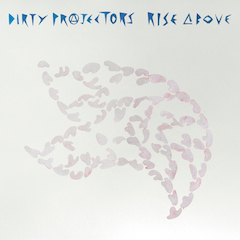
The Dirty Projectors:
Rise Above
(Dead Oceans, 2007)

black_damagedThe Original:
Black Flag:
Damaged
(SST, 1981)
A true hardcore cornerstone; Damaged is one of the most influential punk albums of all time. Black Flag defined the entire L.A punk scene and paved way for American underground rock with ferocious anger and rambling anthems like “Gimmie Gimmie Gimmie,” “T.V. Party,” and “Police Story.”

dirty_riseWhat is this about?
Dirty Projector mastermind Dave Longstreth hadn’t heard Damaged in 15 years when he decided to remake it basically from how he remembered it in his youth. Longstreth, being a complete opposite of Henry Rollins in every way, turns angry riffs into lush orchestration, and angry yelling into sweet harmonies.

Why should I listen to it?
This is something completely different, that’s for sure, and not an album aimed at the typical Black Flag-fan – or hardcore enthusiast at all. Longstreth and his Dirty Projectors reache far beyond such categorization, and this is probably a love-hate kind of work. The critic’s stayed mainly positive, ‘That the album has a concept – a song-by-song ‘reimagining’ of Black Flag’s Damaged – scarcely matters to the listener, although it seems good for Longstreth: It gives the illusion of an anchor,’ wrote Pitchfork (8.1/10), while in a more lukewarm response, Paste Magazine stated, ‘This is either one of 2007’s most refreshing or most grating albums, and there’s a hair’s breadth in between.’

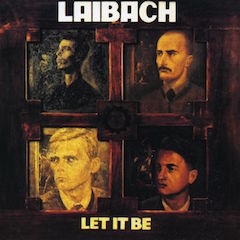
Laibach:
Let It Be
(Mute, 1988)

beatles_beThe Original:
The Beatles:
Let It Be
(Apple, 1970)
The final studio album released by The Beatles, even though it was mostly recorded prior to Abbey Road in the early months of 1969. The quartet was already in steaming ruins at the time of its release in May 1970, but the grandiose, orchestral production of Phil Spector manages to even out the frictions within the band. A second proper version of the album was released in 2003 without his heavy-handed touch, as Let It Be… Naked.

laiback_beWhat is this about?
In the history of odd combinations, this one really stands out. The industrial/neo-classical Slovenian outfit Laibach doesn’t compromise their strict, military sound and guttural singing when turning towards the gentle pop of The Beatles. Their beautiful version of “Across The Universe” aside, this shows another side of The Beatles. Laibach decided to drop the title track on their version, and replaced “Maggie Mae” with a German folk tune.


Why should I listen to it?
For Beatles-lovers, mainly because you’ve never heard The Beatles like this before. As All Music Guide puts it, ‘In some respects, Let It Be wasn’t that hard of an effort – songs like “Get Back”, “I Me Mine,” and “One After 909” simply had to have the Laibach elements applied (growled vocals, martial drums, chanting choirs, overpowering orchestrations, insanely over-the-top guitar solos) to be turned into bizarre doppelgängers. The sheer creepiness of hearing such well-known songs transformed, though, is more than enough reason to listen in.” But this is also a political statement. Made at the dawn of the Slovenian independence movement, it evokes living behind the Iron Curtain at a time when the people no longer would ‘let it be.’

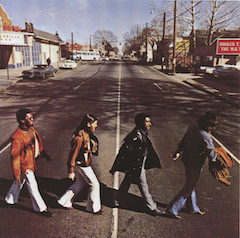
Booker T. & M.G.’s:
McLemore Avenue
(Stax, 1970)

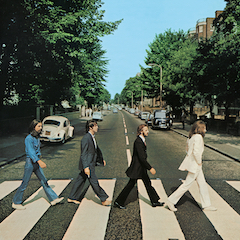
abbey_beatlesThe Original:
The Beatles:
Abbey Road
(Apple, 1969)
The real swan song by The Beatles, and the last sessions where they all participated, is nothing short of a masterpiece, bringing them into brave new musical directions (again and for the last time), completed with standout tracks like “Something,” “Sun King,” and “Come Together” – and of course the iconic cover art. Fun fact: a 19-year-old Alan Parsons worked as an assistant engineer in the studio. Known not only for his own subsequent artistic career, he also did the engineering on the aforementioned The Dark Side of the Moon.

booker_mclemoreWhat is this about?
Booker T. Jones was so awestruck when he heard Abbey Road, he just had to pay immediate homage to it, and together with Donald “Duck” Dunn, drummer Al Jackson and the rest of the M.G’s, he made McLemore Avenue just a couple of weeks after its release. The album cover is even a remake of the original, McLemore Avenue being the street passing Stax studios in Memphis. You can even spot the famous “Hitsville USA” sign back there.

Why should I listen to it?
This is a soulful, instrumental and quite improvisational interpretation, where the single tracks are bundled into three lengthy medleys – except for “Something”, the only standalone track – securing a sweet Southern flow that suits the songs surprisingly well.

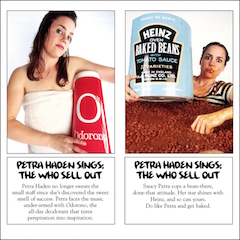
Petra Haden:
Petra Haden Sings the Who Sell Out
(Bar/None, 2005)

who_selloutThe original:
The Who:
The Who Sell Out
(Decca, 1967)
A concept based tribute album to pirate radio, complete with fake commercials and jingles in-between the songs. A milestone in their catalog, The Who Sell Out is far from a sell-out. This masterpiece is a perfect blend of mod pop and hard rock, wonderful vocal harmonies and with some of the bands finest songs, including “I Can See For Miles.”

haden_selloutWhat is this about?
This daring project came to life when Mike Watt (of Minutemen fame) handed his friend, singer-violinist Petra Haden (that dog, The Decemberists, many others), an 8-track cassette tape with the original Who album recorded onto one track and the other seven empty, for her to fill with intricate vocal harmonies. Haden decided to remake the classic by herself, and only herself. This a cappella version features just her, singing all the voices, all the instruments and yeah, even the jingles and the mock radio commercials.

Why should I listen to it?
This could’ve ended up a total train wreck in the hands of others, but Petra Haden has the vocal capability and keen musical understanding to transform one masterpiece into another. And Pete Townsend himself approved of it, speaking with Entertainment Weekly in 2005, ‘”I heard the music as if for the first time. I listened all the way through in one sitting and was struck by how beautiful a lot of the music was. Petra’s approach is so tender and generous. I adore it.”

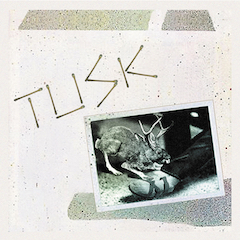
Camper Van Beethoven:
Tusk
(Pitch-A-Tent, 2003)

fleetwood_tuskThe original:
Fleetwood Mac:
Tusk
(Warner, 1979)
Actually the most expensive album made at that time, with a stunning $1 million price tag. According to author Rob Trucks’ in his 33 1/3 book Fleetwood Mac’s Tusk, the group started their recording session with a cocaine fueled celebration of Mick Fleetwood’s new $70,000 sports car, before he got a phone call saying that the uninsured car was broadsided and demolished while being towed to his home. The album itself also became a commercial car crash, selling ‘only’ four million copies – something like 20 millions less than Rumours. It is now generally hailed as a keystone album within the AOR segment.

camper_tuskWhat is this about?
This is nothing less than a re-recording of a re-recording. First done by Camper Van Beethoven in 1987 around spare time of making their delightful Our Beloved Revolutionary Sweetheart. This song-for-song remake didn’t get a proper release until 2003 when they returned from a 12-year long hiatus. They dug up these old demo tapes, and decided to give it another shot, more or less as an experiment to see if they still could play together and work as a group.

Why should I listen to it?
And they sure could. Camper Van Beethoven gained popularity as one the most beloved alternative rock bands in the mid ‘80s; combining garage/punk roots with jangle pop, ska and country-folk. All elements are present here, on a collection where the song material of course is excellent – the performance loose and joyous. Even if it’s not up there with Camper’s best albums, it’s still a treat.

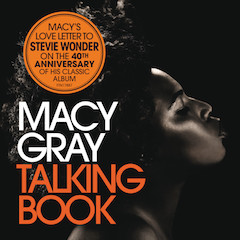
Macy Gray:
Talking Book
(429/Savoy, 2012)

wonder_talkingThe original:
Stevie Wonder:
Talking Book
(Tamla, 1972)
An undisputed classic from the glorious creative highpoint of Stevie Wonder; Talking Book secured him multi-platinum sales, several hit songs (“Superstition”, “You Are The Sunshine Of My Life”) and a swath of Grammys.


macy_talkingWhat is this about?
Not promoted as a covers album, but rather labeled a ‘love letter’ to Stevie Wonder on the occasion of the original’s 40th anniversary, Macy Gray did her tribute in a pretty straightforward way, leaning on her raspy voice and keeping the funky edge more or less intact.

Why should I listen to it?
This album received various critics. Popmatters.com stated that ‘some of these versions just seem unnecessary, more a product of the let’s-cover-the-whole-album concept rather than songs that anyone was dying to re-record;’ while The New Yorker wrote in a much more positive review, ‘Gray hits all the right notes, both as a singer and an interpreter: it’s a marvelous, expansive, eccentric performance that lifts off into gospel toward the end. The original version was about romantic love. This one may be about matters more divine (there’s one explicit mention of prayer), unless it’s just Gray’s way of reiterating her devotion for Talking Book itself. Either way, it’s a stirring closer, and a reminder that the most important thing about a love letter is how it ends,’ referencing the closer, “I Believe (When I Fall In Love It Will Be Forever).”

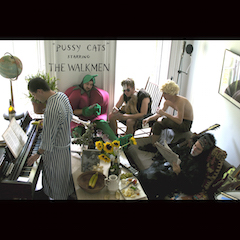
The Walkmen:
Pussy Cats
(Record Collection, 2006)

harry_catsThe original:
Harry Nilsson:
Pussy Cats
(RCA, 1974)
In 1974 John Lennon temporarily separated from Yoko Ono and left New York for a period, settling in Los Angeles and rambling around with Harry Nilsson in what is commonly known as the “Lost Weekend.” Fueled by large amounts of booze, the pair entered the studio together and recorded Pussy Cats, with a worn-out Harry Nilsson at the microphone and Lennon filling in as producer. The album is guested by, amongst others, Ringo Starr, Jim Keltner and Keith Moon. It must have been a hell of a party.

walkmen_catsWhat is this about?
It started out as a joke, but ended up as a full album. Indie/post-punk outfit The Walkmen did a track-by-track, note-by-note remake of one their favorite albums, recorded in the last days of their Marcata studio in New York City. Together with a bunch of friends they created their own Lost Weekend while the studio fell apart around them. Oddly enough, we get a couple of covers of covers here as well, since Nilsson/Lennon themselves versions of “Many Rivers To Cross” and Dylan’s “Subterranean Homesick Blues.”

Why should I listen to it?
It’s kind of hard to revitalize the ramblings of the drinking buddies, and wisely enough, singer Hamilton Leithauser does not try to impersonate Nilsson growls. As the little sister to the band’s main album of that year, A Hundred Miles Off, this one might be considered a parenthesis in their own catalog; but it’s in some ways just as good. The band catches the vibe while creating their own mood into it. And hopefully it helped gain more attention to an often-overlooked gem from the mid-‘70s.

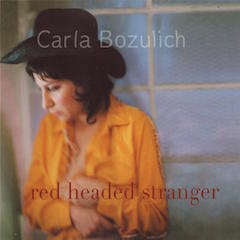
Carla Bozulich:
Red Headed Stranger
(DiCristina Stairbuilders, 2003)

willie_strangerThe original:
Willie Nelson:
Red Headed Stranger
(Columbia, 1975)
Being dissatisfied with is relations with Atlantic Records, outlaw cowboy Willie Nelson turned to Columbia in 1975 for more artistic freedom. His first statement was Red Headed Stranger, a concept album about a fugitive on the run from the law after killing his wife and her lover. With a production so sparse even Columbia thought it was just demo tapes, but they kept their promise of artistic liberty and hesitantly released Stranger – to wide acclaim from the public and critics alike. It was Nelson’s big breakthrough, sold multi-platinum and is generally ranked among his finest works to date.

carla_strangerWhat is this about?
Singer/songwriter Carla Bozulich first gained attention as the singer in Ethyl Meatplow and country-based post-punk band The Geraldine Fibbers, later performing as Evangelista. Red Headed Stranger is her first solo album, and an escape from the pressure of writing new songs. She turned to this classic, aided by, amongst others, longtime partner Nels Cline, Alan Sparhawk of Low – and hey, Willie Nelson himself.

Why should I listen to it?
The result is nothing short of gorgeous. Adding instruments like Autoharp, electric mbira and tamboura into the mix, Bozulich does more than a remake, this is a true rediscovery with new soundscapes within a whole different aural texture. As All Music sums it up in their rave review, ‘As downtrodden and spiritually haunting as its predecessor, this new Red Headed Stranger is vital and necessary, a work of new Americana — not the radio format, but the mythos itself.’

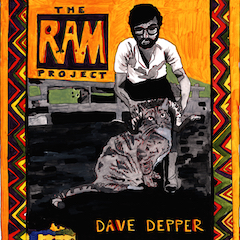
Dave Depper:
The RAM Project
(Jackpot/City Slang)

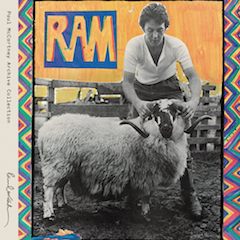
macca_ramThe original:
Paul McCartney:
Ram
(Apple, 1971)
The second solo album from Macca, made in the shadows of breaking up The Beatles and darkened by his sour relationship with John Lennon. Ram was not received favorably in its time (nothing less than “monumentally irrelevant” according to Rolling Stone’s Jon Landau), but its reputation has grown steadily throughout the years, and it is now considered as on his best solo albums. Same Rolling Stone, different writer, called it, in-retrospect, a ‘daffy masterpiece.’

01, 12/7/10, 3:42 PM, 8C, 4920x4936 (528+1736), 100%, Custom, 1/60 s, R46.0, G28.0, B51.0

01, 12/7/10, 3:42 PM, 8C, 4920×4936 (528+1736), 100%, Custom, 1/60 s, R46.0, G28.0, B51.0

What is this about?
In 2010 Dave Depper decided to re-do Paul McCartney’s Ram completely by himself in is own bedroom. For one month he carefully recorded every single instrument, with just a little aid from Joan Hiller in the role of Linda McCartney. What started as a bedroom project turned out to be a proper release, and one that has continued to live on for Depper, being something much bigger than he initially intended.

Why should I listen to it?
This is a pretty impressive piece of work, clearly done with lots of passion and love. More a re-built creation than anything else, an exercise in imitation. As with the approach of the Flaming Lips, sometimes music is just about having a good time, and stumble upon brilliance now and then, even if that brilliance belongs to other people.

Bjørn Hammershaug

Earache: Grindcrusher Since 1985

entombed

Digby Pearson founded Earache Records in 1986.

A longtime fan of ’80s hardcore (MDC, DRI, Discharge), Digby was deeply involved in the underground music scene early on — working as a roadie, writing for fanzine Maximum RocknRoll and doing promotion for bands on the road. His obsession with rock and roll in its hardest and heaviest forms eventually materialized into starting his own label, which he began from his Nottingham, England apartment.

morbid_angel_altarsFocusing on the more extreme outskirts of metal, Earache immediately struck gold with Birmingham grindcore pioneers Napalm Death, releasing their groundbreaking debut, Scum, in 1987. As records sold, Earache gradually grew into a more organized business, and soon incorporated Florida’s Morbid Angel, Sweden’s Entombed and Liverpool’s Carcass into it roster, while expanding beyond its grind and death metal origins to include other extreme sub-genres like industrial metal (Godflesh), doom (Cathedral) and stoner (Sleep).

By the early 1990s, Earache Records was the unequalled leading label for extreme metal in all shapes and forms.

And as metal started to gain audience with a larger public, several major releases found their way onto worldwide album charts.

carcass_heartworkEarache struck a U.S. licensing deal with Sony Music in 1993, but disappointing sale figures turned it into a short-lived venture. As it turned out, the mainstream masses weren’t quite ready for the extremes after all. Earache came out wounded in the aftermath, with many of the most important bands signing deals with major labels: Carcass to Sony, Morbid Angel to Giant, Entombed to EastWest.
Not easily broken, Earache refortified around its fiercely independent status and strong, extensive back catalogue. After the Sony deal, they once again scored a big-time signing with Swedish melodic death metal band At The Gates, and continued to branch out the label’s musical roots with such acts as cyber-techno-band Ultraviolence and reggae-punkers Dub War, who scored a Top 5 hit in the U.K.

By the turn of the millennium, Earache Records was more vivacious than ever.

The Wicked World imprint was founded to foster underground metal talent, such as Decapitated and Hate Eternal, while still developing breakthrough bands like Swedish super-group The Haunted, Norwegian dark-goth Mortiis and Australian grind mutants The Berzerker.

Earache was the central catalyst in the metal explosion of the new century despite having no direct involvement in the new set of bands conquering the album charts (Slipknot, Nightwish, Hatebreed), sticking to bands with a more individualistic takes on the extreme metal ethos and having modest success with acts like Mortiis, Cult of Luna and veterans Deicide, who signed to Earache after their long stint with Roadrunner.

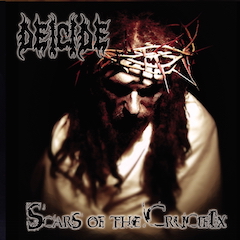
deicide_scarsDeicide’s 2004 debut for Earache, Scars of the Crucifix, returned the label’s name to the American Billboard charts and went on to be Earache’s best-selling album in years. Toward the end of the decade the label incubated a thrash metal renaissance, with bands like Evile and Municipal Waste enjoying worldwide success.
The signing of Rival Sons in 2010 signaled a move into the commercial rock, and a new era of success has ensued. Since then, Earache has shifted gears to sign and release more widely appealing rock and roll, with acts like Blackberry Smoke, which joined the party in early 2014, and The Temperance Movement, who signed in summer 2013. The two most recent additions to Earache’s roster – Kagoule and Biters – epitomize Earache and Digby’s willingness to evolve and reinvent.

Known worldwide as the label for all things extreme in music, Earache’s contribution to the underground scene is immense.

They’ve signed a stunning number of leading and innovative acts in their nearly three-decade run, selling millions of records while remaining a wholly independent and loyal to the up and coming bands.

As Digby Pearson says in our below interview, “We stand for taking wholly unfashionable scenes and underdog bands, and making them household names. The prevailing trends we generally ignore. I’m attracted to bands that stand out like a sore thumb, those pushing against the grain.”

Digby Pearson is this year’s recipient of the Pioneer Award at the AIM Independent Music Awards. Taking place September 8 in London, Pearson is the fifth recipient of the honor, following previous winners Martin Mills (Beggars Group), Geoff Travis (Rough Trade), Daniel Miller (Mute) and Laurence Bell (Domino).

*   *   *

Deafen People with Noise
Q&A with Digby Pearson

digby_earache

How did you get into the music business in the first place?

I got into music first, business second. Purely as a fan, helping out local friends in bands, from behind the scenes, promoting pub shows, zine, roadie, everything. It was the DIY punk/hardcore scene that welcomed all comers. The feeling was “anyone could have a go,” so I did. I promoted Napalm Death’s second-ever show, four years before I released their debut album.

What labels where your own role models or guiding stars, when you started up?

Labels in the HC/punk scene were my education: SST, Dischord, Clay… and John Peel of BBC Radio 1, of course. Aside from that I was a fan of Def Jam as it was created. I watched from afar, transfixed – the whole street level ethos of the label, even though it was early hip-hop genre. I kinda tried to replicate that ethos for Earache, minus the gold chains… [laughs] Rick Rubin is a total hero of mine.

What does Earache stand for as an institution?

We stand for taking wholly unfashionable scenes and underdog bands, and making them household names. The prevailing trends we generally ignore. I’m attracted to bands that stand out like a sore thumb, those pushing against the grain.

In your opinion, what is the greatest achievement in the nearly 30 year history of Earache?

Giving anti-establishment bands a voice, and a platform. The now-thriving global genre of ‘Extreme Metal’ was pretty much born during the explosive first 20-odd releases of the label, out of a bedroom in Nottingham. I released all the major players, one after another.

What’s the secret behind keeping the spirit alive for such a long time?

Just being positive and enthusiastic about music 24/7. Even almost 30 years on, I crave new sounds and listen to new bands daily. I’m really into new young bands playing blues-rock and southern rock these days, several of the signings hit the U.K. Top 10 and European charts in last two years: Rival Sons, The Temperance Movement, Blackberry Smoke.

Did you have an initial idea back then on what Earache should be and how it could evolve in the future?

No lofty ideas at all, except to deafen people with noise! It’s not what you’d call a business plan, but the single-mindedness of purpose is what I guess attracted fans to the sound.

What makes you decide to sign a band or not?

Again, having an absolutely contemporary sound is what gets my attention, which is often not the prevailing trend. It helps that Earache is 100-percent independent — no one has any stake or input on the label. We do what we damn well want. Bands have absolute creative freedom, which some have only come to appreciate once they moved on.

Pick three of your favorite Earache releases.

napalm_death_scumNapalm Death
Scum (1987)
Unprecedented at the time in ‘not giving a fuck.’
It kick-started the extreme metal genre.


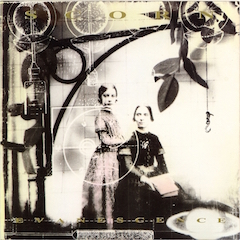
scorn_evanescenceScorn
Evanescence (1994)
Ex-members of Napalm Death experimenting with samples, drum loops, and deafening dubby bass-lines.
Way ahead of its time. Made in ‘95, sounds contemporary even in 2015.


rivalsons_headRival Sons
Head Down (2012)
Bluesy rock from Long Beach, played with an intensity and honesty that electrified the corpse of rock ‘n’ roll in recent years.


The metal scene and the music itself have gone through various mutations over the years. In what way does these changes reflect the history of Earache?

Yeah, Earache has been in the midst of most of the metal scenes and micro genres over two decades. We swerved a couple of scenes — gothic metal, nu-metal — as they weren’t to my tastes, but in hindsight that was probably a bad decision as they became the biggest metal sellers of recent times. Oops.

The music industry also goes through changes. How have those challenges affected you?

Obviously the digital revolution is changing things as we speak. Downloads and now streams; we’ve seen it coming, luckily, so we adapted with plenty of time.

Any regrets? Anything you would do differently if you had a second chance?

I honestly would have decided to sign commercial-ish music earlier, instead of waiting 25 years.

Bjørn Hammershaug

Black Power, Resistance and Consciousness in Album Cover Art

black_power_1200The birth of the Civil Rights Movement in the 1950s marked the beginning of a social, political and cultural revolution that drastically changed American society.
What began as a peaceful and pacifistic movement aimed at ending racial segregation, embodied by protest marches, sit-ins, Freedom Riders and figures like Rosa Parks and Martin Luther King, Jr., gradually evolved and splintered into a more militant climate. While legal and symbolic victories like the defeat of Jim Crow laws were major milestones of progress, they did not necessarily lead to better living conditions for the common man, and from the mid-1960s onward many started seeking different strategies for socio-political empowerment, leading to the rise of Black nationalism.

Black nationalism and separatism challenged the Civil Rights Movement, with ‘Black Power’ used as a strong political slogan emphasizing racial pride and the creation of black political and cultural institutions. Key leaders of this movement included Stokely Carmichael, Malcolm X and Bobby Seale, co-founder of the Black Panther Party. Along with intensified friction within the different fractions, the combination of inner city riots, the Vietnam War and economic downtimes added fuel to the fire in the late ’60s and early ’70s. And there’s a straight line connecting that era and the ongoing debates about police brutality, economic inequality, mass incarceration, underrepresentation and other major disadvantages still facing African Americans in 2016.

Black Power had a significant impact on pop culture and music, not the least of which occurred in the decade between 1965 and 1975.

In his book Listen Whitey! The Sights and Sound of Black Power, Pat Thomas writes: ‘As the Black Power movement expanded, it influenced established artists such as Marvin Gaye, James Brown and the Isley Brothers. The movement would shape the voice of emerging songwriters like Sly Stone and Gil Scott-Heron (…). It would force Jimi Hendrix (…) to reconsider his apolitical stance. There would be rank-and-file Black Panther members like Nile Rodgers of Chic and Chaka Khan of Rufus who would go on to pop music fame in the 1970s.’

Below are just some album covers with a discernible message related to Black Power, resistance and consciousness, albums as worthy of seeing as they are worth listening to, chronologically connecting Max Roach and Gil Scott-Heron with Nas and Kendrick Lamar.

* * *

Max Roach:
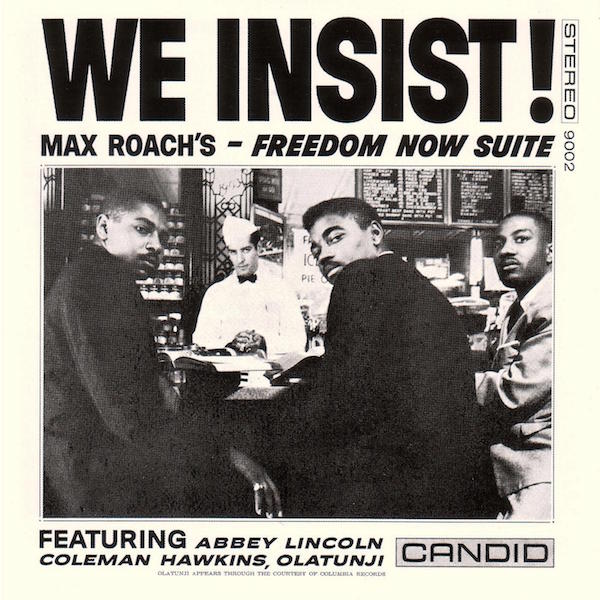
We Insist! Max Roach’s Freedom Now Suite
(Candid, 1960)

max_roach_insist
This avant-garde jazz album led by drummer Max Roach consists of five parts concerning the Emancipation Proclamation and the growing African independence movements of the 1950s. All Music Guide calls the record a ‘pivotal work in the early-’60s African-American protest movement [that] continues to be relevant in its message and tenacity. It represents a lesson in living as to how the hundreds of years prior were an unnecessary example of how oppression kept slaves and immigrants in general in their place.’ The cover references the sit-ins of the Civil Rights Movement: a black-and-white photograph of three black men in a diner, staring directly into the camera while being tended by a white waiter behind the counter. The image might seem like an ordinary scene today, but in 1960 it was certainly meant as a political and provocative statement.

Elaine Brown:
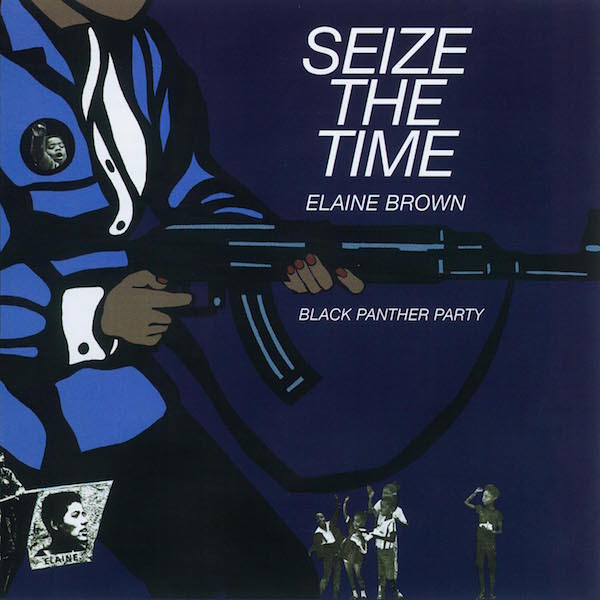
Seize The Time – Black Panther Party
(Vault, 1969)

elaine_brown_time
Songwriter and pianist Elaine Brown was among the most noteworthy musicians to emerge from within the Black Panther movement. Her debut album, Seize the Time, includes the Panther anthem “The Meeting.” In a 1970-printed ad for the album, Brown herself writes: ‘Songs are a part of the culture of society. Art, in general, is that. Songs, like all art forms are expressions of feelings and thoughts. A song cannot change a situation, because songs do not live or breathe. People do. And so the songs in this album are a statement – by, of and for the people. All the people.’ The cover was made by Panther-illustrator Emory Douglas and it’s strikingly symbolic both in the use of the AK-47 (a symbol of solidarity with the North Vietnamese) and the fact that the hands holding the gun are wearing nail polish. In other words, black and female power combined.

Sun Ra:
The Nubians of Plutonia
(Saturn Research 1959/1966; below cover featured on 1974 Impulse re-release)

sun_ra_nubians
The Nubians of Plutonia dates back to the late 1950s, when it was originally recorded, but it wasn’t released for almost a decade, ultimately on Sun Ra’s own Saturn label in 1966. It’s a groundbreaking cosmic jazz masterpiece its own right, laced with tribal African grooves and hints of funk and space-age exotica, but the main reason for featuring the album here is the stunning artwork from the 1974 reissue on Impulse. The label acquired the rights to 21 albums originally made on Saturn, cleaning up the sound and providing them with brand new full-color covers, and the design for The Nubians of Plutonia is especially wonderful, embracing its afro-centric focus in line with the pan-African vibes of the era.

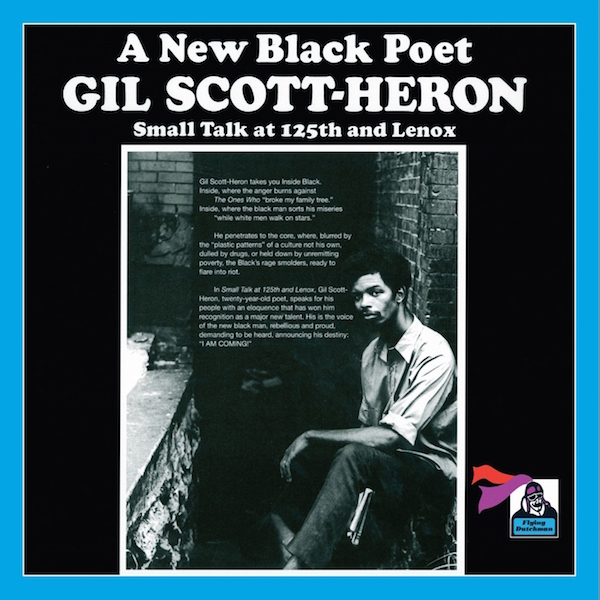
Gil Scott-Heron:
A New Black Poet: Small Talk at 125th and Lenox
(RCA, 1970)

gilscott_lenox
Gil Scott-Heron was only 21 years old at the time of his debut album’s release, a poignant and politically passionate set of spoken-word, percussive rhythms (bongo drums and congas) and proto-rapping recorded live in a New York City nightclub located at the address indicated by the title. The album, along with Scott-Heron’s greater career, is widely considered a presage of hip-hop, and includes the iconic and heavily-sampled “The Revolution Will Not Be Televised.” The black-and-white cover photo by Charles Stewart captures Scott-Heron in a back alley, with a written introduction on him as the centerpiece: ‘He is the voice of the new black man, rebellious and proud, demanding to be heard, announcing his destiny: ‘I AM COMING!”

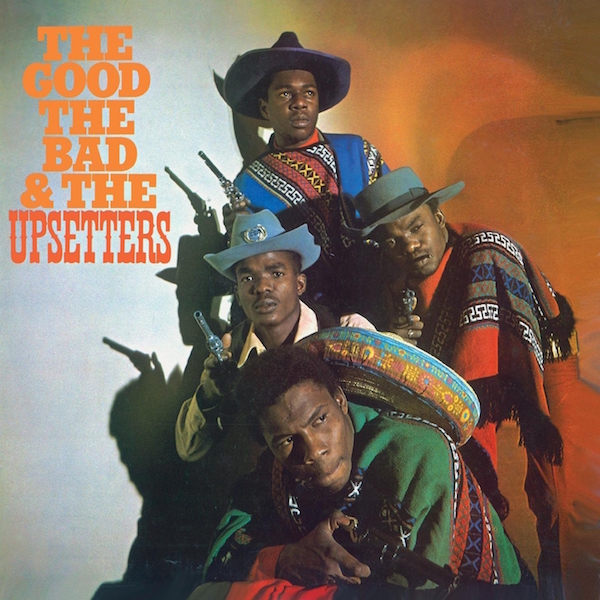
The Upsetters:
The Good, The Bad And The Upsetters
(Trojan, 1970)

upsetters_good_bad
Not exactly a cover referring to anything associated with the Black Power movement, but a wonderful shot in its own right with The Upsetters posing in Spaghetti Western garb. This album stirred conflict on a different matter, though. The Upsetters were the house band for legendary Jamaican producer Lee “Scratch” Perry, and the original U.K. edition of The Good, The Bad And The Upsetters was released on Trojan in 1970 without Perry’s involvement. Angered by this, Perry issued another version of the album in Jamaica using the same Trojan album artwork but with totally different songs on it.

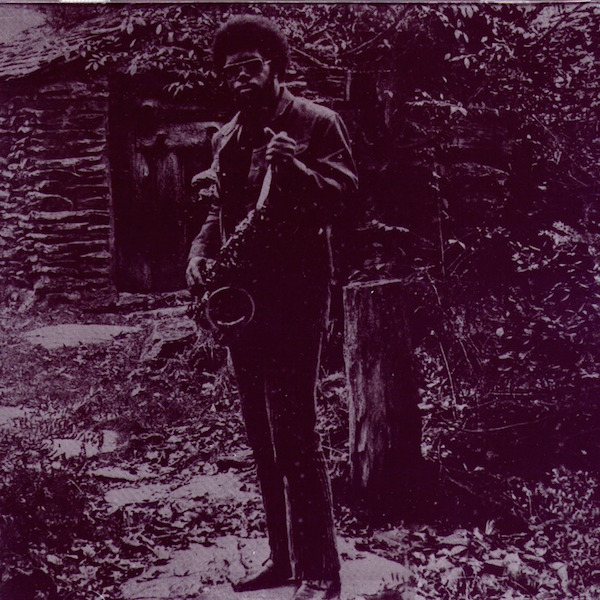
Joe McPhee:
Nation Time
(CjR, 1970)

joemcphee_nation
This free jazz masterpiece by saxophonist and trumpeter Joe McPhee, once described by The Guardian as ‘a grinning punk cousin to Miles Davis’s brutal and brilliant Bitches Brew,’ is closely connected to the emerging Black Power movement. Nation Time was recorded live at the Urban Center for Black Studies at Vassar College in 1970, where McPhee himself taught classes in ‘Revolution in Sound.’ The album sounds as groundbreaking today as it did back in 1970, and is a total must-hear. On the cover, shot by photographer Ken Brunton, McPhee is posing in a Black Panther-style outfit, holding the saxophone instead of a gun, in front of an old slave-shack. Bringing the African call-and-response tradition into the Black Power movement, McPhee shouts out the rhetorical question, ‘What time is it??,’ in the title track, with the audience enthusiastically chanting back, ‘It’s Nation Time!!’

Isaac Hayes:
Black Moses
(Stax/Enterprise, 1971)

black_moses_full_cover
Black Moses is the fifth album by legendary soul singer Isaac Hayes, following up his soundtrack to Shaft with yet another chartbuster. This was his second double-LP of 1971, his second consecutive release to top the Billboard R&B chart, and his second consecutive Grammy-winner. Stax Records boss Dino Woodward is credited for coming up with the ‘Black Moses’ tag. As pulled from the book Soulsville U.S.A.: The Story of Stax Records: ‘Dino said, ‘Man, look at these people out there,’ explains Isaac. ‘Do you know what you’re bringing into their lives? Look at these guys from Vietnam, man, how they’re crying when they see you, how you helped them through when they was out there in the jungle and they stuck to your music. You like a Moses, man. You just like Black Moses, you the modern-day Moses!’ Hayes himself disapproved of both the title and the concept, but changed his mind after release. The LP itself came in iconic packaging: a fold-out, cross-shaped cover showing him as a modern-day Moses. “It raised the level of black consciousness in the States,” he later said. ‘People were proud to be black. Black men could finally stand up and be men because here’s Black Moses, he’s the epitome of black masculinity. Chains that once represented bondage and slavery can now be a sign of power and strength and sexuality and virility.’

The Last Poets:
This is Madness
(Douglas, 1971)

last_poets_madness
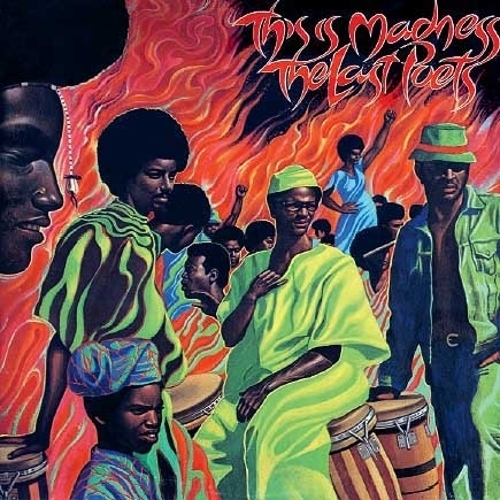
Closely linked with the Black Panthers and Black Nationalism, The Last Poets performed their live debut in Harlem in May 1968, at an event marking the recent killing of Malcolm X. They described their music as ‘jazzoetry,’ combining jazz, poetry and rapping. The cover for This is Madness, in striking colors and raised fists, is a painting by Abdul Mati and based on a photograph by Bilal Farid.

The Pharaohs:
The Awakening
(Scarab, 1971)

pharaohs_awakening
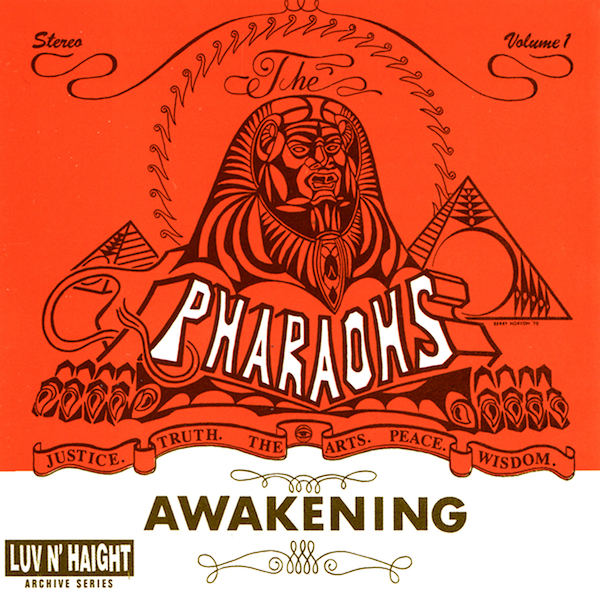
Rooted on the South Side of Chicago, The Pharaohs were closely connected to Chess Records (the esteemed label known as a quality stamp for funk, blues, rhythm & blues, jazz and soul), formed in part by a group called the Jazzmen and the Afro Arts Theatre and the Association for the Advancement of Creative Musicians (AACM) in Chicago. On the back cover they describe their debut album as ‘the sounds of the pygmies blended with the Soul Sounds of 39th street in Chicago.’ The cover itself is mixes Egyptian imagery (a style Earth, Wind and Fire later would employ) and pan-African interest. From the flipside of the LP version: ‘Once upon a time there is a group of young men who came together and formulated a dream. They dared to dream that hey could create an approach to the arts that would encompass their experiences in America, the soul of their motherland… Africa, and the spirit of the oneness of the Universe.’

Pharoah Sanders:
Black Unity
(Impulse!, 1971)

sanders_unity
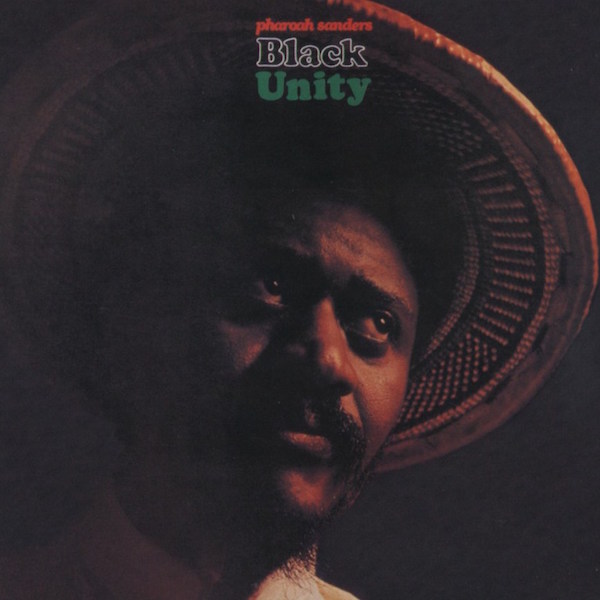
Gigging with the likes of Don Cherry, Sun Ra and John Coltrane, Pharoah Sanders turned out to become one of the most revolutionary jazz saxophonists of all time and a key figure in pioneering astral jazz. Black Unity is truly essential listening, a 37-minute long, tight, rhythmic and energetic improvisational piece that fully embraces the pan-African ideals of the time. All Music Guide describes it as ‘pure Afro-blue investigation into the black sounds of Latin music, African music, aborigine music, and Native American music.’ The multi-ethnic musical amalgam and spiritual freedom is equally reflected in the music, the title and on the front cover.

Bob Marley & The Wailers:
Soul Revolution Part 2
(Upsetter, 1971)

marley_soul
Soul Revolution Part 2 was released in Jamaica, as a kind of sequel to Soul Rebels the year prior, and was a part of Bob Marley & The Wailers’ collaboration with Lee ‘Scratch’ Perry. The album, not properly released outside of Jamaica for several decades, found them moving further away from their ska and rocksteady roots and into an early form of reggae. Their growing social concerns are being elevated to new heights with this original album cover art, showing the band dressed in full guerrilla warfare outfit, armed and ready for action. The rifles were perhaps fake, but he imagery is still as stark today.

The Watts Prophets:
Rappin’ Black In A White World
(Ala, 1971)

watts_prophets
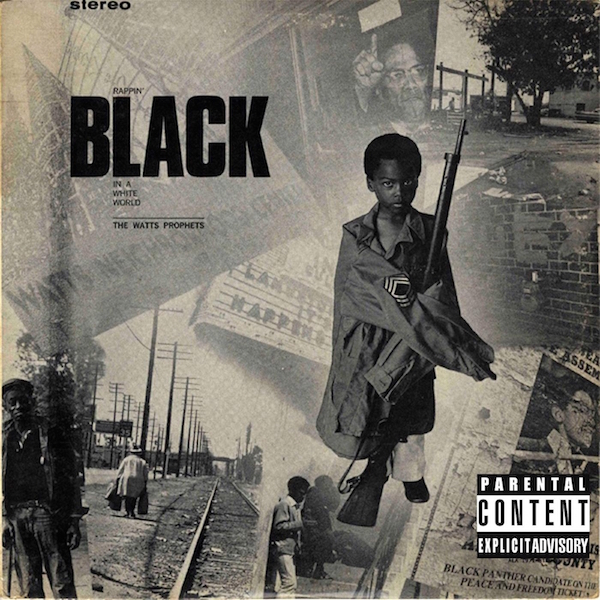
The West Coast equivalent to Harlem’s The Last Poets (above), The Watts Prophets (from Watts, Los Angeles) is a group of musicians and poets. Beginning in the late 1960s, their combination of jazz and socially conscious poetry made them (like The Last Poets) among the forerunners for establishing hip-hop as a music form. Actually, the title itself is supposedly the first time ‘rappin’ came into use, and The Watts Prophets have been described a living bridge from the Civil Rights of the ’60s to the Hip Hop generation of today.

Miles Davis:
On the Corner
(Columbia, 1972)

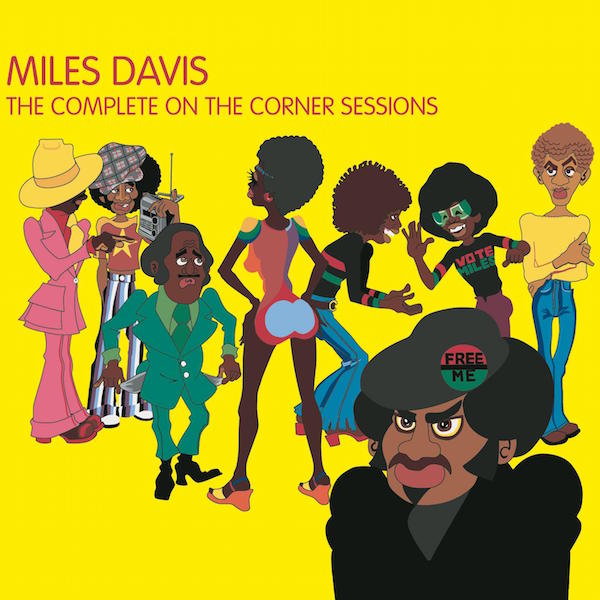
miles_onthecorner
It received lousy reviews, didn’t sell, and has been called ‘the most hated album in Jazz.’ But history has proven many of the worst critics wrong, and today On the Corner is rightfully considered one of Miles Davis’ best and one of the most influential albums of all time. Miles mixed rock, jazz and funk in a way that is hailed as a proto-album both for hip-hop and electronic music, and All Music Guide says ‘the music on the album itself influenced every single thing that came after it in jazz, rock, soul, funk, hip-hop, electronic and dance music, ambient music, and even popular world music, directly or indirectly.’ Miles Davis aimed to reconnect with the African-American communities for this album, and the cover art mirrored the social transformations of the time. He also named one of the tracks “Mr. Freedom X,” in reference to Malcom X.

Huey Newton:
Huey! Listen, Whitey!
(Folkways, 1972)

huey_whitey
Huey P. Newton, one of the founding members of the Black Panther Party, was arrested in the late 1960s on charges of shooting a police officer. An album in two parts, Huey! is a representation of the support Newton received from the Panthers and other members of the community during his trial, while Listen Whitey! chronicles the reaction of the black community immediately following the assassination of Dr. Martin Luther King, Jr. Unrehearsed, the people’s voices on this album offer an unblemished glimpse of two difficult moments in African American history. The album’s cover shows Stokey Carmichael at the lectern of the Oakland Auditorium in February, 1968, speaking at the “Free Huey Rally.”

Eddie Kendricks:
People… Hold On
(Tamla/Motown, 1972)

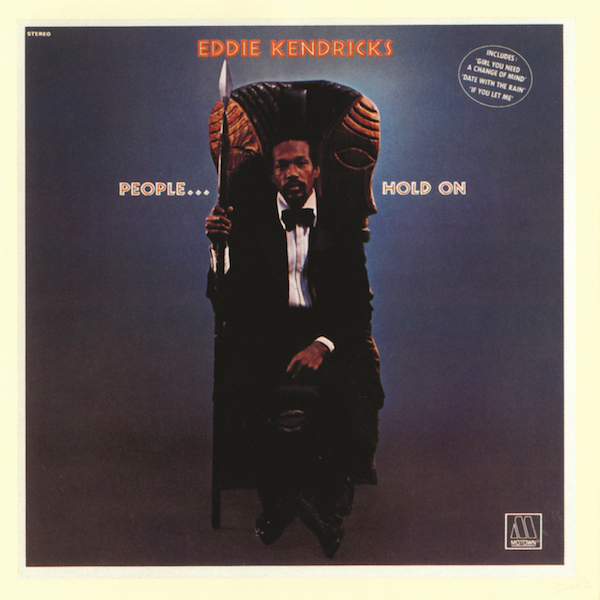
eddie_kendricks_holdon
Led by the club hit “Girl You Need a Change of Mind,” the second solo album from the former Temptations vocalist Eddie Kendricks turned out to be his breakthrough. The album cover is a remake of the iconic photo of Huey Newton, conceived by Eldridge Cleaver, with Kendricks sitting in a large African chair, spear in hand.

Jimmy Cliff:
Struggling Man
(Island, 1973)

cliff_struggling
The title might refer to the strife Jimmy Cliff went through following the death of his producer Leslie Kong’s in 1972. As All Music Guide writes: ‘it’s the intensity of the singer’s struggle during this period that fuels this set, his pain, confusion, and turmoil are raw, packing the set with an emotional intensity that he’ll never quite equal elsewhere.’ The album cover itself combines his emotional turmoil with inner city despair. The drawing by David Dragon shows a rather grim street with empty-looking faces strolling behind Cliff as the focal point. A struggling man, in a struggling world, this is a great reggae album with an iconic cover.

Curtis Mayfield:
There’s No Place Like America Today
(Curtom, 1975)

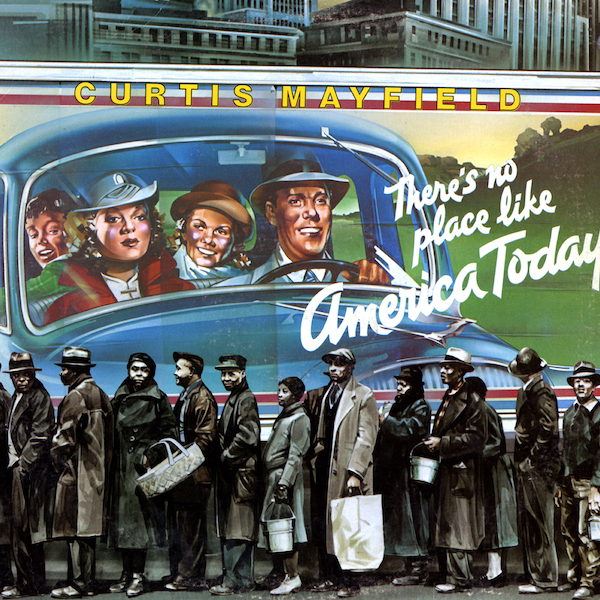
curtis_america
This album cover is based on a famous photograph by Margaret Bourke-White of flood victims, originally published in the February 15, 1937 edition of LIFE magazine. When David Bennun revisited this underrated classic for The Quietus, he wrote of the cover: ‘He couldn’t have picked a more apt one; the record evokes its own time and place as surely as the picture represents the chasm between American dreams and street-level reality. 1975 was, for many in the cities of the USA, a particularly wretched time, one which even now carries the aura of winter, of hangover, of chills and meanness and struggle.’

Steel Pulse:
Tribute to Martyrs
(Island, 1979)

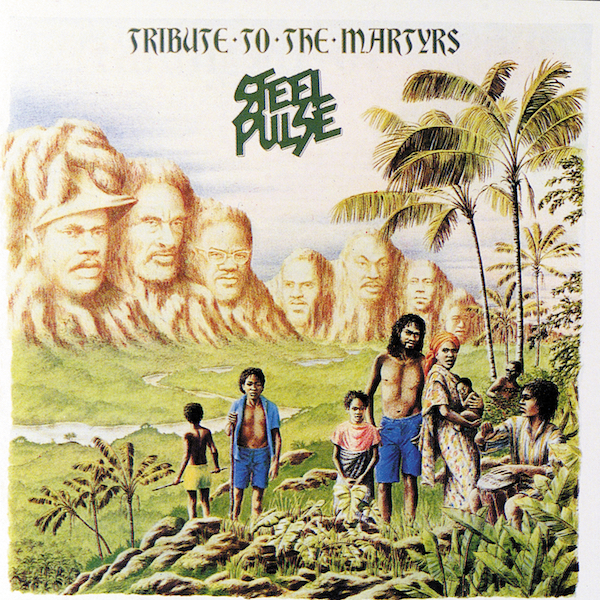
steel_pulse_martyrs
Tribute to the Martyrs is the second studio album by English roots reggae band Steel Pulse. The album cover, illustrated by Jene Hawkins and designed by Bloomfield & Travis (Barrington Levy, John Cale), is packed with socio-political references. The scene’s background features an alternative Mount Rushmore-styled carving of seven heads, composed of Malcolm X, Steve Biko, Martin Luther King, Jr., Jamaican Pan-Africanist Marcus Garvey, Emperor Haile Selassie and others, who look over an island-dwelling family exploring their homeland.

Bad Brains:
Bas Brains
(ROIR, 1982)

bad_brains
The first LP by Bad Brains is a seminal masterpiece. The D.C. band of African-American Rastafarians, in itself an anomaly in hardcore circles, came to be known as pioneers in the way they fused punk, hard rock and reggae. Their debut album is not only considered a masterpiece in the evolving of hardcore, but stands out as one the strongest albums of its decade no matter the genre. Commonly known as one the fastest albums ever recorded at the time of its 1982 release, this crucial record features classics cuts like “Banned in D.C” and “Pay to Cum.” And of course its striking yellow, green and red cover art depicting the dome of the United States Capitol building being split apart by thunder and lightning.

Public Enemy:
It Takes A Nation Of Millions To Hold Us Back
(Def Jam, 1988)

public_enemy_nation
On their iconic second album, Public Enemy set out to make an updated version of Marvin Gaye’s socially conscious What’s Going On, with the goal to ‘teach the bourgeois and rock the boulevards.’ This landmark LP, one of the greatest, most important and influential hip-hop albums ever made, sports an equally striking cover art of Chuck D and clock-wearing Flavor Flav behind bars. No way any jail could stop this revolution.

The Roots:
Things Fall Apart
(MCA/Geffen, 1999)

roots_things
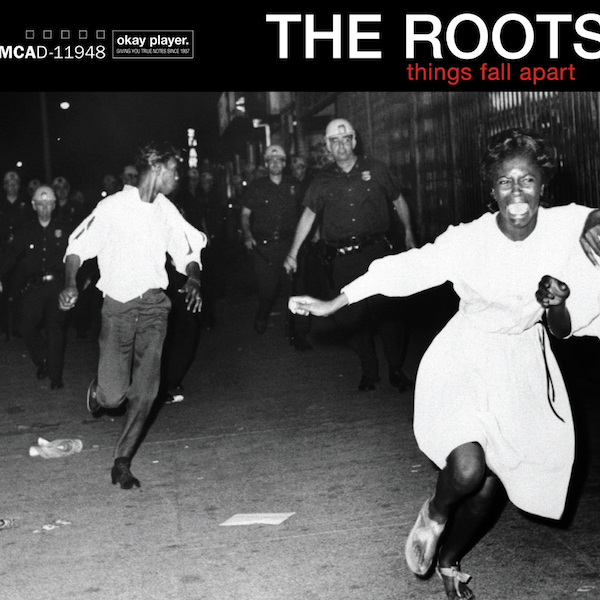
Things Fall Apart was The Roots’ breakthrough album, earning them a Grammy and Platinum sales, and hailed as a cornerstone for conscious rap. They borrowed the album title from the highly acclaimed 1958 novel by Nigerian author Chinua Achebe, considered an essential writer on African identity, nationalism and decolonization. The default album cover (it came in five different versions) is a picture from the 1960s, shows police chasing two African-American teens on the streets of Bedford-Stuyvesant, Brooklyn during a riot. Art director Kenny Gravillis later described it like something the urban community could really relate to: ‘Seeing real fear in the woman’s face is very affecting. It feels unflinching and aggressive in its commentary on society.’

Dead Prez:
Let’s Get Free
(Columbia, 2000)

dead_prez_free
The debut album by politically-charged hip-hop duo Dead Prez has been called the most politically conscious rap since Public Enemy, raising awareness of inner-city issues like racism, police brutality, education and political injustice. They also touch on Pan-Africanism in their lyrics (‘I’m an African/Never was an African-American’) and the Black Panthers (‘I don’t believe Bob Marley died from cancer/31 years ago I would’ve been a panther/They killed Huey cause they knew he had the answer/The views that you see in the news is propaganda’). Their call to action, revolution and Black liberation is clearly reflected in the album cover, an photo of South African schoolchildren raising their rifles during the 1976 Soweto uprising, fighting for their right to education under an oppressive regime.

Nas:
Untitled
(Columbia, 2008)

nas_untitled
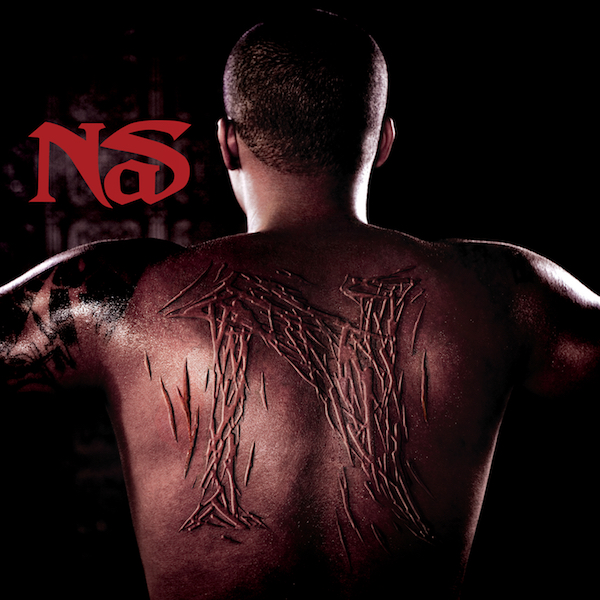
Nas changed the title of this album from the full N-word to just calling it Untitled, keeping the N brandished into his back depicting the whippings common in the age of slavery. In a 2008 interview with CNN, Nas explained how he didn’t seek out to upset on the original title, but rather to upend a society that focuses more on pejoratives than the racial plights that spawn them: ‘There’s still so much wrong in the whole world with people – poor people, people of color – I just felt like a nice watch couldn’t take that away, make me forget about that. A nice day on a yacht with rich friends couldn’t make me forget about reality, what’s going on. That’s why I named the album that – not just that the word is horrible, but the history behind the word, and how it relates to me, how it’s affected me, offended me.’

Kendrick Lamar:
To Pimp a Butterfly
(Aftermath/Interscope, 2015)

kendrick_pimp
This feature end with one of the most strikingly symbolic album covers of recent times: Kendrick Lamar holding a baby in front of the White House with a group of basically shirtless young men flashing cash and champagne (and what appears to be a dead or passed out white judge laying on the lawn underneath them). To Pimp a Butterfly is packed with references of black American music and culture, including some of the albums and artists already mentioned above. This is the picture of the aftermath of the very same black revolution first subtly indicated by Max Roach on top of this list, seeking the same kind of liberation and freedom that has here finally been crossed out like the eyes of the judge.

* * *

Sources & Links of Interest:

Pat Thomas: Listen Whitey! The Sights and Sound of Black Power, 1965-1975 (Fantagraphic, 2012)
Giles Peterson and Stuart Baker: Freedom Rhythm & Sound: Revolutionary Jazz Original Album Art 1965-83 (SJR, 2009)
Ashley Kahn: The House That Trane Built: The Story of Impulse Records (Granta, 2006)
The Independent: Heart on sleeves: 50 years of Jamaican album covers tell the story of a nation
Dangerous Minds: Isaac Hayes’ Black Moses – The Story of One of the Greatest Album Covers Ever
The Quietus: Revisiting Curtis Mayfield’s There’s No Place Like America Today
42 Reggae Album Cover Designs: The Art & Culture of Jamaica
Complex: Art Director Kenny Gravillis Tells the Stories Behind The Roots’ 5 “Things Fall Apart” Album Covers
Let’s Get Free: Living Hip-Hop History Fifteen Years Later
The Guardian: Kendrick Lamar’s To Pimp a Butterfly album cover: an incendiary classic
Smithsonian Folkways
Wikipedia
AllMusicGuide

Silver Apples: Golden Pioneers

silver_apples_1Releasing two albums in the late 1960s that set the template for experimental electronic music and DIY culture for years to come, the Silver Apples are true music pioneers.
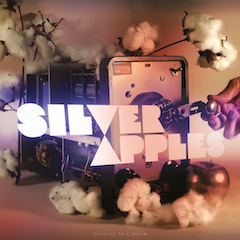
silver_apples_clinging_240Comprised of Simeon Coxe on vocals and oscillators and Danny Taylor on percussion, the duo soon became a fixture of New York’s underground scene. Almost 50 years later, Simeon and his Silver Apples are once again setting standards with Clinging to a Dream, their great, new album.

Born in the mountains of East Tennessee in 1938, Simeon was raised in New Orleans and exposed to R&B and the likes of Fats Domino and Big Mama Thornton at an early age before moving to New York as a teenager to pursue his own artistic visions. First joining The Random Concept bluegrass band, he soon moved to The Overland Stage Electric Band who were regulars at the famous Café Wha? in Greenwich Village. One night while playing there, he plugged in an oscillator and went nuts with the sounds, leading the other members to flee the band. That is, with the exception of Danny Taylor, a drummer who had formerly worked with Jimi Hendrix more than happy to join in on Simeon’s cutting edge experimentation. Silver Apples were born that night.

Both their eponymous 1968 debut and its 1969 successor Contact document a band on a cosmic journey of primitive electronic techniques and a minimalistic rock style. Such marks a predecessor to German krautrock, electronica, indie/drone rock and even the dance music to come in later decades. But for a time, it looked as if their history might have ended there. Pan Am Airlines objected to their second album’s cover art, leading to a million dollar lawsuit that effectively halted further progress. The label went bust in the process and the duo were banned from playing their songs live.

silver_apples_contactFast forward to the 1990s when Silver Apples experienced a renewed interest in their music. As a result, Simeon hooked up with drummer Xian Hawkins and slowly began touring as Silver Apples once again. Their revival show took place at New York City’s Knitting Factory in front of a cool crowd including Johnny Depp, Kate Moss, the Beastie Boys and Sean Lennon. In 1998, Simeon finally managed to track down and reunite with Danny Taylor for the first time in 27 years. This lead to the release of their ‘lost’ third album titled The Garden in 1998, only possible by virtue of Danny Taylor stumbling upon the tapes in his attic.
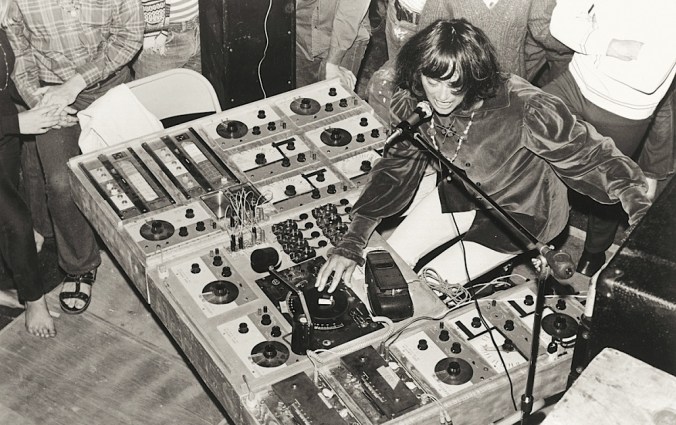
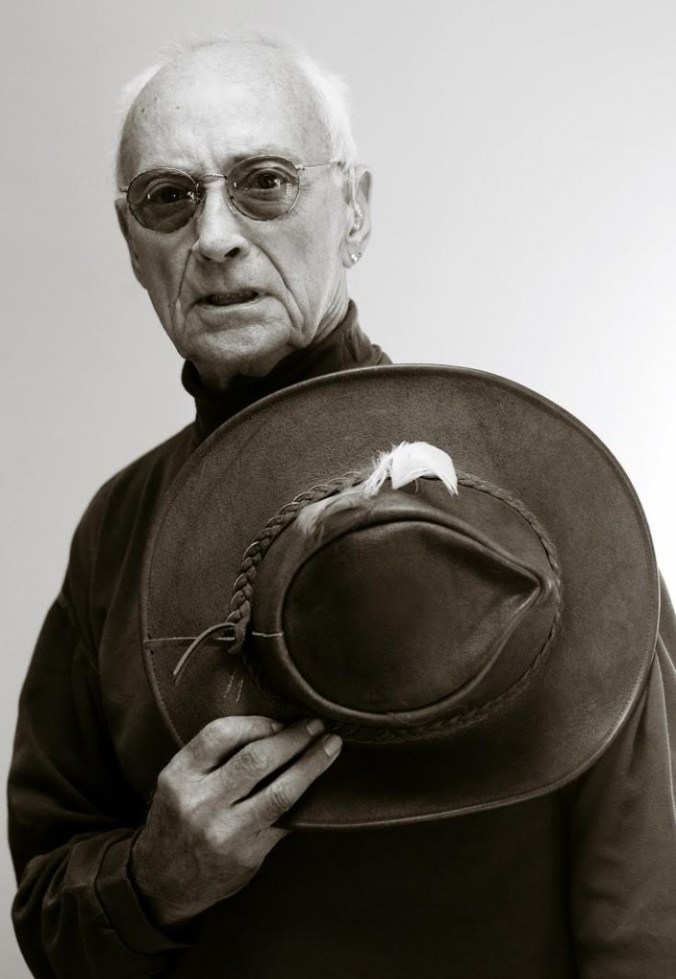
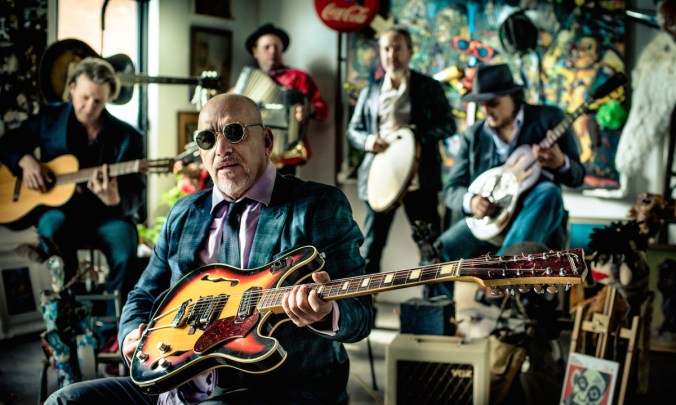
Just a couple of gigs later, misfortune struck the band once again in the form of a tour van crash that left Simeon with a broken neck. Following the crash, Xian Hawkins pursued an excellent solo career as Sybarite and Danny Taylor sadly passed away from cancer in 2005. In 2007, a recovered Simeon started up again, playing all around the world as Silver Apples (All Tomorrow’s Parties, Austin Psych Fest) alongside artists he had once inspired (Hans-Joachim Roedelis of Cluster, Portishead). These days, Simoen has settled into a home studio in Alabama, trading out his old oscillators for modern gear.

Silver Apples’ first album in 19 years carries on in the tradition that began back in 1967, merging pure, raw electronic sounds with melodic and poetic content clearly representative of 40 years of polishing and refining this experiment. As for Pan Am, they found themselves out of business long before the Silver Apples.

silver_apples_4

* * *

What, growing up, made you want to become a musician?

The endless hours of rehearsing the same thing over and over again was so fascinating I just couldn’t stop.

What’s the best advice you ever received?

My mom reminding me to brush my teeth.

The advice you wished someone would have given you?

To remember to comb my hair.

What’s the best gift you ever received?

An electric train set.

Most unlikely source that inspires your own music.

Bartok string quartets.

What’s the first thing you thought about this morning?

What time is it?

In case of fire, what three things would you rescue?

My deodorant, my hat, and my bottle of water.

If you weren’t an artist, what would you do?

Picket art galleries.

How does the perfect day look like for you?

Any day that the sun comes up is perfect.

What’s your greatest fear?

That the sun won’t come up.

What’s a place you’ve never been that you want to go?

Swindon.

What’s your favorite piece of gear on stage?

My volume pedal.

An artist or genre that you just don’t understand?

Folk music.

Give the recipe to your favorite dish.

Put 2 pieces of bread into toaster.
Depress thing.
When thing pops up grab bread (now toast).
Slather toast with whatever.
Eat.

A book that you wish everyone one would read?

The dictionary.

Criticize your own music from the perspective someone who hates it.

Silver Apples has the annoying propensity for repeating stuff too much.

What superpower would you chose and why?

Fly like a bird. So I can get the fuck outta here.

silver_apples_3

Bjørn Hammershaug
Først publisert på read.tidal.com, september 2016.

The Black Sorrows: – Jeg ble forelsket i Norge

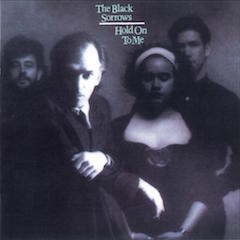
black_sorrowsThe Black Sorrows handler mest om én person: Joe Camilleri er sanger, låtskriver, gitarist, saksofonist, produsent – i det hele tatt sjel og hjerne bak det populære australske bandet – med helt spesielle bånd til Norge. The Black Sorrows var veldig populære her hjemme tilbake på slutten av 80- og tidlig på 90-tallet med album som Hold On to Me (lå 14 uker på VG-lista i 1989) og Harley & Rose. I 2014 er de igjen aktuelle med et nytt album, og nylig ble spilte de også på Nidaros Bluesfestival, som tydelig viste at mange fortsatt husker bandet fra tiden de var ’norgesvenner’.
* * *

– Jeg ble forelsket i Norge, det tror jeg vi alle ble. Norway got us, sier den sympatiske frontfiguren da vi spør om hvordan han selv husker denne tiden.

black_sorrows_holdontome– Nordmenn forstod hva vi prøvde å gjøre som et band. Hold On to Me og særlig låten ”The Chosen Ones” snakket rett til folket, og hele Skandinavia omfavnet musikken vår med åpne armer.
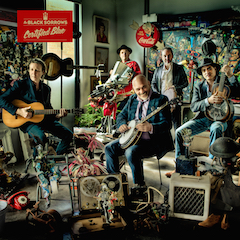
’We were foot loose and fancy free’, sier Camilleri, og legger til at The Black Sorrows hadde et friskt, unikt uttrykk litt på siden av hva som ellers var populært på den tiden, som forklaring på hvorfor de fikk så godt fotfeste i vår del av verden.

– Vika Bull spilte i bandet på den tiden, og hun fortalte meg senest i går hvor mye hun elsket Norge og ønsket å dra tilbake. Jeg sa ok, da gjør vi det slik, og vervet henne umiddelbart til å synge på turneen vi planlegger nå senere i år.

Joe Camilleri er blant de mest populære og respekterte personlighetene i australsk musikk. I 2014, med 45 albumutgivelser på samvittigheten, feirer han 50 år som musiker og artist. Men med unntak av årets lille besøk er det lenge siden han sist besøkte Norge.

– Jeg utviklet en flyskrekk som ble virkelig ille, forteller han.

– Jeg klarte rett og slett ikke å komme meg om bord på et fly. Selv hjemme i Australia kunne jeg bare kjøre bil eller i beste fall ta toget. Dette var tøffe tider for meg, og det tok faktisk 10 år å komme over det. Jeg vet heller ikke hvorfor eller hvordan det startet. Frykten sitter fremdeles i, og kan plutselig overmanne meg igjen, men nå har jeg funnet verktøy for å håndtere dette. Angsten forhindret meg heldigvis ikke fra å utøve min største glede; det å skrive og spille musikk.

black_sorrows_certifiedDet nye albumet Certified Blue har fått strålende omtaler i hjemlandet, og er omtalt som det beste bandet har gjort siden suksessalbumet Hold On To Me. Hvordan vil du beskrive lyden av The Black Sorrows i dag?
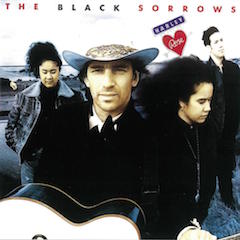
– The Black Sorrows er roots-basert; Americana, blues, rock, alt. country… vi er vanskelige å kategorisere tror jeg. Vi er alle disse betegnelsene og mer – jeg liker å tenke at vi er fri fra musikalske trender. Men det viktigste er, det har alltid handlet om ’låta’ … la sangen skylle over deg og du vil bli en del av den.

Bandets besetning har vært i konstant endring, alt etter hvilket musikalsk uttrykk Camilleri til enhver tid har jaktet på. Over 40 musikere har vært innom bandet. Jeg lurte på hvordan dette har påvirket musikken til The Black Sorrows og om manglende stabilitet har gitt seg utslag i større musikalsk fleksibilitet.

– Ja, denne fleksibiliteten er veldig viktig for meg. Alle de store musikerne som jeg beundrer lot aldri noe utfordre deres musikalske veivalg. Hver låtskriver må tro på sangen og musikerne som skal fremføre den må spille en sekundær rolle. Så når bandet kommer sammen for å spille live, kan de forme den slik det måtte passe der og da. Den konstante endringen i besetningen skaper både utfordringer og gir muligheter som jeg vokser på. Gitaristen min, Claude Carranza, har vært med meg i cirka 15 år, så han er ansett som en konstant.

– Jeg dannet The Sorrows for 30 år siden, og jeg tror det har vært omtrent 40 musikere innom på ulike tidspunkter. Hver og en av dem har brakt noe spesielt til bandet. En musikkskribent skrev nylig at den elastiske besetningen er min drivkraft for å stadig bevege meg framover som artist. Jeg elsker å gi yngre musikere muligheten til å være en del av et stort liveband, enten det er som sanger, fiolinist eller en blåser. Enhver musiker vet når de selv trenger å gå videre. The Black Sorrows vil da være en del av deres musikalske CV.

Hvilke temaer opptar deg som låtskriver mest i disse dager?

– Ettersom du blir eldre er det mange flere ting du finner ut om deg selv. Enkelhet er nøkkelen til livet. Hvis du finner hva det er for deg før din tid løper ut, vil livet ditt ha en mening. Dagens teknologi er ment å gi oss mer tid, men vi bruker for mye tid på higen etter den samme teknologien, i stedet for å leve og være i samspill på et menneskelig nivå. ’If you stay real you know then that you have something to offer. Always be true and you’ll never be blue’, funderer Camileri.

black_sorrows_harley_roseI forlengelsen av dette, på hvilken måte har musikkbransjen endret seg siden du startet som artist?

Den største endringen er hvordan folk har tilgang til musikk. Musikk er overalt, ’on the go’, på telefonen, datamaskinen eller nettbrettet. Noe av dette synes jeg er til det bedre. Folk har større frihet og flere valg til å velge og bestemme hvilken musikk de skal høre på. Kraften av store kommersielle radionettverk og de store selskapene som smaksdommere har til stor grad falt. Teknologien og programvaren som er tilgjengelig i dag betyr at artister kan spille inn et spor i sin egen stue, spille inn en video, legge den på YouTube og ha en viral hit over natten. Og jeg elsker det faktum at LP-platene gjør et comeback!

Som kunstner, artist og låtskriver i så lang tid. Hva har vært dine ’musikalske retningslinjer’ gjennom karrieren?

– En god sans for humor, og en real dose med ærlighet. En tro på hva du har å tilby – og ikke følge musikalske trender. Tro på at det alltid er noe igjen i tanken, og til slutt, det er alltid verdt å ta kampen.

Noen siste ord til dine norske fans?

– I have a great love for your country…there must be something in the water for music and art to play such a big part in your daily lives. It’s intoxicating. I’ve been to Norway many times now and I believe you have a good balance. I say that without knowing too much about your politics. I look forward to seeing you all again soon.

Opprinnelig publisert på magazine.wimp.no, 9. juni 2014

Bjørn Hammershaug

All Tomorrow’s Parties 2004

I år ble All Tomorrow’s Parties arrangert for femte gang. I løpet av disse årene har festivalen etablert seg som en av de fremste i Europa, og til og med fått en søster i USA. To utsolgte helger vitner også om at interessen er stor for artister hjemhørende i den mer alternative delen av rocken og beslektede avarter, selv om ATP ikke akkurat er Glastonbury i størrelse (med kun to scener, Upstairs og mer intime Downstairs, og et begrenset antall billetter på cirka 3000).

Stedet heter fremdeles Camber Sands og ligger cirka fem kilometer utenfor den pittoreske småbyen Rye i East Sussex. Ganske sprøtt å rotere mellom svømmebasseng, minigolf, spillearkader og glorete familieforlystelser for å høre mindre familievennlig musikk – det skaper i hvert fall en kontrast. Anlegget er ellers velegnet, med overnatting i egne ’chalets’ inkludert i billettprisen. Det store området med små leiligheter, som kan minne om en russisk forstad, sikrer tilgang til både eget bad og kjøkken. Det må også nevnes at stemningen på festivalen er meget behagelig; fritt for skrikende sponsorer, brautende vakter og med et stort sett genuint musikkinteressert publikum råder en sedat idyll over området. Med andre ord ligger forholdene godt til rette for å oppleve noen av dagens mest oppegående artister i løpet av tre hektiske dager og netter. Selv om de to helgene kvalitetsmessig var jevngode, valgte jeg altså å følge den andre helgen. Kuratorer var Stephen Malkmus (fredag), Sonic Youth (lørdag) og festivalen selv på søndag. De to artistenes musikalske bakgrunn preget til en viss grad programmet, helheten var god, spennvidden stor og kvaliteten høy.

Stephen Malkmus & The Jicks (Matador, presse)

Fredag: Gold Sounds
Stephen Malkmus hadde satt opp et program med en del av sine ’elever’, naturlig innledet av Cass McCombs og avrundet av sjefen selv. Stikkord er gitarbasert indierock. Unge CASS MCCOMBS er aktuell med solodebuten A (4AD) og har bakgrunn fra både Palace Brothers og Baltimores støyband Oxes. Som soloartist står han fram som en troverdig sanger/låtskriver, men uten å kjenne låtene særlig godt fra før ble han ikke særlig mer enn et trivelig ettermiddags-bekjentskap.

Dagen var for meg var totalt sett den minst givende, med amerikanske THE SHINS som høydepunkt. Selv om de kommer fra New Mexico har SubPop-bandet mer til felles med britiske frender som Dodgy, Hefner og The Kinks, det vil si at her er det friske og fengende poplåter som gjelder. Av og til kan 2:30 med uforfalsket pop være akkurat det man trenger, særlig når et band har så mange opplagte ess i ermene som The Shins. De spilte et konsist sett basert på sine to utgivelser som aldri rakk å skli ut i det opplagte.
MODEST MOUSE er også rede med en ny utgivelse, Good News For People Who Love Bad News, og de vektla sitt sett rundt denne. Litt kjipt at vokalist Isaac Brock var særdeles tverr denne kvelden, og ved flere anledninger skjelte ut en eller annen foran i salen som drev med noe spikk. Mest jubel vakte gamle kjenninger, særlig fra favoritten The Lonesome Crowded West (1997), ikke minst utrolige ”Cowboy Dan”.
Også NINA NASTASIA sin enkle, intime konsert og THE FIERY FURNACES lo-fi Royal Trux-a like bluesrock var vel verd å få med seg, selv om jeg forlot begge med relativt blanke ark og uten altfor sterke minner for ettertiden.
Det samme kan sies om STEPHEN MALKMUS AND THE JICKS. Mannen hadde utvilsomt sin kreative formtopp en gang på 90-tallet, og i likhet med for eksempel Frank Black vil alt han driver med i etterkant måles opp mot tidligere tilsynelatende uoppnåelige prestasjoner. Litt urettferdig muligens, for The Jicks er slett ikke noe dårlig band. Jeg har ikke noe varmt forhold til dem, og fikk heller ikke noe særlig større ønske om å fordype meg i bandet etter at konserten var ferdig. Dessuten visste jeg at det ventet to dager med muligheten for mer eksepsjonelle opplevelser, og prioriterte dyp søvn foran videre tanker rundt Malkmus og DJs fra Stereolab og Belle & Sebastian.

Lightning Bolt

Lørdag: Sonic Sounds
Dette var dagen Sonic Youth styrte showet, og det sier seg selv at det var av høyeste interesse. Mens fredagens stikkord generelt sett var indie og rock, tilhørte lørdagen de dype droner, utagerende leven og improvisasjon. Her var det bare å svelge en neve med hodepinetabletter og knytte ryggstøtten stramt til. En lang lunch og dype Chesterfield-stoler i Rye ble prioritert foran Nels Cline, Saccharine Trust og Fuck – selvsagt et utilgivelig valg, men de stolene var til gjengjeld pokker så gode.

Uansett, BLACK DICE ventet på meg. Lovende omtalt som ’too stoned to gamble but too high to whip tricycles thru waterfront weeds’ ble jeg ikke direkte bergtatt av deres kombinasjon mellom gitardrodlinger og formel-1 støy. Det var også litt tidlig på aftenen for å konsentrere seg særlig om DREAM/AKTION UNITs frie improv-sett med Thurston Moore, Jim O’Rourke (eller, det så jeg ikke med mitt flaggermusblikk, men det ble i hvert fall hevdet. Arrangørene fant det ikke for godt å opplyse om slikt) og Paul Flaherty på saksofon. Early morning avant garde for de spesielt våkne, litt for mye bruddstykker for meg.
Dagens første killa – og en av festivalens beste konserter stod OOIOO for. Det japanske jentebandet (med Yoshimi P-We fra Boredoms) leverte et forrykende sett med japanske jungelrytmer og tribal kraut-postrock som burde vært selvskreven på alle hjemlige festivaler som regner seg for oppegående. Litt mye forlangt kanskje, men OOIOO lykkes til fulle med det de nesten fikk til på ferske Kila Kila Kila (Thrill Jockey). Et band man ble i særdeles godlune av.
Det var mer enn man kunne si om ANGELBLOOD. Metallbandet med to gotiske messedamer i forgrunnen skremte meg ‘downstairs’ igjen, til tryggere omgivelser med CHARALAMBIDES. Det var englemessing her også (egentlig påfallende mange av artistene denne helgen som drev med det) men i langt roligere former. Texas-duoen Tom og Christina Parker lot det ikke overraskende gå særdeles andektig for seg med steel gitar, e-bow og hallusinerende stemningsbilder.
En lett oppvarming til WOLF EYES, for meg et nytt bekjentskap – og et meget positivt sådan. Kvartetten fra Michigan stilte med to gonger, fløyter og blås og tonnevis av ubehagelig ekstremstøy, blant annet en svært så utagerende ’vokalist’ (tror han bare skrek, jeg kunne i hvert fall ikke skjelne noen meningsbærende ord). Wolf Eyes har omtrent 100 utgivelser bak seg, med kassetter, CD-R, stort og smått, men vil nok aldri bli noen nasjonale kjæledegger. For de av oss som trives litt i stormen er de derimot verd å knaske videre på.
Tilbake til hovedstrømmen opp trappa, og en eksklusiv happening med VINCENT GALLO, for anledningen med John Frusciante på gitar (som heller ingen opplyste noe om på forhånd…) og en eller annen trommis. Med krystallklar lyd var det deilig å lene seg tilbake og bare ta innover seg det vakre settet som de to skadeskutte legendene mante fram. Melankolske gitarlinjer svingte fram og tilbake, vokste seg store og vibrerte mot det eksploderende, mens trommisen og Gallo smeltet sammen som en mektig helhet. Settet kunne nok bli litt for ’progaktig’, men jeg synes det var meget delikat. Og mens vi snakker om delikatesse og makt:
Evigunge SONIC YOUTH var neste ut. Hva skal man si? De har forlengst passert ordinære parametere for et såkalt alternativt rockband og er i år aktuelle med sitt – hva er det – 20. album? Thurston Moore ser akkurat like fjern ut som i 1983, Kim Gordon blir bare flottere ettersom årene går, Steve Shelley har vel passert 40 han også, men ser fortsatt ut som en college-gutt. Det er som om de suger til seg næring fra stadig nye ungdommer som flokker seg rundt bandet, og det er også noe av grunnen til at de ikke bare bærer floskler som ’gudfedre’, men fremdeles er å regne spennende som artister av i dag. Sonic Youths vei fra å være et støyband til det nærmeste vi kommer alternativ mainstream uten å avvike fra sitt opprinnelige er en utrolig prestasjon. De fikk da også litt lengre spilletid enn de andre, uten at noen protesterte hørbart på det, og spilte en del fra den kommende platen. Et problem med å presentere helt nytt materiale er jo at vi i salen blir opptatt av å avvente det som til enhver tid kommer, vi kan ikke være i forkant, og det gjør ikke nødvendigvis konserten bedre. Nå er det jo å foretrekke å høre levende band mer enn døde idoler (mer om det senere), men de nye låtene ble stående som noe anonyme mellom eldre utvalg, fra særlig Dirty og Goo. Hvordan de nye vil stå seg er en modningsprosess, vi vil nok finne ut det om 5 – 10 eller 15 år. Med Jim O’Rourke som fast medlem noen år nå er Youth så tighte og solide at de er et av de sikreste kortene uansett hvordan de legger opp konsertene sine. Men når de avsluttet med en lang og noe retningsløs instrumental (som jeg ikke dro kjensel på der og da) var det likevel med en viss følelse av at de ikke har den samme gløden som ved tidligere anledninger. Selv om alt rundt bandet er prima kan de også virke noe utilnærmelige og kalkulerte i all sin vridde gitarprakt. Akkurat det sjekket en publikummer ut nærmere ved å renne Moore ned på gulvet sammen med mikrofonstativet, men begge kom seg heldigvis helskinnet opp igjen.
Dette skulle egentlig være siste konsert for kvelden, men grunnet noe forsinkelser i et program som ellers fulgte tidsskjemaet omtrent på minuttet, ble LIGHTNING BOLT flyttet opp til den store scenen og lagt etter Sonic. Jeg fryktet at avstanden mellom publikum og band vil forhindre Bolt fra å spre sine ondskap like effektivt som de er berømte for. Dette gikk jeg å tenkte på mens jeg var på vei ut for å snappe litt luft, da noe oppstandelse i et mørkt hjørne fanget min oppmerksomhet – og joda, nede på gulvet, i et mørkt hjørne hadde duoen rigget seg opp.
Umiddelbart etter at Sonic plugget ut, plugget terrorduoen inn, og oppfylte alle mine håp om at de skulle skape mayhem – som de så korrekt ble presentert: ’Deathrock in extasis’. De spiller jo gjerne i publikum, der skillet mellom utøvere og tilhørere omtrent opphører. Bevæpnet med en særdeles slagferdig trommis/vokalist (han har tapet mikrofonen fast inne i munnen) og en helt stillestående bassist som frembringer den mest kraftfulle lyd som kan tenkes er Lightning Bolt en mellomting mellom Nirvana anno Bleach, frijazz, bombeangrep, speed metal og stonerrock å regne som et sosiologisk eksperiment, muligens satt i verk av CIA over hvordan kaotiske masser kan styres. Som vanlig ble det dokumentert med både filmkamera og fotoapparat av to bebrillede alvorlige menn som fokuserer på publikums bevegelser. De første 15 minuttene hersket et vilt kaos jeg sjelden har sett maken til, det er noe med duoen som får folk til å miste fullstendig forstanden og mens jeg krabbet rundt på gulvet og så etter småpenger slo det meg at de faktisk er i stand til å rigge opp og spille når som helst og hvor som helst i løpet av meget kort tid. Creepy. Anyways, etter et kvarters tid altså, da jeg var sikker på at ting skulle gå veldig galt skjedde festivalens mest usannsynlige hendelse. Brian Chippendale reiser og skriker med sin skjærende ødelagte mikrofon at alle skal sette seg ned – og vi gjør det. Alle som en. Om det ikke var artig nok å se folk gå bananas oppreist så var det hysterisk å se folket utagere til Bolts torpederende støyangrep sittende! Om de kan bli noe strengt på plate er de et utrolig liveband, som mest av alt krever at man blir en del av det selv. Og det er det jo ikke alle som har verken lemmer eller tøyler til. Lightning Bolt minner om noe av betydningen i rockens grunnleggende fundament, og var perfekt som avslutter på en ellers strålende konsertaften.

Jackie O-Motherfucker

Søndag: Drone Sounds
Ahh.. søndag, de lange droners dag. Hva passer vel bedre enn å børste av seg skomerkene på nakken og sveve inn i det britiske kollektivet VIBRACATHEDRAL ORCHESTRAs eventyrverden. De har i en årrekke frambragt rytmiske og suggestive toner et sted mellom LaMonte Young/Velvet Underground, folk, kraut og spacerock, og hadde ingen problemer med å få et morgentrøtt publikum (igjen og som alltid; fullpakket, relativt stille, lyttende) til å falle i kollektiv trance – ja, kvinnen foran meg fikk åpenlys orgasme da konserten nådde sitt klimaks. Et sjeldent skue, men ikke overraskende når det er VCO vi snakker om. En flott start på dagen!
Da gikk det roligere for seg med Constellation-pakken POLMO POLPO/HANGED UP og kammerorkesteret THRENODY ENSEMBLE (med Erik Hoversten fra altfor glemte A Minor Forest). Begge underbygget den grå søndagen utenfor med tungladen tristesse og glimt av sol mellom skylagene.
Mellom disse gløttet jeg også opp i storstua og kikket på EXPLOSIONS IN THE SKY. De spiller etter forventede prinsipper, og selv om det er ganske tøft når de river seg løs så klarer jeg ikke helt å la meg imponere av de samme kunststykkene gang etter gang. Det er noe forutsigbart over bandet, utvilsomt meget bra, men ikke akkurat overraskende. Men, de spiller en form for alternativ arenarock, og passet godt på den store scenen.
Et band som definitivt søker å utfordre de musikalske prinsipper et JACKIE-O MOTHERFUCKER, sammen med Lightning Bolt og Vibracatherdal Orchestra de jeg hadde størst forventninger til i forkant. Nå fikk de riktignok en dårlig start, i og med at de brukte en halvtime av spilletiden sin på å rigge seg til. Jeg vet ikke hvem som kan lastes for det, men med syv stykker på den lille scenen, cirka 200 instrumenter og noen kilometer kabler som skulle plugges riktig stilles det vel litt høyere krav til effektivitet enn det bandet selv så ut til å være kapable til. Og kanskje det var stresset og tiden som gjorde at deres konsert ikke ble helt den store happeningen jeg hadde håpet på. JOMF prøver å fremskape en slags kollektiv frihetsgreie (kall det gjerne free folk), ved hjelp av platespillere, samples og en hel rekke lydkilder (fløyter, blåsere, sag, vokalmessing, bjeller, gitarer, rasleting, cymbal med bue, ja, alt som gir en form for lyd). Det første partiet som ble dominert av en monoton tromming var meget vellykket, men etterhvert virket det som om de var mest interessert i å vise hvor mange instrumenter de kunne traktere på kortest mulig tid, og jeg synes de rotet seg litt bort. Jeg snakket litt med den ene gitaristen etterpå (for anledningen påskekledd med gult hår, gul lue og gul hettegenser), som uttalte at han heller ikke var helt fornøyd med det de leverte. ’We can take you higher than this’ lovte han. Og det er jo… betryggende!
BARDO POND og THE NOTWIST derimot, leverte to meget bra konserter denne ettermiddagen. Isobel Sollenbergers drømmende stemme fikk en bekjent til å få skjelvinger etter at konserten var over, og det er en type reaksjon jeg ikke blir overrasket av. Bardo Ponds kombinasjon av svevende dronerock og overmannende støy er både vakker og effektfull. Også tyske Notwist gjorde seg godt på scenen. De trives tydeligvis med litt ullen lyd, men settet de spilte på ATP var langt hvassere enn deres siste plate, fortsatt gylne Neon Golden.
Etter dette var det opp for å høre to større navn, LOVE og TINDERSTICKS. Man går liksom ikke glipp av muligheten for å oppleve Arthur Lee, og rapportene har fortalt at de leverer glitrende konserter. Lee har dessuten skrevet noen låter av ubestridelig rang, og her leverte han alle som en. Det er ikke å forakte å få for eksempel ”Red Telephone”, ”A House Is Not A Motel” og ”Old Man” servert på rekke og rad, men jeg synes likevel at Love var det bandet som passet dårligst inn i denne festivalen. De peker utelukkende bakover, og Arthur Lee har ikke samme glans som han en gang hadde. Når det er sagt, skal man høre et band fra 60-tallet i dag er ikke Love det verste alternativet. Et sprek gjeng musikere sørget dessuten for å gi den aldrende stjerne kompakt behandling. Tindersticks er heller ikke et band i tiden akkurat, men det glemte jeg raskt da stjernene ble tent bak Stuart Staples og han hulket frem låter som ”No More Affairs” og ”Travelling Light”. Kombinasjonen av Cohen og Cave funker fortsatt den!
Avslutningsvis må jeg nevne de to avsluttende konsertene med DIZZEE RASCAL og HAR MAR SUPERSTAR. Rascal leverte et intenst, humørfylt sett som trollbandt et både kresent, bortskjemt og slitent publikum. Unggutten stod for en av fjorårets feteste skiver med Boy In Da Corner, men viste seg fra en langt mer publikumsvennlig side enn det platen tilsier. Har Mar er en sann superstjerne; skallet, svett, fet og bare utrolig cool. Partyløve og pornostjerne, Prince krysset med Ron Jeremy, og en sårt trengende oppmuntring etter en rekke nedstemte konserter.

Dette er selvsagt en helt overfladisk gjennomgang, slik det gjerne blir av festivaler der artistene tenderer til å overgå hverandre, og til slutt flyte over i hverandre. Jeg misset legender som MISSION of BURMA og ESG, hete poteter som LE TIGRE, ERASE ERRATA og ENON, godtfolk som ARAB STRAP, SOPHIA og CAT POWER (hun hadde gjemt seg i et hjørne på den store scenen og når jeg stakk inn hodet for å høre litt stoppet hun like etter konserten og begynte å røre med alt mulig annet enn å spille, blant annet forlangte hun at lyset i salen skulle skrus på, mens lyset på scenen skulle skrus av… og da tuslet jeg like gjerne tilbake til mørket) og potensielle favoritter som DEERHOOF og MIGHTY FLASHLIGHT – tilsammen en festival god nok i seg selv, UTEN å føle at jeg gikk glipp av noe.

Kan det være FOR mye må-se på en og samme helg? Vel, det kan nok diskuteres. En annen ting som også kan diskuteres er hvorvidt band som Love, Tindersticks, Sonic Youth og The Jicks egentlig hører hjemme her. Med et lite unntak av Youth, som fortsatt er et band av i dag, er dette alle artister som hadde sin prime time i andre tiår. Et annet ønskelig aspekt kunne vært å fått inn noe mer jazz-relaterte artister, både for å øke spennvidden ytterligere, men også for i enda større grad å spisse festivalens progressive linje. Slik sett er også band som Arab Strap og Sophia strengt tatt litt for trygge kort. Men, dette er jo som smårusk å regne, så lenge man til enhver tid har noe interessant å se frem til har det lite å si. ATP er utvilsomt et glimt inn i fremtiden, noe norske festivalarrangører ikke alltid er like opptatt av.

Bjørn Hammershaug
Først publisert april 2004

Sonic Youth: New York Is Now

In a free lane
Ghosts passing time
Heat rises
Lights thru the town
Blown soundscapes
Blue city eyes
Black lightning
New angel flies

NYC Ghosts & Flowers (Geffen, 2000)
Sonic Youth har på mange måter vært det bandet som best har definert New York de siste 20 årene. På bemerkelsesverdig vis har de oppnådd en status som undergrunnens aller største moderne rockeband, de har blitt langt mer tilgjengelige siden sine tidlige no wave/støyskiver, mens de stadig oftere viser sitt forhold til avant garde/kunstmusikk. Ikke en gang et misforstått forsøk på å lenke dem opp mot grungen fikk dette bandet ut av sin atonale kurs. Selv om 90-tallet var et mer variert tiår enn 80-tallet, og A Thousand Leaves (1998) ikke var like essensiell som Daydream Nation (1988), har de hele tiden holdt en jevnt høy standard og beholdt sin relevans. Da er det også tillatt med noen svakere utgivelser.

NYC Ghosts & Flowers er deres mest tydelige hommage til hjembyen og dens utskudd. I 2000 hadde New York fortsatt sine tvillingtårn i behold, bare et år senere stod George W. Bush og sverget på en askehaug mens Thurston Moore & co befant seg rett rundt hjørnet. Det kan kanskje forklare noe av grunnen til at dette er bandet på sitt mest avslappede og frittflytende, NYC pre-11/9 var, sin rufsete, levende, vitale ånd til tross, fortsatt en by i uskyld. Både stil og tone er gjennomgående ’cool’, fra William Burroughs’ coverbilde til tekster preget av en slags Lou Reed/hipster asfaltpoesi (mest tydelig på ”Small Flowers Crack Concrete”, en langtrukken serie observasjoner sett gjennom Thurston Moores slørete, men skarpe blikk). Det er slett ikke vellykket, og like meningsløse er enerverende ”Side2Side”, de minimale støyrissene på ”Lightnin’” og ”StreamXsonik Subway”.

Ghosts & Flowers er ikke blant Sonic Youths sterkeste plater, men det er likevel en del enkeltlåter som har mer ved seg. Mest minneverdig er tittelsporet, der Lee Ranaldo både synger og reiser en vegg av truende gitarer til sine lange historie. Dette er det eneste kuttet som til fulle utnytter beatpoesiens strømninger og Sonics evne til å bygge episk rock på sitt skeive vis. Søvnige ”Free City Rhymes” er heller ikke å forakte, spaserturen som åpner platen på tilforlatelig vis. ”Renegade Princess” får etterhvert kampgløden til tidlig Youth (tenk ”Brother James”), mens Kim Gordons sexy vokalbidrag på ”Nevermind (What Was It Anyway)” er platas ’Koolest thing’.

Dessverre havner NYC Ghosts & Flowers litt for langt unna både den mer spennende eksperimenteringen og det mer umiddelbare som har preget deres siste plater, og dette blir aldri den store New York-trippen som det kunne blitt. Men plata er like schizofren som byen selv, og akkurat det er kanskje noe av skjebnens ironi.

Murray Street (Geffen, 2002)
Den 11/9-2001 deiset en flymotor i bakken i Murray Street. Den kom fra et av flyene som senket World Trade Center og store deler av nedre Manhattan. Det var med dette uvirkelige bakteppet Sonic Youth spilte inn platen i samme område. En tilstand av sjokk og vantro preget gatene, men det var en tid for opprydning og fornyelse for kvartetten. Byen og bandet er nært knyttet sammen, og hvem andre enn Sonic Youth kunne stå fram og sette ting i perspektiv. Det gjør de ikke med apati eller aggresjon, men ved å heve blikket, se framover og fokusere på sine sterke sider laget de en av sine beste plater på lang tid.

Mens NYC Ghost & Flowers hadde en slags forsøksvis surrealistisk, mest målløs beat-stemning over seg, er Murray Street en retur tilbake til særdeles god form. Sonic Youth holder seg i mer kjente marker og til det de virkelig behersker; gitarbasert, klassisk rock i venstre fil. Her med utagerende gitardrodlinger, feedback, lange jamsessions, skarpe hugg – og til og med soloer. Volum og tempo holdes i likhet med forgjengeren stort sett nede, gitarlyden er ren og klar, men Murray Street vibrerer likefullt. Det er spenning, en elektrisk nerve og moden lekenhet som former platen. Det er en ære som bør deles med New Youth Jim O’Rourke, som her er kreditert som fullverdig medlem av bandet, tryllemannen er tekniker, bassist og gitarist.

Platas beste spor, ”Disconnection Notice”, preges sammen med lange ”Rain On Tin” av delikat og melodiøst gitarspill. Med åpningssporet ”The Empty Page” så starter i det hele tatt skiva veldig bra. Gitarene misbrukes og Shelley jobber som hund med sin start-stopp rytmikk bak trommesettet, men det skjærer aldri helt ut. Tøylene er løse, men holdes likevel stramt. På ”Karen Revisited” (som nikker til ”Karen Koltrane” fra A Thousand Leaves) skrus gitarene både mer opp og ut, og etter fire minutter sklir den over i outer space der gitartonene får henge løst i fem-seks minutter. Korte, aggressive ”Racial Adults Lick Godhead Style” og ”Plastic Sun” gjør minst av seg, men begge disse tar tilbake noe av gnisten som var mer subtil på Ghosts & Flowers. Når ti minutter lange ”Sympathy For The Strawberry” brenner ut som et langsomt glødende lys avslutningsvis skjer det med en visshet om at Sonic Youth fortsetter å markere seg som en av rockens mer bestående krefter. Det er mulig å hevde at de ikke lenger er cutting edge, at de er den alternative rockens bestefedre. Og nei da, de finner ikke opp kruttet på nytt denne gangen heller. Men de virker likevel både friskere og dristigere enn de fleste av sine yngre støysøsken. Bare det er en bragd.

Uanstrengt, ikke slapt. Intrikat, ikke utilgjengelig. Stadionrock fra fortauet, bypoesi for folket. De soniske borgermesterne av New York har talt.

The Eternal (Matador, 2009)
I siste nummer av litteraturtidsskriftet Vinduet er det et lengre intervju med Sonic Youths gitareminense Lee Ranaldo, et dypdykk ned i hans befatning med diverse utenom-musikalske aktiviteter. Han har blant annet gitt ut seks bøker, og er i likhet med de øvrige i Sonic Youth aktiv med kunstutstillinger og andre uttrykk utenfor det rent musikalske. Ranaldo er i skrivende stund i Skandinavia for å promotere utstillingen Sonic Youth etc.: Sensational Fix (Malmö Konsthall) med bidrag fra over 40 forfattere, kunstnere, musikere og filmskapere tilknyttet deres etter hvert store kreative sirkel av venner.

New York-bandets tverrkulturelle, nærmest meta-kunstneriske kvaliteter er ett av deres mange interessante aspekter, og har bidratt til å løfte dem opp fra å være et regulært rockeband til å bli ikoner innen moderne populærkultur. The Eternal vil ikke rokke ved denne posisjonen, men den musikalske flammen – som tross alt er deres primæraktivitet – gis heller ikke ekstremt mye ny næring på deres 15. studioalbum.

Et stikkord for The Eternal er kontinuitet: Dette er mer en plate som befester Sonics eksistens enn å invitere til nye oppdagelser. Den bærer ikke preg av å skapt under et nytt idéregime eller være tent av noen fornyet gnist. Dette til tross nytt medlem i Mark Ibold (tidl. Pavement), som ikke gjør noe umiddelbart vesen ut av seg, ei heller overflytting til kred-selskapet Matador. De har ikke utnyttet selskapsskiftet til å peile en ny kurs eller markere seg med sin mer out there-side. Låtene er stort sett korte, konsise og nesten uventet ’streite’. På flere deler Gordon, Moore og Ranaldo på mikrofonen i større grad enn tidligere, men det meste som skjer på The Eternal er veivalg som kvartetten for lengst har staket ut og tidligere tråkket opp. Det virker mest som de har plugget inn, skrudd opp og hatt det kult i studio. Dette er plate som tjener på ikke å være preget av å ha blitt til under press eller tynget av pretensiøst alvor.

Et annet stikkord for The Eternal er kontekst: Omslaget er denne gangen et maleri av avdøde John Fahey, en av de fremste amerikanske gitaristene. Ellers er det opplagte referanser til blant andre beatpoeten Gregory Corso (som døde for noen år siden), Johnny Thunders og Bobby Pyn (kjent som Darby Crash i punkbandet The Germs) som døde i ung alder i 1980. ’Døde helter’ er kanskje et samlende begrep om hele skiva. Kontekstualiseringen og de mange referansene Sonic Youth omgir seg med er hver for seg mer grensesprengende enn dagens utgave av bandet som fungerer mer som magnetisk samlingspunkt, en katalysator for ulike kunstnere og deres betydning.

Et tredje stikkord: Rutine. Sonic Youth er Sonic Youth er Sonic Youth. Det forventes knapt at de utfordrer sitt etablerte sound, og hvorfor skal de nå det. Jeg vet ikke om en country- eller tekno-utgave ville være å foretrekke foran deres etablerte troika av no wave, gitarrock og avant garde. Jeg synes likevel det bør være tillatt å forvente en viss progresjon, et spenningsmoment som kunne gitt lytteren noen nye utfordringer å bryne ørene på. Noe ondsinnet kan man si at de forsøker å finne balansen mellom 80-årenes motbølgelyd og 90-tallets kommersielle variant. Noen vil nok mene at de her har funnet dette tyngdepunktet, andre at The Eternal først og fremst preges av erfaring, kontroll og at de lever på den rutinen som de ellers ikke omgir seg med i andre sammenhenger. Låter som ”No Way”, ”Calming The Snake” og ”Thunderclap For Bobby Pyn” blir som bleke blaff fra fortiden, og Lee Ranaldos faste bidrag er definitivt trad.arr fra den kanten.

Det siste stikkordet får være evigheten, for dette bandet lager fremdeles noen låter som er ekstremt slitesterke. Heldigvis er det slik at en midt-på-treet Sonic-skive fremdeles er bedre enn mesteparten av det som finnes der ute. Deres elegante cool noise, skimrende gitarer, atonale riff og melodisk pop er en oppskrift uten datostempel, med Kim Gordon (igjen) ansvarlig for de aller sterkeste bidragene. ”Sacred Trickster” og killeren ”Anti-Orgasm” (duett med Thurston Moore) er klassisk Youth. De to åpningssporene lover likevel mer enn platen evner å holde i form av frampå energi. Sonic kler uansett best den lettere, luftige stilen som på ”Malibu Gas Station” og ikke minst ”Massage The History”, ti minutter med tilbakelente dronedrømmer og Kim Gordon i hviskende, sensuell ynde. Så cool youth som bare Sonic Youth kan være.

Når Sonic Youth en gang legger inn årene vil de ha etterlatt seg en gedigen musikalsk arv, som en av det 20. århundres mest sentrale artister. Deres katalog vil da bli vurdert på en annen og mer helhetlig måte. I et større bilde er det mulig The Eternal vil framstå annerledes enn i dag. Sonic Youth har med sine siste par skiver paradoksalt nok havnet i en posisjon der deres kunstneriske innflytelse er i ferd med å bli mer utbytterikt enn deres musikalske utkomme.

Bjørn Hammershaug