My album collection, presented in chronological order from when it was bought from January 1988 – revisited one at the time. This is the final round from 1988.
Green On Red | Here Come The Snakes | Red Rhino 1988 |
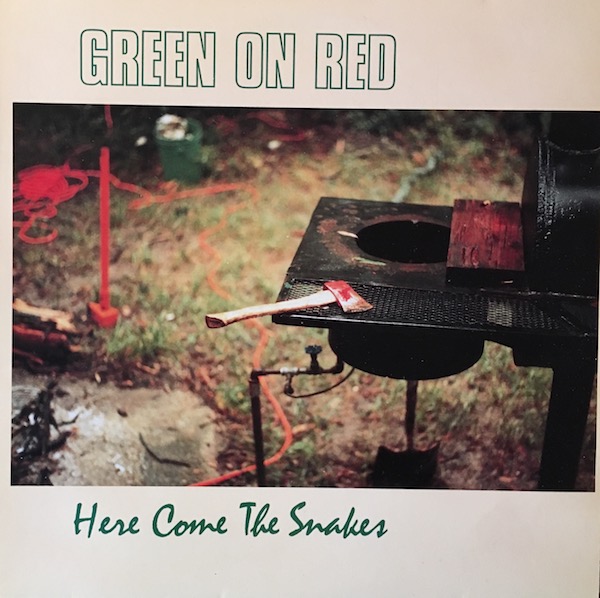
What comes after the blues? Green on Red went down to Memphis to figure it out, and teamed up with producers Jim Dickinson and Joe Hardy at Ardent. Only a duo at the time, leaving Dan Stuart and Chuck Prophet as core members, this album digs deep down in the American soil of country, blues and rock & roll and ends up somewhere between The Rolling Stones and Neil Young, where the three songs at the tail end of the album shines particularly strong. Here Come The Snakes might lack the youthful innocence and camaraderie of their previous efforts, but it sure adds another value. Something more severe.
The band members reconciled some years later, but dark shadows looms over Green on Red at this point in their career.
Various artists | Welcome to Comboland | Making Waves 1986 |

North Carolina must’ve been a joyous place to live in the 1980s, judged by the friendly atmosphere and cheerful indie presented on this compilation. Or perhaps it’s just a reminder of less cynical times, a time of less tension and a more laidback attitude. Or maybe it’s because of Don Dixon, being largely responsible for producing many of the bands presented here. His jangly signature sounds permeate the album of twelve artists from the state. The Connells are probably most remembered of these bands today, however, I urge everyone to grab a copy of this sampler. Just for you to enjoy forty-two minutes of Southern hospitality, including prime acts like Southern Culture on the Skids, Fetchin’ Bones and The Spongetones.
Naked Prey | Naked Prey | Down There 1984 |
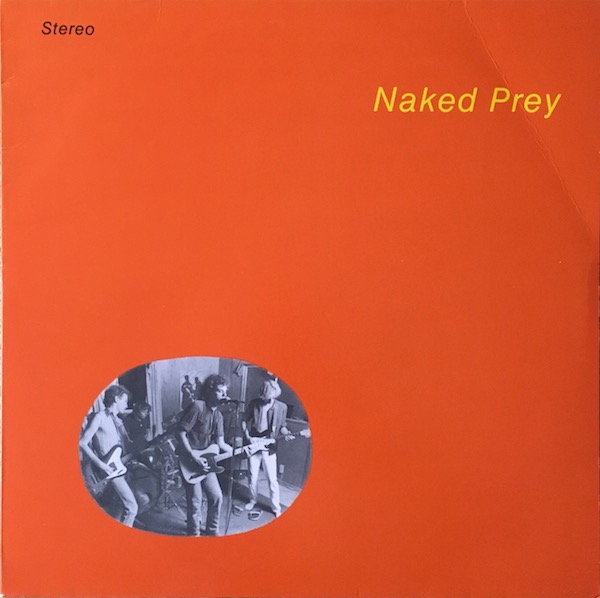
The 1984 debut album from Tucson outlaws Naked Prey is a raw and ragged exploration of an acid drenched southwestern mythology at the crossroads of garage rock and country punk. Fronted by the one and only Van Christian, with lovely guitar work by David Seger. Produced by Dan Stuart, Steve Wynn and great cover shot by Scott Garber, this is a supergroup in my book.
Giant Sand | The Love Songs | Demon 1988 |
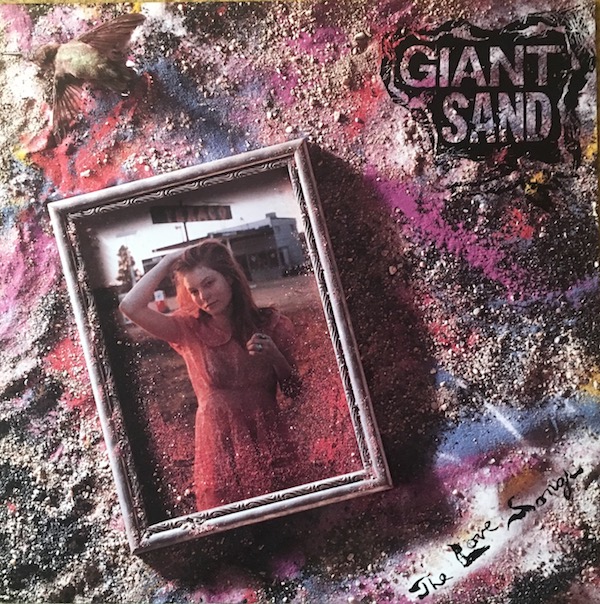
We are all things at different times. This album made such an impact on me that I convinced my pal to buy a ‘66 Barracuda. I still remember how we cruised down the road under a fingernail moon, while the pine trees transformed into cactuses, counting stars like neon lights from down the mud to way up sky. The car eventually got sold, but the The Love Songs still thrones up there as a one of my dearest favorite albums of all time. ‘Your passion is like world war three/my defense is a crumbling NATO.’ I mean, what’s not to love?
Jane’s Addiction | Nothing’s Shocking | Warner 1988 |
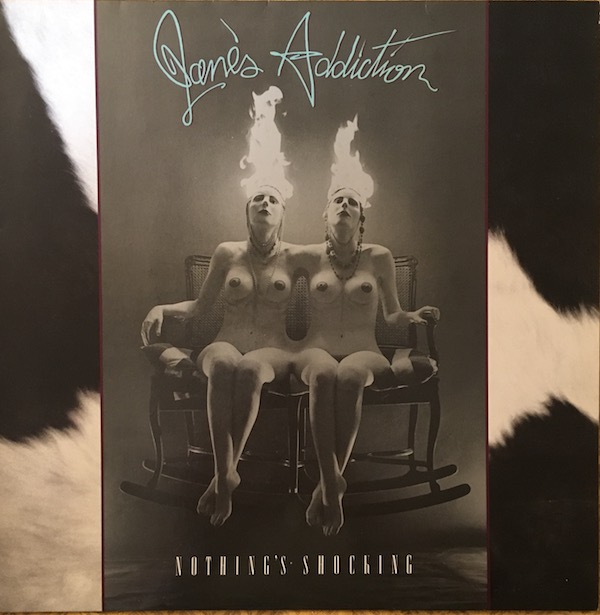
So, this was pretty mind-blowing stuff 30 years ago. It’s not quite as shocking today, but the cover art alone, the conjoined twins with their heads on fire, sets the tone for an ambitious and powerful album. Jane’s Addiction managed to unify punk, funk and metal into something cutting-edge and timeless. Nothing’s Shocking paved way for so much of the grunge craze to come, but this is smarter, more arty and engaging than most of them.
Thin White Rope | In the Spanish Cave | Frontier 1988 |

In the Spanish Cave is a tad brighter and varied than its predecessors. Ranging from almost joyous tunes (“Mr. Limpet”) to bulldozing guitar assaults (“It’s OK”), it features their most beloved song, the epic desert anthem “Red Sun.” In a thorough review celebrating its 25th anniversary in 2013, The Quietus points out how they created an alien take on the unfathomable vastness of the American landscape and its effects on the nation’s psyche, and how they used this landscape, not as representing a sense of freedom, but as an area of something uncanny and unsettling, summing up the album as a “potent, fantastical window onto a malign new phase of the American Dream.” Needless to say, this is one of my favorite albums of all time.
Creedence Clearwater Revival | Cosmo’s Factory | Fantasy 1970 |

‘They’re selling independence/Actors in the white house/Acid in digestion/Mortgage on my life..’ With all their standards and ballads on daily adult radio rotation, it’s often easy to forget how insanely cool CCR actually was. “Ramble Tamble” sounds like something The Cramps and The Dream Syndicate could’ve cooked up together a decade later, with the breezy mid-section as one of this album’s standout moments. But there’s a lot more gold here; “Run Through The Jungle” and the lengthy “I Heard It Through The Grapevine” are particularly great – and most of the other songs are established as beloved rock classics.
Hüsker Dü | Candy Apple Grey | Warner 1986 |

Signing a band like Hüsker Dü on a major label must’ve been a rather bold move back in 1986. But in hindsight this was a prophesy of new times for American alternative guitar rock, and soon bands like R.E.M, Dinosaur Jr. and The Replacements moved from indies to major – without losing their former edge. The Hüskers was constantly developing from underground punks to something far more diverse and mature, and in many ways Candy Apple Grey is the culmination of a journey they’d started on with ‘Zen Arcade’ only two years prior. It’s nothing but amazing to look back at their astonishing intense production and rapid progression, and no wonder they were about to burn out and implode just a year or so later. Candy Apple Grey gives us some of their finest songs, including “Don’t Want To Know If You’re Lonely”, “Sorry Somehow” and acoustic “Hardly Getting Over It.” What a truly great band they were.
True West | Hollywood Holiday | New Rose 1983 |
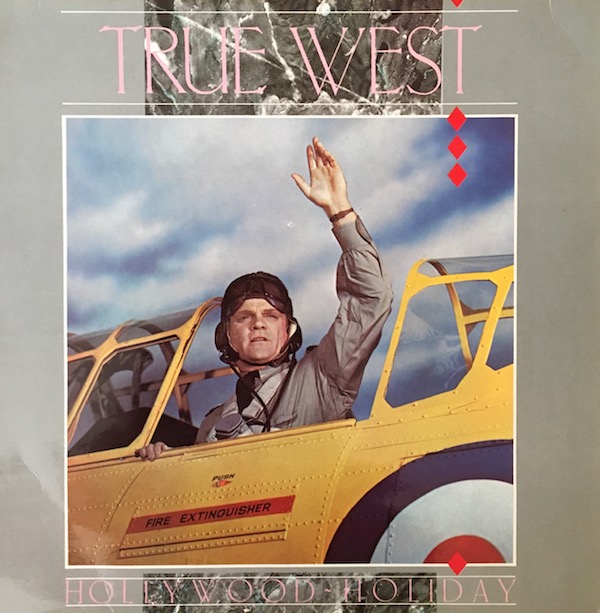
True West belonged to a group of likeminded 1980s Los Angeles bands dubbed ‘Paisley Underground’, along with The Dream Syndicate, The Bangles, The Long Ryders, The Rain Parade and others. It’s a shame that they’re largely ignored today, cause not only were True West the quintessential paisley band, a missing link between ’60s garage rock, trippy psychedelia (they do a mighty fine version of Pink Floyd’s “Lucifer Sam”) and Televison (check out “It’s About Time”), this album holds up very well compared to many of their peers efforts and is a lost classic of ’80s guitar rock. A little while ago I named Drifters (1984) their masterpiece, but after another couple of listenings to Hollywood Holiday I must reconsider that statement. Man, I’d completely forgotten what a tremendous album this is, from start to finish. I love the frantic guitar work between Russ Tolman and Richard McGrath on the almost Gun Club-like “I’m Not Here” and songs like “And Then The Rain” and “Throw Away The Key” would’ve been hits in the hands of R.E.M. Hollywood Holiday is produced by Russ Tolman (he later went on and made a great, still ongoing solo career) and The Dream Syndicate’s Steve Wynn. They knew each other very well as members of The Suspects, the short lived band they shared with Kendra Smith, later in the first incarnation of The Dream Syndicate and Gavin Blair, lead singer of True West.
Thin White Rope | Exploring The Axis | Frontier/Zippo 1985 |

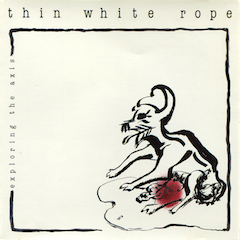
Thin White Rope never really fit into the categories used to brand guitar dominated rock in the 1980s. They were too harsh to be labeled as jangle, too loud for the emerging alternative country movement and too dark to fit into the flowery Paisley Underground. Just as close to Television, Bauhaus and Joy Division than their more successful contemporary counterparts in ’80s American underground (R.E.M, The Replacements, Pixies), Thin White Rope’s desert psychedelia was a far more vast and difficult creature to cast. Out of time back in the day, they are timeless in hindsight. Thin White Rope immediately introduced their main modus operandi. The first song off their first album, Exploring the Axis, is something of a surreal country-noir story entitled “Down in the Desert,” about a guy called Karl who headed south and came back changed by his experiences in the desert. (“Karl came back and he works and he smiles/But if you look closely there’s still something scared in his eyes…”) Based out in the Northern California university town of Davis, Thin White Rope often returned to the desert as a recurring trope in their songs, both emotionally and musically. “Soundtrack,” from the same album, also laid a sonic foundation for what to come later; their ability to let an austere tune about alienation (“Windshields are like TV screens/I’m not involved at all”) explode into a ferocious assault as a sneering Guy Kyser goes full Mad Max (“She throws firebombs on the highway/Glass splashing and bushes burning”), revealing a band with a constant underlying rage – a beast they sometimes tamed, sometimes let loose.
Oh yes, they held us in a firm grip out on that ledge, but one also softened with beautiful melodies and a sense of melancholia and human kindness; elements that would be more prominent later on in their career.
The Dream Syndicate | Ghost Stories | Enigma 1988 |

Ghost Stories is the fourth and final studio full-length album from The Dream Syndicate, until they finally returned after a 30-year long hiatus in 2017. Fronted by lead singer and songwriter Steve Wynn, The Dream Syndicate managed to keep a consistent and recognizable style all through the 1980s, but every album has its own distinct personality: The untamed ferocity of the 1982 debut, an album they’ll always be measured against, the grandiose and ambitious sophomore show, and their underrated third album, when they came out of the grey with upbeat breeziness. Produced by Elliot Mazer, ‘Ghost Stories’ ties together all this greatness into an album that sounds better and rocks harder than ever before. Wynn once described the album to me as “dark, noisy, and bratty but its also quite self-assured and not undone by production – neither too little nor too much.” He forgot to mention that the songwriting is ace throughout, there’s not a weak track here and Ghost Stories is one mighty, classic slice of 1980s guitar rock. Just hear the opening verse and try to turn off: “Every cloud has a silver lining/Every down has an answer, I know/But in my heart there’s no light shining/Just emptiness and faded glow/Raining down on the side I’ll never show…”
 The first you hear is an impenetrable wall of grinding, chainsaw-like guitars. Then there’s that steady, motoric pounding rhythm that never surrenders. And then this raspy gravel, a spooky baritone voice, like a raging fire and brimstone preacher, with hazy, slurred lyrics that wasp away like smoke.
 Their widescreen musical scope, borrowing equally from western and eastern influences, is perhaps best described by numerous artists they covered, including Lee Hazlewood (“Some Velvet Morning”), Can (“Yoo Doo Right”), Hawkwind (“Silver Machine”), Suicide (“Rocket U.S.A”) and The Byrds (“Everybody’s Been Burned”). Just as close to Television, Bauhaus and Joy Division than their more successful contemporary counterparts in ’80s American underground (R.E.M, The Replacements, Pixies), Thin White Rope’s desert psychedelia was a far more vast and difficult creature to cast. And despite enjoying a steady fanbase, especially in Europe, they sadly vanished from the common memory following their 1992 demise.
 Based out in the Northern California university town of Davis, Thin White Rope often returned to the desert as a recurring trope in their songs, both emotionally and musically. “Soundtrack,” from the same album, also laid a sonic foundation for what to come later; their ability to let an austere tune about alienation (“Windshields are like TV screens/I’m not involved at all”) explode into a ferocious assault as a sneering Guy Kyser goes full Mad Max (“She throws firebombs on the highway/Glass splashing and bushes burning”), revealing a band with a constant underlying rage – a beast they sometimes tamed, sometimes let loose.
 In the Spanish Cave (Frontier, 1988), probably their most well known album, is a tad brighter and even more varied than its predecessors. Ranging from almost joyous tunes (“Mr. Limpet”) to bulldozing guitar assaults (“It’s OK”), it features their most known song, the epic “Red Sun.” In a thorough review celebrating its 25th anniversary in 2013, The Quietus points out how they created an alien take on the unfathomable vastness of the American landscape and its effects on the nation’s psyche, and how they used this landscape, not as representing a sense of freedom, but as an area of something uncanny and unsettling, summing up the album as a “potent, fantastical window onto a malign new phase of the American Dream.”
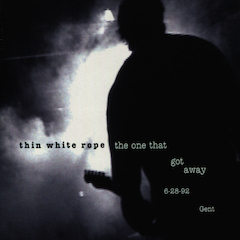 In a fair world, Thin White Rope would be the real heroes. Instead they called it a day after perhaps the most complete effort in their career. The Ruby Sea turned out to be their swan song, described by AllMusic as ‘slowly shedding their more blatantly psychedelic influences and polishing their sound as a surreal and chilling rock band.’ Going out while being at the top of their game – with majestic songs like “Hunter’s Moon” and “Puppet Dog” – the band still had one ace up their sleeve.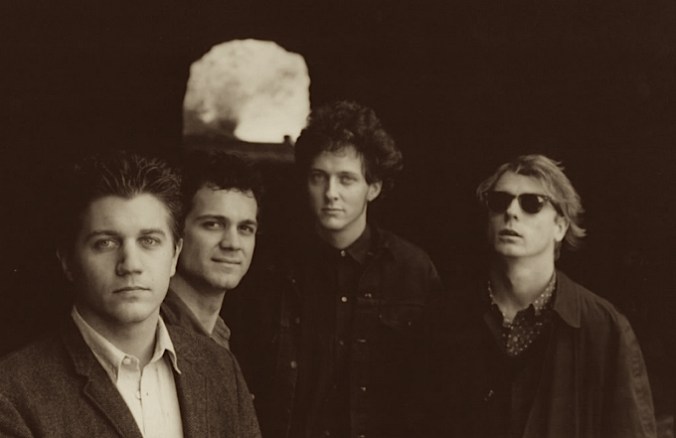
 Who inspired your guitar sound the most?
 Did you have a clear plan or idea from the beginning on what Thin White Rope should be when you first started out playing?
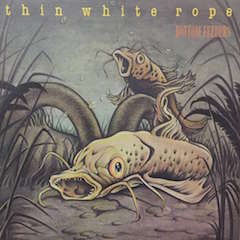 What’s your favorite Thin White Rope album?
 Da jeg ble oppmerksom på den nye amerikanske rocken på midten av 80-tallet var det som å bli slengt inn i et parallellunivers som det viste seg å være vanskelig å komme ut av. Etiketter som Zippo, Enigma og Frontier, og artister som Giant Sand, The Dream Syndicate og Thin White Rope ble dyrket. Noen av de mange artistene som åpenbarte seg ble senere berømte (REM), noen lever fremdeles i beste velgående (Giant Sand), enkelte var kortvarige gleder (Naked Prey, The Long Ryders), mens atter andre raskt vendte tilbake til glemselens daler (Rave-Ups, Dump Truck, Rank And File).
 Green On Red: s/t (Down There, 1982)
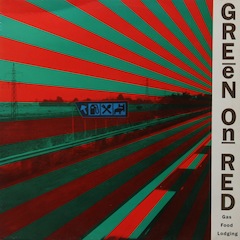 Gas Food Lodging (Enigma, 1985)
 The Killer Inside Me (Mercury, 1987)
 The Big Beast