The Record Collection: 1989 – 4

Beat Farmers | The Pursuit of Happiness | Curb, 1987 |

The Beat Farmers managed to combine hard hitting Southern fried rock with just the right amount of twang and jangle, including a ragged sense of humor, mighty fine songwriting and great musical skills. Now, that’s the recipe for a damn fine band in my book. Even though they never were spectacular, in terms of being visionary vanguards or anything, they were pioneers for roots based rock and paved way for numerous bands to come. Back then it was labelled as ‘cowpunk’, but in heart this is really classic all-American rock ‘n’ roll.

I bought The Pursuit of Happiness (1985) prior to this one, and it’s still my personal favorite – regardless of this here iconic cover art. But, standout tracks like “Hollywood Hills” and “Make It Last” ranks among their finest work ever, as does (as always) the deep sound of Country Dick Montana (“Big River”). The band dissolved after Country Dick passed away in 1995, while performing on stage.

Sidewinders | Witchdoctor | Mammoth/RCA 1989 |

Tucson, Arizona’s Sidewinders sure stepped up the game with their sophomore album Witchdoctor. Their mix of jangly guitars and hard rocking songs, acoustic beauty and electric rage, melted together just perfect on this album. On standout tracks like “Cigarette,” “Bad Crazy Sun” and the exquisite cover of Neil Diamond’s “Solitary Man” they’re not too far from the sound of city comrades like Naked Prey and Green On Red, but Sidewinders always had a more approachable side to their music. It all comes together on “What She Said”, just one of those great moments where melodic sensibility takes a turn and starts to explore the unknown. This close to 10 minute epic track is the highlight of an album that has plenty to give, even 30 years after it was first being released.

Rich Hopkins might never have received a massive commercial breakthrough, but he sure is an underrated songwriter and bandleader – and he’s a true desert character. Sidewinders later turned into Sand Rubies, and Hopkins has continued up until this day as Rich Hopkins and the Luminarios.

Various artists | Time Between: A Tribute to the Byrds | Imaginary, 1989 |

“It’s hard to believe that 25 years have elapsed since The Byrds took their first faltering steps into World Pacific Studios to open the chapter on a fascinating period of creative growth and bestow upon the music world an influence that is still felt to this day.” So says the album notes by Lyndon Noon. Well, it’s also hard to believe the fact that it’s 30 years since I purchased this here LP. However, the influence of The Byrds continues to live on, their songs will endure forever. More so than many of the bands honoring them on this tribute album. But the reason I bought Time Between was not first and foremost because of The Byrds, even though I already loved them in 1989, but the fact that so many of my favorite bands contributed here: Giant Sand (“Change Is Now” for sure), Thin White Rope and Dinosaur Jr. (“I Feel a Whole Lot Better” after this) all chip in, as does honorable names like Miracle Legion, The Chills, Richard Thompson, The Barracudas, The Moffs and many more. This is a wonderful homage, serving many of the purposes of a such a project: Paying respect to the mother band, creating unique versions of their original songs and expanding the understanding of their legacy. You want to dive into the original versions while listening to the covers at the same time. Well done.

Band of Susans | Love Agenda | Blast First, 1989 |

Band of Susans came from the New York City underground, and even though they basically remained there during their whole career, the band, made up of remarkably many Susan’s, sure left a mark in the history of art rock. They were students under composers like Rhys Chatham, and contemporaries with other NY bands like Sonic Youth, Live Skull and Swans.

Their second album Love Agenda, with Page Hamilton, later of Helmet fame in the line-up, has aged remarkably well. Here’s plenty of layers and layers of loud guitars and the start-stop dynamics we later came to love from Helmet, but restrained vocals and sweet melodies buried underneath the pillows of noise were not too far from British acts like The Jesus and Mary Chain or My Bloody Valentine. But, Band of Susans sure went their own way. As a matter of fact, it’s possible to map out several different schools of noise rock, with Sonic Youth as kids from the school of no wave, The Jesus & Mary Chain following the path of British post-punk and My Bloody Valentine doing what is now known as dreampop/shoegaze. Band of Susans is related to all of this, but also turned a slightly different direction with minimalistic mantras characterized with a wall of sound and a sea of noise. It all comes to life on Love Agenda.

The Denver Mexicans | The Denver Mexicans | Still Sane, 1988 |

A rather short lived band, The Denver Mexicans only released a couple albums during their time span. This is their eponymous debut, made up by legendary LA bassist Dave Provost (The Dream Syndicate, Droogs and many more), Aaron Price on guitar and vocals and drummer Steve Bidrowski (The Unknowns). This album is packed with raw and ragged tunes, ranging from garage rock and surf to cowpunk and desert rock not too far from other contemporary artists like Naked Prey and Green On Red (check out the centerpiece “Lonesome Road.”) Add some sweet acoustic numbers (“Ezras Parade”), cool instrumentals (“Dogs of Surf”, “Denver Mexican Theme”) and a more than decent version of The Dream Syndicate’s “John Coltrane Stereo Blues” in the mix, and you get a pretty wild ride of late 1980s underground rock Los Angeles style. Sadly, I never finished up ordering the t-shirt (slide 3), guess it’s too late now?

Various Artists | ‎Only 39,999,999 Behind “Thriller” – Down There Records 1981-1988 | Down There/Restless, 1989 |
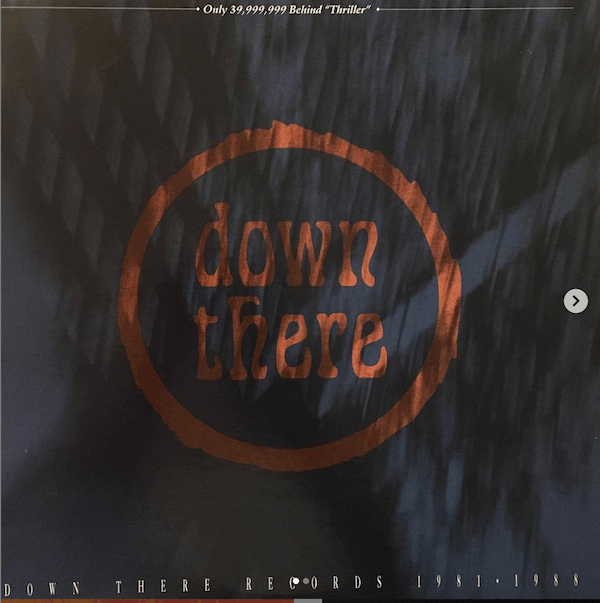
The Dream Syndicate’s Steve Wynn started up Down There Records in the early 1980s. The label catalog is more qualitative than sizable impressive, with early and classic albums from The Dream Syndicate, Green On Red and Naked Prey as part of the roster. Down There also gave us awesome releases from The Romans, Russ Tolman and Divine Weeks, and quite simply ranks as one of the finest labels to document primarily a very vital Los Angeles music scene. This compilation is a pretty awesome place to start digging, it even includes several unreleased tracks, but I highly encourage chasing down the original albums right away. Highlights include Dream Syndicate’s untamed version of “Outlaw Blues” and Green On Red’s early tune “Tragedy.”

Neil Young | After the Gold Rush | Reprise 1970 |

I grew up on Neil Young. Old Ways played on repeat as the soundtrack to endless family summer trips when I was a kid, Ragged Glory and Weld being as heavy as any grunge album in the early ’90s – and later on in life, the thrill of discovering so many gems in this man’s astonishing catalog. It’s fair to say that Neil Young is one of my all time favorite artists, and After the Gold Rush is one of his finest albums. This is classic Neil at the dawn of a long career peak. You’ll find all his signature moves on this, his third solo album: The acoustic, husky folk tunes (“Cripple Creek Ferry”), the ragged, loud guitars (most notably on “Southern Man”), heartbreaking love songs (“I Believe In You”, “Only Love Can Break Your Heart”, “When You Dance I Can Really Love”), cowboy nostalgia (a slow version of Don Gibson’s “Oh Lonesome Me”), piano-led ballads (“Birds”, the eco-friendly title track)…. You know it’s a classic album straight from the get go: ‘Sailin’ hardships through broken harbors/Out on the waves in the night’ (“Tell Me Why”). Neil Young made some mighty fine albums before this one, and a whole lotta legendary ones after, but his long, sprawling career is compressed into these two sides of timeless music.

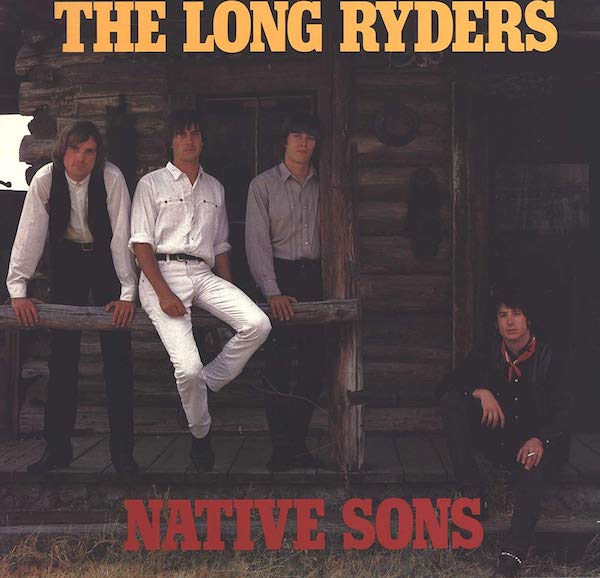
The Long Ryders | Native Sons | Frontier/Planet 1984 |

Native Sons is in many ways a seminal 1980s album, as a highly influential predecessor to the alt-country resurgence a couple years later, a cornerstone in the Paisley Underground movement, a blueprint for tons of rootsy/psychedelic indie bands to come – and of course a damn fine album on its own. Still is. The Long Ryders combined jangly guitars and sweet vocal harmonies (hey, even Gene Clark joins in) with a raw, ragged garage rock attitude, often cited as the missing link between Gram Parsons and punk rock.

This is The Long Ryders’ first full length, produced by Henry Lewy (Joni Mitchell, the Flying Burrito Brothers, Neil Young, Leonard Cohen) and a tour de force of timeless songwriting from start to finish. Love it just as much now as when I purchased it 30 years ago.

Sonic Youth | Bad Moon Rising | Homestead/Blast First 1985 |

Bad Moon Rising is a dark, gloomy nightmare, slowly dragging us through post-apocalyptic city streets and desolate, industrial wastelands, a disturbing postcard from 1980s America. Just a couple years later Sonic Youth gave us Sister and Daydream Nation and forever shaped the face of alternative rock with their merge of underground noise and mainstream glam.

Wrapped in drones, decay and dissonance, there is not much glam to spot on songs like “Ghost Bitch”, “Society Is a Hole”, and “I’m Insane.” The frantic guitar riffs that would become a key signature element for the band, mostly comes to light at the tail end of the album on “Death Valley ’69” featuring Lydia Lunch. Already at this point in their career we find this clever mix of high and low culture, as they give references to Creedence Clearwater Revival, the painter Edward Ruscha and Charles Manson just to mention a few. This is pretty bleak and abrasive stuff, and even though it’s not an easy or immediate album to digest it’s highly rewarding.

Over the years Bad Moon Rising has become one of my favorite Sonic Youth albums.

Rank and File | Sundown | Slash 1982 |

The Kinman brothers, Chip and Tony, were part of the bourgeoning Southern California punk scene as members of the Dils when they decided to relocate to Austin and shift towards a more roots orientated sound.

For the debut LP Sundown they brought in phenomenal guitarist Alejandro Escovedo (formerly of the Nuns and True Believers, and still going very strong) and drummer Slim Evans. This is nothing but a seminal precursor to the whole alt.country and Americana movement, later popularized by Uncle Tupelo, Whiskeytown et al. At the time this vital combination of punk rock and country music came to be known as cowpunk. Rank and File stands next to the likes of Jason & the Scorchers, The Beat Farmers and The Blasters in pioneering this kinda lovely music, especially here on their debut album that is by far their finest moment.

Three For Christmas

Low: Christmas (1999)

On our way from Stockholm
Started to snow
And you said it was like Christmas
But you were wrong
It wasn’t like Christmas at all

By the time we got to Oslo
Snow was gone
And we got lost
The beds were small
But we felt so young
(“Just Like Christmas”)

Sometimes, the most precious gift comes in the humblest of packages.

Low shared this seasonal joy to the world in 1999. Christmas is only 8 songs, consisting of five covers and three originals, as a gift to their fans it was released between the Duluth, MN trio’s masterful full-lengths Secret Name and Things We Lost in the Fire. As years went by, Christmas has turned out to be one of the most beloved holidays albums of recent times. The musical DNA of Low is perfectly tuned for December songs; with their hushed and heavenly harmonies, solemn sound and affinity for beautiful melodies that slowly falls down from heaven and melts like snowflakes on our tongues.

Low turn their backs on the hustle and bustle, away from flashy decorations, shopping sprees and fussy preparations, while never ending up in some sort of typical cool, indie irony. No, their gift to us is given with sincerity and grace.

This utterly wonderful collection of songs is nothing but a sacred and holy embrace of the true spirit of the season. This is Christmas.

If you were born today
We’d kill you by age eight
Never get the chance to say

Joy to the world and
Peace on the earth
Forgive them for they know not what they do
(“If You Were Born Today”)

Sufjan Stevens: Songs for Christmas (2006)


Back in 2001, Sufjan Stevens began to record Christmas songs and release them as gifts to friends and family. This turned into an annual tradition (except in 2004), where Stevens invited friends over for a session of homemade recording a week in December, supplied with a Reader’s Digest Christmas Songbook and using whatever musical instruments available around at the time.

In 2006 the five EP’s were being repacked as a box-set and shared with a broader audience, making it into a wonderful collection of lovable traditional carols (“Joy to the World”, “O Holy Night”, “O Come, O Come Emmanuel”) as well as some brand new holiday-themed favorites (“Come On! Let’s Boogey to the Elf Dance!”, “It’s Christmas! Let’s Be Glad!”).

Songs For Christmas is unmistakably Sufjan Stevens, ranging from the sparse, folky to more grandiose and complex arrangements, and should be considered a must-have either you file it under S for Stevens or C for Christmas.

John Fahey: The New Possibility: John Fahey’s Guitar Soli Christmas Album (1968)

John Fahey is considered as one of the greatest country blues fingerstyle guitarists, and the master of American Primitive Guitar. Armed with his steel-string acoustic guitar, John Fahey recorded numerous classic albums since his debut album Blind Joe Death (1959) and up to the posthumously released Red Cross in 2003.

His biggest commercial success is The New Possibility, released in 1968. Mojo magazine rightfully described how it “possesses a deliciously deep and spooky ambience, a disjointed jauntiness coupled with a frost-fall morning melancholy, Fahey’s guitar somehow sounding like an Elizabethan harpsichord grown wild and mad out in the Appalachian mountains.”

This edition also collects his second Christmas album, Christmas with John Fahey Vol. II. (1975).

Dori Freeman: A Weeping Willow

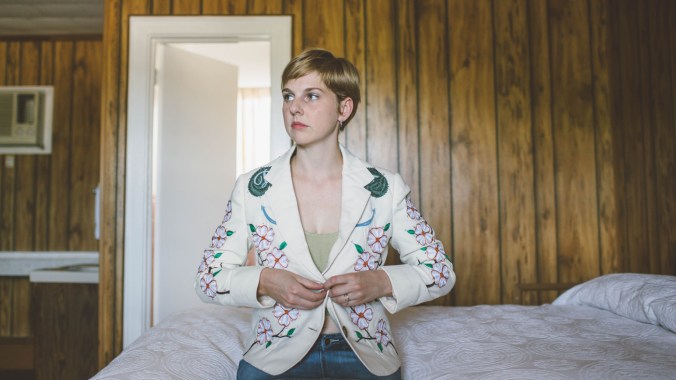
Dori Freeman (Photo: Kristen Horton, press)

This interview was first published on October 17, 2017

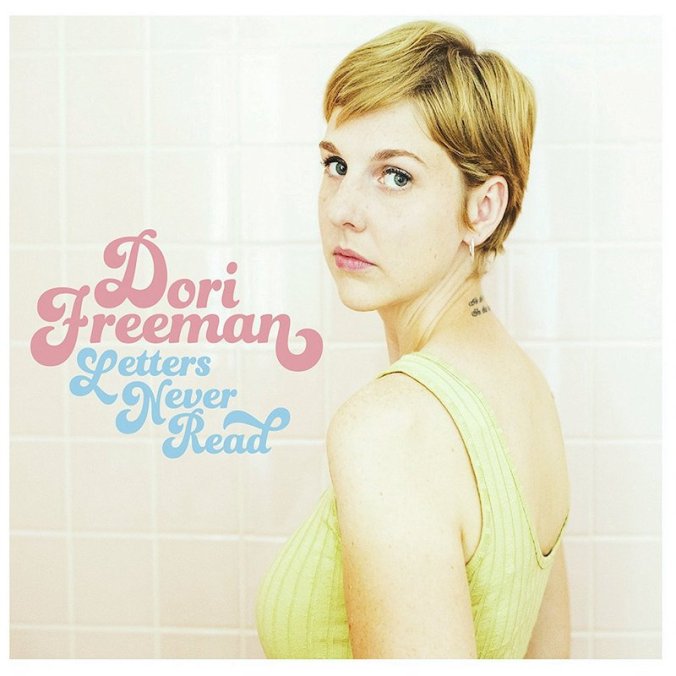
Singer-songwriter Dori Freeman is about to drop her sophomore album Letters Never Read, coming October 20th, 2017. Freeman has again teamed up with renowned folk-rocker Teddy Thompson as the producer.

“I knew I wanted to work with Teddy again and just try to continue and evolve what and we did on the first record”, Freeman says.

She collaborated with Teddy’s even more acknowledged dad Richard Thompson (of Fairport Convention fame), Canadian psych-folk duo Kacy & Clayton and Irish-American songbird Aofie O’Donovan. ”I wanted to collaborate with them because they are all musicians I listen to and admire greatly, plain and simple”, Freeman says.

Dori Freeman hails from the Appalachians, born in Galax, Va, a small town with a rich heritage of old-time music. She grew up in a family of bluegrass musicians, and learned the legacy of Doc Watson and the Louvin Brothers from an early age. At the age of 22 the hard working single mom reached out to her musical favorite Teddy Thompson on Facebook for a possible collaboration. Thompson quickly replied, and went on to produce her critically acclaimed 2016 debut album.

Letters Never Read is a triumphant follow-up, including cover songs by her grandfather Willard Gayheart, and Richard & Linda Thompson, equally rooted in traditional Appalachian folk and sophisticated singer-songwriter pop music, more optimistic and light-hearted without ever compromising on the craftsmanship of poignant storytelling and ‘drawing from inspirations all over the map’.

We caught up with Dori Freeman for a chat about her new album.

***

Congratulations with a new album on the way. What do we get and what’s it about?

10 songs, six originals and four covers. Hard to sum up in a few words what it’s about, but it’s got songs I grew up listening to, one written by my grandfather, a song written by Teddy’s father, and some originals that ponder love from differing perspectives.

What was your initial idea for this album – what inspired you the most?

I was inspired by a lot of things – paying homage to the music I grew up on and pairing that with the originals that have a very different feel. Family inspires me always, a new relationship, reconciling living with depression, pairing of percussion and voice, etc. Inspirations all over the map.

Did you have a clear idea on how Letters Never Read would be from the get-go, or did the album gradually evolve as a process?

I’d say it was more of a gradual evolution. I just try to write and record things from a genuine place and hope by doing that everything will come together into something good.

What is the biggest difference or development compared to your debut?

I was in a much different and more positive place in my life when I made Letters Never Read compared to my debut. I think the record reflects that.

You worked with Teddy Thompson again, producing the album. Can you shed some light on the recording sessions? How did you work out the songs and what kind of sound did you look for this time?

Teddy is wonderful to work with. He has a very clear vision in the studio and he’s very good at coaxing that out of people. Generally, I play all the songs for Teddy on acoustic guitar and then from there we come up with a groove for each song. My husband, the drummer on this record, Nicholas Falk, is also responsible for a lot of the arranging and overall feels on many of these songs.

Unfortunately I wasn’t in the studio at the same time as Richard Thompson, but unsurprisingly he nailed the vision for “If I Could Make You My Own.”

What would be your preferred setting to ultimately enjoy the LP?

While this won’t be immediately released on LP, my favorite place to listen to any recording is in the car.

How would you pair this album with a meal or beverage?

Fizzy water and anything chocolate.

Which albums or songs inspired you the most in the making of this album?

I guess this is an obvious answer since I record songs by each of them, but Fairport Convention and my grandfather were both really inspiring.

Any other artists you would like to recommend that you don’t feel are getting deserved attention?

Kacy and Clayton, Erin Rae, Kaia Kater, Logan Ledger, Zephaniah OHora…

And finally, if your music was a tree what would it be?

A Weeping Willow that also bears delicious neon fruit.

David Berman: Writing Sad Songs, Gettin’ Paid by the Tear

Written July 18, 2019 for the new album from David Berman’s new moniker Purple Mountains. Berman passed away on August 7, 2019.

—

Her doorbell plays a bar of Stephen Foster
Her sister never left and look what it cost her
We’re gonna live in Nashville and I’ll make a career
out of writing sad songs and gettin’ paid by the tear

(Silver Jews: “Tennessee”)

David Berman is not a great singer. A superficial listen to his music under the moniker Silver Jews, now Purple Mountains, will only reveal his characteristic gravel-voice and easily recognizable baritone drawl. Sometimes it’s half-spoken or mumbled with a drowsy attitude as if he’s doesn’t really care about what he has to say.

But like many of the finest songsmiths of his generation (think fellow musical and lyricist peers like Kurt Wagner, Stephin Merritt, Bill Callahan), Berman transcends such technical limitations in favor of something of much higher value: the enduring power of impeccable storytelling.

He might not be a technically perfect singer, but he is a scholar-writer. Berman studied under the Pulitzer Prize-winning poet James Tate at UMass, published his acclaimed collection of poetry Actual Air in 1999, and, with his remarkably precise pen, he manages to turn seemingly simple songs into profound prose.

He can be compared to authors like Nelson Algren (A Walk on the Wild Side), Bukowski or Denis Johnson (Jesus’ Son), and he has named Emily Dickinson an inspiration. “Tell all the truth, but tell it slant” might as well be a guiding light to Berman’s work (the phrase also coined Pavement’s Slanted & Enchanted LP).

It takes more than trained skills to dive into the world of the outcasts, outsiders and outlaws that make up Berman’s lyrical universe. It is no secret that he’s fought through some harder struggles than most folks: drugs and overdoses, depression and suicide attempts, and a public fight with his wealthy, conservative alcohol- and gun-lobbying father (as he proclaimed in a public statement when he first retired from music in 2009: “My life has been riddled with Ibsenism. In a way I am the son of a demon come to make good the damage”).

This is the personal backdrop to his writing, even though his lyrics never solely embrace a dark, self-loathing melancholia that could be expected from his experiences.

Berman is grasping a broad range of the American songbook and psyche, transforming his inner demons and tumultuous past into a poignant, poetic tapestry of wry observations, wit and a sly sense of humor. Always with a keen eye on life off the beaten path, of people whose lives have gone astray, he populates his vivid stories from all across the Americas, from the alleys that are the footnotes of the avenues: the Latin teacher that always smells like piss, suburban kids with Biblical names, honky-tonk psychiatrists and hitchhikers going from Odessa to Houston for the midnight execution.

And he’s a true master of quotable one-liners: “Punk rock died when the first kid said ‘Punk’s not dead,’” “Won’t soul music change now that our souls have turned strange,” “I know that a lot of what I say has been lifted off of men’s room walls.”

Berman first started out performing as Silver Jews in the late 1980s, together with Stephen Malkmus and Bob Nastanovich, before they turned indie icons as Pavement — later with a revolving set of musicians. The sound of his music has also gradually evolved over the years, seamlessly moving between raucous lo-fi, indie and slacker country/Americana.

Notoriously known for being a reclusive and some kind of an enigma, Berman has always followed his own path, off from the limelight, but he nevertheless made a career as a cult hero for a few but growing number of devotees.

Despite his personal issues, he has never made a weak or half-hearted album. There is a strong consistency of high quality from the sprawling 1994 debut Starlite Walker to the Jews’ final album Lookout Mountain Lookout Sea (2008) — with American Water (1998) as a possible artistic peak.

He spent the best part of the 21st century straightening up his life, writing poetry, drawing, reading and perhaps living just an ordinary life without releasing any new music for so many years. And, now, David Berman has returned with yet another extraordinary effort. This time with members of ever-so wonderful Woods as backing band, and with a set of songs that sounds more positive and confident than ever. Has he ever written a more upbeat song than “All My Happiness is Gone,” a warmer, more comforting tune than “Darkness and Cold”?

It’s almost as we can see his sardonic grin when he opens the album to tell us about just the way that he feels:

Well, I don’t like talkin’ to myself
But someone’s gotta say it, hell
I mean, things have not been going well
This time I think I finally fucked myself
You see, the life I live is sickening
I spent a decade playing chicken with oblivion
Day to day, I’m neck and neck with giving in
I’m the same old wreck I’ve always been
(Purple Mountains: “That’s Just the Way That I Feel”)

Return of the Griveous Angels: Sid Griffin on The Long Ryders

Alt-country progenitors and Paisley pioneers the Long Ryders recently dropped their first new album in 33 years, Psychedelic Country Soul. It’s a triumphant return to form and their finest effort to date.

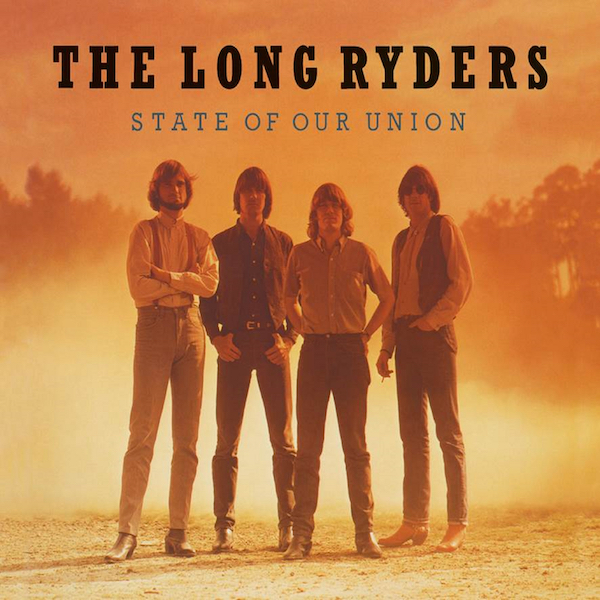
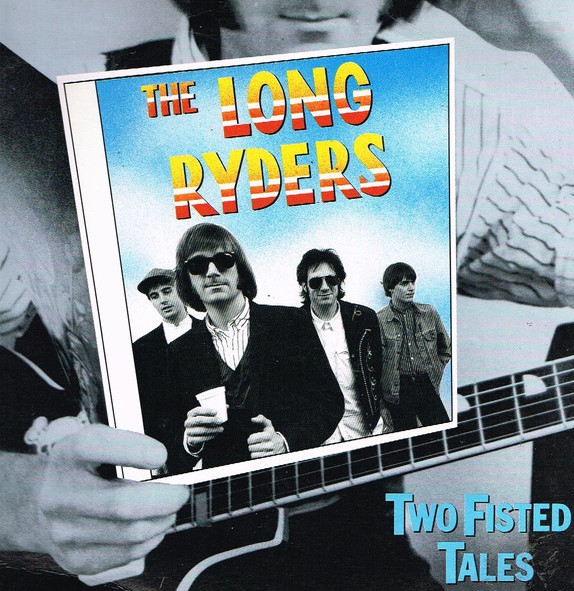
The Long Ryders (formed in 1981 in Los Angeles) are often cited as the missing link between Gram Parsons and punk rock. They were closely connected with the ’80s Paisley Underground scene (the Bangles, the Dream Syndicate, the Rain Parade), and widely considered as one of the forerunners of the alt-country genre. With their full-length albums Native Sons (1984), State of Our Union (1985) and Two Fisted Tales (1987), the Ryders became critical darlings with a dedicated following — especially in Europe. The band decided to call it quits just as U2 asked them to open for them on the U.S. wing of their Joshua Tree tour. But now, more than 30 years later, The Long Ryders are finally back.

I spoke with frontman Sid Griffin about the album they always wanted to make, recording in Dr. Dre’s studio and the Paisley Underground scene. Plus, he graciously shares the story of the fabulous the Long Ryders — album by album.

***

How did you approach the songwriting and the recording process this time around?

Due to the Internet, we were able to demo all our song ideas and send them to each other. This proved crucial, as no one in the Long Ryders lives anywhere near another Long Ryder. Greg lives in Los Angeles, Tom lives east of Chicago, Stephen lives in Virginia on the East Coast and I live in Europe. So the Internet allowed us to learn the songs we decided to record long before we saw each other face to face.

We met in L.A. and had two days of rehearsals. Producer Ed Stasium wanted three rehearsals, but there simply was not time. In fact, Larry Chatman promised us seven free days in Dr. Dre’s studio and on the Wednesday I knew we were not going to finish in time, so I went to Larry’s office behind the band’s back and begged for an eighth free day. Which Larry graciously gave us.

The Long Ryders recorded as live as possible with everyone looking at everyone else in the big room at Dr. Dre’s studio. The Foo Fighters had been in there a few weeks earlier due to a malfunction at the studio at Dave Grohl’s house. It is a great sounding room and Dre’s engineer, Lola, was a big help, too.

There were some percussion overdubs at Ed’s home studio near San Diego by Greg Sowders, and Stephen overdubbed some keyboards in Virginia, but that was it. Ed mixed it at his home studio and BANG! The Long Ryders were back in the game.

Did you feel any kind of pressure making a comeback album like that?

No. Why would we feel pressure? I told the guys before we started recording, ‘If this album sucks, we do not put it out… simple as that.’  And the guys agreed with me. We also figured if we only cut half a good album we would put out an EP and if we only cut two or three good songs we would put out an Internet single or a Record Store Day single on vinyl and that would be that. So by knowing we were not going to release lousy or even mediocre product, we left with no real pressure on us at all.

You’ve said that this is the album ‘you’ve always wanted to make.’ What were you looking for in the first place?

The Long Ryders wanted Psychedelic Country Soul to reflect who we were, who we are now and how we got there. Hence Stephen McCarthy coming up with such a marvelously appropriate album title. What you read on the outside of the package is what you get inside the package with our music, dig?

And somehow this new album represents us, top to bottom, more accurately than any of our previous albums. One might think Native Sons is the definitive Long Ryders album, but this one is. It’s got it all: rough and ready rockers, two bittersweet ballads, some crazy, totally out-there psychedelia, country riffs, bluesy riffs, heartfelt vocals. It even has my dear friend Kerenza Peacock from the Coal Porters on violin sweetly sawing away and our old gal pals Debbi and Vicki Peterson from the Bangles adding the most ice-cool harmonies this side of the Beach Boys.

What more could a Long Ryder want?

Except being just a bit older and wiser, what has changed the most being in the music industry today?

The Long Ryders have seen the music industry change a great deal. We have noticed the consumer always, always, always goes for the ease of musical delivery and not the best sound quality. So Neil Young’s Pono and also WAV files are not that big a deal to the majority of listeners.

And while vinyl is on the rise, it and CDs or indeed any hard copy format will never again see the huge sales of the past. Not when a consumer can tap a few buttons and hear the music in seconds. Therefore most people have long dismissed going to a store to buy physical product, and that is a shame as record shops were such temples of community and bohemianism and fun.

A number of bands from the 1980s L.A. scene, also known as the Paisley Underground scene, have recently reunited and released new material. How did you relate to the term Paisley Underground back in the days?

Michael Quercio [of the Three O’Clock] coined the phrase ‘Paisley Underground’ in an interview with The L.A. Weekly back in the day, no one in the press thought of it. The real Paisley Underground is and always was the Salvation Army who became the Three O’Clock and of course the Rain Parade, the Bangles and the Dream Syndicate. No one else. You will note these are the exact four bands who are included on the recent Yep Roc album of Paisley Underground bands doing other Paisley Underground bands’ material.

Then the Long Ryders and Green on Red were included, which was nice. After all, we were all friends, we all knew each other, we all attended the other band’s gigs, and played music that was at least vaguely related to the other acts’ music. As time went on, True West, way up in Davis, California, were added to the Paisley Underground and Naked Prey out in Arizona were added to the Paisley Underground and then half of the 1960s-oriented guitar bands in southern California were Paisley Underground bands! It was really out of hand.

The camaraderie of the original four P.U. bands was diluted and then diluted further. Bands were called members of the Paisley Underground and none of us in L.A. knew who on earth they were.

So, originally, it was just the four bands I mentioned above and no one else. And yes, it was a real, organic thing and not some baloney created by the media. To this day, to this second, I am fond of all the bands above, very happy to be friends with them, and very aware how lucky I was to not merely be in a popular band but part of a popular, groundbreaking scene. One almost, I say almost, as influential as Memphis in 1954, Liverpool in 1963 or New York City in 1977. It was a wonderful time.

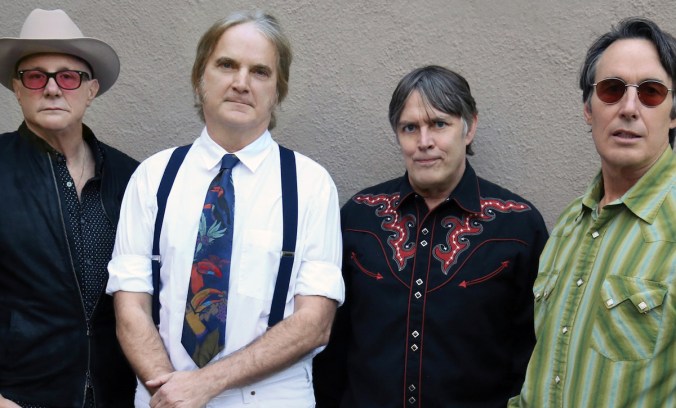
The Long Ryders - Press Photo 2016-2-kopi

How would you describe the 2019 live version of the Long Ryders?

Technically, we are better than ever. I am as serious as a heart attack here when I say this. Stephen McCarthy on guitar is a genius player. I was there when Chris Hillman told Stephen he was the only guitarist he ever heard who played Clarence White’s riffs correctly! Tom Stevens is a brilliant bass player, the best bass player of my age group, the equal of Mike Mills. Greg Sowders on drums and me on whatever are audibly better players today than we were then.

Our playing and singing is better than ever, as is our songwriting, and you hear evidence of this on the new album, Psychedelic Country Soul. The Long Ryders remind me of a prizefighter making a very successful comeback. Oh, sure, the youthful dash and verve are long gone, true, but the technical know-how and cunning thinking that experience has blessed us with are present in great abundance.

I feel like we are only getting started!

And on that promising note, we will let Mr. Griffin guide you through their marvelous recording history, album by album.

10-5-60
(PVC 1983)

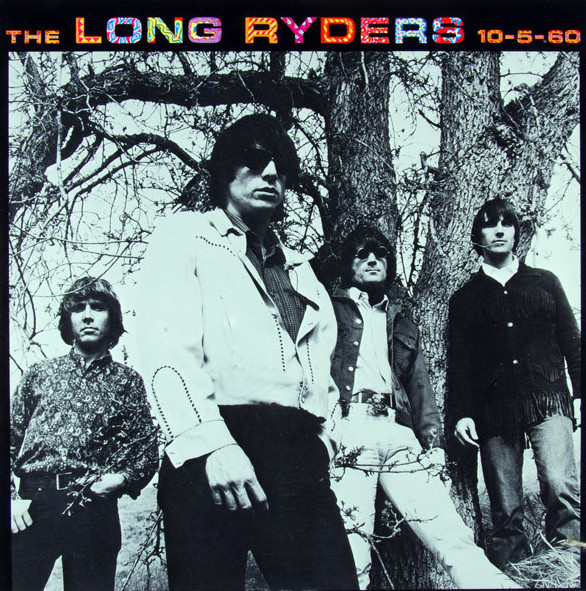
This five-song EP came out in late 1983 and brought the Long Ryders immediate notice. Its success at college radio made us a band to watch and one that was considered influential right from the start.

The stark front cover caused heads to turn at The Gavin Report and Billboard, as the Long Ryders looked so unlike the synth-pop acts of the era. And our music was updated 1960s guitar rock & roll, with ‘roll’ as important as ‘rock,’ all due to the sweet production of Brian Wilson’s 1970s engineer Earle Mankey.

The pounding title track, the psychedelically mesmerizing melody of ‘And She Rides,’ and the Lovin’ Spoonful styled whimsy of ‘Born to Believe in You’ set out the parameters for the Long Ryders straight away. Yet it was Stephen McCarthy’s ‘You Don’t Know What’s Right, You Don’t Know What’s Wrong’ that became a signature song and a signpost pointing to Americana and alt-country, two phrases that did not exist in 1983 and that were not yet a musical genre on radio or in print.

Native Sons
(Frontier 1984)

In summer 1984, Los Angeles hosted the Olympics. The public was warned frequently about traffic gridlock. The Long Ryders found out A&M Studios was available at a rock-bottom rate, as there was concern no act would want to record during the tourist invasion of the summer Olympics.

Choosing the legendary Henry Lewy as producer (Joni Mitchell, the Flying Burrito Brothers, Neil Young, Leonard Cohen), we moved into A&M Studios before Herb Alpert had time to deposit our check and started work. Psychedelia was toned down save the atmospheric ‘Close to the Light’ and country, bluegrass and Sun Records rock & roll was emphasized. ‘I Had a Dream’ made a great, great single in Europe and Elvis Costello signed us to his Demon label in London.

We were becoming an American answer to Rockpile, and soon Native Sons was the #4 album on the College Radio/Indie charts. Back then, this meant radio airplay, record sales and positive reviews in every newspaper in the country.

State of Our Union
(Island 1985)

Our March/April 1985 tour of Europe saw us greeted like Caesars returning to Rome after foreign conquest. We holed up in London’s Columbia Hotel as label after label visited us, each anxious to sign us and put us at the top of the charts. We went with Island Records’ London office as the great Nick Stewart, the man who signed U2, had the best rap.

We recorded in Chipping Norton, Oxfordshire, with Will Birch at the controls and Neill King engineering, both experienced music industry veterans. A cook was on hand to feed us our culinary requests and a large keg of beer was placed at our disposal. The recording went well, but mixing proved a chore with the first mix having hit technical difficulties. The album was remixed at R.G. Jones in south London by Neill King, Will Birch and I, the band having flown home as scheduled. Yet from this worrisome hassle emerged ‘Looking for Lewis and Clark,’ our pulsating signature song.

Two Fisted Tales
(Island 1987)

Back to A&M Studios in Hollywood, which was Charlie Chaplin’s old studio in the 1930s. Our producer was Ed Stasium (the Ramones, the Smithereens, Jeff Healey Band) and he crafted a radio-friendly record that did not sacrifice our Americana/alt-country principles one iota. Ed drilled us and rehearsed us like the U.S. Marine Corps, even down to deciding kick drum patterns. It was terribly exciting. I thought we were going to be the next R.E.M. by Christmas.

We were now with Island Records USA and those Noo Yawkers were thrilled when they heard what we had cut. NRBQ’s ‘I Want You Bad’ was the lead-off single with ‘Gunslinger Man’ a powerful follow-up release. Two Fisted Tales contains more Long Ryders songs that were covered by other acts than any other record we made. We were indie rock stars and Hollywood heroes in our L.A. neighborhoods. Life was sweet.

Psychedelic Country Soul
(Cherry Red 2019)

After thirty-three and 1/3 years (!) the Long Ryders returned with a brand new studio album, an album most fans are calling our very best one. On our last tour in 1987, we befriended Larry Chatman, a dear pal, and Larry never forgot it. Flash forward 30 years and Larry is now Dr. Dre’s main man. Larry offers us a week’s free studio time at Dre’s in L.A. as repayment for our helping him 30 years earlier. We immediately accept this extraordinarily kind offer.

Exchanging demos via the Internet, we decide which songs to record. Ed Stasium is back in the producer’s chair and the sound, the feel, the vibe of the record is largely down to him. We worked 16-hour days and accepted no visitors to the studio. It was time to live up to whatever legend had grown up around us in three decades, the Founding Fathers Of Alt-Country and so forth.

Vicki and Debbi Peterson from the Bangles sang on several songs. My dear friend Kerenza Peacock played violin like the world class virtuoso she is indeed. Featuring our best songs, each specifically written for this project, everyone brought their ‘A’ game. Psychedelic Country Soul is our best written album, our best sung album, our most thought-out album, and I think our best sounding album in pure sonic terms. It hit #1 in the UK’s Official Alt-Country/Americana chart shortly after its release.

I am very proud of it and very proud of the guys in this band.

The Year in Music 2018

Songs of the Year 2018

Listen to the full Experience – playlist on TIDAL

10 Great Ones

FIDLAR: Too Real

Dawn Landes: Traveling

Sudan Archives: Nont For Sale

Courtney Barnett: Need a Little Time

Buddy: Trouble on Central

Chastity: Children

AJ Tracey: Doing It

Amanda Shires: Parking Lot Pirouette

Childish Gambino: This is America

Brandi Carlile: The Joke

Albums of the Year – top 10:

Turnstile: Time & Space
(Roadrunner)

Sons of Kemet: Your Queen Is a Reptile
(Impulse!)

Kacey Musgraves: Golden Hour
(MCA Nashville)

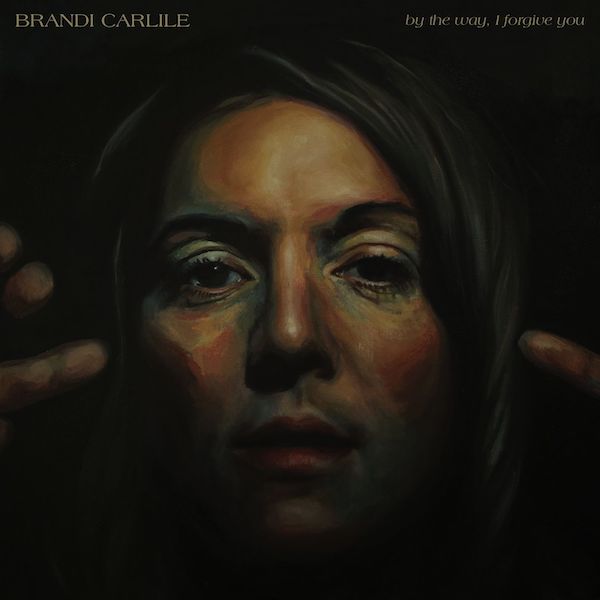
Brandi Carlile: By The Way, I Forgive You
(Elektra)

Low: Double Negative
(Sub Pop)

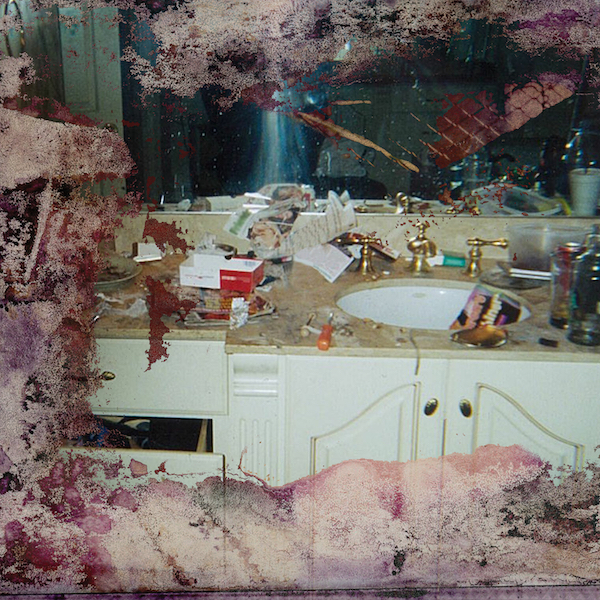
Pusha T: DAYTONA
(G.O.O.D. Music/Def Jam)

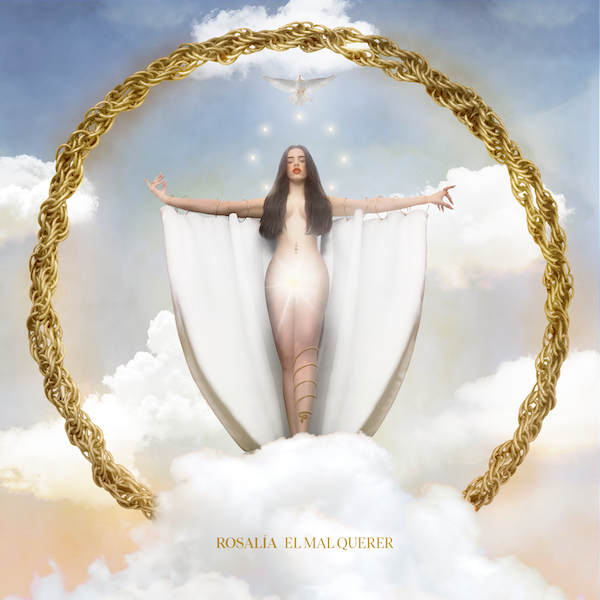
Rosalía: El Mal Querer
(Sony)

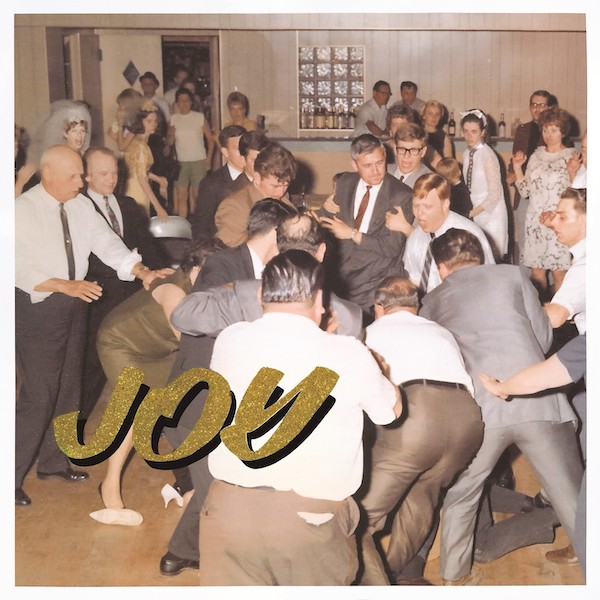
IDLES: Joy As An Act Of Resistance
(Partisan)

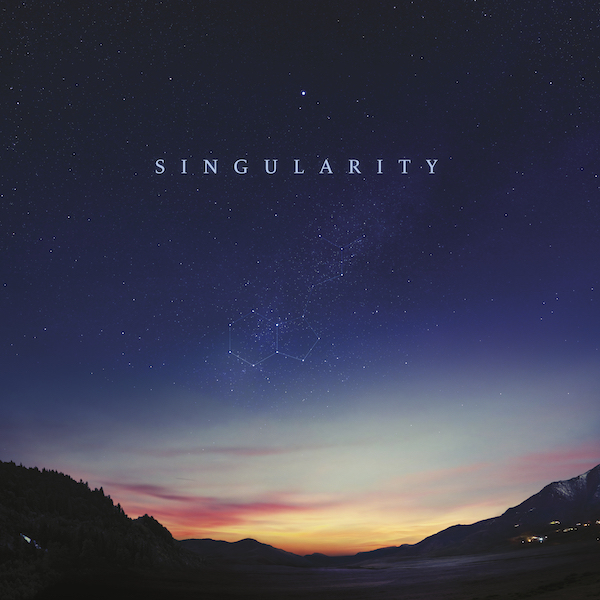
Jon Hopkins: Singularity
(Domino)

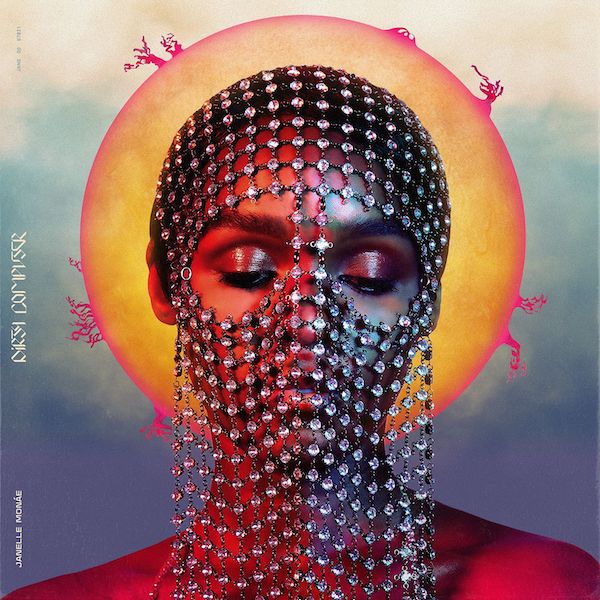
Janelle Monae: Dirty Computer

≈≈≈Bubbling Below≈≈≈

Khruangbin

Khruangbin: Con Todo El Mundo
Rolling Blackout Coastal Fever: Hope Downs
Parquet Courts: Wide Awake
Lucy Dacus: Historian
Nothing: Dance on the Blacktop
John Prine: The Tree of Forgiveness
Tony Molina: Kill the Lights
Kali Uchis: Isolation
DJ Koze: Knock Knock
Caitlyn Smith: Starfire

Amanda Shires

Amanda Shire: To the Sunset
U.S. Girls: In Poem Unlimited
Tribulation: Down Below
The Decemberists: I’ll Be Your Girl
Noname: Room 25
Shame: Songs of Praise
Natalie Prass: The Future and the Past
Ben Howard: Noonday Dream
Charles Lloyd & The Marvels + Lucinda Williams: Vanished Gardens
Courtney Barnett: Tell Me How You Really Feel

Fatoumata Diawara

A$ap Rocky: TESTING
Fatoumata Diawara: Fenfo
Mary Gauthier: Rifles & Rosary Beads
Car Seat Headrest: Twin Fantasy (Face to Face)
Kamasi Washington: Heaven and Earth
Ruby Boots: Don’t Talk About It
Ought: Room Inside the World
Ambrose Akinmusire: Origami Harvest
Vince Staples: FM!
Park Jiha: Communion

Amgala Temple

Mitski: Be the Cowboy
Cardi B: Invasion of Privacy
Jonathan Wilson: Rare Birds
Amgala Temple: Invisible Airships
Superchunk: What a Time to Be Alive
Frøkedal: How We Made It
George FitzGerald: All That Must Be
Crippled Black Phoenix: Great Escape
Ashley McBryde: Girl Going Nowhere
Ben Lamar Gay: Downtown Castles Can Never Block the Sun

Israel Nash

Geir Sundstøl: Brødløs
Nils Frahm: All Melody
Hop Along: Bark Your Head Off, Dog
Courtney Marie Andrews: May Your Kindness Remain
Yo La Tengo: There’s A Riot Going On
Laura Gibson: Goners
Israel Nash: Rolling On
Snail Mail: Lush
Kurt Vile: Bottle It In
King Tuff: The Other

Haley Heynderickx

Soccer Mommy: Clean
Blood Orange: Negro Swan
Father John Misty: God’s Favorite Customer
SOPHIE: Oil of Every Pearl’s Un-Insides
Haley Heynderickx: I Need to Start a Garden
Tierra Whack: Whack World
Hailu Mergia: Lala Belu
Marie Davidson: Working Class Woman
Yves Tumor: Safe In The Hands Of Love
Alejandro Escovedo: The Crossing

Caroline Rose

The Beths: Future Me Hates Me
Møster!: States of Minds
Caroline Rose: LONER
Damagers: s/t
Boygenius: s/t
Leon Vynehall: Nothing Is Still
Hookworms: Microshift
Windhand: Eternal Return
Thou: Magus
Hot Snakes: Jericho Sirens

Jess Williamson

All Them Witches: ATW
The Internet: Hive Mind
YOB: Our Raw Heart
Cecile McLorin Salvant: The Window
Zhu: RINGOS DESERT
KEN Mode: Loved
Daniel Bachman: The Morning Star
Jess Williamson: Cosmic Wink
Sleep: The Sciences
The Nude Party: s/t

Daniel Avery: Songs For Alpha
Preoccupations: New Material
Young Fathers: Cocoa Sugar
Buddy: Harlan & Alondra
Jeff Rosenstock: -POST
Stephen Malkmus & the Jicks: Sparkle Hard
cupcakKE: Ephorize
Anbessa Orchestra: Negestat
iceage: Beyondless
Ryley Walker: Deafman Glance

BEST REISSUES/HISTORICAL ALBUMS OF 2018

Songs: Ohia: Love & Work: The Lioness Sessions
(Secretly Canadian)

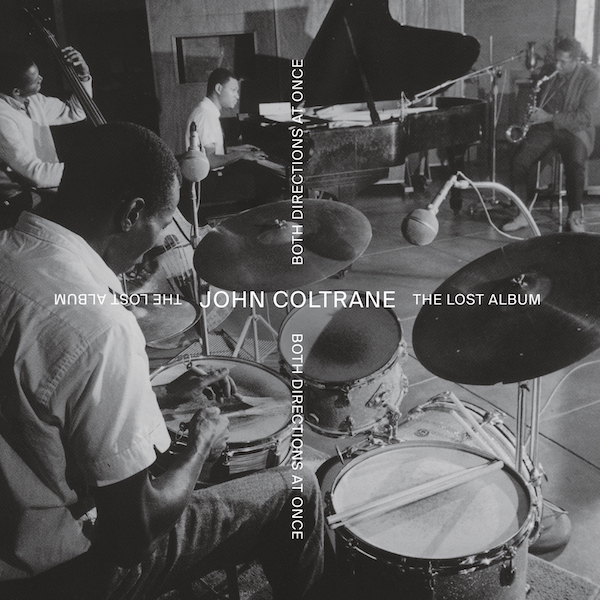
John Coltrane: Both Directions At Once: The Lost Album
(Impulse)

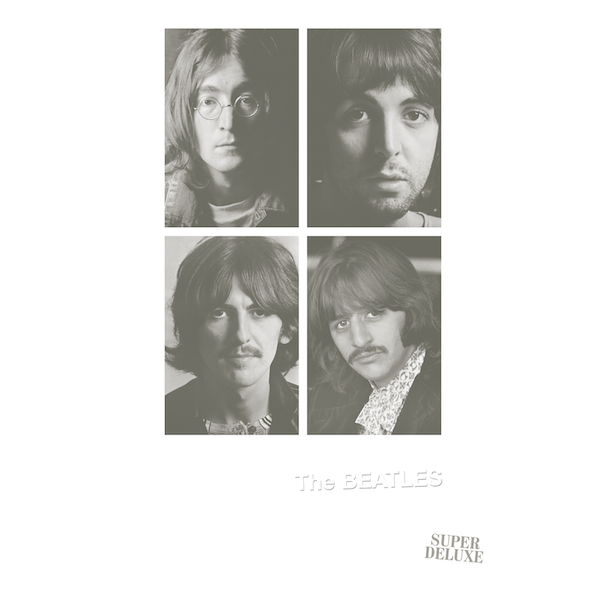
The Beatles: The Beatles And Esher Demos: 50th Anniversary Edition
(Apple/Universal)

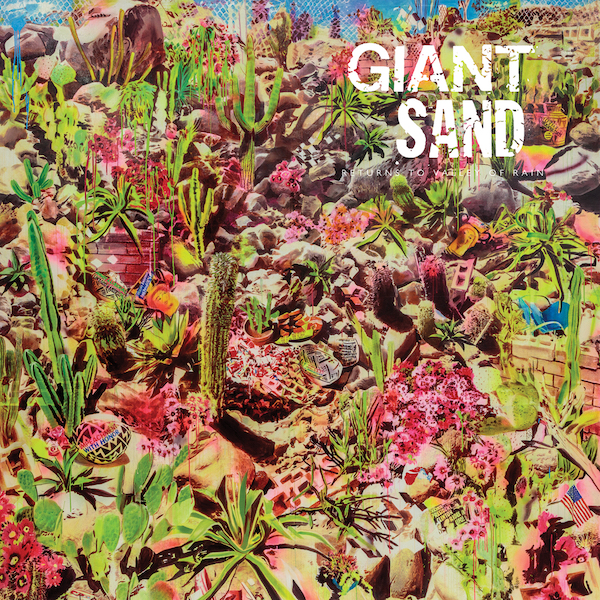
Giant Sand: Returns to Valley of Rain
(Fire)

VA: Basement Beehive: The Girl Group Underground
(Numero)

Bobbie Gentry: The Girl From Chickasaw County – The Complete Capitol Masters
(Capitol)

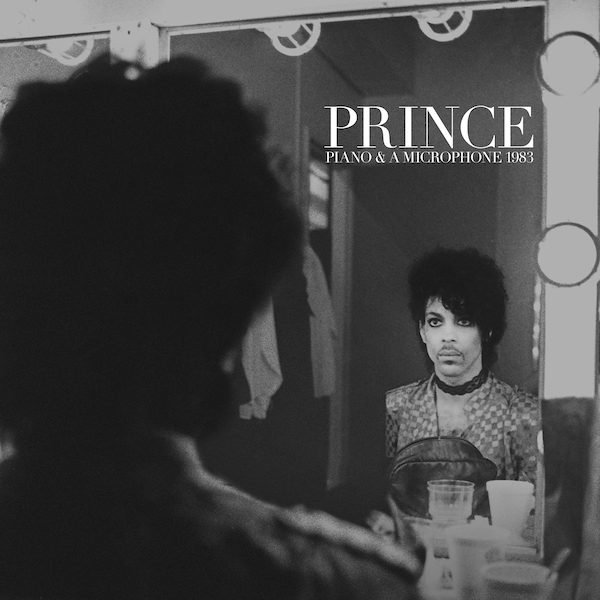
Prince: Piano and a Microphone1983
(Warner/Rhino)

Giant Sand Returns to the Valley of Rain: A Tribute to Howe Gelb

Howe Gelb, 2018 (Photo: Gabriel Sullivan)

Returns to Valley of Rain (Fire records) is a ferocious re-recording of Giant Sand’s classic 1985 debut album Valley of Rain. Originally recorded by Howe Gelb on vocals and guitar, Winston A. Watson and Tommy Larkins sharing drums duties and Scott Garber on bass, this incarnation of Giant Sand also consists of newer members Thøger T. Lund, Gabriel Sullivan and Annie Dolan.

The album holds a special place in the vast Giant Sand catalog, celebrated by both 25th and 30th anniversary reissues in recent years. When some of these old songs started to creep back into their setlist, it seemed appropriate to give the full album another shot with the proper Fender 30 amp, made only in the early 1980s, with the intention of making the album sound like it should’ve sounded. Says Fire Records about the process: “It was re-done for $400 and the same day and a half session time as the original. Scott Garber even drove up from Austin with his fretless to play so that the album is literally the originally line up for at least half of the songs. And yes, no pedal boards were used too.”

Giant Sand have never been easy to categorize, a fool’s errand that gets harder every passing years, as Howe Gelb and his various compadres have freely embraced new and disparate stylings into their seesawing sound. But whether labeled as roots rock, gospel, piano jazz, punk, latin or lo-fi or anything in between, the music always comes out with the identifiable signature of characteristic beatnik rhythms, shrewd lyrics and Howe Gelb’s warm, charismatic personality hovering above it all.

Gelb has travelled many a long and dusty mile to get to his place of prominence as an elder statesman of freewheeling Americana and “Erosion Rock”; a brand of music changing with the elements on a daily basis as nature intended, like Giant Sand, believing that continuous evolution should be a palpable element in music, as when songs were first handed over again and again, before the frozen capture of a recording studio.

I asked a couple of Howe Gelb’s numerous colleagues and friends over the years to share some insight on the enigmatic genius. Find out why Gelb is a smart cookie, how he embrace the random and eschew the obvious and why his modus operandi is best described as inspired chaos.

***

When we met…

M. Ward (singer-songwriter, and one half of She & Him):
It’s an honor to know Howe Gelb. He was one of the first real pals and confidants I had in this strange industry. I’m endlessly inspired by his piano-playing, his songs, his energy and everything in-between.

Giant Sand took me on my first-ever tour of Europe – in which I played my first and last performances of lap steel. Howe taught me that if you polish the song too heavily in rehearsals then you have polished the song too heavily in rehearsals.

M. Ward/press

Steve Wynn (The Dream Syndicate, The Baseball Project and more):
I first met Howe just moments after playing to the biggest audience of my life. It was Roskilde 1986 and The Dream Syndicate was a last-minute fill-in for The Cult. We arrived from Italy just about 30 minutes before we went on stage to 50,000 people. It started pouring as we finished and much of the crowd dispersed which was a shame since the next band was Giant Sand and they were fantastic. I watched them as the rain poured down and was instantly intrigued. Howe and I ended up talking well into the night, both exhilarated by the excitement of the evening.

Jason Lytle (Grandaddy):
I spent the first few of my “learning to write songs” years trying to sound like Giant Sand. The only problem is… I had never even heard Giant Sand or Howe Gelb. Someone I had crossed paths with in the early 90’s told me about a weird band that lived out in the desert in Arizona and was inventing their own brand of music that was sometimes punk, sometimes folky Neil Young and sometimes Thelonius Monk… and sometimes all of them even combined.

It set my imagination on fire.

It wasn’t until years later I finally bought a Giant Sand LP and was quite relieved it was as special as it was and kind of similar to what I hoped it would sound like.

John Parish (artist, producer and frequent Giant Sand collaborator):
The first Howe Gelb/Giant Sand record I worked on was Chore of Enchantment – my part of that album was recorded in Tucson in 1998, and it was my introduction to Howe’s method of working – best described as inspired chaos.

It was the first production session I did where I realized I had no control over events – the job became recognizing the inspiration within the chaos, and then making sure it was recorded, logged – before being edited down the line.

It is a challenging but exceedingly rewarding way of working, and pretty much unique to Howe.

Peter Holsapple (The db’s, Continental Drifters):
I met Howe through my friends Mark Walton and Robert Maché with whom I played in the Continental Drifters; my other bandmates Susan Cowsill and Vicki Peterson toured with Giant Sand promoting Center of the Universe. He seemed like a sweet guy, and if he was friends with my friends, well dammit I liked him too. I recorded a little on Glum when Howe was recording at Kingsway in New Orleans with Malcolm Burn and Trina Shoemaker. It was 1994, and it took a small slice of one afternoon.

KT Tunstall (singer and songwriter)
Howe co-produced my fourth LP with me, Invisibe Empire // Crescent Moon in Wavelab Studios, Tucson, AZ in 2012. Collaborating with him was a beautiful and formative experience for me. I had never worked with an artist-producer before, and he encouraged me to be much more experimental, less rigid about process and performance, and as we were recording live to tape, everything was much more focused on feel rather than technical perfection. I think the most memorable thing was that he invited me into his world – I stayed with him and his family during the recording, we took road trips with a guitar (one particularly memorable one to the Mexican border), so every aspect of that time was colored by his daily life, which is definitely colorful!!

As a person…

Steve Wynn:
Open. He embraces new people and new things very easily. He welcomes The Random although there is a filter and an aesthetic to the pieces of the puzzle he lays out before letting the mayhem begin.

Strangely enough, the biggest influence that Howe had on my life was teaching me to actually take control. I was still the kind of artist who just blindly went from gig to gig, record to record under the control of managers and labels, not questioning or fully understanding the process and finding myself quite helpless when the cracks in the system began to appear.

Howe was living a different life – under the radar and with the sense of adventure that I remembered from the earliest days. With his help, I reconstructed my way of making music (on the fly, on the cheap), touring (hitting the places most bands don’t go) and releasing (small, hungry labels and more frequent releases). It was an eye-opener and creatively stimulating and still is my way of working to this day.

Thanks, Howe, for teaching me to embrace the random and to eschew the obvious.

M Ward:
Howe is a shaman of music who needs no setlist nor traditional groundwork to launch his ideas into meaningful spaces. I recommend sampling all of his Giant Sand records and Howe Gelb solo records and then buying them all.

He finds uniquely rare and beautiful melodies that you can’t trace to anything prior – except maybe songs from his own prior experiments or maybe Thelonious Monk’s – and that makes you think where could this music possibly have come from except for somewhere in southern Arizona.

Peter Holsapple:
Howe is a smart cookie, and one is well advised to listen carefully to what he says. We are not cut from the same songwriting cloth by any means, but I respect and admire his expansive and adventurous creative soul, and l hear the earth and air directly when I hear his songs.

Have YOU ever seen another Howe Gelb? I haven’t.

KT Tunstall
Howe is a bona fide one-off. No-one else could do Howe Gelb. He is unpredictable; he genuinely doesn’t ever play a song the same way twice. He has a phenomenal creative brain; quite surreal, mischievous, very quick. Very funny. There is always a lot of laughing spending time with him, and you don’t always know why. It’s kind of chaotic working with him, but somehow he always manages to pull off often large scale projects, it’s most suspicious. Is he a wizard?? He’a a joy to watch perform, a craftsman and a lightning quick creator, making things happen in the moment, very exciting. One of my favourite moments in his live performance was when he would sit at the grand piano and say, in an impossibly low voice, “I think this thing takes batteries”. He would then throw a handful of 9volt batteries inside the piano.

John Parish:
Original, creative, inspiring, frustrating, spontaneous, late, curious.

John Parish, Photo: Maria Mochnacz

Jason Lytle:
The person that he is …is the musician that he is. That is…. I think he sounds like the sort of guy that he is. I do like it when that happens. It means you’re usually getting the real goods when you hear what he is working on/putting out there.

Steve Wynn:
I’ve said enough above about his lack of fear in accepting unexpected pleasures, random events, changes and following whatever path seems interesting from record to record, tour to tour and even from moment to moment. But none of that would work if it wasn’t for the fact that he’s a damn good guitarist and pianist. You gotta have the goods to back up the concept or else you’re left with nothing but a hollow manifesto.

KT Tunstall
I think Howe is very stubborn in his creative choices, and that protects him and his band from becoming creatively diluted. Lyrically, his material comes from such a singular place that it couldn’t be anyone else, so his signature sound and style will always be inimitable. He also has the most amazing baritone voice, and has found a delivery syle that immediately convinces you that what he’s conveying is worth listening listening to.

A fun fact at the end…

Peter Holsapple:
Howe taught me that time is elastic. I’ve never been the same since.

KT Tunstall
Howe likes orange things. For snacks, he would hold out a carrot and a tangerine and say, “want something orange?”

John Parish:
He likes to eat lunch at Cafe Poca Cosa.

Jason Lytle:
He came to my house for coffee one morning when I lived in Portland Oregon. I asked him if he would like sugar or agave (a plant based sweetener) in his coffee. He said: “I’ll take agave”. We sat outside with our coffees and he was surprised that what he was drinking was NOT coffee with a shot of tequila in it…. as he had a momentary lapse and mistook agave for some kind of tequila. I laughed …but was also impressed that he would show up at my home in the morning and be up for starting the day off with me over a coffee/tequila drink. (Sounds horrible by the way….hahaha!)

Steve Wynn:
I was living out in Marina Del Rey, California for a few years in the late 80’s. I had a mildewed little bungalow that was supposed to be destroyed at any moment (strangely enough, it’s still there to this day) so I was able to rent it cheaply while living just blocks from the beach in a neighborhood much fancier than my means. I didn’t have a car – a bike was enough in that beach community – but Howe offered me to take care of his hand-illustrated, graffitied grey Barracuda before he went on one of his lengthy tours. I loved it. Push-button transmission and everything. Only thing was that the rich neighbors didn’t agree. One morning I went to get the car and found a note under the windshield. “Please don’t park this car around here. It is an eyesore.” Ha-ha – if only they knew that the car belonged to and had been painted by an international rock star (and that it would show up as the cover art for a Leaving Trains record!)

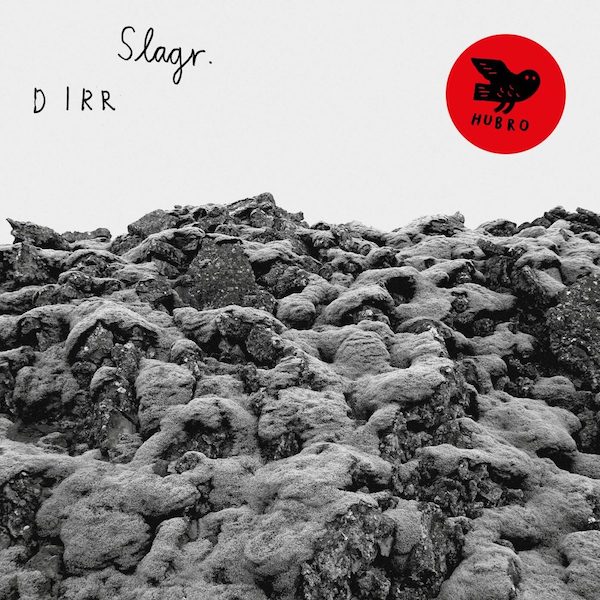
Slagr: Dirr


Slagr: Dirr
Hubro/Grappa, 2018

Sommeren 2018 ble den varmeste og tørreste i manns minne. Den ene dagen etter den andre med tropisk hete man helst kjenner fra langt sydligere breddegrader. Eng og åker visnet bort, vannet forsvant og vi nordboere la oss til en roligere væremåte, satte arbeidsoppgavene på vent og søkte etter noe så unorsk som skygge i den dirrende luften.

Dette kunne ikke Slagr forutse da de fullførte sitt fjerde album, mens snøen fremdeles dekket landet. Dirr ble et fast lydspor til denne underlige sommeren, men den har beholdt sin relevans også inn mot kjøligere tider og vil ganske sikkert være en følgesvenn inn mot en ny vinter. Dette er musikk for alle årstider, og for mange sinnsstemninger.

Slagr er fremdeles Anne Hytta på hardingfele og Amund Sjølie Sveen på vibrafon og glassharmonika, samt cellist Katrine Schiøtt som på sømløst vis har erstattet Sigrun Eng. Dere som kjenner trioen fra tidligere utgivelser eller fra deres liggekonserter, der musikken kan nytes i en høvelig posisjon og hypnagoge tilstand, vil ikke bli overrasket over det som serveres her. Dette er ikke en trio som radikalt søker bort fra sin etablerte kontekst fra plate til plate. Deres katalog pusles heller møysommelig sammen til å danne et helt særegent bilde, der utvikling og variasjon kommer i form av ørsmå detaljer, og der låtene og platene er brikker underordnet denne helheten.

Etablerte stikkord for å beskrive det de står for er fremdeles gyldige: mediterende minimalisme, filmatisk folkemusikk, atmosfærisk avantgarde. De tilhører ikke én tradisjon, og skal heller ikke presses inn i noen fasttømret boks. Slik sett er det naturlig at deres siste plate kommer ut på den sjangerfrie kvalitetsleverandøren Hubro. Slagr er frigjort fra det åpenbare, og selv om de definitivt er jordet i noe ur-aktig og bestandig, henvender de seg vel så mye til drømmenes verden og det abstrakte.

Dette gjør de uten å lage noe i nærheten av «vanskelig» musikk. Slagr har alltid vært en ren nytelse for sjel og sinn. De komponerer særdeles vakre melodier, saktegående og dvelende, som kan nytes både i konsentrert lytting med gode hodetelefoner eller som bakgrunnsakkompagnement til den frie natur. Slagr blir liksom en naturlig del av deg og dine omgivelser.

Platen er innspilt i Sofienberg kirke, en omgivelse som passer platen. Det er høyt under taket her, en romlig klang som kommer til sin rett enten de tre spiller sammen eller står fram med solospill. I likhet med deres foregående plater er det ikke lett å trekke fram enkeltspor som skiller seg fra andre, for igjen har de laget en plate som bør spilles i sin helhet, slik at sporene høres i sammenheng.

Dirr er delt inn i 8 stykker, alle med korte navn som “aur”, “eir” og “hel”. Titlene angir en klar norsk og nordisk kulturarv, men musikken i seg selv beveger seg på tvers av både landegrenser og tidsepoker. Det har gått inflasjon i begrepet ‘tidløst’, men skal man først ty til det, så er Slagr den rette mottaker. Det er rart med det: Med sitt lavmælte tonespråk og minimale estetikk evner Slagr igjen å åpne ukjente dører og male store bilder, mens tankene blir til drømmer og drømmene blir til musikk.

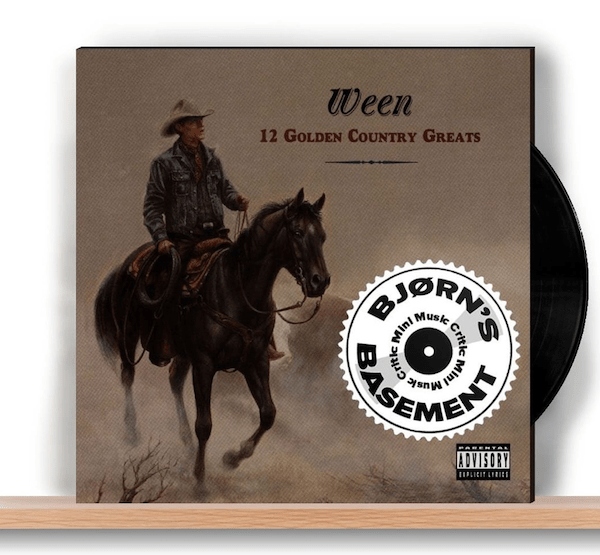
Ween: 12 Golden Country Greats


Ween: 12 Golden Country Greats
(Elektra, 1996)

Wonderful Ween. So eclectic, so unpredictable and always great. Gene and Dean Ween (real names Aaron Freeman and Mickey Melchiondo) are to music what the Coen Brothers are for the movies; stealing and lending from a wide array of cultural references and creating something completely their own.

Ween started out in the mid 1980s and by 1996 they already had an astonishing catalog under their belt, including their major label debut Pure Guava (1992) and the formidable magnum opus Chocolate & Cheese (1994). Their previous albums were all rollercoasters of various styles and influences, but on 12 Golden Country Greats they decided to focus their sound on good ol’, classic country music, from honky tonk and countrypolitan to folk.

To do things right they even went down to Music Row and brought in a bunch of legendary Nashville session musicians and hired Ben Vaughn to produce. The final result is 10, not 12, golden country songs that are musically superb and work tremendously well beyond just being a parody of the genre by two college boys from the Eastern seaboard. Yes, their sense of humor and vulgarity aren’t for everyone, yes they fool around with all the Nashville clichés in the book, but overall 12 Golden Country Greats is one of the best country albums of the 1990s.

Featuring some of the Ween’s finest songs, including “Japanese Cowboy,” “Help Me Scrape the Mucus off My Brain” and “You Were the Fool,” it’s an album hardcore country fans will appreciate, and also an album that will turn non-believers over to the genre.

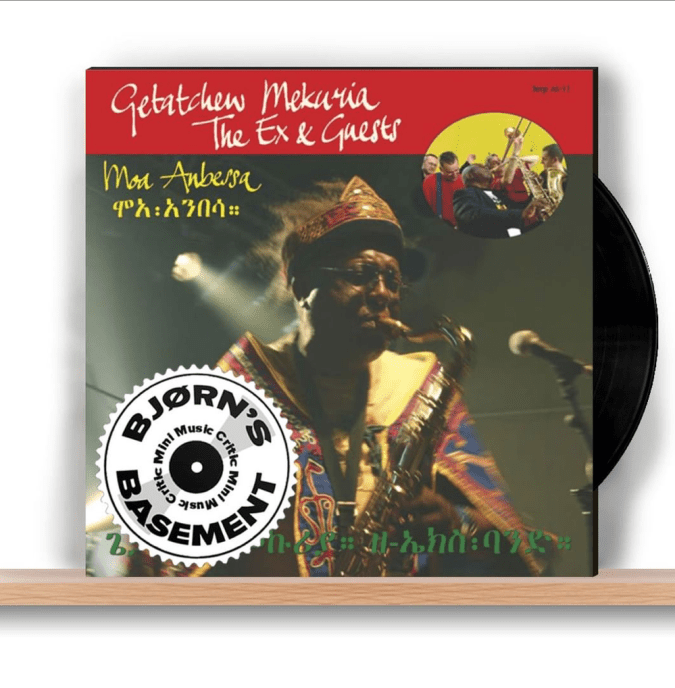
Getatchew Mekuria & The Ex: Moa Anbessa


Getatchew Mekuria & The Ex: Moa Anbessa
(Terp, 2006)

What happens when free-minded Dutch anarcho-punks meet a 70-year-old Ethiopian jazz saxophonist? Well, in this case, pure magic; or as Terrie Ex calls it: “A tribute to the free spirit.”

The story goes that the members of The Ex were longtime fans of the Ethiopiques re-release of the 1972 album ‘The Negus of Ethiopian Sax,’ where the big sound and memorable vibrato of Getatchew Mekuria (1935-2016) caught their immediate attention. When the fabulous and open-minded punk veterans were about to celebrate their 25th anniversary in 2004, they had the wild idea of inviting Mekuria to the party. So, they went down to Addis Ababa, tracked him down and explained their story. Mekuria didn’t think twice. He joined the band for his first travels outside of Ethiopia, and he was on fire! The event was a massive success, and the combo agreed to record together.

Recorded partly in the studio and partly live, a number of traditional, mainly Ethiopian, songs were rearranged by The Ex and guests, including a horn section featuring Xavier Charles (Silent Block) and Brodie West (Deep Dark United), and Mekuria flexed his sax like there was no tomorrow. Titled Moa Anbessa, the result is completely dazzling: a fiery and joyous mix of funky Ethio-jazz and sharp, authoritative post-punk vibrating with soulful energy and warmth. So much more than your average “world fusion,” this is musical exchange at its very best. ‘Moa Anbessa’ is strongly recommended for all “free spirits” out there.

Put it on, don’t resist the urge to groove, dance or sing along.