Songs: Ohia: Magnolia Electric Co.


Songs: Ohia: Magnolia Electric Co.
(Secretly Canadian, 2003)

Jason Molina was the best songwriter of the 2000s, and Magnolia Electric Co remains not only his finest work, but stands as a beacon of modern American storytelling. Fifteen years down the road, this album still burns with an eternal flame. It begins dim: “The whole place is dark/Every light on this side of the town/Suddenly it all went down/Now we’ll all be brothers of the fossil fire of the sun/Now we will all be sisters of the fossil blood of the moon,” and it ends as the “lonesome whistle whine.”

The lyrics are dark, the songs heartbreakingly expressive, and the including some wonderful guest vocals by English singer-songwriter Scout Niblett and country artist Lawrence Peters. It’s also a transitional album, on the way from Molina’s lo-fi origins under the moniker Songs: Ohia to a fuller, working-class band sound as Magnolia Electric Co. Whatever he named his projects, Molina had a tight grip on the American music mythology, which he closely intertwined with his Rust Belt surroundings.

Such were his personal demons part of the geographical landscape he knew so well: the abandoned factories, the dismal towns, the taste of gasoline and the odor of hopelessness, as he was writing about a people, a culture and a landscape torn between rural downfall and post-industrial struggle.

Jason Molina dug deep in the darkest corners of the human mind. He wrote 21st century blues about crossroads and back highways, shadows and ghosts, the moon above and hell below. He unveiled the loneliness inside our hearts and the emptiness that surrounds us. And he did so with a clear vision and a beating heart that bled clear through his shirt and dripped into ours.

In March 2013, the world lost a original voice – and his peer has yet to be found.

John Zorn – Bar Kokhba: Lucifer


John Zorn – Bar Kokhba: Lucifer
(Tzadik, 2008)

Ranking among the most enjoyable and popular projects from the highly productive avant-garde composer John Zorn are his works with the Bar Kokhba ‎Sextet, made up of the Masada String Trio – violinist Mark Feldman, cellist Erik Friedlander and bassist Greg Cohen – and featuring Mark Ribot on guitar, Joey Baron on drums and Cyro Baptista on percussion. Needless to say, this is a brilliant cast of musicians from the New York Downtown scene performing some of the most melodically rich and accessible music in Zorn’s wildly eclectic catalog.

Lucifer: Book Of Angels Volume 10 is a laidback and gentle journey of traditional Jewish harmonies, klezmer jazz and classical chamber music with smooth flavors of spaghetti westerns, latin rhythms and surf rock.

There’s not a dull moment here. This album flows like a lush breeze into an eternal sunset.

The Record Collection: 1989 – 2

R.E.M. | Life’s Rich Pageant | I.R.S, 1986 |

The fourth studio album from R.E.M. was my first encounter with the band. I bought it on cassette in 1986, and the LP version three years later. It’s still the favorite album from a band I never stopped adoring. Characterized by a cleaner production than on their previous efforts (thanks to Don Gehman), a punchy sound while maintaining their enigmatic presence and jangly roots. And of course, it has some of the band’s greatest songs, including the killer opening trio of “Begin the Begin”, “These Days” and “Fall On Me.” I wish I still was in college, bury magnets, swallow the rapture.

The Beasts of Bourbon | The Axeman’s Jazz | Big Time 1985 |

A super supergroup from Australia, including members from Hoodoo Gurus, The Johnnys and of course The Scientists (Kim Salmon). This is their debut album, originally released down under a year before. With a mix of swamp rock, psychobilly and country blues, somewhere between The Cramps, Nick Cave and Hank Williams, this here beast was created during one particularly dark and gloomy evening in Sydney. The opening track and leadoff single, where singer Tex Perkins does a convincing take on Leon Payne’s classic murder ballad “Psycho” still remains one of the highlight on an album packed with stories about death and misery. The Beasts of Bourbon were confronting, abusive and filled with desperation and despair. This album gives you plenty of it all. Pour yourself a glass, turn the lights down low and join this band along the lost highway and into the night.

American Music Club | California | Frontier 1988 |

‘To the left, a beautiful California landscape
Dead ends in the sky
And to the right, beautiful mountains rise
High and dry
Another futile expression of bitterness
Another overwhelming sensation of uselessness’

Mark Eitzel is one of the great American storytellers and voices; deep, stoic and soulful, he fleshes out personal anguish and wry observations with an unmatched eloquent pen. American Music Club lived up to their name and incorporated many different styles into their music over the years, always gravitating around Eitzel’s magnetic presence, and on California they played it all out so extremely well. There is a barren feeling deep inside this golden landscape, where dreams meet the sea, a sense of sadness, longing and hopelessness so wonderfully conveyed on tracks like “Last Harbour”, “Western Sky”, “Laughingstock” or “Firefly”, but all conducted with elegance and beauty. Into a story not only about inner demons, or the state of California, but of America itself.

The Band of… Blacky Ranchette | Heartland | Zippo 1986 |

When Howe Gelb got the country itch, he let Giant Sand rest for a while, saddled up Blacky, teamed up with some of his finest compadres and set out on the western trails. The first Blacky LP came back in 1985, ‘Heartland’ followed a year later. Both albums are a testament to the sparkling relationship between Gelb and Rainer Ptacek, two creative geniuses and close friends until Rainer sadly passed away in 1997. Blacky pursued a more pure country sound than the Giant Sand moniker could provide, but always bumped into the usual detours that makes Howe Gelb’s music so irresistible. This is a “lost” Americana classic way before that became a hip term.

Drivin’ N’ Cryin’ | Mystery Road | Island 1989 |

Drivin’ N’ Cryin’ masterfully merged Southern indie with Southern hard rock and country, and managed to unify it all into a stirring hot cocktail under the guidance of singer and main songwriter Kevn Kinney. Their two previous albums are both wonderful, but Mystery Road shines with confidence, power and the sharpest set of tunes in their entire album catalog. The country/folk songs are particularly strong, “Ain’t It Strange,” With the People,” “Peacemaker,” and of course the wonderful “Straight to Hell” are classics in its own right and also remains a missing link between Gram Parsons and Uncle Tupelo and the whole Americana resurgence of the 1990s. But Drivin’ N’ Cryin’ always had the urge to rock off too, Aerosmith style (“Toy Never Played With,” “Wild Dog Moon”) and ‘Mystery Road’ gives you plenty of it all. This is an album you can drive and cry to.

Pixies | Surfer Rosa | 4AD 1988 |

This is one of my definitive favorite albums of all times, and both Surfer Rosa and Doolittle are on my Top 10 Album List of the 1980s. Pixies was brand new to me when I bought ‘Surfer Rosa’, on a warm springs day, and it became the soundtrack for the summer when I turned 17. How fortunate! I believe the combination of their super catchy songs and disturbing lyrics (“He bought me a soda and he tried to molest me in the parking lot”, “I got no lips, I got no tongue, where there were eyes, there’s only space”, “I’m the horny loser”) somewhat resonated to a teen life being equally carefree and confusing. Needless to say, all these songs here are classics in my book, and every time I put on the album, not as often as before I have to admit, but it’s just as rewarding as in 1989, I’m being transferred back to this time in my life. So grateful Pixies was there to guide me into adulthood. PS: On the back cover, I still see the fingerprint marks from the day I bought it. I hated the stains back then, now it’s almost like a stamp of remembrance, something that would never occur in the digital world. There’s a beauty in that as well.

The Feelies | Only Life | A&M 1988 |

Some discovered The Feelies on their 1980 debut album, and I guess that must’ve been a thrilling experience. I bought my first Feelies-album on a hunch (I believe) some time in 1989. Their legacy didn’t matter to me, it was all about the moment. In hindsight, Only Life might not be considered such a seminal album, but to a perpetual nervous teen it was mind-blowing and just the best thing ever. I was well into jangle pop at the time, but was starting to look out for something with more punch, and The Feelies served just the right mixture of restless indie charm and groovy rhythms. As a huge fan of all kinds of horror movies, I remember how the cover art appealed to me big time, imaging these five fellas standing in front of Amityville, Elm Street or whatever VHS flick I was watching at the time. I guess that is what I still find fascinating; the dreamlike, hypnotic sounds of innocence and the tempting undertows towards something darker. I never tire of The Feelies, and I’ll never stop listening to this album.

Dinosaur Jr. | Bug | SST/Blast First 1988 |

Remember the last time you heard a new album and instinctively knew it would not only blow your brains out in the moment, but also mark the beginning of a life long relationship? An album of such impact that you just had to play it over and over again, share its brilliance with anyone with the slightest of interest and memorize every word and note? Not too often these days for my part, but hopefully youngsters still do, it’s a glorious feeling. I went and saw Dinosaur Jr in this tiny club after buying Bug in the summer of 1989, holding my under-aged breath while sneaking in, squeezed in right by the speaker and witnessed a loud, loud mess of guitar insanity, the songs hardly recognizable, buried deep below endless layers of feedback and noise. My ears were ringing for weeks afterwards. Bug is also a noisy mess, but with this brilliant mixture of emotional vulnerability, slacker coolness and full on assaults that makes it such a classic. “Freak Scene” is the obvious key track, a super catchy indie anthem if there ever was any. I was not the only kid yelling out lines like these on a frequent basis, but it was like J spoke directly to me:
“Sometimes I don’t thrill you
Sometimes I think I’ll kill you
Just don’t let me fuck up will you
’cause when I need a friend it’s still you
What a mess” ‘Bug’ is a lot more thank “Freak Scene” though, “They Always Come”, Budge” and “Let it Ride” are equally addictive, and I’ve always adored hazy slow burners like “Yeah We Know” and “The Post” just as much. One of my fondest memories is tied to the sludgy, epic finale of “Don’t.” Remember how I occupied the DJ booth at our weekly youth club disco and blasted it on max volume, giggling at the horrified faces in front of me. Oh the days of joy and guitar noise.

Black Sun Ensemble | s/t | Reckless 1988 |

Much of the music from the American southwest is rooted in the dusty ground with the barren landscape as a majestic backdrop, but some went even further. I was deep into many of the bands being labeled as ‘desert rock’ at the time, but Black Sun Ensemble was something else indeed. There is an undeniable flavor of the frontier twang in their sound, but as they reached for the sky, they also discovered other horizons, including ritual music, Medieval patterns, space rock and Indian raga. This album is a collection of some of their early hard-to-get cassette releases (‘Sapphire Sky Symphony’, ‘Raga Del Sol’) and a couple of new tracks, and works as a great introduction to one of the many overlooked bands from this time and place. It is a magic carpet ride of hypnotic cosmic desert psychedelia centered round the intricate guitar work of Jesus Acedo (1962-2013), imagine a mix of John Fahey, Jimi Hendrix and Ravi Shankar, instrumental explorations of the outer world and of the inner mind. It’s a trip alright, this is Country & Eastern at its finest.

The Leaving Trains | Transportational D. Vices | SST 1989 |

The Leaving Trains came out of the same vital Los Angeles scene that spawned likeminded artists like The Gun Club, The Flesh Eaters and The Dils. They were a wild ride in the glory days and left behind a string of great albums in the latter half of the 1980s ranging from rambling punk frenzy to introspective, self-loathing material. Transportational D. Vices leans towards the former, with its hard-hitting down-and-out tunes mostly between 1-2 minutes long (including a cool cover of Urinals’ “Black Hole”). Falling James Moreland was the only steady member in a band with a constant revolving lineup, and his keen melodic sense always shines through their ramshackle sound. Falling James is quite a story by the way, notoriously known for his crossdressing appearances, a super brief marriage with Courtney Love, name-dropped by Tom Waits (“Gun Street Girl”), and now retired from music he’s a writer for L.A. Weekly. ‘Transportational D. Vices’ is produced by Earle Mankey (the Weirdos, Runaways, Concrete Blonde, The Three O’Clock, The Long Ryders) and the album cover is a photo of Howe Gelb’s very own ’66 Barracuda. Such is the life of Falling James, packed with fame and tragedy, peculiar incidents and surrounded by cult figures, living in the gutter and looking at the stars. Just as the songs he made.

Karen Dalton: In My Own Time


Karen Dalton: In My Own Time
(Paramount, 1971)

The story of Karen Dalton is not paved with gold or glitter. But her music continues to amaze and inspire new generations of music lovers.

Dalton didn’t write much of her own music – acting more as an interpreter than a songwriter – and she only cut two albums during her lifetime: 1969’s It’s So Hard to Tell Who’s Going to Love You the Best and 1971’s In My Own Time. Raised in Oklahoma and Kansas, Dalton entered the Greenwich Village folk circuit in the early 1960s, where she befriended the likes of Fred Neil, Tim Hardin and Bob Dylan. In My Own Time was recorded in Bearsville Studios, Woodstock with a great group of musicians and a wonderful set of songs. But it failed commercially, and Dalton drifted away and faded into obscurity, living a rough life, partly on the streets, fueled by her drinking and drugs habits. She passed away due to AIDS related illness in 1993 at only 55 years old.

Often dubbed “a folk singer’s answer to Billie Holiday,” Dalton’s hauntingly beautiful and bluesy voice matches her wide open musical approach, blending folk, country, soul and jazz, exemplified here with George Jones’ “Take Me” and Holland-Dozier-Holland’s Marvin Gaye hit “How Sweet It Is.” Highlights include the stunning opener “Something On Your Mind” and the dark, mournful and sparsely accompanied folk classic “Katie Cruel.” Karen Dalton was a transcendental singer, leaving no listener untouched.

Such a shame there were so few of them while she still was alive, in her own time.

Terry Callier: What Color Is Love

In the early 1970s, Chicago singer-songwriter and jazz guitarist Terry Callier cut three astonishing albums for the Chess Records subsidiary Cadet: Occasional Rain and What Color Is Love (both 1972), and I Just Can’t Help Myself (1974). Here Callier fully displays his masterful ability to intertwine folk, rock, soul and jazz, and What Color Is Love shines particularly bright among the three.

This is a kaleidoscopic album of timeless beauty and enduring quality – sublime orchestration, funky grooves and lush arrangements add further texture to Callier’s rich, mellow voice and exquisite songwriting. In 2012 Terry Callier passed away at the age of 67, and despite being re-discovered by the British acid jazz scene in the early ’90s, he never really got the recognition he deserved.

He ranks up there with (his childhood friend) Curtis Mayfield, Isaac Hayes and Gil Scott-Heron, and on ‘What Color Is Love’ he outshines them all. Just put on the epic opener “Dancing Girl” and check out for yourself.

The Record Collection: 1988 (51-60)

The album collection in chronological order from when it was bought. Revisited one at the time. Part 5.

Sonic Youth | Daydream Nation | Blast First 1988 |


Bought in late October 1988, when this was brand new I guess. I knew Sonic Youth a little bit from before, had been scared off by ‘Confusion is Sex’ and fell in love with ‘Sister’ earlier in the same year. But this is still my gateway album into a band I’ve never tired from. Sonic Youth will forever be one of my definitive favorite bands. ‘Daydream Nation’ was a mind blowing experience back then, and it’s just as good today, 30 years later, ranking as one of the true masterpieces of not only 1980s guitar rock, but as a beacon in American underground culture.

R.E.M. | Green | Warner 1988 |


Is ‘Green’, their major label debut, the last great album of R.E.M.? I don’t know, I’m well aware of the enormous success they were about to enjoy later on, but for me, this was actually the final album I bought and enjoyed from start to finish from a band that was tremendously important to me. “World Leader Pretend” will forever remain an eternal favorite, but the whole album is just gorgeous. A soundtrack to the indian summer of 1988.

Divine Horsemen | Devil’s River | New Rose 1986 |


A Lee & Nancy kinda dark cowpunk romance set in the LA gutter, based on equal love for punk rock and honky tonk; Divine Horsemen are one of the true alt.country pioneers – but arrived a bit too early to cash in on the thing. ‘Devil’s River’ is their finest moment, and it has aged well too. Chris D and Julie Christensen was a mighty fine unit back in those days. And hey, it’s engineered by Mr Brett over at Westbeach.

Black Flag | My War | SST 1984 |


How much damage did this album cause for a young innocent kid, unaware of the sludgy nightmare on the b-side? I was already a fan of early Black Flag, “Six Pack”, TV Party” and such stuff, but this was a whole other ballgame. Little did I know that ‘My War’ became the gateway album to my grunge phase, right around the corner. The Pettibon cover is brilliant, too.

Green On Red | Green On Red | Down There/Enigma 1982 |


The musical roots to this EP can be traced back to the 1960s and bands like the Seeds and Electric Prunes, infused with the nervous tension of the early 1980s. ‘Green On Red’ is a dense masterpiece from a band in its very infancy, a night road trip from the Arizona desert to the backstreets of Los Angeles, where our protagonists evolves from youthful naivists to dark-eyed realists. “I made a pact with the devil that night” snarls Dan Stuart, while Chris Cacavas clings on to a steady organ drone. This might be a prediction of greater albums to come, but Green On Red never captured this almost dreamlike state of past and present ever again. I love it.

Thin White Rope | Red Sun EP | Demon 1988 |

“Red Sun” is the one majestic centerpiece in a catalog full of them, and it’s still the perfect song for those sweltering 100 degrees summer evenings on the porch. The grinding cover version of “Some Velvet Morning” is also worth mentioning, those guitars stems from a whole other solar system. Such a great EP, such a great band.

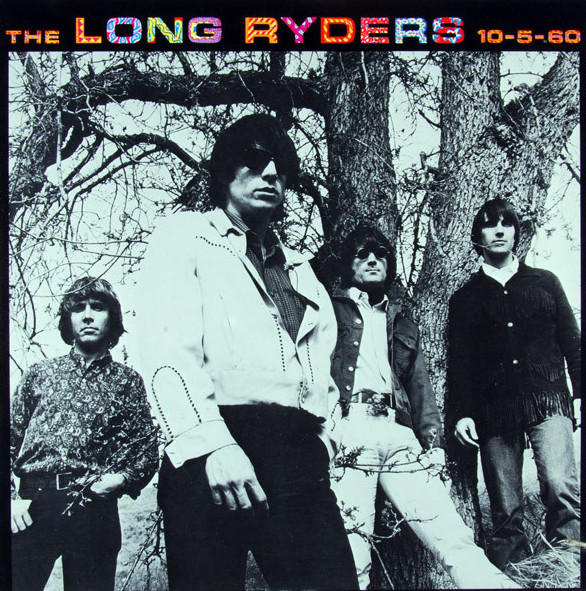
The Long Ryders | 10-5-60 | Zippo 1987 |


Six wonderful tracks of paisley power, where ‘60s folk rock meets ‘80s garage revival. “Born To Believe In You” was my favorite back then, and it still is.

True West | Drifters | Zippo 1984 |


The combination of chiming guitars, rootsy sound and retro-friendly jangle pop sure is irresistible. True West did it better than most of their peers, and ‘Drifters’ is their masterpiece. Especially side 2, including some of their most memorable songs, “And Then the Rain”, “Morning Light” and others, is standout. ‘Drifters’ is a mighty fine album.

Lee Clayton | Naked Child | Capitol 1979/1983 |


Where the heck is Lee Clayton today??

Motörhead | Ace Of Spades | Bronze 1980 |


Everything is cool about this album. I believe I bought it – in the fall of 1988 – mostly because of the cover art – I mean, what’s not to dig about those three mighty grim lookin’ cowboys posing in the desert. But the songs are killer too, of course. Timeless on all levels.

The Record Collection: 1988 (31-40)

The album collection in chronological order from when it was bought. Revisited one at the time. Part 3, Spring 1988.

Jonathan Richman and the Modern Lovers | It’s Time For… | Rough Trade 1986 |

This album is summer to me. To be just about sixteen and hear “Just About Seventeen” for the first time was just about right on time. I immediately fell for Richman’s naive and almost childlike qualities, but behind the immediate charm are somber songs (“Ancient Long Ago”, “When I Dance”, “The Desert”) with enduring qualities lasting way past being seventeen and well into adulthood. This album still evokes the endless summer days of youth.

The Legendary Stardust Cowboy | Rock-It To Stardom | Big Beat 1985 |


Yee-haw, this is a way out rodeo ride from the cattle ranch to outer space and back by the one and only Legendary Stardust Cowboy from Lubbock, Texas. “Paralyzed” is the obvious novelty hit here; jaw-dripping hilarious and remarkably addictive. The Ledge made some wild rockabilly/psychobilly stuff back in the days, sometimes out of tune – “Who’s Knocking On My Door!” barely holds together and “Fly Me to the Moon” is, well, let’s say a bit weirder than Sinatra’s smooth version. “I Walk a Hot Wind” wouldn’t be totally off on a Cramps-album, and so it goes. Rock-it to Stardom is one helluva joyride even though it’s a bit overwhelming to digest all at once. Bowie was a fan and a friend, and supposedly invented Ziggy Stardust based on this here cowboy. The Ledge is still out there; whooping and a hollering to the moon.

Various artists | Don’t Shoot | Zippo/Demon 1986 |


Americana or alt.country were not frequently used terms when these (mainly) L.A cowpunks came riding into town. This collection serves as a great introduction to the scene, including core figures from bands like The Long Ryders, Green on Red, The Rain Parade, Giant Sand and many others doing a fine mix of covers and originals. Danny & Dusty kicks the whole thing off with previously unreleased “Bend in the Road”, the outlaw brotherhood anthem is still the highlight from an album filled with delightful neon dust from the sunset highway.

Dead Kennedys | Fresh Fruit for Rotting Vegetables | Cherry Red 1981 |
Dead Kennedys | Plastic Surgery Disasters | Alternative Tentacles 1982 |
Dead Kennedys | Bedtime For Democracy | Alternative Tentacles 1986 |
Dead Kennedys | Give Me Convenience or Give Me Death | Alternative Tentacles 1987 |


In the summer of 1988 a friend of mine sold his LP’s when switching over to CD. I couldn’t afford buying a whole lot, but I managed to get hold of four albums by Dead Kennedys and almost completed their catalogue in one big swoop. Hit packed Fresh Fruit… and Give Me Convenience… became instant faves, and turned me on to a long and lasting relationship with not only Jello Biafra but to all the tentacles of the Alternative Tentacles universe. I learned a lot from the Kennedys, approving their anger and enjoying their satire. In the era of the Trump Empire a band like Dead Kennedys is sorely missed, even though much of their socio-political message is just as relevant today.

The Replacements | Pleased To Meet Me | Sire 1987 |


The transition from being a underground punk to gain mainstream fame reached its zenith with ‘Nevermind’ topping the charts in the early 90s. But the road to Nirvana started some years before, and The Replacements is a prime example of this journey (they even got their own “Never Mind” here). This is of course mockingly illustrated with the cover art, and in the music. Without losing sight of their punk roots in Minneapolis, this is the sound of a band growing up and – under the supervision of Jim Dickinson in Memphis – entangling deeper and wider than ever before. The Replacements were never about perfection, faults and flaws played an integral part of their sound and was something they built their entire recording career on. But they never sounded so imperfectly perfect as on Pleased To Meet Me. I’m still listening, looking at the stars and dreaming of the skyway.

Motor Boys Motor | Motor Boys Motor | Albion 1982 |


Taking their name from Joe Strummer’s 101’s song, Motor Boys Motor made just one album before guitarist Bill Carter and bassist Chris Thompson formed the Screaming Blue Messiahs. They were children of the pub rock craze, spiced up with avant rock influences (Beefheart, Pere Ubu) and R&B/blues roots. Some cool moments here and there, some silly ones (“Here Come the Flintstones”), they never really surpass the killer opening track “Drive Friendly” and never got quite as hazardous as the striking cover art.

deLillos | Suser avgårde | Sonet 1986 |


Det må ha vært sommeren 1985. Jeg hørte fast på Ungdommens Radioavis på den tiden – mediemangfoldet var noe begrenset – og den sommeren spilte de låtene fra rockemønstringen på høy rotasjon. Jeg husker ikke så mange av de andre finalistene, men “Siste sommerferiedag” med deLillos festet seg umiddelbart – den traff nok en dypt iboende melankolsk nerve – og ble min favorittlåt det året. Jeg satt hjemme og ventet på at den kanskje skulle komme, hver lørdag tror jeg det var, for det var ingen andre muligheter enn å sitte foran radioen og vente. Litt senere hørte jeg «Johnny Fredrik» og så viste Halvsju videoen til “Tøff i pyjamas”, og sammen med Jokke ble deLillos mitt første og største norske favorittband. Suser avgårde er den eneste LP-platen i samlingen som jeg faktisk kjøpte først på CD – i 1987 må det ha vært, deretter på nytt igjen på LP året etter. Uansett format, ‘Suser avgårde’ er en fantastisk bra plate, fri for dødpunkter, som hver gang gjenskaper følelsen av ungdom og sommer, der naivisme og uskyld møter gryende voksenalvor og usikkerhet. Jeg var allerede godt kjent med musikken til R.E.M, The Chills og Jonathan Richman, og det var først og fremst i denne musikalske tradisjonen deLillos hørte hjemme i mitt hode. Men de sang på norsk, og de talte til meg uten omveier. Det var ikke noe jeg heller ville bli enn en forsoffen student som flanerte langs brosteinslagte bygater, gå på fester med søte piker og drøssevis av vinkasser, ja bare suse avgårde inn i livet.

The Record Collection: 1988 (20-30)

The album collection in chronological order from when it was bought. Revisited one at the time.

The Dream Syndicate | The Days Of Wine And Roses | Closer 1982 |


I vividly remember buying this LP – the French pressing – on my first ever record fair, early in 1988. I was well aware of The Dream Syndicate at the time, going back to Out of the Grey that I’d bought on cassette a couple years before. I adore all of Syndicate’s albums, but I always find myself returning to this here baby. The Days Of Wine and Roses must’ve been an anomaly in 1982, way ahead and out of tune with the sign of the times it marks the return of GUITARS in American rock. This is a tour de force of loud, noisy, abrasive, distorted, tickling guitars, cool Velvet vibes and an almost free jazzy approach to the songs. They are all awesome, from creepy beasts like “Halloween” (oh, when those guitars kick in) and “When You Smile” to full force freak outs (the kosmisch title track, “Definitely Clean”) and instant college rock anthems (“Tell Me When It’s Over”). In short, this is a cornerstone in 80’s American guitar rock that set a standard hardly anyone has managed to achieve ever after. Stories and words are here and gone, but this album hasn’t faded at all.

Wall of Voodoo | The Ugly Americans In Australia | I.R.S. 1988 |


I’d been drawn to the stoic super-American voice of Stan Ridgeway for some years when the Wall Of Voodoo live album hit the shelves in 1988. I guess it felt like a quite unnecessary purchase back then, I haven’t given it too many spins, and this live LP doesn’t really reveal new magic 30 years down the road. But, there are some great explorations of sci-fi new wave gone country here, horseback space travel style. “Far Side Of Crazy” and “Mexican Radio” are obvious favorites, and the version of “Ring Of Fire” is pretty dope. Never saw them live, but I believe this LP captures the band in prime shape – and the sound quality is not too bad either. However, when I feel like listening to WoV I rather pick up one of their awesome studio albums. Think I’ll do just that right now.

The Sex Pistols | Never Mind The Bollocks | Virgin 1977 |


One of remarkably few albums in my LP collection bought on its historical merits rather than being new and fresh. As a matter of fact Never Mind the Bollocks was only 10 years old then, comparable to buying a 2008 album today, but back in those days this was an old school dinosaur from a whole other time. Never a huge fan of British punk in general, and finding Johnny Rotten’s voice mostly annoying, I have to acknowledge the band’s unquestionable qualities and their nose for efficient songwriting. No fillers here, just pure punk catchy as hell. No need to go in depth on its historical significance, just one of those albums you need to know I guess. Glad I turned on as a kid, even though I rarely listen to it.

Giant Sand | Storm | Demon 1988 |

Storm was my introduction to the wondrous world of Howe Gelb and his Giant Sand, and what has now turned out to be a 30 year long relationship. Giant Sand have always been all over the map, difficult to pigeonhole, unmistakable unpredictable and remarkably recognizable. I’m so thankful for stumbling down their desert rabbit hole, and it all started with Storm. It obviously holds a special place in my heart. The songs range from Neil Young style environmental concern, a cover of The Band’s “The Weight”, straight out honky tonk, ragged country rock (“Town Without Pity”), country gospel (“The Replacement”) and dusty piano ballads (my personal fave “Was Is a Big Word”) – on Storm Howe Gelb started to shape a signature style of songwriting unmatched by anyone.

Hasil Adkins | He Said | Ace/Big Beat 1985|


Wild, wayward and hell-bent, the one man band of Hasil Adkins exploded like a bomb in the ears of this here kid, proving rock n’ roll was something wilder and primitive, more untamed and way out there than your parents Elvis albums. This is the raw sound of a one man rebellion against conformity and boredom. “She Said” being the classic tune here, I also tuned into the even more awkward and freaky “We Got a Date.” They just don’t make em like Hasil anymore.

Rave-Ups | Town + Country | Fun Stuff/Demon 1985 |


Americana was not a frequently used term in 1985, but plenty of bands played boots ‘n roll before Uncle Tupelo et al pushed the direction further into the mainstream and new directions. Among those pioneering acts in the early to mid 80s we find Hollywood via Pittsburgh quartet Rave-Ups, sparkling with equal parts pleasant college rock fervor and neo-country twang – town and country if you like. Frontman Jimmer Podrasky sang with nasal country sincerity, sometimes with a rockabilly yelp, and Sneaky Pete Kleinow lays down some mighty fine pedal steel here too. “Radio” was the big favorite back then, and this haunting night tune is still the highlight amongst a number of other fine cuts – “Positively Lost Me” being the most famous. The back cover reminds us of a time when urban cowboys actually were pretty in pink.

AC/DC | Back in Black | Atlantic 1980 |


My record collection is scarcely populated with hard rock or metal albums, but the ones I bought are actually not too bad. Back in Black is by all means a classic, the title track, “Hells Bells” and “You Shook Me All Night Long” are eternal anthems in the Aussie rockers – or anyone’s – catalog. Tight production provided by Mutt Lang and Brian Johnson passed the test and immediately proved he could fill the shoes of Bon Scott adds even more power to this album. But I can’t say I ever played this a whole lot in 1988 and I haven’t listened to it too much as the years went by either. My loss, I guess.

Violent Femmes | Violent Femmes | Slash/London 1983 |


A little girl glances through a darkened window, barefoot and with a white summer dress on, resembling a 19th century painting. What’s in there, in the dark, that we don’t see? The innocent child catches a glimpse into the adult world, as confessed by a college kid, a world of deception and debauchery, religious shame and sexual confusion, love, lies and lust. Many have done this before and after, but none as compelling as Gordon Gano and his Violent Femmes on their debut album. The Milwaukee trio played punk rock with folk instruments, or folk songs with a punk attitude perhaps, singing their hearts out from any street corner. One thing is that the songs are super catchy, the lyrics really makes this a standout album. I memorized each and every one, these stories all became the soundtrack to my youth. Every time I listen to this album I’m 16 again, kissing off in the air, chasing that good feeling, trying to wipe away the shades from those windows and get a glimpse of the secrets in there.

Concrete Blonde | Concrete Blonde | I.R.S. 1986 |


“Still in Hollywood” was the big favorite back in the days, and it’s still the standout track from Concrete Blonde’s debut album. Hailing from the same buzzing LA scene that included bands like Wall Of Voodoo, X, Jane’s Addiction and The Gun Club, the blondes certainly had a punk edge to their sound, softened with a rock approach in the vein of The Pretenders and Heart. Johnette Napolitano is unquestionably the star, with her recognizable strong voice and cool attitude. Concrete Blonde made better albums later on in their career, but I still get a kick out of this one. It’s true.

Iron Maiden | Live After Death | EMI 1985 |


Superior technical skills, theatrical gimmicks, and over the top performance are just some of Iron Maiden’s characteristics – and they all come out to play on their 1985 live album. The Churchill intro followed by “Aces High” sets the standard for an album that leaves no room for any fillers. Live After Death captures the band in its prime. Classic cover art too, as always. Can’t wait for the kids to discover this, cause after all, Iron Maiden speaks to the inner child in all of us.

Year of the Rooster: Årets album og låter 2017

Mitt lyttemønster preges i stor og økende grad av enkeltlåter framfor konsentrerte dypdykk ned i enkeltalbum. Noe skyldes et relativt stort musikalsk konsum hver dag og uke, som ikke gir altfor store rom for grundig fordypning over tid, et luksusproblem som også sier noe om det enorme berget av god musikk som kontinuerlig kommer ut (mest middelmådig, men hvem har vel tid til å bry seg om denslags). Det er derfor kanskje litt bråkjekt å si det, men 2017 har ikke vært preget av dette ene opplagte albumet – det som virkelig har klistret seg fast til den digitale eller fysiske platespilleren i uke etter uke, men snarerer denne jevne strømmen som legger seg til det evig voksende lasset som venter på å bli hørt i den kontekstuelle helheten de fortjener.

Her er lista over albumene og låtene jeg har gledet meg mest over i år, så langt, og jeg tror alle følger med over til 2018 uten å miste altfor mye glans.

Årets album 2017

Kendrick Lamar: Damn
(Top Dawg/Interscope)


– … fordi Hot DAMN. Så bra at han like gjerne ga den ut både framlengs og baklengs. Kunne gitt den ut sidelengs for min del.

Mount Eerie: A Crow Looked At Me
(P.W. Elverum & Sun, Ltd.)


… fordi dette er den av årets plater jeg har hørt mest på som jeg har hørt minst på – og som jeg egentlig ikke vil høre på. Ikke fordi den er dårlig, på langt nær, men fordi det gjør vondt og det er tungt å gå inn i entreen sammen med Phil Elverum denne gangen. Han åpner døra for oss inn til sitt hjem og hjerte, dunkelt belyst er det, leier oss liksom inn, inn i et hus fylt av minner og lukter og savn og sorg etter kona, og han viser oss dette med alt av menneskelig styrke og svakhet som det er mulig å stable på plass i en skjelven favn. Jeg er glad for at han gjorde det. Og lei meg for at han måtte det.

Power Trip: Nightmare Logic
(Southern Lord)

… fordi ingen tar skade av en porsjon mettal for å røske opp litt i ny og ne. Jeg har alltid likt Southern Lord og hatt sans for deres mørke og seige doom-ting, men dette er pur party fra start til slutt, det vil si snaue halvtimen. Jeg har så vidt begynt å olje en litt rusten kjærligheten for vintage thrash, og denne har bare trigget interessen ytterligere. Nightmare Logic har noen av de feteste riffene du vil høre i år, og det i selskap med særs mange sterke metall-utgivelser (Pallbearer, Bell Witch, Converge, Chelsea Wolfe, Wolves in the Throne Room, Elder, Converge…) står denne igjen som årets favoritt – og årets tøffeste råkkeskive.

Tyler the Creator: Flower Boy
(Columbia)


… fordi selv om Tyler the Creator har med seg et fett stjernelag på gjestelisten, inkludert Frank Ocean, Kali Uchis, A$ap Rocky, Jaden Smith, “vår egen” Anna of the North og mange andre, er dette først og fremst blomsterguttens eget mesterverk. På sitt fjerde soloalbum fortsetter Tyler the Creator å tøye musikalske grenser og brette ut sjela si på et vis som er sterkt imponerende.

Rhiannon Giddens: Freedom Highway
(Nonesuch)

… fordi Americana-genren aldri har stått sterkere, med en lang rekke artister, nye og gamle, som alle har levert noen av årets beste og mest relevante plater, som Jason Isbell, John Moreland, Zephaniah Ohora, Rodney Crowell, Hurray For the Riff Raff, Angaleena Presley og en lang rekke andre. Rhiannon Giddens stikker seg likevel ut litt ekstra som en kraftfull og klar stemme i et betent politisk klima. Vandrende langs den sølete frihetsveien har frontfiguren fra Carolina Chocolate Drops laget en plate som med røtter dypt ned i bakken og langt tilbake i tid belyser Amerika av i dag.

Brockhampton: Saturation II
(Question Everything)


… fordi dette Texas/Los Angeles baserte hiphop-kollektivet (unnskyld, boybandet) er årets suverene nykommer, som i år like gjerne fullførte hele sin Saturation-trilogi. Anført av ekstremt kreative Kevin Abstract preges Brockhampton av et vitalt musikalsk overskudd som går på tvers av genre og der alle involverte løfter hverandre opp og fram.

Jane Weaver: Modern Kosmology
(Fire)


… fordi Jane Weaver på sitt sjette album har funnet den perfekte kombinasjonen av deilige krautbeats, rastløs psykedelia og flørtende electronica. Modern Kosmology er som tittelen indikerer en speisa trip ut i kosmos, men det er en plate som heller aldri mister bakkekontakten. Jane Weaver synger med sval og sober stemme, litt sånn Nico-drømmeaktig, og som en sirene lokker hun oss inn i sitt Wicker Man’ske eventyrrike som vi aldri har lyst til å komme ut av.

Peter Perrett: How the West Was Won
(Domino)

…fordi denne tidligere tidligere frontmannen i The Only Ones (de med “Another Girl, Another Planet” og en drøss andre klassikere) har levd flere liv enn de fleste av oss, kommet ut av rennesteinen på mirakuløst vis og minner om at egenskapene som låtskriver ikke har blitt borte på veien. Snarere tvert i mot. Peter Perrett (65) skriver med hjertet bankende utenpå skjorta. Lakonisk og hjertevarm, mørk og morsom lirer han ut av seg smått briljante låter med et blikk og en penn skarpere og mer presis enn de fleste kan drømme om å nærme seg. Hjerteskjærende bra.

Gun Outfit: Out of Range
(Paradise Of Bachelors)


… fordi jeg er en sucker for slackers. Det har kommet mye fint i denne gata i år, Kevin Morby, Courtney Barnett & Kurt Vile og Michael Nau kunne alle vært med her. Men jeg går for denne. Gun Outfit hangler avgårde sånn akkurat passe vindskeivt og fint, men på finurlig vis får de det til å henge sammen. Liker du den slentrende vokalstilen til David Berman (Silver Jews) og de skakke melodilinjene til Pavement koplet med den rastløse energien til The Feelies er dette akkurat den dosen med Cosmic American Indie du trenger i år.

Curtis Harding: Face Your Fear
(Anti-)


… fordi Curtis Harding har en av disse uimotståelige varme soul-stemmene, og han forvalter arven etter de store (Marvin, Curtis et al) bedre enn de fleste – uten egentlig å bryte ny grunn. Han imponerte med debuten Soul Power i 2014, og fortsetter den fine stilen med Face Your Fear. Jeg hadde ikke tenkt at denne skulle havnet på Topp 20, dette er ikke en plate som nødvendigvis avdekker nye hemmeligheter for hver gjennomhøring, men den sitter veldig godt på øret til de fleste sammenhenger og har hengt med gjennom hele året. Og alle trenger vi en god dose soul i hverdagen.

***

Valerie June: The Order of Time
(Caroline)

Posse: Horse Blanket
(Self-released)

The Feelies: In Between
(Bar/None)

Couch Slut: Contempt
(Gilead Media)

Anouar Brahem: Blue Maqams
(ECM)

Ruby Rushton: Trudi’s Songbook: Volume One & Two
(22a)

Kaleema: Nómada
(Tropical Twista)

Trio Da Kali & Kronos Quartet: Ladilikan
(World Circuit)

Dean Hurley: Anthology Resource Vol. 1: △△
(Sacred Bones)

Zara McFarlane: Arise
(Brownswood Recordings)

Howe Gelb & Lonna Kelly: Further Standards
(Fire)

gelb.jpg

~ ~ ~ bobbling below ~ ~ ~
//JAY Z: 4:44//Susanne Sundfør: Music For People In Trouble//Fleet Foxes: Crack-Up//Thundercat: Drunk//Grizzly Bear: Painted Ruins//Michael Nau: Some Twist//This is the Kit: Moonlight Freeze//The Dream Syndicate: How Did I Find Myself Here//Sannhet: So Numb//Gas: Narkopop//Thurston Moore: Rock N Roll Consciousness//The War on Drugs: A Deeper Understanding//Slowdive: s/t//Protomartyr: Relatives in Descent//Laura Marling: Semper Femina//Aimee Mann: Mental Illness//Waxahatchee: Out in the Storm//Big Thief: Capacity//Joan Shelley: s/t//Aldous Harding: Party//Father John Misty: Pure Comedy//Tara Jane O’Neil: s/t//Rodney Crowell: Close Ties//Jason Isbell and the 400 Unit: The Nashville Sound//Hurray for the Riff Raff: The Navigator//Angaleena Presley: Wrangled//Erlend Ropstad: Alt som har hendt//Phoebe Bridgers: Stranger in the Alps//Matttis Kleppen: Bassgitar//Spoon: Hot Thoughts//Zephania Ohora: This Highway//Tønes: Sesong 4//Esmerine: Mechanics of Dominion//King Krule: The Ooz//

Topp 100 Låter

Hele spillelista hører du her

Father John Misty: Pure Comedy

JAY-Z: The Story of O.J.

Kendrick Lamar: HUMBLE.

Shabazz Palaces: Shine a Light (feat. Thaddillac)

Grizzly Bear: Four Cypresses

Drake: Passionfruit

Ezra Furman: Driving Down to L.A.

Hurray For the Riff Raff: Pa’lante

Harry Styles: Sign of the Times

Thundercat feat. Michael McDonald & Kenny Loggins: Show You the Way

~~~Bubbling below~~~
Frank Ocean: Chanel
Cende: What I Want
Ariel Pink: Another Weekend
Fleet Foxes: -Naiads, Cassadies
Girl Ray: Stupid Things
Posse: Keep Me Awake
Washed Out: Get Lost
Kevin Morby: City Music
Phoebe Bridgers: Funeral
The Dream Syndicate: How Did I Find Myself Here

Kendrick Lamar: The Heart Part 4
Faux Ferocious: Me and Johnny
Peter Perrett: Living in My Head
This is the Kit: Bullet Proof
Michael Nau: Big Wind No Sail
Future feat. Kendrick Lamar: Mask Off (Remix)
Valerie June: The Front Door
Zephaniah O’Hora: High Class City Girl From the Country
King Krule: Dum Surfer
Thurston Moore: Turn On

The Feelies: Turn Back Time
Jason Isbell and the 400 Unit: If We Were Vampires
QTY: Michael
Laura Marling: Soothing
Sudan Archives: Come Meh Way
Linda Vidala, KingSkurkOne, OnklP, Kamelen: Bængshot (Remix)
Vic Mensa: Say I Didn’t
Bedouine: One of These Days
Beach Fossils: Down the Line
Gun Outfit: Strange Insistence

Luis Fonsi, Daddy Yankee, Justin Bieber: Despacito (Remix)
J A Y E L E C T R O N I C A: Letter to Falon
Andrew Combs: Rose Colored Blues
Big Sean: Bounce Back
Sampha: (No One Knows Me) Like The Piano
Michael Nau: Big Wind No Sail
The War On Drugs: Thinking of a Place
Manchester Orchestra: The Alien
Miley Cyrus: Malibu
Steven Wilson w/ Ninet Tayeb: Pariah

King Gizzard and the Lizard Wizard: Tezeta
Gold Star: Come With Me
Kamasi Washington: Truth
Real Estate: Darling
Afghan Whigs: Arabian Heights
Otis Taylor: Walk on Water
Rolling Blackouts Coastal Fever: French Press
Curtis Harding: On and On
Karen Elson: Distant Shores
Mount Eerie: Real Death

Big Thief: Mary
King Gizzard & the Lizard Wizard: Rattlesnake
Floating Points: Silurian Blue
Jay Som: The Bus Song
Lizzo: Water Me
Courtney Barnett & Kurt Vile: Over Everything
Rodney Crowell: It Ain’t Over Yet
Erlend Ropstad: Det Store Blå
David Ramirez: Twins
Tara Jane O’Neil: Flutter

Milk Music: Crying Wand
Mashrou’Leila: Roman
Mary Epworth: Me Swimming
Kacy & Clayton: Just Like a Summer Cloud
Bing & Ruth: The How of It Sped
Protomartyr: My Children
Saba Abraha: Wicked Ways
Ought: These 3 Things
Pinegrove: Intrepid
Woods: Spring Is in the Air

Emily Haines & the Soft Skeleton: Fatal Gift
Selena Gomez: Bad Liar
Vince Staples: BagBak
Algiers: The Underside of Power
Kevin Morby: Baltimore (Sky at Night)
Leikeli47: 2nd Fiddle
Brockhampton: SWEET
Charlotte Gainsbourg: Ring-a-Ring O’ Roses
St. Vincent: New York
Lilly Hiatt: The Night David Bowie Died

Slowdive: Sugar For the Pill
Everything Is Recorded feat. SYD, Sampha: Show Love
Kaleema: Sierra Leona
Colter Wall: Kate McCannon
Tønes: Våkna ny
Jeb Loy Nichols: Come See Me
Sam Gellaitry: Jungle Waters
Julien Baker: Appointments
Sufjan Stevens: Tony Harding (in D Major)
Lambert: In the Dust of Our Days

Year of the Rooster: Retroåret 2017

Fortiden blir lengre for hvert år. I 2017 har det kommet så mange flotte reutgivelser og samlinger at man nesten ikke trenger å høre på ny musikk. Vel, bare nesten da. Vi har feiret at Bob Seger og Yoko Ono, for å ta to vidt forskjellige artister som eksempel, har kommet på plass i de digitale platehyllene, men aller viktigst var selvsagt at hele katalogen til ECM nå endelig er tilgjengelig i sin fulle bredde. Kvalitetsgarantister som Numero, Strut og Light in the Attic, og vår hjemlige Runde 2, bidrar til å pumpe ut gull fra arkivene, og eldre utgivelser blir til stadighet støvpusset og nylansert. Dette er mine fem favoritter fra retroåret 2017:

Hüsker Dü: Savage Young Dü
(Numero)


Numero er alltid en kvalitetsgaratist, og markerer sitt katalognummer 200 med praktboksen Savage Young Dü der de dokumenterer den tidlige fasen til Hüsker Dü. Her får du 69 låter, derav 47 tidligere uutgitte, som følger Minnesota-trioen fra den spede begynnelsen i 1979 og fram til de signet med SST i 1983. Dette er en viktig og fullverdig dokumentasjon av et band som utviklet seg fra ubehøvlet punkrock til et av de aller mest sentrale bandene i framveksten av den amerikanske undergrunnsscenen. Savage Young Dü høres digitalt, men nytes også i fysisk format i kraft av en massiv og godt illustrert bok.

Lal & Mike Waterson: Bright Phoebus
(Domino)


Nydelig remastering og reutgivelse av et særs vanskelig tilgjengelig album, opprinnelig utgitt i 1972. I tillegg til the Watersons ble innspillingen gjestet av nær sagt halve den britiske folk-scenen på 70-tallet: Martin Carthy, Richard Thompson, Ashley Hutchings, Dave Mattacks, Tim Hart og Maddy Prior er alle med her, på en plate som jevnlig og rettmessig beskrives som ‘a folk-noir masterpiece’.

Neil Young: Hitchhiker
(Reprise)


Man blir aldri ferdig med Neil Young. I hvert fall vi som er ekstra glad i den midtre 70-tallskatalogen hans. Hitchhiker har ligget på lager i hans legendariske arkiver altfor lenge, selv om mange av låtene herfra har sivet ut i årenes løp. Sammen med produsent David Briggs gjennomført Young såkalte ‘full moon sessions’ i årene 1975-77, og det er fra en slik kveld disse opptakene stammer fra. Nærmere bestemt 11. august 1976. Sammen med etablerte klassikere som “Pocahontas” og “Powderfinger” dukker også uutgitte “Hawaii” og “Give Me Strength” opp på en skive som bærer med seg den endeløse solnedgangen fra California på 1970-tallet slik bare Neil Young klarer å fange den.

U-Men: s/t
(Sub Pop)


Jeg har så vidt nevnt U-Men her inne tidligere, og nå har jammen meg Sub Pop skrapet sammen hist og hint fra dette oversette bandet fra Seattles pre-grunge periode. Mark Arm (Mudhoney) har skrevet liner notes, og han beskriver dem egentlig bedre enn noen andre: The U-Men are one of the best bands I’ve ever seen. They were hypnotic, frenetic, powerful and compelling. It was impossible to resist getting sucked into their weird, darkly absurd world. They effortlessly blended The Sonics, Link Wray, Pere Ubu, and Captain Beefheart. Their shows were loose-limbed, drunken dance parties and no two shows were alike. The U-Men were avant garage explorers and, most importantly, they fucking rocked.

VA: Sweet As Broken Dates: Lost Somali Tapes
(Ostinato)


Det kommer tonnevis med samleskiver fra hele globusen i løpet av et år, enten det er psykedelisk rock fra Ghana eller strupesang fra Tibet som blir dokumentert. Så mye fet musikk fra alle verdenshjørner og tidsepoker, så liten tid til å sette seg inn i alt. Denne får lov til å representere musikk som ofte blir ignorert, i hvert fall med vestlige øyne. Sweet As Broken Dates: Lost Somali Tapes er ikke bare en musikalsk skattekiste, som omfavner funk, Afrobeat, reggae, folk og mer, men også en kulturell dokumentasjon over et land som var – og sikkert er – langt mer enn borgerkrig og flyktninger. Vakker musikk, trist bakteppe.

…best of the rest…
The Replacements: For Sale: Live At Maxwell’s 1986
Drivin ’N’ Cryin’: Mystery Road (Expanded edition)
Buffalo Tom: Let Me Come Over: 25th Anniversary Edition
Throbbing Gristle: 20 Jazz Funk Greats (Remastered)
Fingers Inc.: Another Side
Acetone: 1992-2001
VA: Wayfaring Strangers: Acid Nightmares
Jackie Shane: Any Other Way
Mulatu Astatke: Mulatu of Ethiopia

Retroåret i spillelister

Vil du grave litt mer ned i musikk fra fortiden, nær og fjern, så har jeg plukket ut noen anbefalte spillelister på TIDAL laget i 2017, som inkluderer både strømlinjeformet country, punk, psykedelisk soul og frihetsjazz for å nevne noe. Bør være litt for enhver smak, i hvert fall for den som er nysgjerrig på musikk. God fornøyelse!

Murder Ballads: Stories of Misery & Mayhem

Murder ballads have a history that goes back to pre-modern times, with many originating in England and Scotland and written down, printed and sold on broadsheets already in the 17th century as true crime novels of their time. These dark and often grotesque stories have endured during the centuries in their purest form or mutating into something slightly different as they found new life on the other side of the Atlantic with the European settlers. A classic example would be the Appalachian murder ballad “The Knoxville Girl”, which can be derived under various names back to English ballads from the 1500s. But murder is also a frequent topic in American ballads, as Library of Congress states: “Many murder ballads were composed in America, especially after famous murder cases. An example is “Pearl Bryant,” a fictionalized account of the murder of Pearl Bryan in Kentucky in 1896.” This playlist is a collection of some of the most famous Murder Ballads, including “Tom Dooley”, “Stagger Lee” and “In the Pines”, as well as some more recent examples of the genre. [Ill: “Anguish”, Albrecht Schenck, public domain]

Rumba on the River: Congolese Classics

The Democratic Republic of Congo (DRC) harbors one of the most varied and vibrant music scenes in Africa, particularly centered on the capital of Kinshasa. Formerly known as Belgian Congo and Zaire, DRC started to develop a pan-Congolese musical identity after World War II with Latin tinged Rumba as the main craze. The formation of the popular and highly influential Le Grand Kallé et l’African Jazz (African Jazz) in the early 1950s turned out to be an important event in terms of shaping a unique musical identity as well as giving voice to a rising national self-confidence. African jazz also introduced African music to Europe, and their “Indépendance Cha Cha” (1960) is commonly considered as one of the first Pan-African hit songs. Congolese rumba (or Soukous) is still an important and integrated part of Congolese music, alongside added inspiration from funk, psychedelia and later hip-hop and electronica. Follow the musical development from colonial to modern times and gives you a glimpse into a highly exciting and energetic music scene.

Country Got Soul

It came out of the south. Centered in the ‘Country-Soul triangle’ of Memphis, Nashville and Muscle Shoals in the 1960s, Country Soul was the merging of country and soul music, bridging two genres sharing so much of the same genealogy. The styles were largely segregated at the time, exacerbated by racial identifications of their respective fanbases, but drew from the same musical lineage of gospel, rhythm & blues and folk. The irresistible and triumphant mixture of country and soul worked in favor of both styles and transcended the ‘musical color line’. This playlist guides you through some classics from the Country Soul triangle and beyond.

Surfin’ the Gutter: L.A. Punk Classics

Los Angeles and its surrounding areas are crucial for the birth and development of US punk music. A social movement of Regan-era misfits grew out of the vast and affluent suburbs of Orange County, California, and spawned the birth of hardcore punk in the late 1970s (Santa Ana’s, The Middle Class, Hermosa Beach’ Black Flag, and others). The Los Angeles punk scene is also closely associated with the birth of the melodic and super catchy pop-punk scene (Bad Religion, Descendents, NOFX), and Southern California is thus to a large extent responsible for the alternative rock explosion of the 1980s and 1990s. Enjoy this selection of vintage SoCal punk classics, including FEAR, The Germs, The Dickies and loads more.

Soft Rainbow Summer: Sunshine Pop

The soft, sweet sounds of Sunshine Pop (or Soft Pop) naturally arose in 1960s Southern California, drawing on several vibes of the era, including folk, psychedelia and easy listening. Characteristics include lush vocals, light arrangements and an overall sunny vibe. Groups like The Beach Boys, The Mamas & the Papas, The Turtles, The Association and the 5th Dimension are commonly considered important influences and popular archetypes of a style more than often populated with lesser-known acts. Sunshine Pop has amassed quite a cult following over the years, highly regarded and saved from obscurity by notorious album collectors from all over the world. Let the sunshine in! (Cover picture: Summer Nomads, Life Magazine August 14, 1970).

Electric Samurais: Japan Inside/Out

Japan boasts an extremely eclectic and wide-ranging music scene with prime artists on every level of the musical scope and beyond. This playlist is by no means an attempt to capture the entire national music identity of Japan, but is merely a glimpse into some of the most exciting, experimental and ethereal music coming out of Japan from the 1960s and onwards. Dig into this collection of gems from naive pop art to pure noise bliss.

Psychedelic Africa: Rainbows Over Sahara

Afro rock, psychedelia and raw funk played an important role in the music scene of many African countries from the 1970s and forward. Zamrock came out of Zambia to characterize a scene that was equally inspired by Jimi Hendrix and James Brown (including bands like Witch, Ngozi Family, Amanaz). Nigeria has a long and rich history, not to mention other West African countries like Benin and Togo, and of course among the Tuareg people of Niger and Mali. This musical journey takes you through some of the many highlights from the psychedelic sounds of Africa.

United Forces: Metal Punx

Metal heads and Punk kids used to squat on separate sides on disgruntled youth. But during the 1980s, the two camps found common ground through numerous crossover acts. This playlist highlights some bands and albums that helped unite metal and punk, tearing down subcultures’ dividing lines and paving way for new directions in hard rock in the years to come. Kicking it off with S.O.D’s “United Forces” as the perfect embodiment, and also including D.R.I, Black Flag, Metal Church and tons more.

Touch & Go: 30 Years of Discomfort

Touch & Go is among the most important independent record labels in alternative rock, not only for being home to 1980s pioneers like Butthole Surfers and Big Black, but also for providing a crucial nationwide network of underground culture. Touch & Go started out in 1979 as a music fanzine based in Lansing, Michigan, before turning into a record label that soon relocated to Chicago. Touch & Go soon enough broadened their hardcore punk roots (Negative Approach, The Meatmen) and expanded into unknown sonic terrain with seminal acts like Scratch Acid, Killdozer, Slint and Urge Overkill, and into the 2000s with bands like Yeah Yeah Yeahs and TV on the Radio. Corey Rusk has been in charge of Touch & Go since the early 1980s, and still maintains the label, while now basically handling back catalog. Join in to a trip in the archives and some highlights from a catalog packed with gems, presented more or less in chronological order.

Black Gold of the Sun: Psychedelic Soul Explosion

In the latter part of the 1960s, many soul and R&B artists started to embrace the psychedelic rock sounds of the time, leading to a new and exciting hybrid dubbed Psychedelic Soul. The style turned out to be an inventive and influential musical trend especially for the subsequent birth of funk and disco, which eventually replaced it in mass popularity. Join in for a ride back to the heyday of psychedelic soul and artists like The Temptations, Curtis Mayfield, Shuggie Otis, Sly & the Family Stone, and many others.

Jazz Is Freedom

Jazz is all about freedom from musical boundaries, exploring the unknown and looking ahead. This daring attitude resonates well with the avant-garde jazz pioneers in the 1960s, and on this playlist we pay tribute to just some freedom fighters – from Ornette Coleman and Pharoah Sanders to torchbearers in the modern day.

Wild Rodeo Ride: Cowpunk Classics

Cowpunk was term being used in the 1980s to describe bands that married traditional country and untamed rockabilly energy with a punk attitude. Los Angeles was a particular hotbed of cowpunk, and the scene is a precursor to the alt.country wave of the 1990s and what is being called Americana since turn of the century. This playlist gives you a taste of some cowpunk classics, including true pioneers and artists based more in the outskirts of the style.

Countrypolitan: Country Pop

With its blend of string-laden pop, sweet vocal harmonies and sensible country tunes, Countrypolitan followed the Nashville Sound as a hugely popular style throughout the late 1960s and 70s. Here are some radio friendly chartbusters alongside other favorites from the era.

The Nashville Sound

When the honky tonk of the early 1950s turned into rockabilly, the country roads led to a more prop friendly format known as the Nashville Sound. Studio producers Chet Atkins and Owen Bradley helped develop this style, replacing hillbilly instruments with strings and background choruses in an effort to reach the more adult oriented and commercially broader Nashville market. While honky tonk lyrics often dealt with working class issues like alcoholism, failed marriages and adultery, the Nashville Sound offered a more escapist approach both in tone and prose. Enjoy some of the era’s prime material, featuring timeless songs from the likes of Jim Reeves, Patsy Cline and many more. The Nashville Sound would later become known as Countrypolitan, distinguished from the Nashville Sound by even more lush arrangements and softer sounds.

Jazz Got Soul

Soul Jazz developed in the 1950s and is characterized by its mix of jazz, soul, blues, gospel and rhythm & blues, and closely associated with the hard bop style. We’ve picked out some groovy and soulful favorites that fit into this rather open category, including Cannonball Adderley, Lee Morgan, Jimmy Smith and other masters of soulful jazz.

More Sad and Slow Hits

In the early 1990s some bands started to turn inwards, imploding rather than exploding, in direct contrast to the prevailing indie/rock and post-grunge hegemony at the time. Terms like ‘slowcore’ and ‘sadcore’ were used to describe such artists that played really slow or really sad music. Or quite often both. Slowcore is not defined by one clear identity, but relates to hushed shoegaze, bleak singers / songwriters and experimental post-rock outfits that all found a common affinity in doing it slow. Press play and be patient.

Memphis Got Soul!

When President Barack Obama paid tribute to Memphis soul in 2013, he called the sound of Soundsville, U.S.A. “A music that, at its core, is about the pain of being alone, the power of human connection and the importance of treating each other right. After all, this is the music that asked us to try a little tenderness. It’s the music that put ‘Mr. Big Stuff’ in his place,” referring to Jean Knight and Otis Redding. Memphis soul grew out of Southern soul in the 1960s, immortalized on labels like Stax, Hi and Goldwax. Commonly described as more sultry and stylish than its origins in Southern soul, Memphis soul was a defining direction until disco changed the scene in the later parts of the ’70s. This is a collection of (mostly) vintage gems from a wonderful period in the history of music.

Intricate Guitars Inventive Rhythms

Math Rock is a term first used in the latter part of the 1980s and 1990s to describe a wave of inventive, new bands more than willing to stretch the limits with rhythmic structures and time signatures. Artists like Bastro, Shellac, Hella and Don Caballero are prime examples on bands shirking complexity in favor of simplicity and angularity in favor of the straight ahead sounds. Math Rock is no strict genre, more likely to be rejected by the ones involved, and is related to post-hardcore and emo as to jazz, prog and punk. The common denominator is their willingness to experiment, their openness for the adventurous and their courageous attitude toward the unknown. We cherish all of these with handpicked delights from just some of the names tied to the sound of intricate guitars and inventive rhythms.