Beat Farmers | The Pursuit of Happiness | Curb, 1987 |

The Beat Farmers managed to combine hard hitting Southern fried rock with just the right amount of twang and jangle, including a ragged sense of humor, mighty fine songwriting and great musical skills. Now, that’s the recipe for a damn fine band in my book. Even though they never were spectacular, in terms of being visionary vanguards or anything, they were pioneers for roots based rock and paved way for numerous bands to come. Back then it was labelled as ‘cowpunk’, but in heart this is really classic all-American rock ‘n’ roll.
I bought The Pursuit of Happiness (1985) prior to this one, and it’s still my personal favorite – regardless of this here iconic cover art. But, standout tracks like “Hollywood Hills” and “Make It Last” ranks among their finest work ever, as does (as always) the deep sound of Country Dick Montana (“Big River”). The band dissolved after Country Dick passed away in 1995, while performing on stage.
Sidewinders | Witchdoctor | Mammoth/RCA 1989 |

Tucson, Arizona’s Sidewinders sure stepped up the game with their sophomore album Witchdoctor. Their mix of jangly guitars and hard rocking songs, acoustic beauty and electric rage, melted together just perfect on this album. On standout tracks like “Cigarette,” “Bad Crazy Sun” and the exquisite cover of Neil Diamond’s “Solitary Man” they’re not too far from the sound of city comrades like Naked Prey and Green On Red, but Sidewinders always had a more approachable side to their music. It all comes together on “What She Said”, just one of those great moments where melodic sensibility takes a turn and starts to explore the unknown. This close to 10 minute epic track is the highlight of an album that has plenty to give, even 30 years after it was first being released.
Rich Hopkins might never have received a massive commercial breakthrough, but he sure is an underrated songwriter and bandleader – and he’s a true desert character. Sidewinders later turned into Sand Rubies, and Hopkins has continued up until this day as Rich Hopkins and the Luminarios.
Various artists | Time Between: A Tribute to the Byrds | Imaginary, 1989 |

“It’s hard to believe that 25 years have elapsed since The Byrds took their first faltering steps into World Pacific Studios to open the chapter on a fascinating period of creative growth and bestow upon the music world an influence that is still felt to this day.” So says the album notes by Lyndon Noon. Well, it’s also hard to believe the fact that it’s 30 years since I purchased this here LP. However, the influence of The Byrds continues to live on, their songs will endure forever. More so than many of the bands honoring them on this tribute album. But the reason I bought Time Between was not first and foremost because of The Byrds, even though I already loved them in 1989, but the fact that so many of my favorite bands contributed here: Giant Sand (“Change Is Now” for sure), Thin White Rope and Dinosaur Jr. (“I Feel a Whole Lot Better” after this) all chip in, as does honorable names like Miracle Legion, The Chills, Richard Thompson, The Barracudas, The Moffs and many more. This is a wonderful homage, serving many of the purposes of a such a project: Paying respect to the mother band, creating unique versions of their original songs and expanding the understanding of their legacy. You want to dive into the original versions while listening to the covers at the same time. Well done.
Band of Susans | Love Agenda | Blast First, 1989 |

Band of Susans came from the New York City underground, and even though they basically remained there during their whole career, the band, made up of remarkably many Susan’s, sure left a mark in the history of art rock. They were students under composers like Rhys Chatham, and contemporaries with other NY bands like Sonic Youth, Live Skull and Swans.
Their second album Love Agenda, with Page Hamilton, later of Helmet fame in the line-up, has aged remarkably well. Here’s plenty of layers and layers of loud guitars and the start-stop dynamics we later came to love from Helmet, but restrained vocals and sweet melodies buried underneath the pillows of noise were not too far from British acts like The Jesus and Mary Chain or My Bloody Valentine. But, Band of Susans sure went their own way. As a matter of fact, it’s possible to map out several different schools of noise rock, with Sonic Youth as kids from the school of no wave, The Jesus & Mary Chain following the path of British post-punk and My Bloody Valentine doing what is now known as dreampop/shoegaze. Band of Susans is related to all of this, but also turned a slightly different direction with minimalistic mantras characterized with a wall of sound and a sea of noise. It all comes to life on Love Agenda.
The Denver Mexicans | The Denver Mexicans | Still Sane, 1988 |

A rather short lived band, The Denver Mexicans only released a couple albums during their time span. This is their eponymous debut, made up by legendary LA bassist Dave Provost (The Dream Syndicate, Droogs and many more), Aaron Price on guitar and vocals and drummer Steve Bidrowski (The Unknowns). This album is packed with raw and ragged tunes, ranging from garage rock and surf to cowpunk and desert rock not too far from other contemporary artists like Naked Prey and Green On Red (check out the centerpiece “Lonesome Road.”) Add some sweet acoustic numbers (“Ezras Parade”), cool instrumentals (“Dogs of Surf”, “Denver Mexican Theme”) and a more than decent version of The Dream Syndicate’s “John Coltrane Stereo Blues” in the mix, and you get a pretty wild ride of late 1980s underground rock Los Angeles style. Sadly, I never finished up ordering the t-shirt (slide 3), guess it’s too late now?
Various Artists | Only 39,999,999 Behind “Thriller” – Down There Records 1981-1988 | Down There/Restless, 1989 |
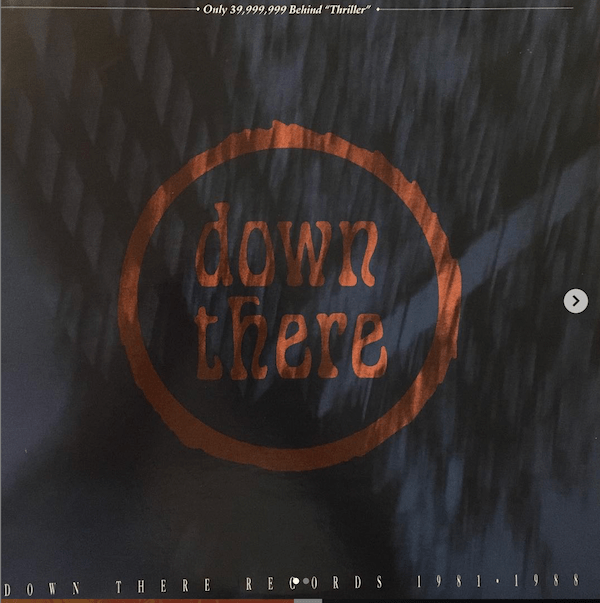
The Dream Syndicate’s Steve Wynn started up Down There Records in the early 1980s. The label catalog is more qualitative than sizable impressive, with early and classic albums from The Dream Syndicate, Green On Red and Naked Prey as part of the roster. Down There also gave us awesome releases from The Romans, Russ Tolman and Divine Weeks, and quite simply ranks as one of the finest labels to document primarily a very vital Los Angeles music scene. This compilation is a pretty awesome place to start digging, it even includes several unreleased tracks, but I highly encourage chasing down the original albums right away. Highlights include Dream Syndicate’s untamed version of “Outlaw Blues” and Green On Red’s early tune “Tragedy.”
Neil Young | After the Gold Rush | Reprise 1970 |

I grew up on Neil Young. Old Ways played on repeat as the soundtrack to endless family summer trips when I was a kid, Ragged Glory and Weld being as heavy as any grunge album in the early ’90s – and later on in life, the thrill of discovering so many gems in this man’s astonishing catalog. It’s fair to say that Neil Young is one of my all time favorite artists, and After the Gold Rush is one of his finest albums. This is classic Neil at the dawn of a long career peak. You’ll find all his signature moves on this, his third solo album: The acoustic, husky folk tunes (“Cripple Creek Ferry”), the ragged, loud guitars (most notably on “Southern Man”), heartbreaking love songs (“I Believe In You”, “Only Love Can Break Your Heart”, “When You Dance I Can Really Love”), cowboy nostalgia (a slow version of Don Gibson’s “Oh Lonesome Me”), piano-led ballads (“Birds”, the eco-friendly title track)…. You know it’s a classic album straight from the get go: ‘Sailin’ hardships through broken harbors/Out on the waves in the night’ (“Tell Me Why”). Neil Young made some mighty fine albums before this one, and a whole lotta legendary ones after, but his long, sprawling career is compressed into these two sides of timeless music.
The Long Ryders | Native Sons | Frontier/Planet 1984 |

Native Sons is in many ways a seminal 1980s album, as a highly influential predecessor to the alt-country resurgence a couple years later, a cornerstone in the Paisley Underground movement, a blueprint for tons of rootsy/psychedelic indie bands to come – and of course a damn fine album on its own. Still is. The Long Ryders combined jangly guitars and sweet vocal harmonies (hey, even Gene Clark joins in) with a raw, ragged garage rock attitude, often cited as the missing link between Gram Parsons and punk rock.
This is The Long Ryders’ first full length, produced by Henry Lewy (Joni Mitchell, the Flying Burrito Brothers, Neil Young, Leonard Cohen) and a tour de force of timeless songwriting from start to finish. Love it just as much now as when I purchased it 30 years ago.
Sonic Youth | Bad Moon Rising | Homestead/Blast First 1985 |

Bad Moon Rising is a dark, gloomy nightmare, slowly dragging us through post-apocalyptic city streets and desolate, industrial wastelands, a disturbing postcard from 1980s America. Just a couple years later Sonic Youth gave us Sister and Daydream Nation and forever shaped the face of alternative rock with their merge of underground noise and mainstream glam.
Wrapped in drones, decay and dissonance, there is not much glam to spot on songs like “Ghost Bitch”, “Society Is a Hole”, and “I’m Insane.” The frantic guitar riffs that would become a key signature element for the band, mostly comes to light at the tail end of the album on “Death Valley ’69” featuring Lydia Lunch. Already at this point in their career we find this clever mix of high and low culture, as they give references to Creedence Clearwater Revival, the painter Edward Ruscha and Charles Manson just to mention a few. This is pretty bleak and abrasive stuff, and even though it’s not an easy or immediate album to digest it’s highly rewarding.
Over the years Bad Moon Rising has become one of my favorite Sonic Youth albums.
Rank and File | Sundown | Slash 1982 |

The Kinman brothers, Chip and Tony, were part of the bourgeoning Southern California punk scene as members of the Dils when they decided to relocate to Austin and shift towards a more roots orientated sound.
For the debut LP Sundown they brought in phenomenal guitarist Alejandro Escovedo (formerly of the Nuns and True Believers, and still going very strong) and drummer Slim Evans. This is nothing but a seminal precursor to the whole alt.country and Americana movement, later popularized by Uncle Tupelo, Whiskeytown et al. At the time this vital combination of punk rock and country music came to be known as cowpunk. Rank and File stands next to the likes of Jason & the Scorchers, The Beat Farmers and The Blasters in pioneering this kinda lovely music, especially here on their debut album that is by far their finest moment.


 Med dette som ballast går Sangild så inn i disse fire mer konkret, i det som er bokens tyngdepunkt: ”Analyser af støjrock”. Hans analyser virker i det store og hele meget fornuftige, begrepsapparatet naturlig og hans tanker er lette å følge. Når det gjelder SY brukes en figur som han kaller “støjens malstrøm”. Dette viser til bandets gjenoppfinnelse av gitarens muligheter, deres nyskapende gitarspråk når de bryter ut av melodiens struktur ved å tilføre energi gjennom støycrescendoer, akselerasjon av tempo eller stigning i tonehøyde. Dette blir en “malstrøm” som “sætter en hvirvel i scene, der nærmest suger lytteren til sig.” Denne malstrømmen er gjennomgående i bandets karriere, og det ses nærmere på låter som ”Tuff Gnarl” og ”Stalker” som eksempel (“Prægnante forekomster av “malstrøm” hos Sonic Youth” står som eget bilag bakerst). Delen om Sonic Youth er meget god, og her ser han for øvrig på andre sentrale trekk ved bandet som deres mørke, dystre side som sammen med flørten og kunnskap til popkunsten og fascinasjon for stjerne-mytologien gir dem et visst ironisk, lite selvhøytidelig preg. Dette, sammen med bandets urbane forankring, leder Sangild over i en diskusjon rundt Sonic Youth som et post-moderne fenomen.
 The Big Beast